Introduction
Are your workplace first aid kits truly OSHA-compliant, or are you trusting a green plastic box from a retail shelf? Many organizations think that having a first aid kit on the wall checks the box for OSHA first aid kit requirements. A basic kit might cover paper cuts and small scrapes, but OSHA looks at much more than that. Inspectors care about how well your supplies match your real hazards, how fast workers can reach those supplies, and whether anyone on-site knows how to use them in the first place.
OSHA keeps the wording of its main first aid rule broad on purpose, which often leaves you guessing what “adequate first aid supplies readily available” really means. ANSI/ISEA Z308.1-2021 fills in that gap by spelling out Class A and Class B workplace kits, along with the minimum contents for each. As enforcement continues to stay strong through 2026, using ANSI as your roadmap is one of the safest ways to show that you meet OSHA first aid kit requirements.
By reading this guide, you will see how OSHA and ANSI fit together, how to choose between Class A and Class B kits, what items you must stock, which extra rules apply to high‑risk industries, and how to manage kits and training over time. Think of this as a practical checklist and reference that helps you move from guessing about compliance to knowing you are covered.
“Adequate first aid supplies shall be readily available.” — OSHA, 29 CFR 1910.151(b)
Key Takeaways
A lot of busy managers just need the bottom line before diving into details, so this quick summary shows what matters most about OSHA first aid kit requirements and how they apply in 2026.
OSHA standard 29 CFR 1910.151(b) requires that you keep adequate first aid supplies readily available, and ANSI/ISEA Z308.1-2021 is the accepted guide that shows what that looks like in practice. The ANSI standard defines Class A kits for low-risk workplaces and Class B kits for higher-risk sites, with clear minimum contents for each class.
You are expected to complete a workplace hazard assessment and use it to choose the right kit class and any extra items your site needs. When emergency medical help cannot reach your workers within three to four minutes, OSHA also expects you to have trained first aid personnel on-site, especially in construction, logging, and other high‑hazard operations.
Non-compliance with OSHA first aid kit requirements can lead to large fines, lawsuits, and repeat inspections, so treating this as a one‑time purchase is risky. Ongoing tasks such as regular kit inspections, smart placement, accurate restocking, and keeping staff training current are all part of staying compliant year after year.
Understanding OSHA’s First Aid Standard: 29 CFR 1910.151(b)
OSHA’s core rule for workplace first aid appears in 29 CFR 1910.151(b). It states that adequate first aid supplies must be readily available for employees. On the surface, this sounds simple, but the wording is broad, which is why so many companies are unsure if they truly meet OSHA first aid kit requirements.
The word adequate is doing a lot of work in that sentence. OSHA expects your first aid supplies to match the real hazards in your workplace, not just the minimum that might work somewhere else. A quiet office with desk work needs very different quantities and types of supplies compared with a welding shop, food plant, or distribution center.
Readily available is also more than a comfort phrase. In practice, OSHA expects workers to reach first aid supplies quickly, usually within a few minutes at most. Kits that are locked away in an office, hidden in a supervisor’s truck, or buried behind stored inventory do not meet the spirit of the rule. During an inspection, an officer will often ask workers where the nearest kit is and see how long it actually takes to get there.
Because 1910.151(b) is so general, OSHA points employers toward ANSI/ISEA Z308.1-2021 as the accepted reference for what an adequate workplace kit should include. ANSI is not written directly into the regulation for general industry, but inspectors use it as the measuring stick. When your kits match or exceed ANSI requirements, you show clear good faith in meeting OSHA first aid kit requirements.
This is also why simple retail first aid kits are rarely enough. They often:
fall short on quantities of basic items,
leave out trauma supplies needed for serious injuries,
use sizes that do not match ANSI requirements.
Relying on those kits alone may leave your workers unprotected and your organization exposed during an OSHA visit.
ANSI Z308.1-2021 Standard: Class A Vs. Class B First Aid Kits
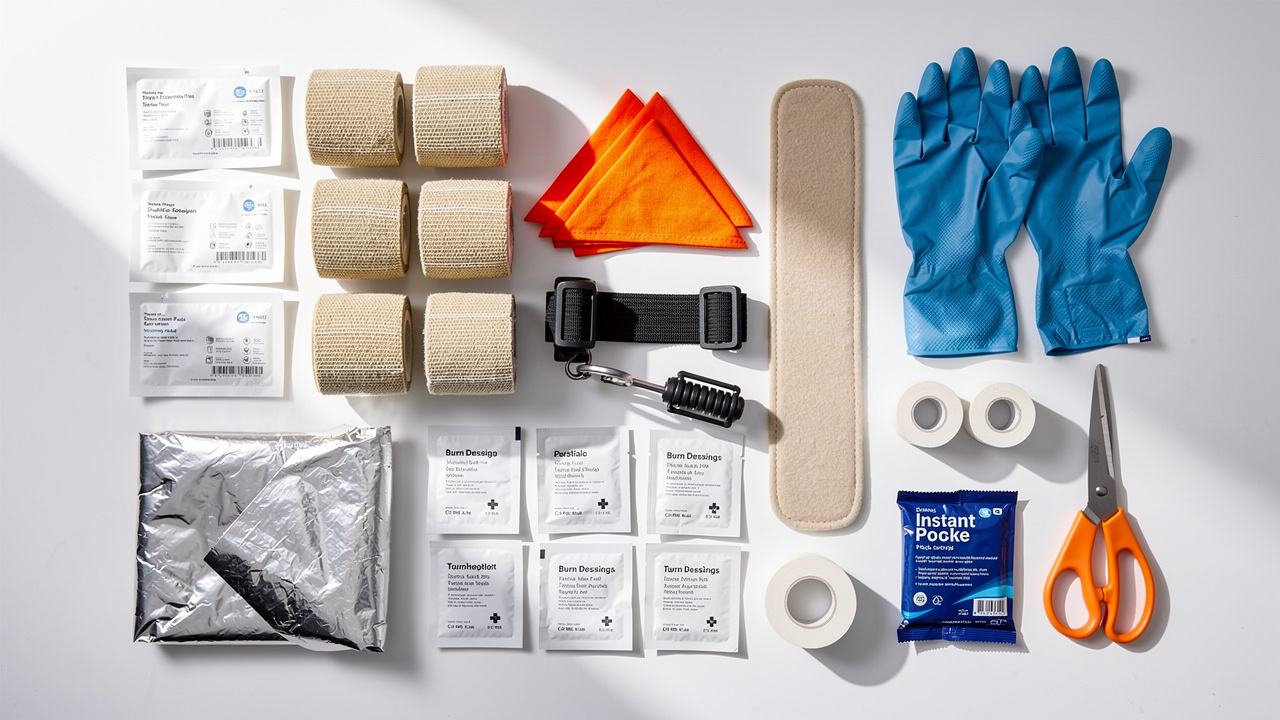
ANSI/ISEA Z308.1-2021 turns OSHA’s general language into something you can actually buy, stock, and audit. Instead of guessing what an adequate kit looks like, you work from a clear list of items and quantities. The key idea is that your kit should match both the likelihood and severity of injuries on your site.
The standard divides workplace first aid kits into two classes. Class A kits support low-risk environments where injuries are usually minor and not life threatening. Class B kits cover higher-risk operations where serious trauma is far more realistic. Your decision should come from a hazard assessment, not just your industry label, because even two factories in the same sector can have very different risks.
Class A Kits: Low-Risk Workplace Requirements
Class A kits are built for locations where serious injuries are unlikely and most issues involve small cuts, scrapes, or short-term discomfort. Think of:
corporate offices,
retail spaces,
schools and classrooms,
call centers and other administrative settings with limited physical hazards.
In these places, common incidents might be paper cuts, minor slips that cause small abrasions, or light burns from hot beverages or office kitchen equipment.
A Class A kit includes enough bandages, antiseptic wipes, small burn treatments, and basic supplies to handle those everyday events for a typical worker group. Even so, OSHA first aid kit requirements still expect you to think beyond the generic kit when your office has special risks such as on-site labs, server rooms, or heavy storage areas. In that case, you may keep a Class A base and add items like extra burn dressings or more eye wash to match what your assessment reveals.
Class B Kits: High-Risk Workplace Requirements
Class B kits serve environments where the chance of serious injury is much higher. These include manufacturing plants, construction sites, warehouses, logistics hubs, food production lines, and automotive service centers. In these settings, workers can face sharp tools, heavy loads, powered equipment, extreme temperatures, and chemicals, so the stakes are much higher than a bandage and an ice pack.
The Class B list increases both the number and size of basic supplies and adds trauma-focused items. You see more trauma pads, larger roller bandages, extra triangular bandages, and a rigid splint for suspected fractures. The 2021 update made a tourniquet mandatory for Class B kits, reflecting the need to control severe limb bleeding until medical help arrives.
In practice, Class B is often the safer choice whenever there is any doubt about risk level, especially for mixed-use buildings or operations that involve both light office work and heavier tasks. OSHA first aid kit requirements do not punish you for having more capacity than you need, but they do take a hard view when a serious injury occurs and your kits fall short.
Complete ANSI-Compliant First Aid Kit Contents Breakdown
Once you decide between Class A and Class B, you still need to check the details. ANSI/ISEA Z308.1-2021 lays out an item-by-item list of what each class must include, along with minimum sizes and quantities. This section gives you a clear reference you can use during audits, purchasing, or conversations with your suppliers.
The table below summarizes the core ANSI items, their purpose, and the minimum requirements for each class. It covers wound care basics, major trauma supplies, protective gear, specialized care, and essential tools. Your own kits may go beyond this list, but they should never fall below it.
Item Name | Purpose | Class A Minimum Quantity | Class A Size | Class B Minimum Quantity | Class B Size |
|---|---|---|---|---|---|
Adhesive bandage | Covers small cuts and scrapes | 16 | 1 x 3 in | 50 | 1 x 3 in |
Adhesive tape | Secures dressings and pads | 1 roll | 2.5 yd total | 2 rolls | 2.5 yd each |
Antibiotic application | Helps prevent wound infection | 10 packets | 0.5 g each | 25 packets | 0.5 g each |
Antiseptic | Cleans skin and wounds | 10 packets | 0.5 g each | 50 packets | 0.5 g each |
Sterile pad | Covers and protects larger wounds | 2 | 3 x 3 in | 4 | 3 x 3 in |
Trauma pad | Controls heavier bleeding | 2 | 5 x 9 in | 4 | 5 x 9 in |
Roller bandage | Holds dressings in place | 1 | 2 in x 4 yd | 2 | 2 in x 4 yd |
Wide roller bandage | Wraps larger wounds or limbs | n/a | n/a | 1 | 4 in x 4 yd |
Triangular bandage | Sling, pressure bandage, many uses | 1 | 40 x 40 x 56 in | 2 | 40 x 40 x 56 in |
Tourniquet | Stops severe limb bleeding | n/a | n/a | 1 | at least 1.5 in wide |
Splint | Stabilizes suspected fractures | n/a | n/a | 1 | 4 x 24 in |
Medical exam gloves | Protects responder from body fluids | 2 pairs | standard sizes | 4 pairs | standard sizes |
Breathing barrier | Mouth-to-mask protection for CPR | 1 | each | 1 | each |
Cold pack | Reduces swelling and pain | 1 | 4 x 5 in | 2 | 4 x 5 in |
Burn dressing | Cools and protects burns | 1 | 4 x 4 in | 2 | 4 x 4 in |
Burn treatment | Soothes minor burns | 10 packets | 0.9 g each | 25 packets | 0.9 g each |
Eye covering | Protects injured eyes | 2 | 2.9 sq in | 2 | 2.9 sq in |
Eye or skin wash | Flushes irritants from eyes or skin | 1 | 1 fl oz total | optional | often provided at station |
Hand sanitizer | Cleans responder’s hands | 10 packets | 0.9 g each | 20 packets | 0.9 g each |
Foil blanket | Helps prevent shock and heat loss | 1 | 52 x 84 in | 1 | 52 x 84 in |
Scissors | Cuts bandages, tape, or clothing | 1 | each | 1 | each |
First aid guide | Gives basic treatment instructions | 1 | each | 1 | each |
These items cover most needs for general injury, from small cuts to serious bleeding. For many workplaces, they are enough to show that you meet the core OSHA first aid kit requirements for supplies. However, ANSI is very clear that these are minimums, not a full program for every site.
If your hazard assessment shows extra risks, you may need:
more than one kit spread across a large facility,
additional categories of supplies such as chemical splash treatments or outdoor gear,
higher quantities of certain items in high-use areas.
Some employers also add over‑the‑counter medicines such as pain relievers or allergy tablets. When they do, they use single-dose, tamper‑evident packets and avoid any drug that can cause drowsiness on the job.
Industry-Specific OSHA First Aid Requirements
While ANSI gives a strong baseline for most workplaces, OSHA sets tighter rules for some high‑hazard industries. Construction and logging are two of the clearest examples, and healthcare and chemical facilities also face extra expectations. These sectors must think about OSHA first aid kit requirements alongside other safety standards that apply to their work.
Construction Industry Requirements (OSHA 1926.50)
Construction work involves sharp tools, heights, heavy equipment, and changing site conditions, so OSHA treats it separately under 29 CFR 1926.50. The rule explains that if medical care is not reasonably accessible in terms of time and distance, someone with valid first aid training must be available at the jobsite. Appendix A to this standard lists recommended kit contents that line up closely with a Class B kit.
Those recommendations include:
assorted adhesive bandages,
several 4 x 4 inch gauze pads and larger 8 x 10 inch pads,
roller bandages and at least two triangular bandages,
wound cleaning wipes, scissors, tweezers, adhesive tape, and non‑latex gloves,
resuscitation gear such as a pocket mask, plus an emergency instruction sheet.
Because construction projects are often spread over large or multi‑level areas, you may need several kits staged near active work zones rather than one box in a trailer.
Logging Operations Requirements (OSHA 1910.266)
Logging is one of the most dangerous jobs in the country, and OSHA standard 29 CFR 1910.266 reflects that reality. Appendix A to this rule lists a mandatory first aid kit for logging operations, not just a suggested one. The list looks similar to a strong Class B kit but adds items such as two elastic wraps, a rigid splint, and a blanket, because fractures, sprains, and shock are common in this field.
The standard also recognizes that many logging sites are remote, far from emergency medical services. That is why OSHA requires all logging employees to receive and maintain current first aid and CPR training. Emergency instructions in the kit must include local emergency numbers and site‑specific directions, so rescuers can actually locate the crew. For logging companies, OSHA first aid kit requirements blend supplies and training into a single expectation.
Other High-Risk Industries: Healthcare and Chemical Facilities
Healthcare facilities must follow the Bloodborne Pathogens Standard, 29 CFR 1910.1030, which means first aid responders need extra personal protective gear such as masks, gowns, and face shields. Sites that work with corrosive chemicals fall under 1910.151(c), which requires plumbed eye wash and body drench stations where exposure is possible. Small bottles of eye wash inside a kit are helpful for minor issues but are not enough for true chemical emergencies.
First Aid Kit Management and Compliance Maintenance
Buying the right kits is only the first step. OSHA first aid kit requirements look at how well you maintain those kits over time, how easy they are to reach, and whether the contents are still usable when an injury happens. Many organizations lose compliance not because they picked the wrong kit, but because they let it run empty or drift out of date.
“The best emergency equipment is useless if people cannot find it or do not know how to use it.” — Common safety training reminder
Strategic Kit Placement and Accessibility
OSHA’s idea of readily available lines up with the common guidance that workers should reach a first aid kit within three to four minutes. That means you may need more than one kit in a large plant, warehouse, or multi‑building campus. Placing a single box in a supervisor’s office rarely works for shift work, night operations, or spread‑out teams.
Kits should:
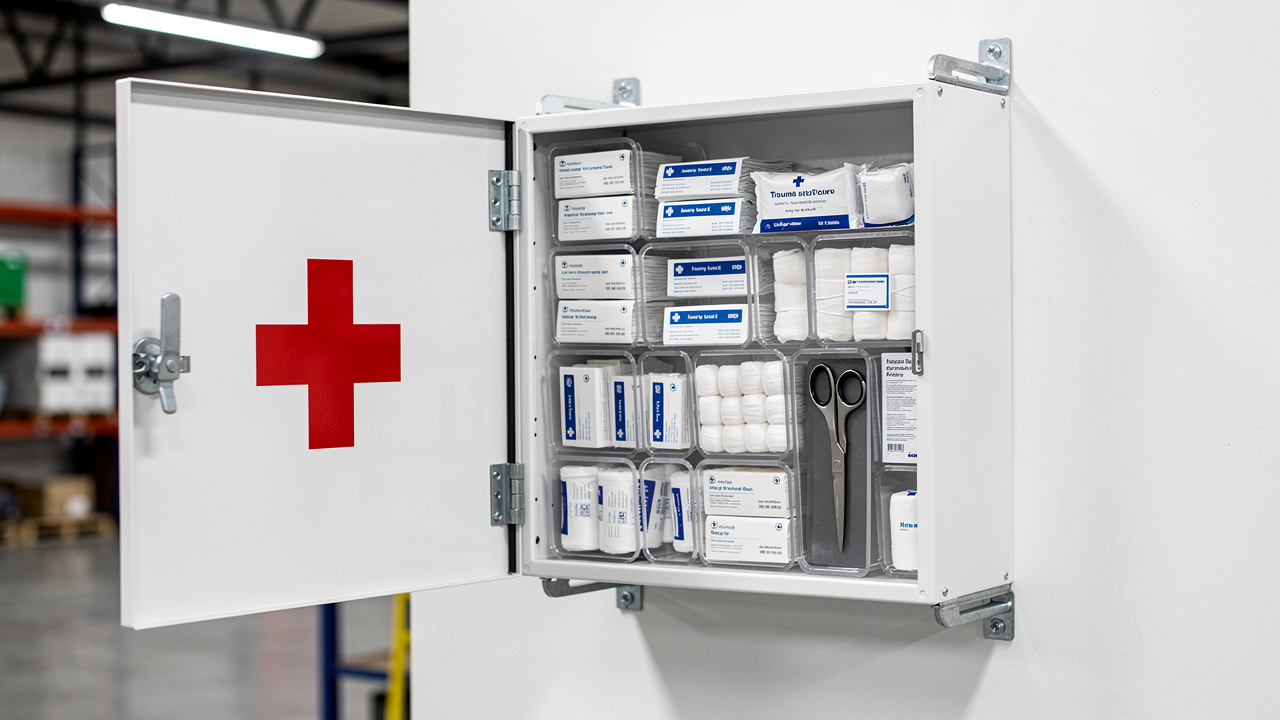
be mounted in visible spots and marked clearly with a recognizable first aid symbol,
stay clear of break rooms or other cluttered areas where they can be blocked,
sit near known hazard zones such as loading docks, machine shops, or production lines, without being buried inside those zones.
Mounting kits at a consistent, comfortable height across your facilities makes it easier for staff to find and open them during a stressful event.
Regular Inspection and Restocking Protocols
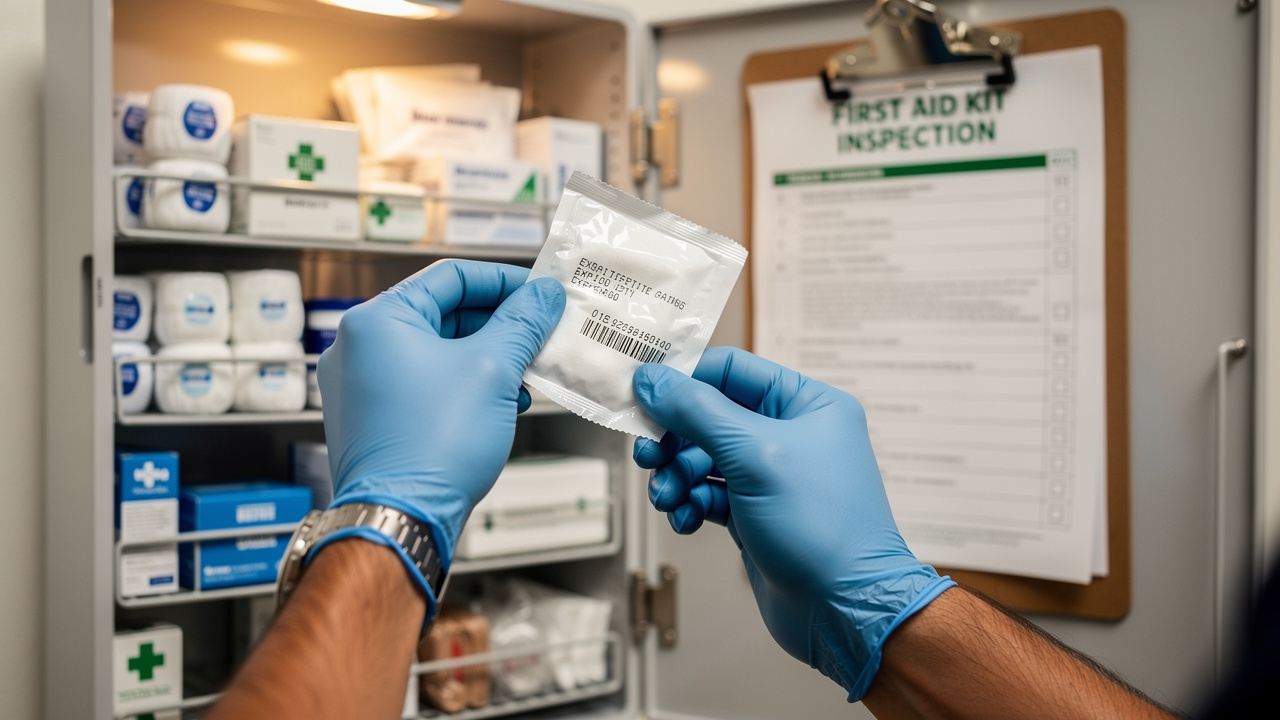
A first aid kit that looks full from the outside can be missing key items inside, so regular inspections matter. Most employers set a monthly or quarterly inspection schedule, then add extra checks any time a kit is used during an incident.
During each review, you should:
confirm that all required ANSI items are present in at least the minimum quantities,
check expiration dates on sterile pads, ointments, burn treatments, and any medicines,
remove and replace damaged, wet, or opened packages right away.
Assigning a specific person or role to own kit inspections and keeping simple paper or digital logs makes you far more ready if OSHA asks for proof. Many organizations work with a trusted supplier such as First Aid Longs to support fast restocking across multiple locations.
Customizing Beyond Minimum Requirements
ANSI sets a floor, not a ceiling, so your hazard assessment should drive any extra items that belong in your kits. A commercial kitchen might add more burn dressings and extra gloves, while a woodworking shop could stock additional eye wash and splinter removal tools. Outdoor crews in agriculture or security might keep more blankets and cold packs because of weather exposure.
Some employers choose to offer over‑the‑counter medicines such as non‑pain relievers or antacids in single‑dose packets. When you do this, document what is included and how you manage storage and access. It is also worth matching container types to your environment, using ANSI Types I through IV to cover:
indoor wall‑mounted kits,
portable kits,
outdoor kits,
heavy‑duty kits that can handle moisture and rough handling.
Recording why you added each extra item helps show that your program is based on a real assessment, not guesswork.
First Aid-Trained Personnel: OSHA’s Human Resource Requirement
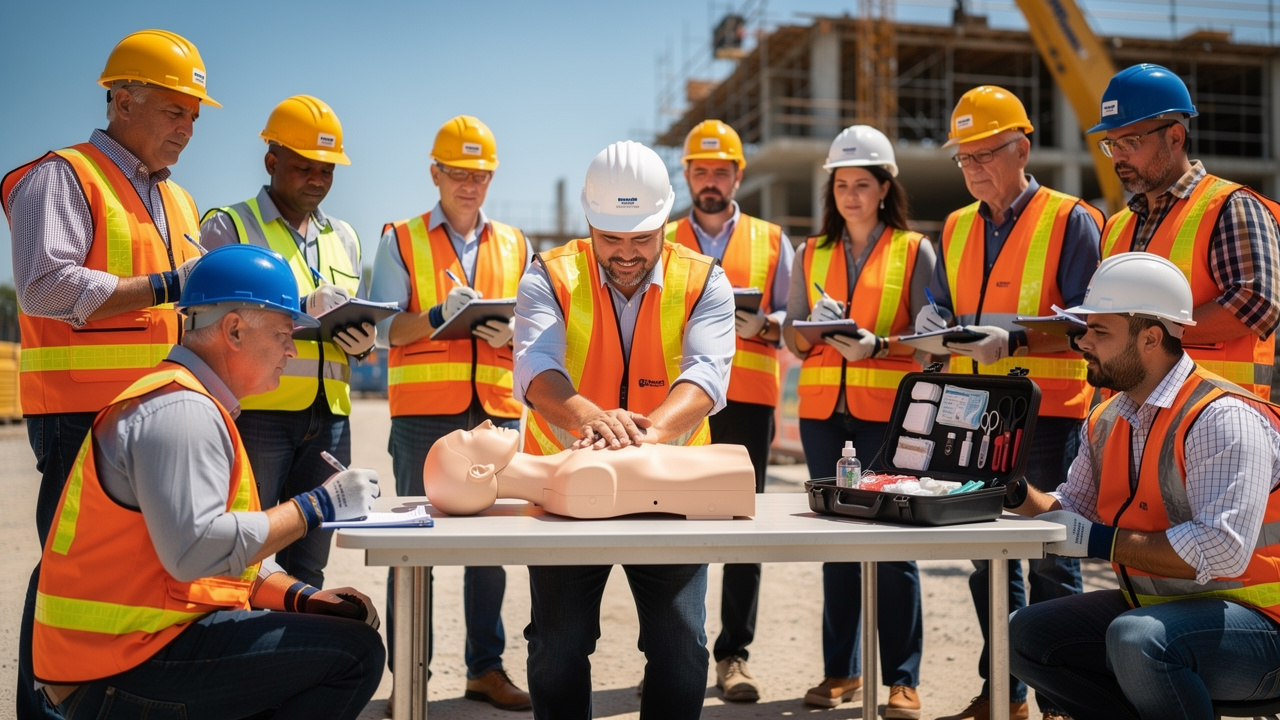
OSHA first aid kit requirements are about more than boxes and bandages. In many workplaces, you must also provide people who know how to use those supplies quickly and correctly. A well‑stocked kit does little good if no one nearby can control bleeding, support breathing, or recognize when a victim is going into shock.
Under 29 CFR 1910.151(b), if no infirmary, clinic, or hospital is close enough to treat injured workers, you must have one or more people adequately trained to render first aid. OSHA and related guidance often frame near proximity as a response time of about three to four minutes, and even faster where hazards such as electrocution, suffocation, or severe bleeding exist. Rural areas, traffic congestion, or remote jobsites make that kind of response from outside providers unlikely, so in those settings trained internal responders are not optional.
To show that people are adequately trained, most employers rely on courses from organizations such as the American Red Cross, American Heart Association, or National Safety Council. Good programs typically cover:
basic first aid,
CPR,
use of automated external defibrillators (AEDs).
Certifications do not last forever, so you need a simple way to track expiration dates and schedule refresher training, often every two years.
Construction has its own rule at 1926.50(c), which states that a person with a current first aid certificate must be available at the site when medical care is not reasonably accessible. Logging goes even further under 1910.266, requiring all employees to hold current first aid and CPR certifications. No matter the industry, it is smart to train multiple workers on each shift and in each area, so you are not left without coverage when someone is on vacation, moved to another role, or leaves the company.
Conclusion
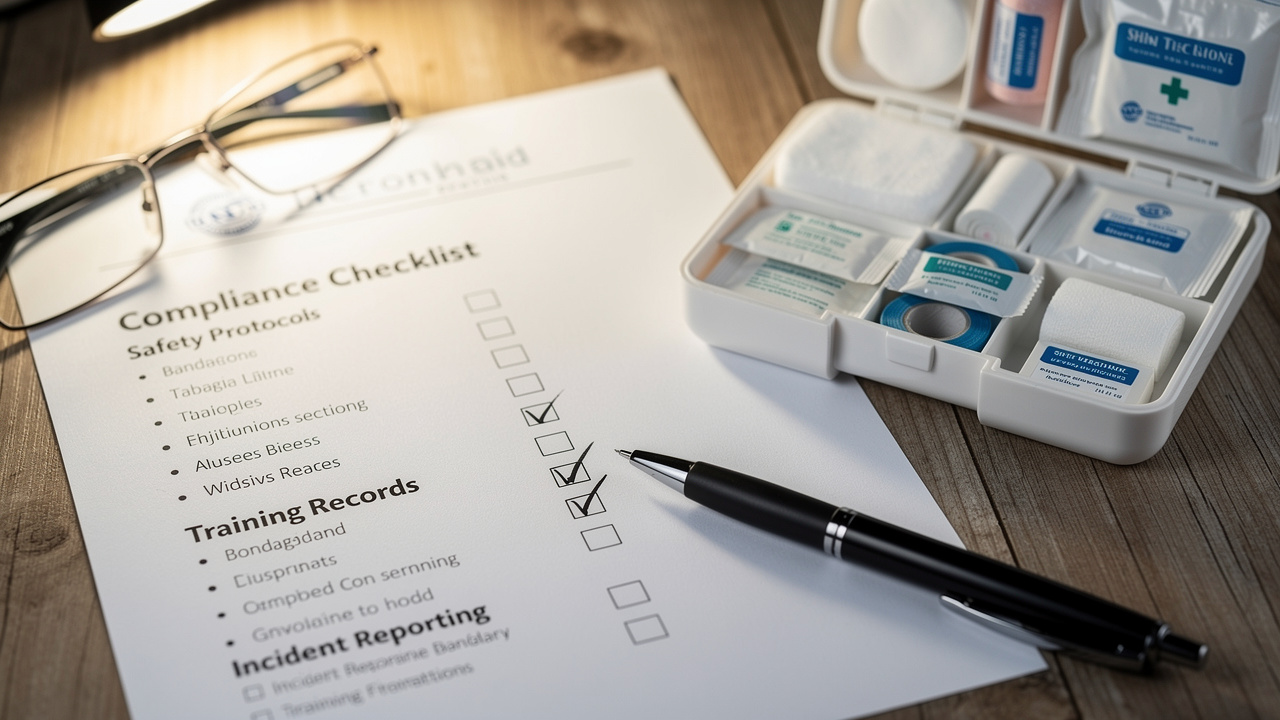
OSHA first aid kit requirements are both a legal standard and a direct statement about how much you value the people who work for you. Compliance is not just about avoiding fines; it is about putting the right help in reach when something goes wrong. In 2026, with continued attention on workplace safety, that combination of care and compliance matters more than ever.
At a practical level, your program rests on three pillars:
You choose the right ANSI kit class, confirm every required item is present, and add extra supplies based on a real hazard assessment.
You train enough people to provide first aid when outside help cannot arrive in time.
You keep everything current through smart placement, regular inspections, and prompt restocking.
The risks of ignoring these steps are significant. Willful violations can reach $164,323 per case, and serious incidents can bring lawsuits, lost trust, and long‑term operational stress. On the other hand, treating OSHA first aid kit requirements as an investment builds a safer, more resilient operation.
A simple next move is to audit every kit on your sites against the ANSI Z308.1-2021 list and your own hazard profile. Confirm that inspections and restocking are on a written schedule, and check that training records show current certifications for every shift. As a wholesale medical supply manufacturer, First Aid Longs supports organizations that want dependable, compliant Class A and Class B kits at scale, backed by strong manufacturing quality and on‑time delivery. With clear information and reliable partners, keeping your first aid program compliant becomes a steady routine instead of a guessing game.
Secure Reliable First Aid Kit Supplies Today!
Explore Our first Aid Kits designed to reduce delays and stabilize your healthcare operations.