

Introduction
Do you believe all workplace first aid kits are created equal? And are you sure it actually lines up with ANSI first aid kit standards, not just a marketing claim on the label?
Many businesses assume any box that says “first aid” or “ANSI compliant” is good enough. In reality, kits vary a lot in what they contain, how they are packaged, and how well they match the risks in your facility. Without a clear understanding of ANSI/ISEA Z308.1, it is easy to buy kits that look fine on paper but leave big gaps when an actual emergency happens.
The ANSI first aid kit standard gives you a clear playbook for what should be in a workplace first aid kit. It explains kit classes, required contents, and container types, and it fits neatly with OSHA’s broad rule that you must provide “adequate” first aid supplies. When you understand how ANSI first aid kit standards work, you can choose the right kits, place them in the right spots, and keep them ready to use.
By the end of this guide, you will know what the standard says, the difference between Class A and Class B kits, what must be inside, which container type matches your environment, how ANSI and OSHA work together, and how to maintain your kits over time.
Key Takeaways
ANSI/ISEA Z308.1-2021 is the main reference for workplace first aid kits, and it is developed by the International Safety Equipment Association rather than ANSI itself. The standard sets minimum contents and performance expectations, so kits are not just random assortments of bandages. Following this framework gives your safety program a clear and defensible baseline.
The standard uses two kit classifications, Class A and Class B, so you can match your first aid coverage to your level of risk. Class A serves lower hazard spaces such as offices and retail areas, while Class B supports higher hazard work like construction, manufacturing, and warehousing. Choosing the right class is one of the most important steps in applying ANSI first aid kit standards.
Class B kits include everything in Class A but with larger quantities and two extra items, a splint and a tourniquet. Those additions allow your team to respond to severe bleeding and suspected fractures before emergency medical services arrive. For many industrial sites, Class B is the more realistic fit.
Four container types, from Type I through Type IV, match different conditions from clean indoor offices to harsh outdoor or mobile work. Picking the right container keeps your supplies clean, dry, and usable when you need them most. The wrong container can leave even a well-stocked kit full of damaged or expired items.
OSHA does not list exact supplies but does require trained responders and adequate first aid materials that are easy to reach. Using ANSI/ISEA Z308.1-2021 as your guide shows that you took reasonable steps to meet this standard. Regular inspections, restocking, and hazard-based supplemental items then keep your kits aligned with real risks in your workplace.
“Adequate first aid supplies shall be readily available.”
— OSHA, 29 CFR 1910.151(b)
What Is The ANSI/ISEA Z308.1-2021 First Aid Kit Standard?

ANSI/ISEA Z308.1-2021 has a long name, American National Standard – Minimum Requirements for Workplace First Aid Kits and Supplies, but the idea is simple. It spells out what a basic workplace first aid kit should contain and how those supplies should perform. The goal is to make sure kits can handle the kinds of injuries that happen most often at work.
One point that surprises many people is who writes the standard. ANSI does not write it. Instead, the International Safety Equipment Association, or ISEA, develops and publishes it as an ANSI-accredited standards body. That is why you often see the standard written as ANSI/ISEA Z308.1-2021.
The standard is voluntary, meaning it is not a federal law by itself. Even so, it carries a lot of weight. It sets minimum performance expectations for first aid kits and their contents, from the number of bandages to the size of trauma pads. It also introduces classes and container types that help you match your kit choice to your headcount, work tasks, and hazard profile.
OSHA’s general rule is that employers must provide adequate first aid supplies and make them easy to access. OSHA does not publish a detailed checklist for most industries. Because of that, safety professionals, insurers, and auditors often treat ANSI first aid kit standards as the default way to show that your supplies are “adequate.” If your kits meet or exceed ANSI/ISEA Z308.1, you have a strong case that you did the right thing.
The current edition, updated in 2021, reflects lessons from modern workplaces and current medical best practice. From corporate offices and call centers to machine shops and construction projects, companies across many sectors use this standard to guide their buying decisions. When you partner with a manufacturer like First Aid Longs, which focuses on medical consumables and quality-controlled production, you can source kit components that line up with Z308.1 while still meeting your own branding and volume needs.
Class A vs. Class B First Aid Kits: Understanding The Classifications
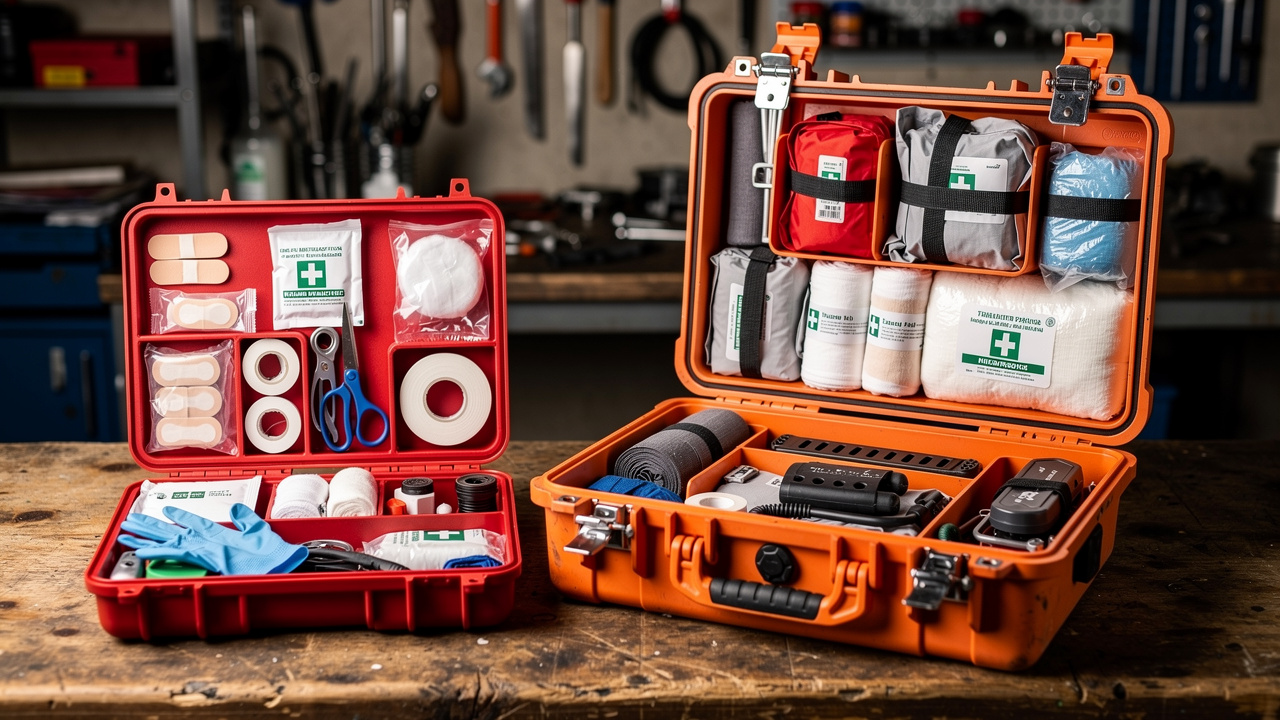
ANSI/ISEA Z308.1-2021 uses a simple two-level system to match kit contents to different levels of risk. Rather than guessing how much first aid coverage you need, you start by deciding whether your space looks more like a low-hazard office or a higher hazard work site. From there, you choose Class A or Class B as your baseline and then add items based on your hazard assessment.
Class A First Aid Kits: Coverage For Basic Workplace Needs
Class A kits are designed for workplaces where serious injuries are less common and hazards are lower. They still offer a wide range of supplies, but the quantities are aimed at smaller groups and less severe incidents. Think of them as a strong starting point for common injuries rather than a trauma kit.
A Class A kit is built to handle:
Minor cuts and abrasions
Slightly larger wounds that need more than a simple bandage
Small burns
Basic eye injuries from dust or splashes
Offices, retail stores, restaurants, schools, and indoor corporate spaces are classic Class A environments. In these places, heavy machinery, high falls, and major crush points are not part of day-to-day work.
Under ANSI first aid kit standards, a kit cannot simply be “Class A style” without meeting the item list and sizes in the standard. Each Class A kit must contain specific items in at least the minimum quantities and dimensions that Z308.1 lists. This baseline is also important because Class B kits build directly on top of Class A requirements.
Class B First Aid Kits: Stronger Protection For High-Risk Environments
Class B kits step things up for work environments where severe injuries are more likely or where many people share the same space. They include more of the same items that Class A kits carry, plus extra tools to deal with major bleeding and possible fractures. If your workers use power tools, lift heavy loads, work at height, or face chemical or mechanical hazards, Class B often makes more sense.
Typical Class B settings include:
Manufacturing plants
Construction sites
Distribution centers and large warehouses
Agricultural operations
Oil and gas work and other heavy industry
In these places, multiple people can get hurt in a single incident, and the injuries can be serious. That is why Class B kits have much larger quantities of items such as adhesive bandages, pads, wipes, and dressings.
Two items are found only in Class B kits:
A splint to stabilize a suspected broken bone or severe sprain
A tourniquet to control life-threatening bleeding from an arm or leg
Together with higher quantities of other supplies, these tools let your trained responders manage more serious emergencies during those first vital minutes.
To decide between Class A and Class B, look at your hazard profile, headcount, and distance from emergency medical services. If your team works with machinery or in remote areas where an ambulance may take longer than three or four minutes to arrive, Class B is usually the safer choice. Many organizations even mix both, using Class B kits in production or field areas and Class A kits in office zones.
Complete Breakdown Of Required ANZI First Aid Kit Contents

The heart of ANSI first aid kit standards is the detailed list of what must be inside each kit. Table 1 in ANSI/ISEA Z308.1-2021 sets out the minimum items, sizes, and quantities for Class A and Class B. You can think of it as a checklist you can use when you receive a new kit or inspect an existing one.
To make this easier to follow, it helps to group the contents by how they are used. The sections below walk through wound care, bandages and dressings, burn and eye care, tools and personal protective gear, and a few important extras. Class B kits always meet Class A requirements but carry higher counts and, in some cases, larger item sizes.
Snapshot: Core Class A vs. Class B Contents
Category | Class A (Minimum) | Class B (Minimum) |
|---|---|---|
Adhesive bandages | 16 (1″ x 3″) | 50 (1″ x 3″ or larger) |
Trauma pads | 2 (5″ x 9″) | 4 (5″ x 9″) |
Antibiotic applications | 10 packets | 25 packets |
Antiseptic wipes | 10 wipes | 50 wipes |
Roller bandages | 1 roll (2″) | 2 rolls (2″) and 2 rolls (4″) |
Triangular bandages | 1 | 2 |
Burn dressings | 1 (4″ x 4″ or larger) | 2 |
Eye coverings | 2 with attachment | 2 with attachment |
Eye/skin wash | 1 fl. oz. total | 4 fl. oz. total |
Exam gloves | 2 pairs | 4 pairs |
Splint | Not required | 1 |
Tourniquet | Not required | 1 |
(Refer to ANSI/ISEA Z308.1-2021 for the full official table and exact item specifications.)
Wound Care And Treatment Supplies
Adhesive bandages are the workhorse item in any first aid kit. Class A kits must have at least sixteen bandages that are at least one inch by three inches, while Class B kits must have fifty. These cover small cuts, scrapes, and blisters and are often the first item to run low if you do not restock.
Adhesive tape is there to hold pads and dressings in place when a bandage is not enough. A Class A kit needs at least two and a half yards of tape, and a Class B kit needs five yards. The tape should be strong enough to stay on under light movement but gentle enough to avoid skin damage.
Antibiotic applications are single-use packets of cream or ointment meant to reduce the chance of infection in minor wounds. The standard calls for ten packets in Class A kits and twenty-five in Class B kits. Alongside that, you need antiseptic wipes, which clean the skin around a wound before dressing it. Class A kits include ten wipes, while Class B kits carry fifty.
For heavier bleeding, trauma pads come into play. They are large, absorbent sterile pads at least five by nine inches. Class A kits must have two of these, and Class B kits must have four, so you can handle one or more serious bleeding events. Sterile gauze pads round out this group, usually in three by three inch squares, with two required in Class A kits and four in Class B kits.
Dressings And Bandaging Materials
Roller bandages hold dressings firmly in place and can provide light compression to control bleeding or swelling. A Class A kit must contain at least one two-inch roll. A Class B kit must go further, with two two-inch rolls and two four-inch rolls. The larger width helps cover bigger wounds or secure dressings on arms and legs.
The triangular bandage is one of the most flexible items in the kit. It is a large piece of cloth, typically forty by forty by fifty-six inches. You can fold it into a sling, tie it around a pad to cover a large wound, or use it to secure a splint. Class A kits must have one triangular bandage, and Class B kits must have two.
Burn And Eye Care Items
Burn dressing pads are pre-soaked with burn gel and placed directly on a burn to cool the tissue and reduce pain. The standard calls for at least one burn dressing of four by four inches or larger in Class A kits and two in Class B kits. These are meant for smaller burns and for first aid before any advanced care.
Burn treatment packets contain creams or gels that also cool and protect minor burns. Class A kits must include ten of these packets, and Class B kits must include twenty-five. Together with burn dressings, they help you manage a range of heat-related injuries, from touching a hot surface to mild scalds.
For eye injuries, each kit must contain eye coverings with a way to attach them, such as tape or an elastic band. Both Class A and Class B kits need at least two sterile eye coverings. You also need eye and skin wash, which is a sterile liquid used to rinse debris or chemicals. A Class A kit must provide at least one fluid ounce in total, while a Class B kit must have at least four fluid ounces.
Tools And Personal Protective Equipment
A breathing barrier, such as a CPR face shield or a one-way valve, is required in both kit classes. It allows a trained responder to give rescue breaths while lowering the risk of contact with bodily fluids. Each kit needs at least one breathing barrier.
Cold packs are single-use packs that become cold when squeezed or snapped, then applied to sprains, strains, or bruises to limit swelling. Class A kits must contain one cold pack, while Class B kits must contain two. They are particularly helpful in active workplaces where strains and bumps are common.
Medical exam gloves protect the person giving first aid as well as the injured employee. The standard requires non-latex gloves to reduce allergy risk. Class A kits must carry at least two pairs, and Class B kits must carry at least four pairs. One pair of scissors is also required in both kit classes for cutting tape, clothing, and bandages so you can reach and treat the injured area.
Only Class B kits must contain a splint and a tourniquet. The splint is used to keep a suspected broken bone still and supported until medical care is available. The tourniquet is a device applied to a limb to control life-threatening external bleeding when direct pressure does not work. Both items must be high enough quality to perform reliably under stress.
Essential Miscellaneous Items
Two final items round out the mandatory list. Every kit must include a first aid guide, which walks users through step-by-step responses to common injuries. This is especially helpful for newly trained staff or those who do not use their skills often.
Hand sanitizer is also required in individual packets. Class A kits must have six packets, and Class B kits must have ten. These support hand hygiene when soap and running water are not close by, which is common in warehouses, construction zones, and field work.
First Aid Kit Container Types: Matching Protection To Your Environment
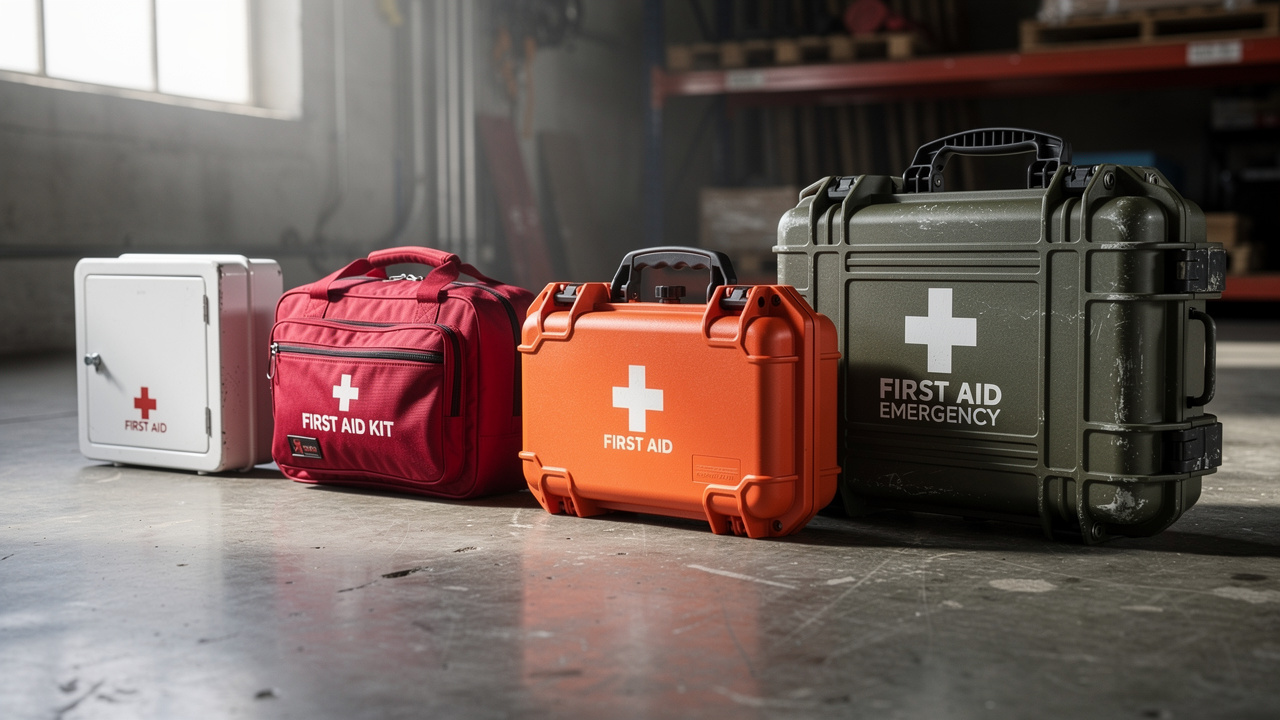
Stocking the right supplies is only part of applying ANSI first aid kit standards. Those supplies also need protection from dust, moisture, impact, and everyday wear. Z308.1 divides containers into four types that match different environments and ways of using the kit.
When you choose a container type, think about where the kit will be stored, how often it will be moved, and what physical or weather conditions it will face. Using the right container keeps the contents ready to use instead of cracked, wet, or scattered.
Type I Stationary Indoor Kits
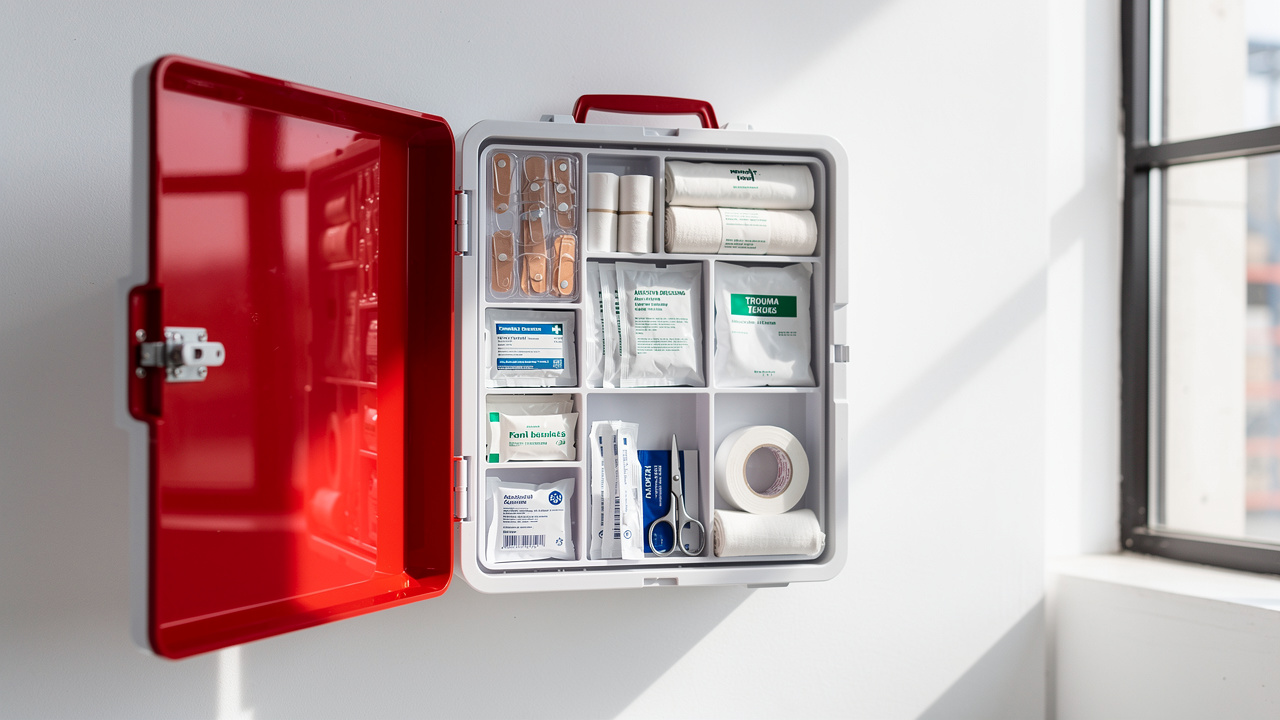
Type I containers are meant to stay in one place inside a building. They are usually wall-mounted cabinets or boxes in clean, climate-controlled areas. Since they do not need to handle rough transport or outdoor weather, they do not require heavy seals or shock protection.
These kits work well for:
Offices and conference areas
Schools and training rooms
Retail spaces and reception zones
They should still be clearly labeled and easy to open in a hurry. Many safety managers choose Type I containers for main hallway or breakroom locations.
Type II Portable Indoor Kits
Type II containers are portable but still intended for indoor use. They protect the contents from light bumps and normal handling as people carry the kit from storage to the incident location. They do not need to stand up to rain, mud, or very dirty conditions.
These kits suit restaurants, salons, small gyms, and other high-traffic indoor sites where incidents can occur anywhere in the space. You might keep a Type II kit in a central cabinet and grab it when someone gets hurt. They balance portability with basic protection and are often designed with handles and simple latches.
Type III Water-Resistant Portable Kits
Type III containers bridge the gap between indoor and outdoor use. They are portable and can be mounted, and they include water-resistant seals to protect contents from humidity, splashes, and light rain. They are not intended to be fully waterproof under deep submersion, but they handle damp environments far better than Type I or II containers.
These kits are ideal for:
Construction trailers and loading docks
Outdoor event venues
Agricultural buildings and greenhouses
Indoor spaces that open directly to the outside
They are also useful inside large warehouses that open directly to the outdoors, since temperature swings and moisture can affect supplies stored near dock doors.
Type IV Rugged, Heavy-Duty Kits For Extreme Conditions
Type IV is the toughest container class in the ANSI standard. These boxes or cases must stand up to rough handling, frequent movement, and harsh environmental conditions. They are tested for impact, moisture resistance, and corrosion resistance so that contents stay protected through heavy use.
If your teams work in oil and gas, mining, forestry, marine work, or heavy construction, Type IV containers are usually the best choice. They can tolerate vibration on vehicles, direct spray from hoses, and exposure to dust, mud, and chemicals. Remote work sites and mobile units, such as service trucks and security vehicles, also benefit from Type IV kits. When you pair this container type with Class B contents, you get a strong base for serious field incidents.
How ANSI Standards Relate To OSHA Compliance Requirements
Many safety leaders wonder how a voluntary standard like ANSI/ISEA Z308.1 connects to OSHA rules that carry fines and enforcement. OSHA sets broad obligations, and ANSI gives you a detailed way to meet them. Understanding both will help you explain your first aid program to inspectors, executives, and workers.
OSHA’s Core First Aid Requirements
The main OSHA rule for general industry first aid is 29 CFR 1910.151(b). This rule says that when there is no clinic, infirmary, or hospital close enough to handle serious injuries, your workplace must have someone on-site who is trained to give first aid. It also says that adequate first aid supplies must be available.
OSHA does not define “adequate” by listing exact items for all workplaces. Instead, it expects you to look at your hazards, employee count, and location, then decide what supplies and training you need. OSHA and federal courts have treated three to four minutes as the normal maximum response time for outside medical help during life-threatening events.
If your site is farther away from quick emergency response, OSHA expects you to have trained responders on your staff and the right gear on hand. Some higher risk industries, such as construction, maritime work, and logging, have their own extra first aid rules. Even for those sectors, though, ANSI/ISEA Z308.1 is a helpful reference.
Why ANSI Compliance Meets OSHA’s “Adequate Supplies” Standard
Because OSHA leaves “adequate supplies” open to interpretation, safety professionals need a standard reference. ANSI/ISEA Z308.1-2021 fills that role by giving you a clear, current list of items and quantities for different kinds of workplaces. When your kits match Class A or Class B requirements, and you inspect them regularly, you can show that your supplies are not random.
Following ANSI first aid kit standards also shows that you based your choices on a national consensus rather than guesswork. During an OSHA inspection, being able to point to Z308.1-2021 and show that your kits meet or exceed it supports your case that you used reasonable care. Many insurance carriers and risk advisors now treat ANSI alignment as a standard expectation for their clients.
The Class A versus Class B model also fits well with OSHA’s hazard-based approach. OSHA wants you to assess your risks and design your safety program around them. Using Class B kits in higher risk spaces and Class A kits in lower risk areas is a simple way to tie your first aid program to that hazard assessment.
Industry-Specific OSHA Requirements
Some industries carry extra OSHA rules around first aid. For example:
Construction employers must follow 29 CFR 1926.50, which covers medical services and first aid on job sites.
Maritime operations, including shipyards, marine terminals, and longshoring, have their own sections.
Logging operations must meet 29 CFR 1910.266, which includes detailed first aid kit contents.
If you operate in any of these sectors, you should read those rules in addition to ANSI/ISEA Z308.1. In many cases, Class B kits are the starting point, not the ceiling, because of the higher chance of serious injuries. You can then add more items to match your specific hazards and any extra OSHA content lists.
Recommended Supplemental First Aid Supplies Beyond Minimum Requirements
ANSI/ISEA Z308.1 sets minimum contents, not a full wish list for every hazard in your workplace. After you meet the baseline, the next step is to look at your incident history, processes, and environment to decide what else you should add. This hazard-based approach turns ANSI first aid kit standards from a checklist into a more complete safety tool.
A good way to do this is to run a simple hazard assessment with your safety team, supervisors, and possibly your occupational health provider. Look at past injury reports, near misses, and known worker health issues. The sections below outline common supplemental items that many organizations add after doing this review.
As many safety trainers like to say, “If it is not inspected and restocked, it will not be ready when you need it.”
— Common safety saying
Pain Management And Medical Conditions
Over-the-counter pain relievers can help workers stay comfortable after minor injuries until they can see a doctor if needed. Analgesic tablets and mild anti-inflammatory creams are common choices, and they should always be stored in their original packaging with clear directions. If you add these, make sure your policies and local rules allow workplace use.
Some workplaces have staff members with diabetes or other conditions that affect blood sugar. Glucose gels or tablets can be important for managing low blood sugar episodes while waiting for medical help. In hot warehouses, production floors, and outdoor sites, electrolyte drinks or tablets help workers who may suffer from heat stress or heavy sweating.
Expanded Wound Care And Bleeding Control
Standard bandages cover many cuts, but they do not always fit awkward spots such as knuckles and fingertips. Assorted adhesive bandages with shapes made for joints and small areas stick better and protect the wound longer. This small change can make dressings more comfortable and more effective.
Work with wood, metal, or glass often leads to splinters or tiny fragments in the skin. Splinter removers or fine tweezers let trained staff remove these objects more safely than with fingers alone. For very serious bleeding, hemostatic dressings with clotting agents can be important, especially when workers take blood thinners or have clotting problems.
Skin Reactions And Environmental Considerations
Many jobs involve plants, chemicals, or materials that can irritate skin. Hydrocortisone cream is often added to first aid kits to relieve itching and redness from rashes or mild allergic reactions. Having it on hand can keep small problems from turning into lost-time complaints.
Surface disinfecting wipes help you clean up work areas after a blood or body fluid incident. EPA-approved wipes that target common viruses and bacteria reduce the chance of cross-contamination. Face masks are another common addition, used for respiratory infections, dusty environments, or times when contagious illness is a concern at your site.
Emergency And Environmental Protection
Foil emergency blankets are light, compact, and very helpful in keeping injured workers warm while they wait for transport. They reflect body heat and can slow the onset of shock, especially on outdoor sites or in unheated warehouses. Many safety teams place at least one blanket in every main kit.
Disposable thermometers support simple health checks when an employee feels unwell or may have a fever. While they do not replace medical care, they help you decide whether someone should go home or seek treatment. Extra cold packs are also smart additions in workplaces with frequent strains, sprains, or repetitive motion injuries. When you buy refills or supplemental items, a manufacturer such as First Aid Longs can supply these in bulk or smaller quantities, giving you the flexibility to build out your kits at your own pace.
Best Practices For First Aid Kit Maintenance And Inspection
Buying kits that meet ANSI first aid kit standards is only step one. If supplies expire, get used and not replaced, or sit in a box no one can find, they will not help during an emergency. Treat first aid kit care as an ongoing process, just like fire extinguisher checks or safety training.
A simple maintenance program covers three things:
Set a schedule for inspections.
Standardize what to look for during those checks.
Put restocking and recordkeeping in place so nothing falls through the cracks.
Establishing An Inspection Schedule
At a minimum, you should carry out a formal inspection of every first aid kit once a year. Many safety teams go further and add quick monthly visual checks to catch low stock or obvious damage. The right schedule depends on how often your kits are used and how harsh your environment is.
To keep this organized:
Assign a specific person or role to each kit, such as a shift supervisor or safety coordinator.
Make it clear that they are responsible for checking the kit on certain dates and after any incident where supplies are used.
Put higher use or higher hazard areas, such as production lines or field crews, on a quarterly detailed inspection cycle.
For frequent restocking, working with a reliable supplier like First Aid Longs can keep refill orders simple and on time.
What To Check During Inspections
An effective inspection covers more than just a quick glance at the box. Focus on:
Completeness – Confirm that all required items for Class A or Class B are present in the right quantities. If your organization added supplemental items, check those as well using your own internal list.
Expiration dates – Look at any sterile supplies, creams, ointments, and wipes, and replace anything that has passed its date. Supplies stored in hot vehicles or unconditioned spaces may degrade faster than the printed date suggests.
Package integrity – Make sure dressings are still sealed, packaging has no tears or moisture stains, and plastic parts are not cracked.
Accessibility – Confirm that kits are still in their planned locations, are clearly marked with the first aid symbol, and are not blocked by boxes or equipment.
Basic functionality – Open the kit and test a few items, such as peeling back a corner of tape or lightly squeezing a cold pack to be sure it still reacts.
Restocking And Documentation Protocols
Restocking works best when you have a simple, written process. Many organizations keep a restock sheet with each kit so the person who uses supplies can note what they took right away. Safety staff then use that sheet during inspections to refill from central stock or place orders.
It helps to:
Keep a log for each kit with inspection dates, who checked it, and what was replaced.
Watch for patterns, such as items that run out faster than expected.
Store a modest amount of backup stock on-site so you can refill quickly instead of waiting for every shipment.
When you partner with a manufacturer such as First Aid Longs, you can set up standing orders or quick-turn reorders that match ANSI content lists and your own supplemental choices.
Secure Reliable First Aid Kit Supplies Today!
Explore Our first Aid Kits designed to reduce delays and stabilize your healthcare operations.

Conclusion
ANSI/ISEA Z308.1-2021 gives you something every safety program needs: a clear and practical framework for workplace first aid. By following ANSI first aid kit standards, you move from guesswork and marketing claims to a well-defined baseline that lines up with OSHA’s requirement for adequate supplies and trained responders. Instead of wondering if your kits are “good enough,” you can compare them directly to Class A or Class B requirements.
The two kit classes make it easier to match your first aid coverage to your risks. Lower hazard spaces can rely on Class A kits, while high hazard or remote sites usually need Class B kits with higher quantities, a splint, and a tourniquet. Container types from I through IV then let you protect those supplies in everything from quiet offices to harsh outdoor job sites.
Long-term readiness depends on more than buying the right box once. Regular inspections, thoughtful restocking, and hazard-based supplemental items keep your kits aligned with real work conditions. Adding items like hemostatic dressings, foil blankets, or electrolyte replacements shows your team that you take their safety seriously.
Now is a good time to audit your current kits against ANSI/ISEA Z308.1-2021. Check class, contents, container type, and maintenance practices, and close any gaps you find. If you need a reliable source for compliant supplies or kit components, a manufacturer like First Aid Longs, with cleanroom production and flexible order sizes, can support your program across all your sites. Investing in well-planned, well-maintained first aid kits is not just about compliance; it is about protecting people and keeping your business running when something goes wrong.


