

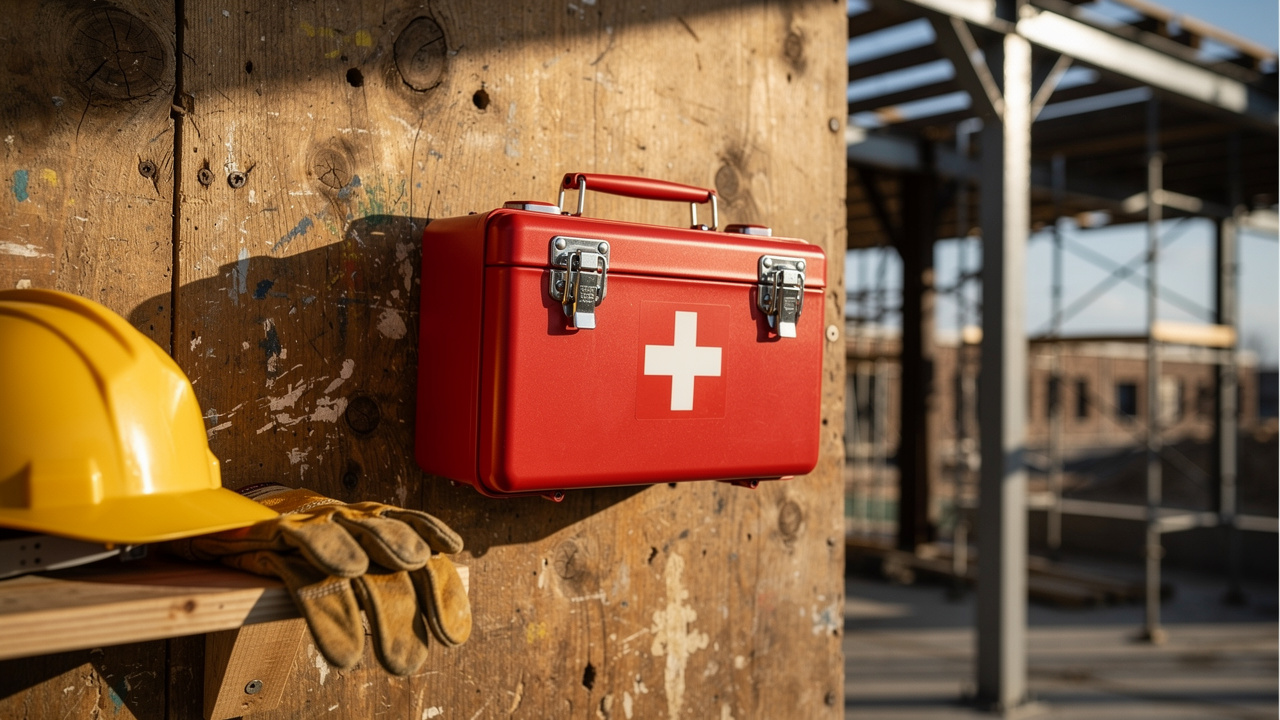
Introduction
The gap between an office kit and a true construction first aid kit is as wide as the gap between a sticky note and a real project plan. Bandages for paper cuts and headache tablets are not enough for saw injuries, rebar punctures, eye damage, burns, or falls from height.
OSHA requires “adequate” and “readily available” medical supplies, and inspectors often look to the ANSI/ISEA Z308.1 standard to decide whether your kits meet that bar. Falling short can mean citations, fines, delays, and preventable harm.
By the end of this guide, you will understand how OSHA and ANSI requirements work, what Class B means, how to build a construction first aid kit checklist that goes beyond the basics, how to keep every kit ready, and how market trends in the First Aid Kit Market are driving innovation in construction safety supplies. You will also see how a partner like First Aid Longs can help you stay stocked, compliant, and confident on every site.
Key Takeaways
Most construction jobs benefit from an ANSI Class B Construction First Aid Kit because of higher-risk injuries such as heavy bleeding, fractures, eye trauma, and burns.
OSHA does not publish a fixed checklist but points to ANSI/ISEA Z308.1. Choosing kits that clearly state “Meets ANSI/ISEA Z308.1-2021” gives your safety team solid footing.
A construction site first aid kit should cover bleeding control, burns, eye injuries, fractures, sprains, minor cuts, and heat stress, not just small bandages.
Kits must be easy to reach within three to four minutes from any work area, never locked, clearly marked, and supported by smaller portable kits in vehicles and remote zones.
A system of scheduled inspections, assigned responsibility, documented checks, and prompt restocking turns a box of supplies into a dependable safety resource.
Supplies work best when paired with first aid and CPR training for supervisors and key workers, including bleeding control skills.
Understanding OSHA Construction First Aid Kit Requirements
OSHA’s construction standard, 29 CFR 1926.50, requires medical attention and first aid to be “readily available” to workers. In practice, that means you either have fast access to a medical facility or you keep properly stocked construction first aid kits on site with trained people ready to use them.
OSHA does not list exact items for a construction kit. Instead, it expects “suitable” supplies that match your hazards. To decide what “suitable” looks like, OSHA staff and many safety professionals rely on ANSI/ISEA Z308.1, so lining up with this standard is your best starting point.
Distance to professional care also matters. If a hospital or clinic is not reasonably close in time, OSHA expects at least one worker with approved first aid training on site. The more remote and hazardous the work, the higher that expectation.
Two myths often cause trouble:
Any box marketed as “OSHA approved” is fine, even if it never mentions ANSI.
One small kit in the job trailer can cover a multi-acre or multi-story project.
Both ideas can lead to citations and higher liability, especially after an incident.
“Adequate first aid supplies shall be readily available.”
— OSHA, 29 CFR 1910.151(b)
During inspections, officers often check whether first aid supplies are easy to find, not expired, and appropriate for the tasks on site. Treating kits as part of your broader safety system is not a one-time purchase sets you up for success.
ANSI Z308.1 Standard: The Blueprint for Compliance
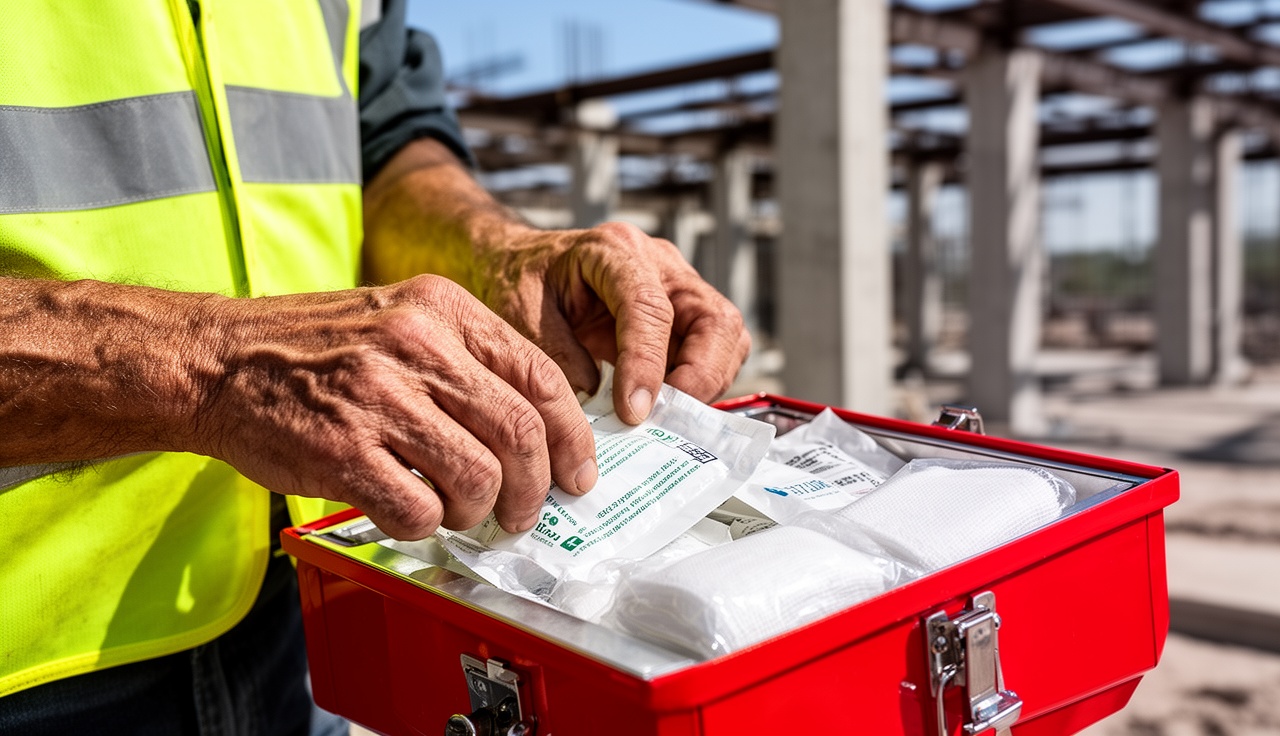
The ANSI/ISEA Z308.1 standard defines the minimum contents for workplace first aid kits and is widely treated as the baseline for compliance. The current version, ANSI/ISEA Z308.1-2021, reflects real injury patterns and modern first aid practices.
While OSHA does not enforce ANSI the way it enforces its own rules, it often references this standard in guidance and enforcement letters. When something goes wrong, a kit that clearly meets the current ANSI standard shows that you followed widely accepted best practice.
Key points:
Kits are divided into Class A and Class B based on risk level.
Item categories include bandages, antiseptics, burn care, eye care, and tools.
Minimum quantities are set so a crew does not run short on a busy day.
The 2021 update put more focus on serious bleeding control and added items like tourniquets and splints for Class B kits.
Use ANSI as a checklist. Compare your existing kits to the standard and close gaps. When purchasing, look for clear wording such as “Meets ANSI/ISEA Z308.1-2021, Class B” on packaging or product pages. Vague language is a red flag.
Class A vs Class B Kits Which Does Your Site Need
ANSI defines two main kit classes:
Class A: For lower-risk workplaces and smaller crews. Focus on minor cuts, scrapes, and brief eye irritation, with modest quantities and limited trauma gear.
Class B: For higher-risk work and larger groups, including most construction sites. Includes a broader mix of bandages and dressings, more generous quantities, a commercial tourniquet, and a splint.
A simple comparison:
Feature | Class A | Class B |
|---|---|---|
Intended Environment | Lower-risk, small crews | Higher-risk, construction & industrial |
Focus | Minor cuts and scrapes | Serious bleeding, fractures, burns, eye injuries |
Trauma Pads / Large Dressings | Fewer, smaller | More, larger |
Tourniquet | Not always included | Required |
Splint | Not always included | Required |
Class B kits assume hazards like falls, heavy equipment, power tools, and sharp materials. For framing, bridge work, demolition, or road crews, Class B is far better aligned with daily reality.
On very small, low-risk jobs (light remodeling with hand tools and fast access to a clinic), a Class A kit might be acceptable, though many safety managers still prefer Class B for extra margin. On larger or spread-out sites, one main Class B station is often backed up by smaller Class A kits in vehicles or remote areas.
Essential Contents of a Construction Site First Aid Kit

A standard office box with a few bandages will not support crews working with grinders, saws, falling objects, and hot work. A proper construction site first aid kit needs stronger items, more of them, and a layout that lets workers reach essentials in seconds.
Think in terms of injury types:
Bleeding (from minor cuts to life-threatening wounds)
Burns (thermal, electrical, chemical)
Eye injuries
Fractures and sprains
Minor cuts and abrasions
Environmental stress (heat and cold)
Crew size and work type shape quantities. A “25-person” kit can be emptied quickly during active phases like concrete pours or demolition. Larger projects often combine kits or start with 50- or 100-person ratings so one busy day does not leave you short.
Remember: compliant and ready are not the same. ANSI is the floor; high-risk work usually calls for extra items such as additional tourniquets, hemostatic gauze, and more burn dressings.
Wound Care and Bleeding Control Supplies

Bleeding control sits at the core of any Construction First Aid Kit. Most calls involve cuts, scrapes, or punctures, and some escalate fast.
Your kit should include:
Adhesive bandages in multiple sizes, favoring heavy-duty fabric styles plus fingertip and knuckle designs.
Sterile gauze pads (2×2, 3×3, 4×4) and roller gauze to build layered pressure dressings.
Trauma pads (5×9 or larger) for major bleeding.
Medical adhesive tape, hypoallergenic and latex-free, that tears cleanly and holds under sweat and dust.
At least one commercial tourniquet approved by current trauma-care guidance, with extra units for higher-risk sites.
Optional hemostatic gauze or clotting dressings on sites where heavy bleeding is a realistic risk.
“The first few minutes after a serious injury often decide the outcome.”
— Common guidance in first aid and trauma training
Antiseptics, Ointments, and Infection Prevention
Dust, dirt, and concrete slurry can drive bacteria deep into wounds. Cleaning injuries properly at the start helps prevent infections and lost work time.
Include:
Antiseptic towelettes, individually wrapped (benzalkonium chloride or alcohol-based).
Single-use antibiotic ointment packets instead of shared tubes.
Hand sanitizer for responders when clean running water is not nearby.
Plenty of nitrile gloves to protect both worker and responder.
Written procedures should remind crews to rinse gently, avoid scrubbing debris deeper, and seek medical care when in doubt.
Burn Care Supplies
Welding, cutting, hot pipes, roofing, asphalt, and electrical work all create frequent burn hazards.
A construction first aid kit should carry:
Sterile burn dressings pre-soaked in cooling gel, in several sizes.
Small burn cream or gel packets for minor burns that do not break the skin.
Extra burn gear (larger dressings, burn blankets, saline for rinsing) where hot work is routine.
Chemical burns require care matched to specific products, so keep material safety data sheets accessible and train workers on the right response.
Eye Care and Protection
Dust, chips, sparks, and splashes put eyes at risk even when PPE is worn correctly.
Include:
Sterile eye wash solution (bottles or single-use pods) to flush out dust, metal flecks, or cement powder.
Sterile eye pads plus conforming gauze or tape to protect injured eyes from light and further contact.
On dusty or chemical-heavy sites, a wall-mounted eye wash station near the work area in addition to kit-based eye wash.
Procedures should stress: no rubbing, flush for several minutes, then cover and seek medical care.
Tools, PPE, and Emergency Equipment
Supplies work best with the right tools and protective gear:
Multiple sizes of nitrile exam gloves
Trauma shears or EMT scissors
Tweezers or forceps for shallow splinters (when safe)
Instant cold packs for sprains, strains, and bruises
A concise first aid guide in the lid of the kit
A flexible splint for suspected fractures
A CPR face shield or mask
An emergency blanket to help manage shock or cold stress
These items protect responders, speed up care, and support more complex scenes.
Selecting the Right Construction First Aid Kit for Your Needs
Choosing a first aid kit for construction is not as simple as grabbing the first “50-person” box on a shelf. You need to consider:
How many people are on site (including subcontractors and visitors)
What they are doing (and which trades are present)
How spread out the work is
How quickly professional help can arrive
Start by counting your peak headcount, not just typical days. Then map your risks: interior remodel versus bridge project, finish carpentry versus demolition or heavy crane work. Your kit should match the highest hazard you regularly face, not the easiest job on the schedule.
Many firms standardize on a strong Class B wall-mounted kit at the main office or trailer, then issue smaller portable kits to foremen or vehicles as the project grows.
Crew Size and Kit Capacity Ratings
Kit packaging often lists “25-person,” “50-person,” or “100-person” ratings based on ANSI guidance. These numbers are rough planning tools, not hard limits.
Real usage varies. A 25-person framing crew may burn through bandages and antiseptics much faster than a 25-person commissioning crew. If you restock constantly, your kit is probably undersized.
Practical tips:
Size up at least one level when you are near the top of a kit’s range.
Count rotating subcontractors as part of your total.
Use a distributed approach on large or multi-level projects: one central Class B Construction First Aid Kit, plus smaller kits in trucks, near loading docks, and on upper floors.
Review capacity during high-activity phases and when headcount changes.
Site-Specific Risk Assessment
A simple risk assessment goes a long way. List your main tasks and ask what injuries they might cause, then check that your kits cover those injuries.
For example:
Welding / Metalwork: burns, eye injury, cuts
→ Extra burn dressings, burn blankets, eye wash, eye pads.Carpentry / Framing: saw cuts, nail punctures, hand injuries
→ More wound care (gauze, trauma pads, strong bandages).Masonry / Demolition: dust, chips, falling debris
→ Extra eye care, cold packs, splints.Electrical Work: electrical burns, arc flash
→ Advanced burn care, strong eye care, clear transfer plans to specialized care.Roofing / Work at Height: falls, major trauma
→ Extra tourniquets, pressure dressings, splints.Concrete / Heavy Equipment: crush injuries, deep lacerations
→ More large trauma dressings, advanced immobilization tools.
Use incident logs and industry data to spot patterns, then adjust stock. Factor in heat, cold, remoteness, and long response times when deciding on add-on modules.
Critical Features of High-Quality Construction First Aid Kits
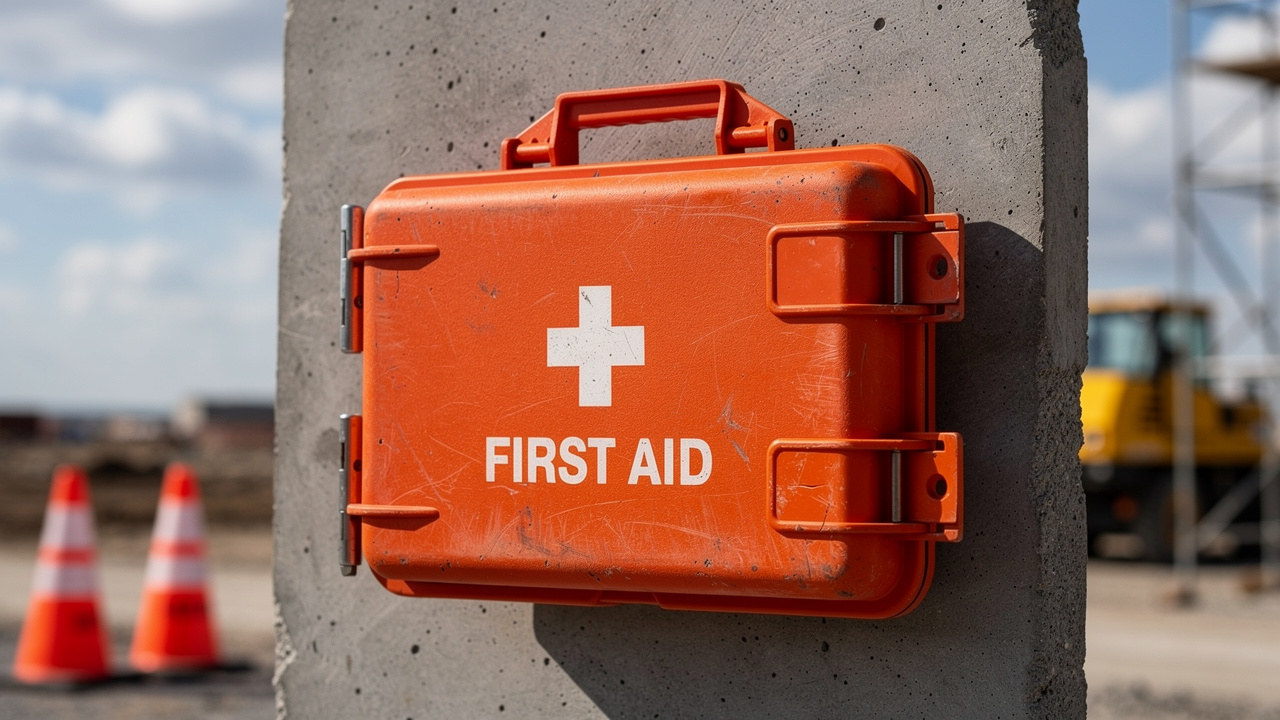
Two kits can list similar contents on paper but perform very differently on site. Construction work brings dust, vibration, and weather; a flimsy office-style box often fails fast.
Look for:
A strong case that keeps out dirt and moisture
A design that keeps items organized and easy to grab
Layouts that support fast inspections and refills
A durable case that survives years of use saves money and keeps contents ready when the pressure is on.
Case Durability and Weather Resistance
On construction sites, the case is the first shield for your supplies. Both metal and high-grade plastic can work well when built for tough conditions.
For metal cases:
Welded seams and full-length hinges
Reinforced corners
Powder-coated finish to resist rust
For plastic cases:
Thick, industrial-grade resin that resists cracking and warping
Tight-closing rims, often with a gasket for a weather-resistant seal
Whatever the material, the goal is to keep out moisture, dust, and grime that can damage sterile packaging or paper instructions. Test hinges and latches; if they already feel weak in your hands, they will not stand up to daily job site abuse.
Mounting Options and Portability
Placement affects how well kits serve your crews.
Look for:
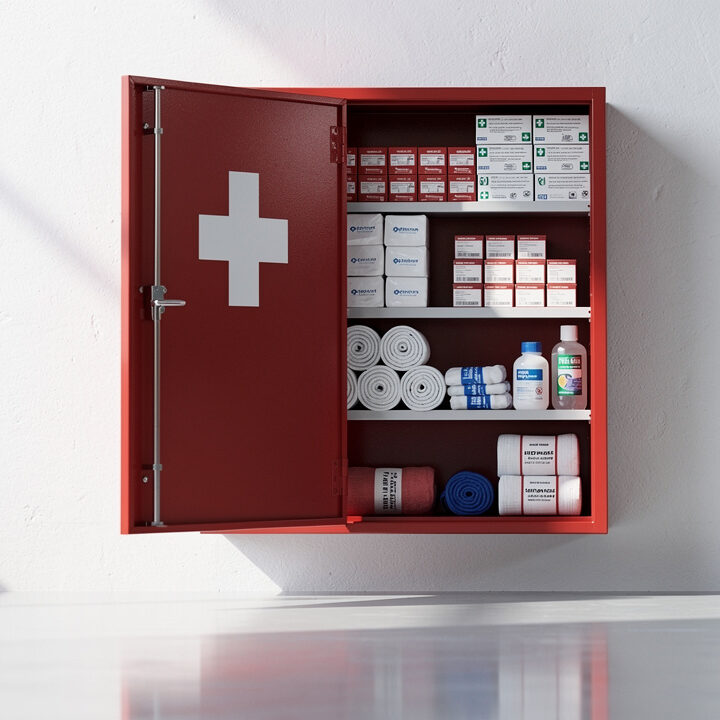
Wall-mounting hardware or pre-drilled holes for stable installation in offices, trailers, and workshops.
Mounting height that workers of different sizes can reach easily.
A sturdy carry handle and latches that stay closed during transport in trucks or lifts.
Many companies prefer hybrid designs that hang on a wall bracket but lift off quickly when responders need to bring the kit to the injured worker.
Internal Organization and Ease of Access
Even the best case and contents fall short if everything inside is a jumble. Under stress, workers should open a Construction First Aid Kit and spot gloves, major dressings, and key tools immediately.
Look for:
Shelves, dividers, or trays that separate bleeding, burns, eye care, and tools
Clear pockets or bins that make missing items obvious
Critical supplies (gloves, trauma pads, tourniquets, scissors) near the front or on the lid
Door organizers with elastic loops or small pockets for tweezers, pens, and small packets
Simple labels like “Bleeding,” “Burns,” and “Eye Care,” possibly with icons, help mixed-language crews work together quickly.
“The best first aid kit is the one your crew can find and use in under a minute.”
— Common saying in safety training
Where to Source Your Construction First Aid Kits
Once you know what your construction site first aid kit should contain, you need to decide where to buy it. Your options usually include:
Large online marketplaces
Big-box home improvement retailers
Specialized safety and first aid suppliers
Industrial / MRO distributors
Whichever channel you choose, you are responsible for confirming that kits meet OSHA expectations and the latest ANSI/ISEA Z308.1 standard.
Online Marketplaces
Online marketplaces offer wide selection and quick comparisons. You can:
View photos of cases and layouts
Read reviews from other contractors
Compare prices and shipping times
Watch for:
Clear statements such as “Meets ANSI/ISEA Z308.1-2021, Class B”
Seller ratings and reviews from industrial or construction users
Comments on case strength and weather performance
Avoid kits described only as “OSHA compliant” without any ANSI details.
Big-Box Home Improvement Retailers
Home improvement chains let you:
Inspect kits in person before buying
Check case quality, latches, and mounting options
Read labels for ANSI Class A or B markings
Selections are smaller than online but often cover common needs for small to mid-sized contractors. Return policies and staff support are helpful if a kit arrives damaged or not as expected.
Specialized Safety and First Aid Suppliers
Specialized suppliers focus on safety gear and medical consumables. Advantages include:
Kits designed specifically for construction, welding, electrical work, and more
Detailed documentation on ANSI and OSHA alignment
Refill packs and add-on modules (trauma, burns, eye care)
These suppliers are good partners when you want to go beyond minimum compliance and standardize kits across multiple sites.
Industrial and MRO Suppliers
Industrial and MRO distributors serve companies that buy in volume and manage fleets, plants, or multiple projects.
They typically offer:
Contract pricing and consolidated billing
Wide ranges of Construction First Aid Kits, eye wash stations, AEDs, and PPE
Account reps who learn your standards
Websites and catalogs can be dense, so a short planning call with an account manager often pays off when you are outfitting many crews at once.
Customizing Your Kit for Specialized Construction Hazards
ANSI-compliant kits give you a strong baseline, but each site has its own risks, and research on First Aid Monitoring Kits shows growing demand for specialized kits that address industry-specific hazards. You may need to customize your kits with trade-specific or project-specific items.
Start with your highest-risk tasks. Ask:
Which injuries could be life-threatening or disabling?
Would the current kit handle those injuries until EMS arrives?
How long might it take for professional help to reach the site?
If there is a gap, that is your cue to add targeted supplies. Document these decisions in your risk assessment so future teams understand why those items matter.
Trade-Specific Supplemental Supplies
Different trades bring different injury profiles. Consider these add-ons:
Welding / Metal Fabrication
Extra burn dressings and gel blankets
More eye wash and sterile eye pads
PPE for rescuers handling hot debris
Electrical Work
Additional advanced burn care
Clear instructions not to apply ointments to severe burns
Strong eye care for arc flash exposure
Roofing / Tower / At-Height Work
Extra trauma dressings and splints
Multiple tourniquets and pressure bandages
Demolition / Concrete / Trenching
Extra eye wash and respiratory protection for responders
Large trauma pads for crush or impact injuries
Supplies for managing trapped-limb scenarios where policy allows
Match quantities to crew size and risk level, and review at least annually.
Remote Site and High-Risk Environment Considerations
Remote projects raise the stakes. When help is 30 minutes or more away, your on-site capabilities matter much more.
For these projects, consider:
Advanced hemorrhage control: extra tourniquets, hemostatic gauze, pressure dressings
Additional trauma tools: trauma shears, chest seals, airway aids (where allowed and with proper training)
Reliable communication: satellite phones, radios, or emergency beacons if cell coverage is weak
Environmental gear:
Cold regions: extra blankets, head coverings
Hot climates: electrolyte packets, cooling towels
Rural/wild areas: snake bite or sting treatments if local risks warrant
An AED near your main first aid station is a wise consideration on large or remote sites with older or higher-risk crews.
First Aid Longs Your Partner in Construction Site Safety
For many firms, the hard part is not writing a checklist; it is finding a medical supply partner that keeps up with standards, timelines, and growth. First Aid Longs was built to fill that role.
First Aid Longs focuses on medical supplies and consumables for business and industrial clients, including construction, manufacturing, warehousing, and healthcare. With in-house manufacturing and 100K Class cleanroom facilities, they control product quality from raw material to finished item, which supports consistent performance and cost control.
Because they offer OEM and ODM services with low minimums, First Aid Longs can help you design construction site first aid kits that match your internal standards for contents, labeling, and packaging. Instead of accepting “almost right” off-the-shelf kits, you can align contents with your own construction first aid kit checklist.
Their work with a broad client base gives them insight into supply chain issues, stocking strategies, and cost management. For you, that can translate into:
Reliable access to refill items
Predictable lead times
Steady support so you do not run out of trauma pads, tourniquets, or other critical items
Whether you manage a few regional jobs or a national portfolio, a quality-focused partner like First Aid Longs can simplify restocking and strengthen readiness across your sites.
Strategic Placement and Accessibility Best Practices
A fully stocked Construction First Aid Kit is only helpful if workers can reach it fast. Aim for first aid supplies to be reachable from any normal work area within three to four minutes.
Practical steps:
Place a primary kit in a central, visible location such as the job trailer or site office wall.
Mount it at a height most workers can reach without strain.
Keep the area clear no stacked boxes, tools, or personal items blocking access.
Never store the main kit in a locked office, truck, or container that only one person can open.
Post clear signs (and cover location during orientations) so everyone knows where kits are.
Large or vertical projects need multiple kits:
Main Class B station in the trailer or office
Portable kits in foremen’s vehicles
Kits on upper floors and near stair towers or elevators
Satellite kits that move with crews working in remote corners of the project
Outdoor kits should have weather-resistant cases and, when possible, some shelter from sun and rain. Simple tamper seals and basic logs near each kit help balance accessibility with theft control.
Post emergency instructions near every kit, listing:
911 and local emergency numbers
Site address or GPS coordinates
Internal radio channels
Key contacts
Review and adjust placements as site layouts, access routes, and work zones change.
Maintenance, Inspection, and Restocking Protocols
Buying a construction first aid kit is the easy part. Keeping it full, in-date, and ready requires a simple but consistent system.
An effective program:
Assigns clear responsibility for each kit.
Follows a regular inspection schedule.
Uses a straightforward restocking process and documents what was done.
Ignoring expiration dates, assuming “someone” will refill supplies, or failing to keep records often becomes a problem during inspections or after an injury.
Establishing Responsibility and Inspection Schedules
Every active site should have a named person in charge of kits, often the safety officer or a foreman.
Their duties:
Inspect each kit weekly on busy projects.
Confirm required items (bandages, gauze, trauma pads, burn care, antiseptics, gloves) are present, sealed, and in good condition.
Check that tools (scissors, tweezers, CPR shield, splint) are still there and functional.
Look for damage to the case, hinges, latches, or mounting hardware.
Once a month, review expiration dates, especially on antiseptics, ointments, burn gels, and some sterile dressings.
Record each inspection in a simple log (paper or digital) with date, name, findings, and actions. These records are valuable during audits and investigations.
Immediate Restocking and Refill Systems
Restock immediately after any use, not “when you get around to it.” The next injury might need exactly what was used last time.
Good practices:
Keep a small reserve stock of high-use items (bandages, gauze, wipes, gloves) on site.
Use a brief usage log near each kit, or require workers to tell the responsible person when they take items.
Set reorder points (for example, when only one unopened box of an item remains in reserve).
Work with a consistent supplier such as First Aid Longs so you do not have to re-evaluate contents with every order.
Treat refills as a recurring operating cost. Buying common items in bulk often lowers cost and simplifies stocking across multiple sites. Once a year, consider a full review or replacement of heavily used or older kits.
Training Your Team From Supplies to Skills
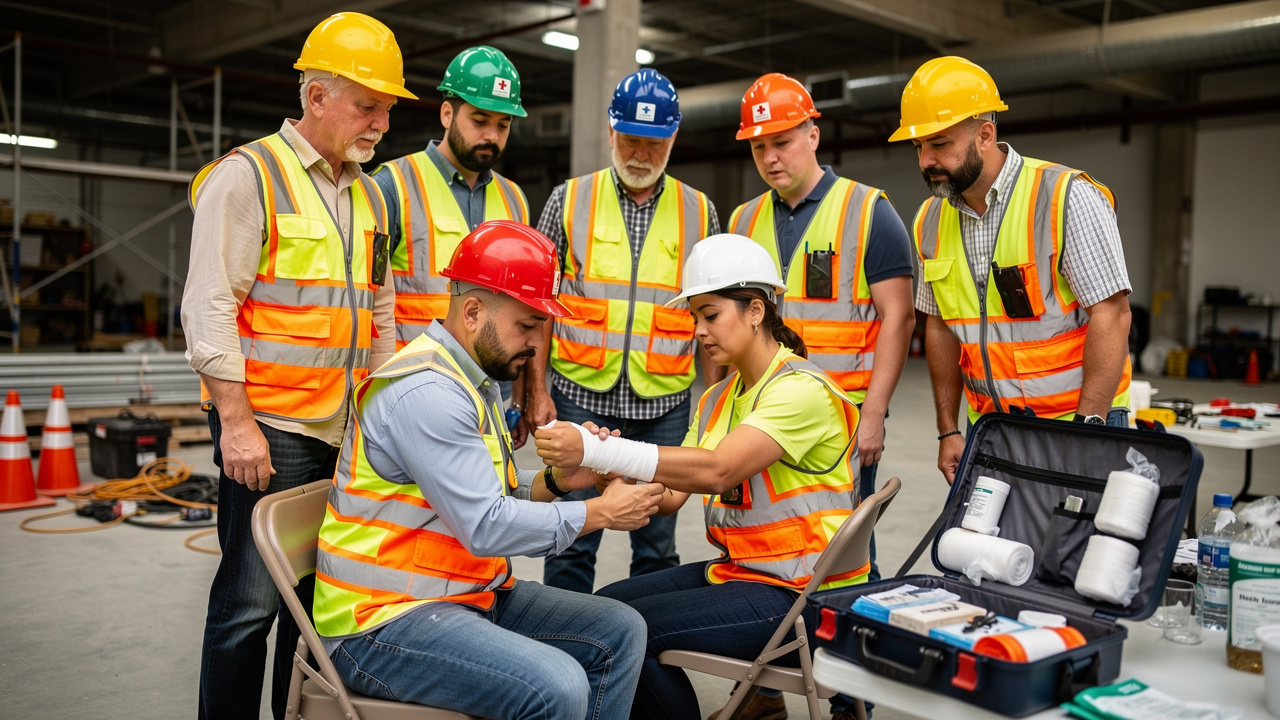
A Construction First Aid Kit packed with advanced gear does little good if no one knows how to use it. Skills and confidence turn equipment into real protection.
When medical care is not close, OSHA expects at least one trained person on site. For construction, it is wise to have supervisors and foremen trained in:
Basic First Aid
CPR and AED use
Bleeding control (for example, Stop the Bleed-style training)
For safety officers and lead responders, more advanced occupational first aid or wilderness first aid courses can be valuable, especially on remote sites.
Training should:
Include hands-on practice with the same tourniquets, dressings, and tools found in your kits.
Be refreshed every 2–3 years (or sooner, based on certification).
Be documented, with records of attendees, dates, and course types.
Offer support for different languages where needed, through translated materials or bilingual instruction.
Regular drills that combine first aid response with communication and evacuation plans help crews perform under pressure.
Common Mistakes to Avoid in Construction First Aid Preparedness
Many well-meaning programs stumble over the same issues. Watch out for these:
Mistake 1: Using office-grade kits on construction sites.
Office kits are built for paper cuts, not saw injuries or falls. Use ANSI Class B kits designed for industrial and construction work.Mistake 2: Locking kits in vehicles or offices.
If workers need keys or badges during an emergency, minutes can be lost. Keep kits in open, clearly marked, always-accessible spots.Mistake 3: Treating first aid as a “set and forget” purchase.
Without inspections and refills, kits empty and items expire. A simple schedule and assigned responsibility fix this.Mistake 4: Relying on a single kit for large or spread-out sites.
One box in the trailer is not enough for multi-acre or multi-story projects. Use multiple kits so help is never far away.Mistake 5: Ignoring trade-specific hazards.
Welding, roofing, demolition, and electrical work each need targeted supplies. Add trade-specific items based on your risk assessment.Mistake 6: Stocking advanced gear without training.
Tourniquets, hemostatic gauze, and chest seals require practice. Train several people on each site so these tools do not sit unused.Mistake 7: Failing to document maintenance and training.
During audits or legal reviews, “we did it” is weaker than “here are the records.” Logs and training files protect both workers and the company.Mistake 8: Leaving kits exposed to harsh weather and damage.
Cases that crack, rust, or take on water can ruin contents. Choose weather-worthy cases and place them where they have some basic protection.
Secure Reliable First Aid Kit Supplies Today!
Explore our first aid kits designed to reduce delays and stabilize your healthcare operations.
Conclusion
Construction work carries real risks: saws, lifts, welding arcs, heavy materials, and work at height all create injury types that simple office kits cannot handle. Meeting those risks is both a legal requirement and a moral obligation.
Using ANSI-standard Class B Construction First Aid Kits as your foundation lines up your program with OSHA expectations and accepted practice. From there, the strongest programs rest on three pillars:
Proper supplies that match your tasks and hazards
Smart placement so kits are easy to reach from any part of the site
Trained people who know how to use what is in the box
Choosing the right kits, customizing them based on a real risk assessment, and working with reliable suppliers such as First Aid Longs gives you a strong base. Regular inspections, prompt restocking, documentation, and ongoing training keep that base solid.
Take time to walk your sites, open your kits, and compare what you see with the guidance in this article. Close any gaps you find. The effort you invest in first aid preparedness pays you back through fewer injuries, less downtime, and the knowledge that your crews are as well protected as practical planning can make them.
.


