Introduction
Every January, people promise themselves big changes, yet research shows that most resolutions fade within a few weeks. Good intentions are not enough without a clear plan and regular follow-through. Workplace safety often follows the same pattern, especially when it comes to first aid kit expiration and maintenance.
Many teams buy a wall cabinet or portable kit, mount it, and then forget it. Reviews of workplace safety audits based on OSHA guidance show that a large share of inspections find expired or missing supplies. Some reports suggest that around seven out of ten workplace first aid kits contain at least one expired item, and close to four in ten have supplies that are two or more years past their marked date. That gap turns into a real risk when someone is bleeding, burned, or struggling to see after a chemical splash.
The problem often starts with a myth that first aid kits do not really expire, or that they are “good enough” as long as there is something inside. In practice, degraded adhesives, dried-out wipes, and out-of-date medications can fail when they are needed most. That can mean infections that should have been avoided, delayed healing, preventable hospital visits, and questions during OSHA or insurance investigations.
“First aid isn’t about the box on the wall; it’s about what still works when someone is hurt.”
This guide speaks directly to operations managers, facility leaders, health and safety officers, and business owners who carry legal and moral responsibility for staff safety. You will see how and why first aid supplies break down, what first aid kit expiration dates really mean, how to inspect kits in a systematic way, how to replace items cost-effectively, and how to stay aligned with OSHA and ANSI standards.
By the end, you will have a clear, practical plan to keep first aid kits current, compliant, and ready to perform when seconds matter.
Key Takeaways
Before getting into details, it helps to see the big picture of what a strong first aid supply program looks like. Many organizations already have the right intent; they only need a simple structure and reliable partners to turn intent into action.
First aid kits do not expire as a single unit, but the items inside absolutely do. Adhesives dry out, chemicals break down, and sterile packaging fails over time. Treat first aid kit expiration as a rolling process tied to each component, not as a one-time date stamped on the box.
Some items become useless or even unsafe past their expiration dates, while others only lose performance. Medications, ointments, sterile dressings, eyewash, and AED pads belong in the high‑risk group and must always be in date. Bandages, tape, and tools are lower risk but still need regular checks so they work when needed.
A written inspection and restocking schedule turns guesswork into a repeatable process. When you inspect kits on a set timetable, document findings, and replace items promptly, you protect staff, reduce liability, and avoid OSHA issues. This is especially important for multi-site operations and high‑risk workplaces.
Smart replacement strategies save money over time. Combining pre-packed refills, targeted individual items, and, where needed, managed first aid services lets you control costs while keeping every kit compliant and fully stocked. High-quality manufacturers such as First Aid Longs help by providing consistent, reliable supplies that match your standards.
Strong first aid programs combine three elements that support each other: you track first aid kit expiration, you store and manage supplies correctly, and you train staff to use those supplies under pressure. When all three are in place, you have a safety net that protects both people and the business.
Do First Aid Kits Expire? Understanding Supply Degradation

When people ask, “Can first aid kits expire?” the honest answer is both yes and no. The plastic box or metal cabinet does not expire, but the items inside do. A kit is really a bundle of small medical products, each with its own shelf life, storage needs, and failure points.
Manufacturers often give a three‑to‑five‑year guideline for a complete kit, but that date is just a rough planning number. The real first aid kit expiration status depends on the earliest expiring item inside and on how the kit has been stored and used. One dried-out wipe or rusted pair of scissors can limit what the kit can do when a worker needs help.
It makes more sense to view a kit this way: it is only as reliable as its most compromised component. Three main processes cause that compromise over time:
Chemical breakdown of active ingredients
Loss of sterility in packaged supplies
Physical degradation of materials
Understanding these processes helps you build better inspection and replacement habits.
Chemical Breakdown of Active Ingredients
Many high‑value items in a kit rely on active chemicals to do their job. Antiseptic wipes, alcohol wipes, antibiotic ointments, burn creams, hydrocortisone packets, and pain relievers all depend on stable chemical bonds. Over time, heat, light, and age break those bonds and reduce product strength.
Volatile ingredients such as isopropyl alcohol can slowly evaporate even while packets remain sealed. That is why an expired alcohol or antiseptic wipe often feels dry or barely damp. Instead of cleaning a wound, it may simply move dirt across the skin and give a false sense of cleanliness. Expired antibiotic ointments and pain relievers can lose the strength they need to prevent infection or ease discomfort, so a cut that should have healed quickly can become swollen, painful, or infected.
Loss of Sterility in Packaged Supplies
Sterility is vital for anything that touches an open wound or a sensitive area, such as the eye. Gauze pads, sterile bandages, eye pads, and certain compresses are processed and sealed to remove bacteria, fungi, and other microorganisms. The only thing that keeps those items safe is the integrity of their packaging.
Over time, seals can weaken, and tiny gaps can form along the edges. Moisture, dust, and air can work their way in when a kit lives in a humid warehouse, a hot vehicle, or a dusty workshop. A wrapper may also tear or puncture during normal handling without anyone noticing. Even a microscopic breach is enough to end sterility, which means that the item should never touch an open wound again. This is especially important for eye-related supplies, where any contamination can lead to serious infection and even vision loss.
Physical Degradation of Materials
Even when chemicals and sterility hold up, plain physical wear can ruin a product. Adhesives on bandages and tape dry out and lose their grip, so dressings peel off too soon, and wounds stay exposed. Elastic bandages lose stretch and no longer give the compression needed to support a sprain or hold gauze in place.
Gloves made from latex, nitrile, or vinyl slowly break down when they face oxygen, light, and temperature swings. They can become brittle or sticky and develop tiny tears that defeat the barrier they are supposed to provide. Instant cold packs may no longer activate correctly after years on a shelf, and metal tools can rust or corrode in humid areas. All of this can happen before the printed expiration date if storage conditions are poor.
First Aid Kit Expiration Dates And Shelf Life By Supply Type
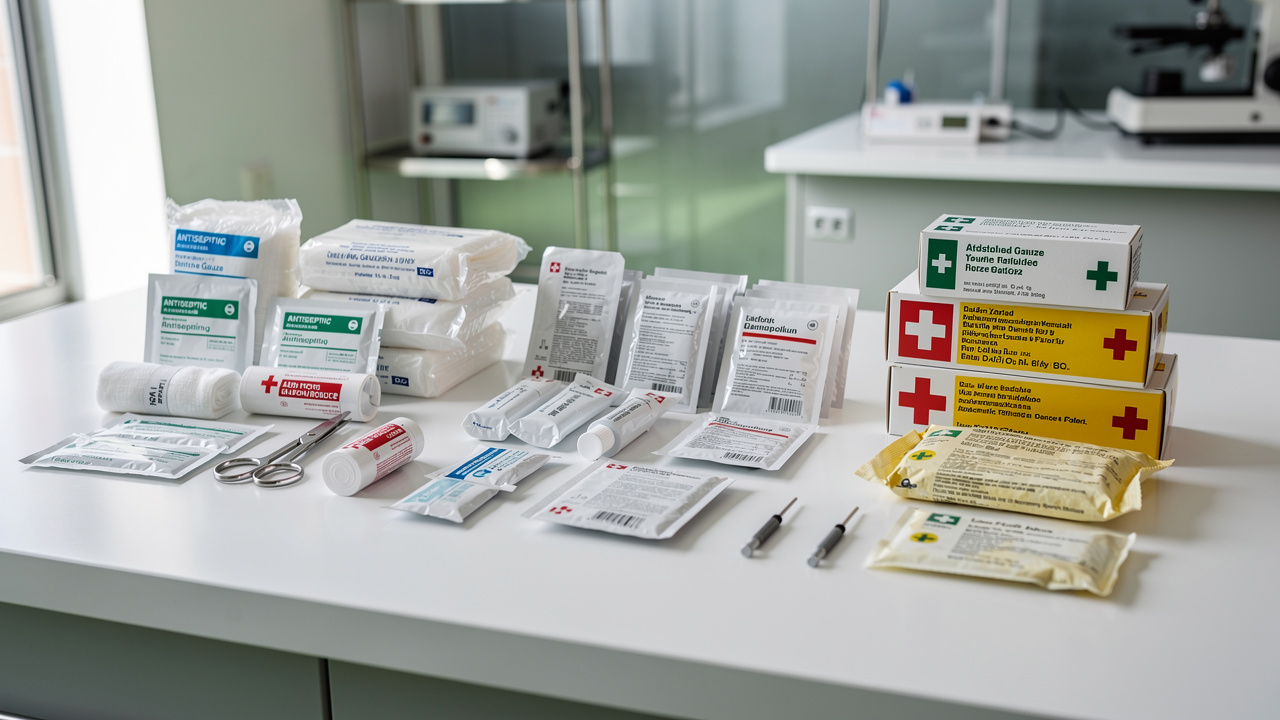
To manage first aid kit expiration dates effectively, it helps to know how long common items usually last. Manufacturer dates always come first, but general ranges give you a starting point for planning replacements and budgets. Good storage extends these ranges; harsh storage shortens them.
A quick overview:
Shelf Life Category | Typical Range | Common Examples | Key Inspection Focus |
|---|---|---|---|
Long | 5+ years | Gauze, adhesive bandages, tape, non-latex gloves, tools, emergency blankets | Packaging damage, adhesive strength, and rust |
Medium | 3–5 years | Hand sanitizer, sterile eyewash, elastic bandages, CPR barriers | Seal integrity, brittleness, cloudiness |
Short | 2–3 years | Antiseptic wipes, alcohol wipes, ointments, burn creams, pain relievers | Dry packets, separation, color or texture changes |
Critical Short | 2–3 years (often) | AED pads, some hemostatic dressings, and advanced gels | Printed date, packaging, and any signs of drying |
The sections below add more detail for each group.
Long Shelf Life Items (5+ Years)
Many non‑medicated, non‑liquid items can remain useful for five years or more when stored well. Adhesive bandages and gauze are classic examples. Plastic or cloth strip bandages, gauze pads, and gauze rolls often stay structurally sound for a long time, but their adhesives and sterile wrappers are the weak spots. When bandages are more than about five years old, their stickiness often declines enough that replacement makes sense even if the fabric looks fine. Any gauze with a torn, stained, or brittle wrapper is no longer sterile and should not touch open skin.
Medical adhesive tape usually has a similar long shelf life, but it also loses tack over the years. Compresses, triangular bandages, and eye pads are made from stable fabrics, so their main risk lies in damaged sterile packaging. Non‑latex gloves made from nitrile or vinyl resist aging better than latex, yet they still become stiff and prone to tears after long storage or heat exposure.
Tools such as scissors, tweezers, and forceps do not have formal expiration dates, but they need regular inspection for rust, corrosion, misalignment, or dull edges. Instant cold packs can often sit for five years or more, yet their inner pouches and chemicals can fail over time, so a quick check is wise. Emergency blankets tend to last for many years if their packets stay sealed and free from rips.
Medium Shelf Life Items (3–5 Years)
Some items bridge the gap between long‑lived bandages and short‑lived medications. Hand sanitizer usually remains effective for about four to five years, depending on the alcohol content. As alcohol slowly evaporates, the strength can drop below the roughly 60% level needed to kill common germs.
Sterile eyewash solutions often have a three‑year shelf life. These need close attention, because any loss of sterility turns them from a safety aid into a hazard. Elastic bandages usually fall in the three‑to‑five‑year range; beyond that, they lose stretch and provide weak support. CPR breathing barriers, especially those with clear plastic films and valves, can become brittle or cracked over several years, so they need periodic replacement even if never used.
Short Shelf Life Items (2–3 Years)
Many of the most active healing and cleaning products sit in the two‑to‑three‑year window. Antiseptic and alcohol wipes often have about a two‑year life. The packaging can develop tiny openings that let alcohol escape, leaving wipes dry and useless for disinfection. An easy test during inspection is to gently squeeze a packet; if it feels flat or stiff, it probably lost its moisture.
Antibiotic ointments, burn creams, hydrocortisone creams, and general first aid creams also tend to last about two years. After that, their active ingredients break down and no longer provide the promised protection or relief. Medicated burn bandages with gels or active compounds follow a similar pattern. Individual packets of aspirin and other pain relievers often list two‑to‑three‑year expiration dates. Past that, the medicine may not relieve pain as expected, which can delay proper treatment decisions.
Critical Short Shelf Life Items Requiring Priority Monitoring
A few items deserve special attention because they sit at the heart of life‑saving care. AED pads usually last only two to three years. The conductive gel on the pads dries out with time, which prevents good contact with the chest and weakens or blocks the shock. Hemostatic dressings and other advanced clotting agents typically have three‑to‑five‑year dates that vary by manufacturer. Since these items play big roles in severe emergencies, they should sit at the top of your tracking list and receive early replacement.
Can You Use An Expired First Aid Kit? Risk Assessment
Many managers only seriously think about expiration dates when they open a cabinet during an incident and notice items are out of date. That moment raises a very real question: can you use an expired first aid kit at all, or does every expired item have to go straight into the trash? The answer depends on context.
In personal or home settings, some people accept higher risk and use certain items past their dates, though research on the use of expired resuscitation medications shows that effectiveness can vary significantly depending on the specific product and storage conditions. In a workplace, however, the bar is much higher. You have a duty of care to staff, OSHA inspectors expect “adequate” supplies, and attorneys will look closely at your decisions if something goes wrong. The safest and most defensible policy is to keep workplace kits free of expired items.
That said, severe emergencies sometimes offer only bad choices. When help cannot wait and there are no fresh supplies nearby, you may need to make a judgment call. In those rare situations, it helps to know which expired items pose a lower risk and which ones you should never use in a professional setting.
Lower-Risk Expired Supplies (Use Only If No Alternative Exists)
Some expired items are more likely to underperform than to cause direct harm, as systematic reviews examining the use of expired medications in emergency situations have documented varying levels of retained potency, for example:
Adhesive bandages and tape that simply lose stickiness
Non‑sterile items used only as outer padding or for cleanup
Instant cold packs that chill poorly but do not injure the skin
Tools such as scissors or tweezers that still function and show no rust
These may help in a last‑resort situation, but should never remain in service once discovered. Any use should trigger prompt replacement orders rather than becoming a standing practice.
High-Risk Expired Supplies (Never Use In Professional Settings)
Other categories demand a zero‑tolerance policy in workplaces:
Any sterile supply with torn, stained, or unsealed packaging (gauze pads, sterile compresses, eye pads)
All medications and topical drugs past their printed date (oral pain relievers, antibiotic ointments, hydrocortisone creams, burn gels)
Eye‑related products, such as eyewash or eye drops, with expired or compromised seals
AED pads beyond their printed date or with dried gel
Expired breathing barriers with cracks or weak valves
Once any of these fail inspection, they belong in the discard pile, not back in your active kits.
Documentation and Liability Considerations
From a legal and regulatory view, using expired supplies creates serious exposure. OSHA inspectors can treat out‑of‑date or ineffective items as a sign that your first aid provisions are not “adequate,” which opens the door to citations and fines. After an incident, workers’ compensation carriers and lawyers may ask for inspection logs and stock records to see whether you kept kits current.
A well‑documented inspection and replacement program shows that you took reasonable steps to protect employees. Compared with the cost of even one legal dispute or serious infection, the price of replacing expired items on schedule is very small.
Beyond Expiration Dates And Additional Reasons To Update First Aid Kits
Printed dates are only one part of first aid readiness. A kit can look “in date” on paper and still fail in practice if items are damaged, outdated, or used up. Thinking beyond first aid kit expiration helps you avoid hidden gaps that appear only when someone reaches for a supply and finds an empty spot or a broken tool.
Three extra factors tend to undermine kits over time:
Physical wear and poor storage
Changes in medical guidance and product design
Regular use during small incidents and training
Physical Wear, Damage, and Storage Conditions
Frequent handling and movement put steady stress on supplies, even if they are still inside their date range. Scissors may become dull from cutting heavy clothing or packaging. Tweezers can bend out of alignment and lose their grip on small objects such as splinters or glass. Elastic bandages can stretch out so far that they no longer rebound, and gloves can pick up tiny tears when they rub against sharp edges inside a crowded cabinet.
Storage conditions add another layer of stress. High humidity inside warehouses, kitchens, or locker rooms encourages mold growth on fabrics and speeds up rust on metal tools. Heat and direct sun, especially in vehicles or near windows, can dry out adhesives, warp plastics, and accelerate chemical breakdown in wipes and creams. The kit container matters as well; cracks in plastic cases, rusted hinges on metal cabinets, or broken latches all let dust and moisture inside. Best practice calls for a cool, dry, climate‑controlled spot that still allows quick access during emergencies.
Evolving First Aid Best Practices and New Products
First aid is not a static field. Training guidelines and recommended supplies change as researchers learn more about wound care and emergency response. For example, older kits often focused on alcohol or hydrogen peroxide wipes for cleaning wounds. Modern guidance leans more toward gentle irrigation with saline or clean water, because harsh chemicals can damage healthy tissue.
Product design moves just as quickly. Hemostatic dressings that help blood clot faster now play an important role in high‑risk settings such as construction, manufacturing, and security work. Newer CPR barriers offer better seals and one‑way valves that improve both safety and effectiveness. Advanced burn dressings with hydrogels provide better cooling and protection for thermal injuries. A kit that was state‑of‑the‑art five or six years ago may still meet minimum rules, yet fall short of what modern products can provide.
Supply Depletion Through Use and Training
The simplest way a kit fails is when items get used and no one replaces them. Staff grab bandages for small cuts, take pain relievers for headaches, or use a cold pack on a sprain, then close the cabinet and move on. If no one records that use, the next person who needs care may find an empty box.
Training can quietly drain supplies as well. Safety drills, first aid classes, and CPR practice often rely on real items from workplace kits, especially in smaller organizations. Unless you keep a separate training kit or perform a careful stock check after each session, your primary kits can fall below safe levels without anyone noticing. A simple incident report or supply use log, combined with a culture that values reporting, prevents that surprise during a real emergency.
How To Tell If First Aid Kit Is Expired With A Systematic Inspection Process

Typing “how to tell if a first aid kit is expired” into a search bar is a common step for new safety officers and facility managers. The real answer is not a single date, but a repeatable inspection process that looks at containers, contents, and documentation. When this process is written down, assigned, and scheduled, you no longer depend on memory or good luck.
Think of inspections as a core part of your safety system, alongside fire drills and equipment checks. A structured approach keeps every kit aligned with first aid kit expiration dates, regulatory standards, and real‑world needs.
Establishing Your Inspection Schedule
The right inspection schedule depends on both risk level and usage, but clear starting points work for most workplaces:
Monthly inspections: Construction, manufacturing, warehouses, busy gyms, and other high‑risk or high‑use settings
Quarterly inspections: Offices, retail spaces, and service centers with moderate risk
Annual full audit (minimum): Every workplace, regardless of size or industry
Inspections should also occur before special events or high‑risk activities, such as shutdown maintenance, large conferences, or seasonal peaks. Assign responsibility in writing to a specific role, like a health and safety officer, facility manager, or trained first aid attendant. Calendar reminders and entries in work order systems keep the schedule on track, and recording the inspector’s name and date on a log shows that checks actually took place.
Step 1: Container and Accessibility Assessment
Start with the outside of the kit before looking at any supplies. Check for cracks, dents, rust, or other physical damage that could expose contents to dust or moisture. Open and close the door or lid to verify that hinges and latches work smoothly and form a solid seal.
Confirm that the kit is clearly labeled as “First Aid” and that any wall‑mounting hardware holds it securely. Look at the area around the kit to make sure boxes, furniture, or equipment do not block quick access. If the cabinet is dusty or dirty, wipe it down so staff can easily spot and reach it during an emergency.
Step 2: Complete Content Removal and Organization
Next, empty the kit completely. Every item should come out, even if it looks fine at first glance. Lay all contents on a clean, flat surface under good lighting so you have a full view of what you actually have.
Group items by function, such as bleeding control, burn care, medications, tools, personal protective equipment, and splints or supports. This organization makes inspection easier now and helps staff find items faster during a crisis.
Step 3: Expiration Date Verification
With items organized, check every printed date. Pick up each product that carries an expiration date, such as ointments, creams, wipes, oral medications, sterile dressings, eyewash bottles, AED pads, breathing barriers, and hand sanitizer. Read the date carefully and do not assume that boxes and their inner packets share the same date.
Create one group for in‑date items and another for expired or soon‑to‑expire products. Anything that will expire before the next planned inspection belongs in the replacement pile. At the same time, update an expiration tracking log (spreadsheet or simple form kept with the kit). Record each item name, quantity, and date, then highlight the earliest upcoming expiration so you know what to watch.
Step 4: Physical Condition and Packaging Integrity Check
Dates alone do not tell the full story, so inspect the physical condition of every item. For packaged sterile supplies, look closely for tears, pinholes, stains, water marks, or discolored seals. Flex the wrapper gently; if it feels brittle or cracks along the edges, its sterility is doubtful, and it should move to the discard pile.
For wipes and liquid packets, squeeze them lightly to confirm that they still contain fluid and have not dried out. Tubes of ointment should be free of leaks, crusted tips, or signs of separation inside. Open one pair of gloves and stretch them to check for tackiness, brittleness, or small tears. Test scissors by cutting through a bandage and see whether they open and close smoothly. Make sure tweezer tips align well and grip small objects. Stretch elastic bandages to see if they spring back. For cold packs, feel for a solid inner pouch and check that the outer packaging shows no crystals or wet spots.
Step 5: Container Cleaning and Restocking
Once you finish inspecting items, turn your attention back to the empty container. Wipe the inside with a clean cloth, and if appropriate, a mild disinfectant. Remove any dust, bits of paper, or residue from past leaks.
Allow the interior to dry fully before restocking. Place in‑date, undamaged supplies back into the kit in an organized layout that matches your groupings from earlier. Keep items used most often, such as bandages and gloves, in the most accessible spots. Simple labels or section markings can help staff move straight to the right area in a stressful moment.
Step 6: Creating Your Replacement List and Restocking
Finally, compile a clear replacement list based on the expired and damaged items you set aside. Mark which ones are already out of date and which ones will expire before the next planned inspection. Compare your list against the ANSI/ISEA Z308.1 standard and any internal company requirements to see whether any classes of items are missing or understocked.
Decide whether to use pre‑packed refill kits, individual items, or a mix, depending on your strategy. Place orders quickly so gaps do not linger, and note the order date on your inspection log. When new supplies arrive, add them to the kit, update the inventory, and adjust your tracking log with the fresh expiration dates.
First Aid Supply Replacement With Refill Strategies and Best Practices

Once you know the state of your kits, the next challenge is how to refill them in a way that supports both safety and budget goals. Some workplaces only replace items after a problem appears, but that reactive pattern often leads to last‑minute scrambles and rushed purchases. A simple, planned approach gives you better control over costs, stock levels, and first aid kit expiration.
Most organizations blend three main methods:
Pre‑packaged refills for common items
Individual product purchasing for fine‑tuned control
Managed first aid services for full outsourcing
A strong manufacturing partner such as First Aid Longs fits into any of these methods by providing consistent quality and flexible order sizes.
“Standardize what you can, customize what you must.” Many safety managers use this rule when designing their refill strategies.
Pre-Packaged Refill Kits: Convenience vs Customisation
Many manufacturers sell refill packs designed to refresh standard first aid kits. These packs usually bundle the items that expire most often, such as bandages, antiseptic wipes, ointments, gloves, and small tools. For offices, retail locations, and other lower‑risk settings, these bundles can be a fast and simple way to stay current.
The main strengths of refill packs lie in convenience and time savings. One purchase replaces many items at once, with no need to build a long shopping list. Costs are also easy to predict when each cabinet uses the same size pack on a regular schedule. At the same time, pre‑selected contents may not match your exact hazard profile. You may receive items your workplace rarely uses while still needing to add special products for burns, trauma, or chemical exposure. Many teams treat refill packs as a solid baseline, then add or swap items to better match their operations.
Individual Item Purchasing Maximum Customization
Buying supplies item by item gives you the greatest control over what sits inside your kits. You can replace only what is used or expired, pick preferred brands or grades, and introduce advanced products that do not appear in standard packs. For example, you might add hemostatic dressings, improved burn dressings, or higher‑grade elastic wraps for certain sites.
This approach often works best for large facilities, construction firms, manufacturing plants, and organizations with dedicated safety staff. When you manage items individually, you can align stock levels to actual risk and usage patterns, which helps avoid both shortages and waste. The tradeoff is additional time spent tracking inventory, comparing suppliers, and managing orders. Reliable partners such as First Aid Longs ease that load by offering stable quality, consistent specifications, and medical‑grade production in controlled cleanroom environments, all with flexible minimum order quantities.
Managed First Aid Services Comprehensive Outsourcing
For many multi‑site operations or businesses without in‑house safety specialists, outsourced first aid management offers a strong alternative. In this model, a service provider visits your locations on a set schedule and handles inspections, expiration checks, and restocking on your behalf. They also provide organized cabinets or kits that stay aligned with ANSI and OSHA expectations.
Managed services reduce the day‑to‑day burden on facility managers. Instead of worrying about first aid kit expiration dates or missing items, your team can focus on core operations while the provider handles compliance details, documentation, and product selection. Budgeting becomes more predictable, since service visits and refill costs follow a known pattern. This approach may have higher direct service fees than do‑it‑yourself stocking, but it also lowers the chance of costly compliance issues or emergency shortages. First Aid Longs supports companies that choose this route by supplying high‑quality, cleanroom‑produced consumables that feed into these programs at scale, keeping quality high and costs under control.
Workplace Compliance With OSHA and ANSI Standards For First Aid Kits
First aid kit management is not only about good practice; it is also about meeting clear regulatory expectations. OSHA sets broad requirements that every employer must follow, while the ANSI/ISEA Z308.1 standard offers detailed guidance on what a compliant kit should contain. Expired or missing supplies can put your organization on the wrong side of both safety and enforcement.
OSHA standard 29 CFR 1910.151(b) states that “adequate first aid supplies shall be readily available.”
Understanding how these rules work helps you justify investments, structure internal policies, and speak confidently during safety meetings or audits. A well‑managed first aid kit expiration program becomes a visible sign that your workplace takes both safety and compliance seriously.
Understanding OSHA’s First Aid Supply Requirements
OSHA standard 29 CFR 1910.151 states that employers must provide “adequate first aid supplies readily available” when there is no nearby medical facility. While the rule does not list specific expiration rules, the word “adequate” implies that supplies must actually work as intended. If bandages do not stick, ointments have lost their strength, or sterile dressings are no longer sterile, an inspector can reasonably decide that your kit falls short.
“Readily available” also has a practical meaning. First aid supplies should be reachable within a few minutes from where employees work, taking into account building layout and shift patterns. OSHA considers factors such as the number of employees, the types of hazards present, the distance to external medical help, and the amount of first aid training your staff has. When inspectors find completely depleted kits, cabinets full of expired items, or kits blocked behind equipment, they can issue serious citations. Proper inspection logs and restocking records show that you made a good‑faith effort to comply, which can reduce both the chance and the severity of penalties.
ANSI/ISEA Z308.1 Standard: Your Compliance Blueprint
The ANSI/ISEA Z308.1 standard, titled Minimum Requirements for Workplace First Aid Kits and Supplies, acts as a practical guide for meeting OSHA’s broad rule. OSHA often points employers to this document when they ask what “adequate” means in real terms. Z308.1 lays out the types and quantities of supplies that should be present in typical workplace kits.
The standard defines two main classes of kits:
Class A kits: For lower‑risk workplaces such as offices, retail shops, and light manufacturing areas where injuries are usually minor cuts, scrapes, and small burns.
Class B kits: For higher‑risk environments such as construction sites, heavy manufacturing, warehouses, and facilities with complex hazards, with more items for serious bleeding and larger injuries.
The standard also covers container strength, clear labeling, and guidance on mounting and accessibility. It undergoes periodic updates, so safety managers should refer to the most recent edition when designing or reviewing programs. Working from an ANSI/ISEA‑based checklist during inspections makes it straightforward to see whether any required items are missing or expired.
Customizing For Industry-Specific Hazards
While ANSI/ISEA sets a base level, many workplaces need more than the minimum, and studying the use of first aid kits in different settings reveals that customization based on specific workplace hazards significantly improves emergency response effectiveness. Examples include:
Construction and manufacturing: Extra trauma dressings, tourniquets, hemostatic gauze, and basic splinting materials
Food service and production: Additional burn dressings, burn gels, and a wide range of bandages for cuts
Chemical plants and laboratories: Ample eyewash supplies and dressings suited to chemical burns
Warehousing and logistics: Extra cold packs, elastic bandages, and supports for strains and sprains
Outdoor and remote work: Emergency blankets, insect and tick tools, and higher quantities of core items
First Aid Longs works with clients across these sectors and understands how to adapt product mixes for different risk profiles while keeping quality and stock consistency high.
The Business Case For Cost Of Non-Compliance Vs Proactive Management
From a financial angle, first aid kit expiration and stock control might look minor compared with equipment, payroll, or rent. In reality, first aid readiness can have a surprisingly large impact on costs when something goes wrong. A modest investment in proactive management can prevent losses that dwarf the yearly restocking budget.
Key cost areas include:
Direct regulatory costs: OSHA citations for empty cabinets, expired sterile supplies, or blocked kits can reach tens of thousands of dollars per violation, with higher penalties for repeated issues.
Legal and insurance costs: Injured workers or their attorneys may question whether proper care was available. Workers’ compensation carriers may push back on claims when incident reports mention missing or expired supplies.
Operational costs: Poor first aid response leads to longer downtime, more severe injuries, and higher medical bills.
Indirect costs can be just as damaging. Staff who see bandage boxes sitting empty or expired eyewash on the shelf often conclude that leadership does not care enough about safety, which hurts morale and retention. Clients and partners may view serious incidents linked to poor first aid as signs of weak overall safety management, which can influence contract decisions and insurance rates.
Compare that with the cost of doing things right. Restocking a workplace kit for a year often runs in the range of a few hundred dollars, even in high‑use environments. Inspections take fifteen to thirty minutes per kit when you have a clear checklist and schedule. Managed first aid services or long‑term supply agreements with vendors such as First Aid Longs spread costs evenly over time while bringing expert oversight. Preventing just one citation, one infection from a contaminated dressing, or one failed cardiac response due to expired AED pads easily covers many years of careful kit management.
First Aid Kit Storage Best Practices To Extend Supply Life
Storage conditions have a direct effect on how long your first aid supplies stay effective. Even the best products age faster when they sit in sweltering vehicles, damp corners, or direct sun. Good storage habits stretch shelf life, reduce waste, and protect your investment in both supplies and safety.
Aim for a cool, dry, stable environment whenever possible. For most items, a temperature range roughly between the low sixties and mid‑seventies degrees Fahrenheit works well. High heat in kitchens, boiler rooms, or vehicle trunks speeds up chemical breakdown in medications and dries out adhesives and wipes. Freezing temperatures can crack plastic bottles and weaken seals. Humidity levels below about sixty per cent help prevent mold growth and protect paper packaging from softening.
Location inside the facility also matters. Kits should be reachable within three or four minutes from work areas, without locked doors or clutter blocking the way. At the same time, they should not sit next to sinks, exposed pipes, or floor drains where leaks or splashes can soak the cabinet. Avoid spots directly under HVAC vents, which cause constant temperature swings, and never store first aid near volatile chemicals that could spill or fume into the kit.
Different environments call for specific choices:
Offices: Climate‑controlled hallways or break areas often work well; avoid unventilated storage closets that trap heat and moisture.
Vehicles: Use insulated, weather‑resistant cases and avoid long‑term trunk storage in hot or cold climates; bring kits inside at the end of a shift when possible.
Warehouses: Keep cabinets away from loading dock doors and uninsulated exterior walls where condensation can form.
Outdoor job sites: Use rugged, sealed cases that return to a controlled space at the end of the day whenever possible.
Hard‑shell portable cases support mobile crews, while wall‑mounted cabinets with gasket seals and clear internal layouts help fixed sites stay orderly and ready.
Training Staff On First Aid Kit Management and Emergency Response
Even the best‑stocked kit cannot help anyone if your team does not know how to use it. Strong first aid programs blend supply management with human skills, so trained people can reach the right items quickly and apply them correctly under stress. Training also supports first aid kit expiration control, because informed staff know to report usage and notice problems.
As many trainers remind their classes, “The right skills, the right gear, and the right place—that’s what turns a kit into real help.”
Effective training usually covers four layers:
Formal first aid and CPR certification: At least one trained responder should be present for every shift, department, or group of roughly fifty employees, with more in high‑risk settings. Organizations such as the American Red Cross, American Heart Association, and National Safety Council offer courses covering basic life support, wound care, and AED use.
Kit‑specific orientation: Certified first aiders should walk through the actual kits they will use, learning where each type of supply lives and how the cabinet is organized. Practice drills where responders locate and apply items under time pressure build confidence.
General staff awareness: All employees should know where kits are located and how to summon help. Short safety talks during onboarding and regular refreshers can cover kit locations, emergency contacts, and the simple rule that any use of supplies must be reported.
Designated kit manager training: Kit managers need to know how to perform inspections, interpret first aid kit expiration dates, use tracking logs, and compare stock against ANSI/ISEA requirements. They also need clear instructions on ordering procedures, approved suppliers, and documentation for audits.
Regular drills that combine response practice with kit checks reveal gaps in both supplies and skills, allowing you to fix problems before a real emergency. Keeping records of all training sessions, including dates, topics, and participant names, strengthens your safety program and supports you during regulatory reviews.
Secure Reliable First Aid Kit Supplies Today!
Explore Our first Aid Kits designed to reduce delays and stabilize your healthcare operations.

Conclusion
First aid kits are not “set it and forget it” items. They are active safety tools that age, wear out, and run low just like any other critical equipment. Chemical breakdown, loss of sterility, physical damage, and everyday use all affect first aid kit expiration, often long before anyone notices a problem. Treating kits as living parts of your safety system rather than static boxes on the wall keeps your workplace ready when incidents occur.
A strong program rests on three pillars. First, you understand how different supplies age and you track first aid kit expiration dates across your sites. Second, you follow a clear inspection and restocking process backed by written logs, smart storage choices, and suitable replacement strategies. Third, you invest in training so people know where supplies are, how to use them, and when to report issues. Together, those steps protect employees, reduce regulatory and legal risk, and control long‑term costs.
You do not have to manage this alone. Manufacturing partners such as First Aid Longs support your efforts with high‑quality, cleanroom‑produced medical consumables, flexible order quantities, OEM and ODM options, and reliable delivery for single sites or global networks. With the right processes and partners in place, your first aid kits stop being a worry point and start acting as a dependable part of your safety program.
Now is a good time to act. Schedule your next inspection, compare your current kits against ANSI/ISEA Z308.1, and set up a simple tracking system for expirations and restocking. If your team needs additional support, explore managed services or supply agreements that fit your organization. Consistent attention to these details pays off every time an incident happens and the right supplies are ready to go.