How confident are you that your workplace could handle a serious medical emergency in the next five minutes? If someone collapsed on the shop floor or suffered a deep cut on a construction site, would your current setup be enough? Many companies buy one or two first aid kits for businesses, hang them on the wall, and assume the job is done.
That habit hides a big risk. A first aid kit for business is not a one-time purchase. It is part of an ongoing safety program that needs planning, regular checks, and adjustments as your staff, processes, and hazards change. When kits are incomplete, mislabeled, or out of date, you face a double problem. Employees are at higher risk of serious harm, and your company is exposed to OSHA citations and legal trouble.
Workplace injuries cost U.S. employers well over $170 billion each year in medical bills, lost time, and related expenses. Quick, correct first aid can reduce injury severity, cut workers’ compensation costs, and keep operations running. Choosing the best workplace first aid kits, keeping them stocked, and training your people is one of the simplest ways to protect both workers and revenue.
In this guide, you will see how OSHA and ANSI rules apply to you, how many workplace first aid kits you really need, what should be on your workplace first aid kit checklist, and how to handle special risks in construction, food service, manufacturing, fleets, and more. You will also see how First Aid Longs supports you with compliant, factory price first aid kits for businesses, OEM and private label options, and reliable medical components built in 100K Class cleanroom facilities. By the end, you will have a clear plan to move from guessing to a structured, compliant first aid program.
As one experienced safety manager tells new hires, “If you have to hunt for supplies during an emergency, your first aid program is not working.”
Key Takeaways
OSHA expects you to provide trained first aid responders and adequate supplies, and ANSI/ISEA Z308.1 explains what an adequate kit looks like in practice. When you follow these standards, your first aid kits for businesses protect both people and your legal position. You move away from guesswork and toward a documented safety program.
The right workplace first aid kits depend on hazards, headcount, layout, and environment, not on a one-size retail box. Class A and Class B kits, plus industry-specific options for construction, food service, manufacturing, events, and fleets, give you more targeted protection. Mobile workers also need vehicle kits that stand up to weather, vibration, and rough use.
A strong first aid program lives or dies on maintenance and training, not just what you buy on day one. Regular inspections, smart restocking, and staff training keep every first aid kit for business ready to use. Custom or OEM kits add another layer, letting you cover special hazards and branding needs while still matching ANSI standards.
Understanding OSHA And ANSI Requirements For Workplace First Aid

Class A Vs. Class B First Aid Kits And Which Does Your Business Need?
OSHA rule 29 CFR 1910.151(b) says that when medical care is not nearby, you must have trained people on site and adequate first aid supplies that are readily available. The term near proximity depends on your setting, response times, and hazard level. A downtown office with fast ambulance access is very different from a remote farm, highway job, or warehouse on the edge of town, and the First Aid Kit Market reflects these varying needs across different workplace environments.
OSHA sums up the requirement clearly: “First aid supplies shall be readily available.” — OSHA 29 CFR 1910.151(b)
OSHA does not publish a fixed first aid kit checklist for business use. Instead, the rule puts the duty on you to judge what is adequate based on your hazards. To make that easier, most safety professionals follow the ANSI/ISEA Z308.1 standard. This standard defines two main classes of workplace first aid kits for businesses, Class A and Class B, and sets minimum contents for each.
Class A kits are built for lower risk settings such as offices, retail stores, small clinics, and light commercial work where injuries are usually minor cuts, scrapes, or small burns. A Class A workplace first aid kit includes bandages, basic dressings, wipes, ointment, and a few trauma items in smaller counts.
Class B kits are designed for higher risk work such as construction, manufacturing, warehousing, logistics, and heavy service trades. They have all the Class A items in larger quantities plus key extras like a splint and a tourniquet for severe bleeding.
Many companies start with Class B as the base, then add more items from their own injury history to build the best first aid kit for businesses in their field.
ANSI Container Types Matching Durability To Your Work Environment
Besides contents, ANSI also classifies first aid kit containers by how and where they will be used:
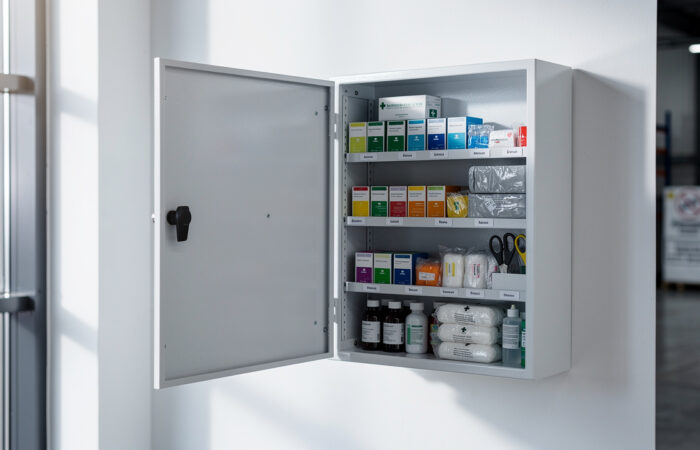
Type I containers work well on indoor walls in clean, climate-controlled buildings. These might be metal or strong plastic cabinets mounted in break rooms, offices, or near time clocks so employees can see and reach them fast.
Type II containers are portable indoor cases with handles. Safety leaders, supervisors, or team leads can carry these from one part of a plant or warehouse to another.
Type III containers protect workplace first aid kits in mobile or outdoor settings. They are built to resist water, dust, and bumps and are common in service vans, forklifts, or outdoor work areas.
Type IV containers are heavy duty cases for harsh sites such as mining, marine, and big construction projects where kits may be hit, dropped, or exposed to bad weather.
Common materials include metal for maximum strength and dust and moisture control, rigid plastic for lighter weight and good seal quality, and soft bags for fast grab-and-go use. Matching the ANSI type to your real conditions keeps first aid kits for businesses dry, clean, and usable when every second counts. It also supports OSHA’s requirement that supplies stay readily available, not damaged or hidden under other gear.
Conducting A Workplace Assessment To Select The Right First Aid Kit
Identifying Your Workplace-Specific Injury Risks
Choosing the right first aid kit for business use starts with a clear view of your risks, not with a catalog page. Every site has its own injury patterns, even inside the same industry. Your first task is to list the kinds of harm that are most likely where your people work.
Key risk categories include:
Physical hazards: Cuts and lacerations from knives, sheet metal, broken glass, or moving parts, which are common in kitchens, auto shops, and factories.
Burns: Thermal burns from hot surfaces or grease, chemical burns from splashes, and electrical burns from faulty tools or wiring.
Slips, trips, and falls: Strains, sprains, and fractures on any busy floor, from a supermarket back room to a warehouse dock or loading area.
Eye injuries: Damage from dust, flying chips, splashes, or bright light in woodworking, welding, laboratories, and similar environments. In some settings, there is a real risk of amputations or major trauma.
Environmental hazards: Outdoor and field staff may face heat stress, hypothermia, insect bites, or poisonous plants.
Chemical hazards: Added risks such as skin burns, inhalation issues, and eye damage from cleaning agents, industrial chemicals, or lab materials.
To build a strong workplace first aid kit checklist, review your OSHA 300 logs, walk each area during real work, and talk with supervisors and front-line staff about near misses. This written record then guides what your first aid kits for businesses must handle.
Determining Kit Quantity And Placement Based On Employee Count And Facility Layout
Many safety teams ask how many first aid kits are required in the workplace, looking for a simple number. OSHA does not give one. Instead, it repeats that supplies must be readily available. In practice, that means anyone who is hurt can reach a kit, or have one brought to them, in just a few minutes.
Kit ratings, such as 10-person, 25-person, 50-person, or 100-person, give a rough sense of how many people one kit can support before supplies run low. A compact first aid kit for small business offices might cover up to ten people on one floor. A larger plant or call center with fifty or more staff in one area may need a wall cabinet rated for many more.
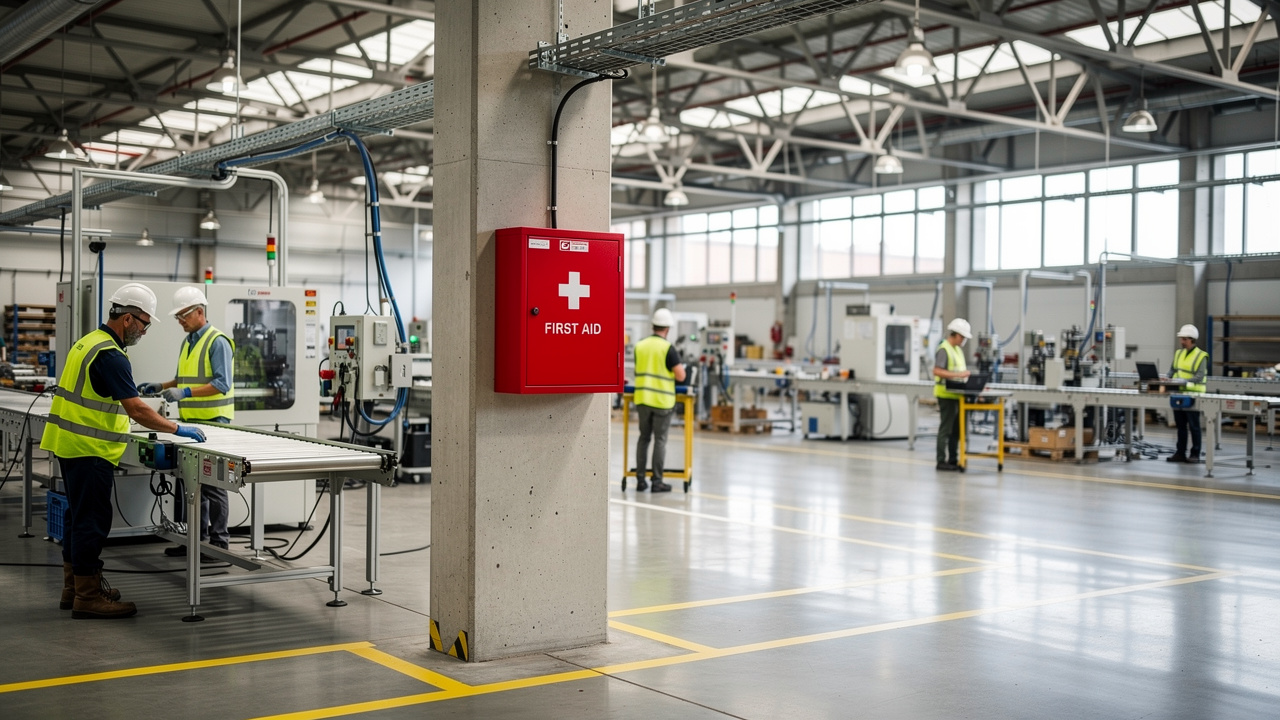
For big buildings, warehouses, multi-level offices, and campuses, it is usually better to spread several smaller workplace first aid kits rather than count on one large cabinet far away. Each floor should have at least one kit, and remote or high-risk zones such as loading docks, mechanical rooms, and construction areas often need their own.
Evaluating Environmental Conditions For Container Selection
The place where you mount or store each kit should guide the container type you choose. Indoor offices and climate-controlled spaces are good matches for Type I cabinets that stay fixed on the wall and are easy to spot. In busy plants where supervisors move from line to line, portable Type II cases allow safety staff to bring care directly to a worker.
Outdoor crews, service trucks, and mobile teams need Type III cases that stand up to rain, dust, and road vibration. For extreme conditions, such as marine work, mining, or large-scale outdoor construction, Type IV containers keep first aid kits for businesses safe from impact, corrosion, and severe weather. Heat and cold can damage adhesive, ointments, and plastic parts, so do not leave standard boxes on dashboards or near heaters. The right container protects your investment in supplies and keeps your workplace first aid kits functional when you need them most.
Essential Components Every Business First Aid Kit Must Contain

ANSI/ISEA Z308.1 sets a national baseline for the contents of workplace first aid kits. For many small and medium sites, this standard list is the starting point for compliance with first aid kit requirements for businesses. You can think of it as the core of your workplace first aid kit checklist, which you then adjust based on your hazard review.
First Aid Longs designs first aid kits for businesses so they meet or exceed this standard. By controlling manufacturing in 100K Class cleanroom facilities, we help you avoid the common problem of cheap first aid kits for businesses that look full but fail in real use because of low-grade components.
Class A Kit Minimum Contents Breakdown
A Class A first aid kit for business use targets the most common minor injuries. ANSI requires at least sixteen adhesive bandages sized one by three inches, which you use for small cuts and scrapes to keep dirt out. A roll of adhesive tape secures larger pads and keeps dressings from slipping. At least ten antiseptic wipes clean the skin around wounds, and ten triple antibiotic ointment packets help prevent infection in minor cuts once the area is clean.
Because burns are so common, even in offices and light duty shops, Class A workplace first aid kits include at least one gel-soaked burn dressing sized four by four inches and ten small burn treatment packets. These cool the area, ease pain, and protect skin. One instant cold pack helps with sprains or bruises by limiting swelling.
Two eye coverings with attachment strips plus at least one ounce of eye or skin wash give short-term support for minor eye issues, though high-risk sites still need full eyewash stations.
To protect responders, each Class A kit must have:
A simple first aid guide
At least six small hand sanitizer packets
At least two pairs of medical exam gloves
For bleeding control, a two inch roller bandage, two sterile pads sized three by three inches, and one trauma pad sized five by nine inches help control moderate bleeding and hold other dressings in place. Together, these items give you a solid base for lower risk settings such as offices, reception areas, and retail spaces.
Class B Enhanced Supplies For Higher-Risk Environments
Class B first aid kits for businesses add depth and strength for sites with higher injury potential. The counts of basic items go up, with around fifty adhesive bandages, fifty antiseptic wipes, and about twenty-five antibiotic ointment packets. This allows you to support a larger crew or more frequent incidents without running out of core items. Extra sterile pads, roller bandages, and trauma pads help with multiple injuries or a single serious event.
The Class B standard also adds tools that handle more severe harm:
A splint, often around four by twenty four inches, to immobilize a suspected fracture or a badly sprained limb.
A tourniquet, which can save a life by stopping massive bleeding from an arm or leg until emergency medical help arrives.
Because a tourniquet can cause tissue damage if used incorrectly, you should pair your Class B workplace first aid kits with training so responders know when and how to apply it.
For manufacturing plants, warehouses, construction firms, and similar operations, a Class B kit is usually the recommended minimum, not a luxury. First Aid Longs assembles commercial or business grade first aid kits for emergencies in these environments with high quality bandages, reliable tourniquets, and strong trauma supplies, so you are not depending on flimsy parts when the stakes are high.
A quick comparison of the two classes:
Feature / Focus | Class A Kits | Class B Kits |
|---|---|---|
Typical workplaces | Offices, retail, light commercial | Construction, manufacturing, warehousing, logistics |
Injury focus | Minor cuts, scrapes, small burns | Both minor injuries and serious bleeding or trauma |
Quantity of basics | Lower counts of bandages and wipes | Higher counts to support more people and incidents |
Advanced items | Basic trauma pad and roller bandage | Splint, tourniquet, more trauma supplies |
Industry-Specific First Aid Approaches For Targeted Protection

ANSI standards give you a strong base, but many industries face predictable risks that call for more than a generic box, which is why the First Aid Kit Market has expanded to include specialized solutions for construction, manufacturing, food service, and other high-risk sectors. By matching first aid kits for businesses to the actual hazards in each field, you reduce confusion during an emergency and help staff grab the right item without hunting through piles of supplies. This applies not only to plants and job sites but also to gyms, schools, hotels, event venues, and large office campuses.
First Aid Longs works with clients across manufacturing, construction, logistics, education, and hospitality, so we understand how one size does not fit all. We support standard kits, industry-focused kits, and OEM or private-label options, which you can also use as practical first aid kits for business promotions at trade shows and conventions.
Construction And Contractor First Aid Kits
Construction and contracting work bring frequent falls, impacts, and cuts from sharp or heavy materials. On these sites, workers may be far from the trailer or office, and injuries can be severe. That is why commercial or business grade first aid kits for emergencies on job sites need more than basic items.
Kits for this field are usually based on Class B contents and then expanded with:
Extra trauma pads and larger roller bandages
Additional splinting gear
Multiple tourniquets for crews spread across a site
Containers are often Type III or Type IV cases that handle dust, mud, weather, and rough handling in trucks. Good construction first aid kits for businesses are portable enough to ride in vehicles yet large enough to support a crew across a full shift.
Food Service And Restaurant Kits
Commercial kitchens and food plants see daily contact with hot oil, steam, grills, and sharp knives. Here, burns and cuts are the main concern, and contamination of food is a serious added risk. A generic first aid kit for small business use may not address these points well.
Food service kits focus on burn care with several gel dressings, burn creams, and cold packs placed where staff can reach them without leaving the kitchen. Bandages are often bright blue so they can be seen fast if they fall into food, and some operations use metal-detectable strips to support screening systems. Many of these workplace first aid kits are medication free to avoid any chance that tablets will end up near food or in a serving area.
Manufacturing Welding And Industrial Kits
Industrial plants combine machine hazards, hot work, chemicals, and high staff counts. Welders face intense heat and eye strain, while machine operators risk cuts, crush injuries, and exposure to fluids. For these settings, first aid kits for businesses need both depth and clear organization.
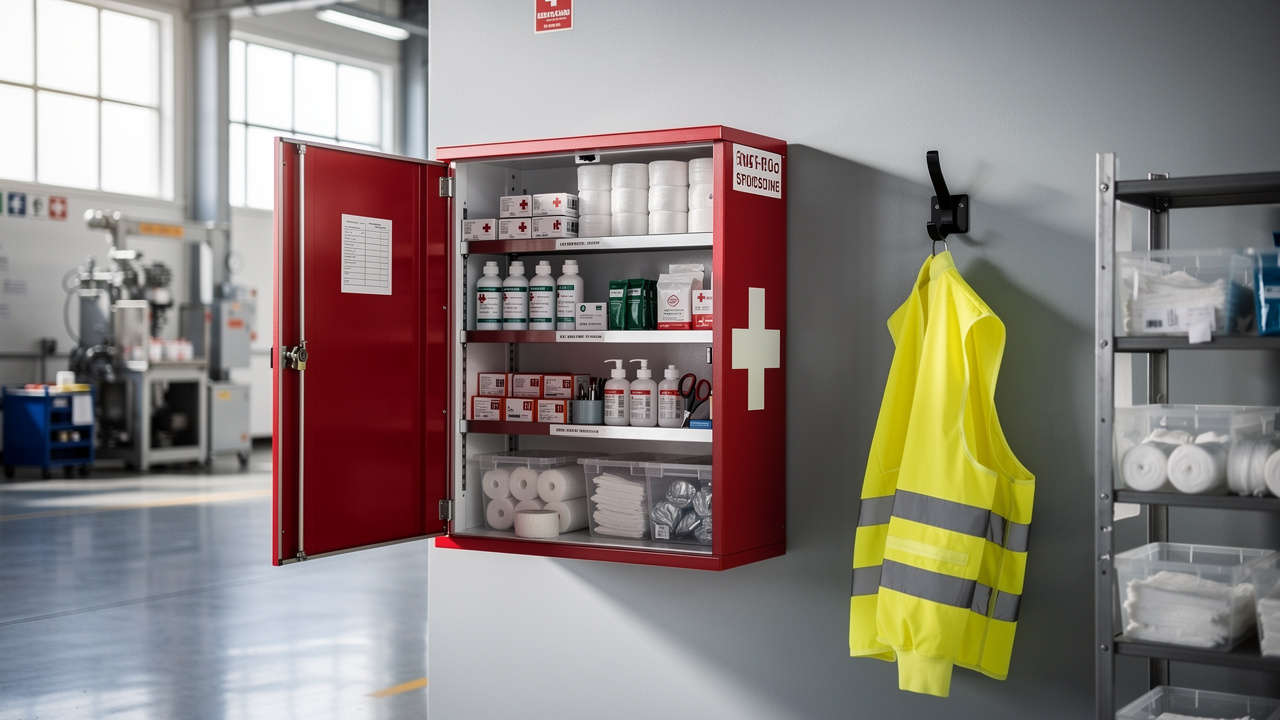
Industrial wall cabinets often have two to five shelves, with one section focused on burn care, another on eye care, and others on bandages and tools. Extra burn dressings, gels, sterile eyewash, eye pads, and strong scissors or shears are common. Metal cabinets help protect supplies from dust, vibration, and impact, and large plants may set up several cabinets along a line so no worker is far from help.
Vehicle Fleet And Mobile Workforce First Aid Kits
Many companies now have staff who spend most of the day in vehicles or at remote customer sites. This group includes field service techs, delivery drivers, security patrols, school bus staff, and mobile event teams. For them, a wall cabinet back at the depot does not help when an incident happens miles away.
Vehicle first aid kits for businesses must be compact yet sturdy, with cases that fit under seats or in tool compartments. Metal or rigid plastic cases with gaskets keep dust and moisture out even on rough roads. Options range from twenty unit standard vehicle kits for one or two occupants up to thirty six unit contractor kits that can handle a whole crew. For regulated fleets, you can choose options that support Department of Transportation expectations, and for large events you can deploy commercial or business grade first aid kits for conventions and shows so staff and guests are protected.
Best Practices For First Aid Kit Management And Maintenance
Buying compliant first aid kits for businesses is only the starting point. Over time, bandages get used, ointments expire, and cases get knocked around, and a kit that looks fine from the outside may fall short when it matters most. A neglected kit gives a false sense of safety and does not meet OSHA’s call for supplies to be readily available and in usable condition.
To avoid that gap, treat first aid kit management like any other safety process, with a schedule, assigned roles, and simple records. First Aid Longs supports both self-managed and supported programs with bulk refill items and guidance on how to keep your workplace first aid kits ready.
A common saying among safety pros is, “If it isn’t inspected, it isn’t ready.”
Establishing A Regular Inspection Schedule
Regular inspections help you catch missing or expired items before an emergency. High use or high risk operations, such as factories and construction sites, should check kits at least once a month. Quiet office spaces may choose a quarterly check, but more frequent reviews never hurt.
A simple inspection routine can follow these steps:
Confirm location: Check that the kit is still in its intended spot, easy to see, and not blocked by furniture, boxes, or equipment.
Inspect the container: Confirm that hinges, latches, handles, and seals all work and that the case is clean and closes securely.
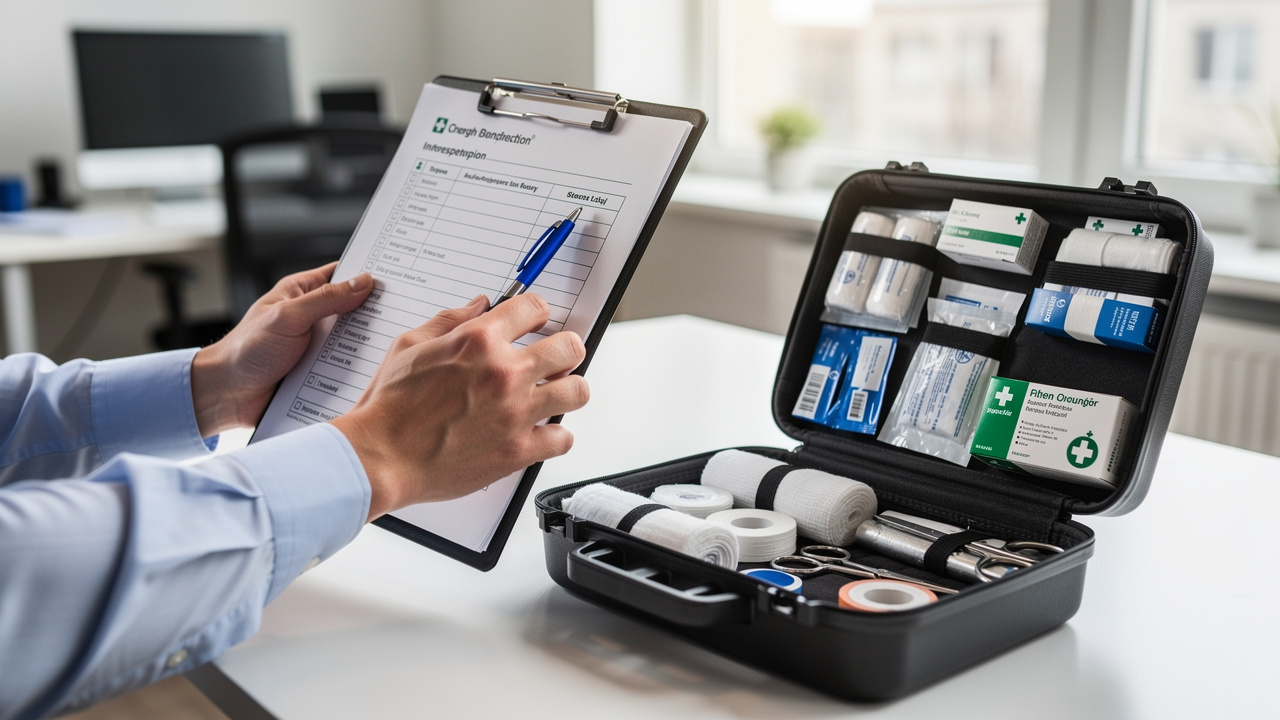
Review contents: Open the kit and compare what you see to your workplace first aid kit checklist and the ANSI class your kit is meant to meet.
Check expiration dates: Remove damaged packages, and look at dates on wipes, ointments, eyewash, and sterile items.
Record findings: Keep a simple log inside the door or lid with the date, the person who checked the kit, and notes about items that need replacement so you can track follow-up.
Restocking Strategies: Manual, Automated, And Managed Services
Once you know what is missing or nearing expiration, you need a clear restocking plan. Small offices sometimes rely on a single staff member to order replacement items as needed. This manual method can work for very small setups, but it often fails when that person changes roles or gets busy. A better approach is to set a regular restock order for core items so supplies arrive before you run out.
Some companies move to semi-automated refill systems, where kits use labeled modules or color coded packs. When one pack is empty, staff scan or note its number and request a refill. This makes it easier to see what was used and keeps your first aid kits for businesses close to ANSI levels without constant counting.
For larger operations, a managed service from a trusted supplier can remove most of the burden. In that model, a representative visits on a set schedule, inspects each kit, refills as needed from a service vehicle, and leaves a record of what was done.
First Aid Longs supports all three paths by offering factory price first aid kits for businesses and bulk refill components with steady quality. We help you avoid very cheap price first aid kits for businesses sourced without testing, which often fail basic ANSI checks. Whatever restocking method you choose, the key is to pick one that your team will actually follow month after month.
How To Build A Custom First Aid Kit For Special Business Needs
Standard Class A and Class B kits cover many needs, but some operations face hazards outside the usual pattern. Research labs, chemical plants, large schools, sports venues, and hospital networks may need more specific items, private label branding, or a mix of medical supplies and extra gear. In these cases, a custom first aid kit for business use can be the best option, as long as it still meets ANSI minimums.
The first step is the same as for any kit choice. You review your OSHA 300 records, walk each area, and speak with employees and supervisors to list likely injuries and special risks. From there, you pick containers that match how the kit will be used, such as wall mounted metal cabinets for main stations, portable plastic cases for vehicles, or soft backpacks for roving responders.
Next, you build your content list by starting with a full Class A or Class B set, then adding items such as extra tourniquets and hemostatic gauze for high bleeding risk, more burn dressings for welding or kitchen work, or insect relief and electrolyte tablets for outdoor crews.
Organization and labeling are the last piece. Group related items so staff do not waste time searching under pressure. Add a printed contents list inside the lid and clear first aid symbols and company branding on the outside. First Aid Longs is well placed to support this work with in-house manufacturing, OEM and ODM services, low minimum order quantities, and consistent quality control. That means you can create custom first aid kits for businesses across different sites while keeping standards, pricing, and delivery times under control.
Secure Reliable First Aid Kit Supplies Today!
Explore Our first Aid Kits designed to reduce delays and stabilize your healthcare operations.

Conclusion
Workplace first aid is much more than a box of bandages on the wall. It is a safety requirement, a moral duty, and a smart business choice that protects employees and reduces the real costs of injury. When you match first aid kits for businesses to your hazards, keep them stocked, and train your people, you turn a simple cabinet into a powerful safety asset.
An effective program rests on three pillars. You choose compliant kits that fit your risks and layout, you maintain and inspect them on a schedule, and you support them with trained responders who know how to act. This mix cuts injury severity, supports faster return to work, and helps you avoid fines for missing or inadequate workplace first aid kits.
If you have not reviewed your current setup in a while, now is a good time. Walk your site, check all the first aid kits for businesses use against ANSI Z308.1, and update your maintenance plan and training roster. At First Aid Longs, we support that work with an extensive range of ANSI compliant kits, custom OEM options, and high grade medical components trusted by more than one hundred clients worldwide. Investing in better first aid readiness is, in the end, an investment in the people who keep your operation running every day.