Introduction
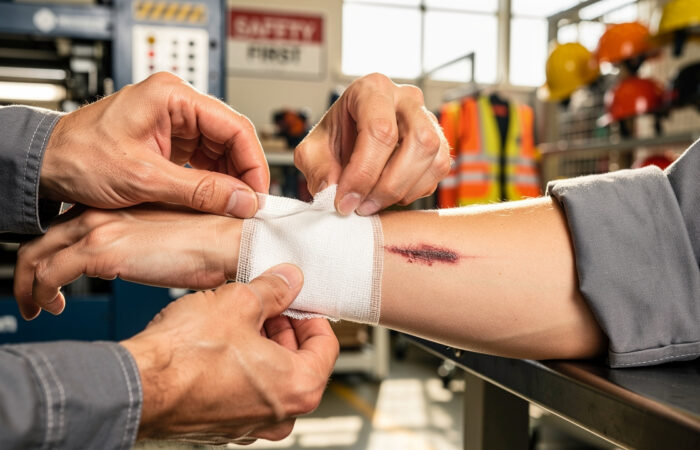
A crew member cuts a finger on a sharp edge, and everyone looks around for a bandage. Someone remembers a box in a back office, but it is half empty and hard to reach. Moments like this are when people discover whether their workplace first aid kits really match the risks in their building.
Regulators such as OSHA ask that first aid supplies be ready when people need them, but the rules do not spell out exactly how many kits every company must buy. That is why questions keep coming up about how many first aid kits are required in the workplace, where to put them, and what they should hold. The answers matter because poor access to basic care can turn a small cut, burn, or eye injury into something far more serious for both the person and the business. Studies show that first aid training could prevent up to 80% of deaths from injury.
In this guide, you will see how OSHA and ANSI/ISEA Z308.1 rules work together, how to review your own site, and how to choose and stock first aid kits for the workplace. Step by step, you move from guesswork to a clear plan based on size, headcount, layout, and risk level. Along the way, you also see how a manufacturer like First Aid Longs can support you with reliable, compliant kits that fit many kinds of workplaces.
Key Takeaways
OSHA focuses on access, not a fixed number of kits. Workplace first aid kits are not a one-size-fits-all purchase, and OSHA cares most about how quickly people can reach supplies. When you match kit numbers to your layout and risks, you cut response time. Fast response makes day‑to‑day injuries easier to manage and reduces stress for your teams.
ANSI Z308.1 gives a clear baseline. ANSI/ISEA Z308.1 sets the minimum requirements for first aid kit contents in the workplace. Using this standard makes it much easier to show that you have planned in a reasonable way. It also gives you a shared language with safety consultants and inspectors.
Site specifics drive how many kits you need. The right number of workplace first aid kits depends on square footage, floor count, employee numbers, and hazard level. You also have to think about things like locked doors and remote areas. When you map these factors, you can place kits so that nobody has to walk more than a few minutes.
Class A vs. Class B kits affect both quantity and contents. You may use Class A kits in offices and Class B kits in higher risk zones on the same site. This mix lets you control cost while still giving strong coverage in dangerous areas.
Understanding OSHA Requirements For Workplace First Aid Kits
OSHA’s basic rule is simple on paper. Employers must make first aid supplies “readily available” whenever medical care is not right next door or very close by. In practice, that means your people should be able to reach a stocked workplace first aid kit quickly, without hunting through locked storage or cluttered rooms.
“Adequate first aid supplies shall be readily available.”
— OSHA standard 29 CFR 1910.151(b)
OSHA does not publish a full, fixed first aid kit contents list for general industry. Instead, it points employers to the ANSI/ISEA Z308.1 standard, which describes the minimum items and quantities for Class A and Class B kits. If your workplace first aid kit meets or goes beyond this standard, you are following what OSHA describes as a best practice.
Because OSHA rules are performance-based, you carry a lot of responsibility as an employer or manager. Operations managers, health and safety officers, lab supervisors, shop managers, and facility managers all share the job of judging workplace hazards and choosing the right first aid kits for the workplace. This includes deciding how many kits you need and which type matches the risk level in each area.
You also need to think about records, research on mandatory first-aid training in workplaces shows that documented preparedness significantly improves emergency response outcomes. It is wise to keep a short hazard assessment on file that explains your work activities and why you chose certain kit types and locations. Add a simple workplace first aid kit checklist for each kit, plus logs of inspections and refills. If an OSHA inspector visits or a claim arises after an injury, this record shows that you planned, acted, and keep your kits in good shape.
Non-compliance can lead to fines, citations, and greater legal pressure if an injury case goes to court. On the other hand, when you follow ANSI guidance and keep first aid supplies close to workers, you protect people, reduce lost time, and show that safety is part of how you run the business.
Factors That Determine How Many First Aid Kits You Need

There is no single national rule that says exactly how many first aid kits are required in a workplace. Instead, the right number depends on how your teams work, how spread out they are, and how risky their tasks may be. Thinking carefully about these factors helps you decide how many kits to buy and where to mount or store them particularly important since a third of employees report anxiety about the lack of trained first aiders in their workplace.
Key factors include:
Workplace size and layout
A small single-floor office with open sight lines may need only one or two well-placed kits. A large plant with multiple floors, long corridors, and separate rooms or cages usually needs several kits, because walking from one end to the other may take several minutes. As a broad rule, many safety teams aim for everyone to be no more than about 200 feet or a three‑ to four‑minute walk from a kit, taking doors and stairs into account.Headcount in each area
The more people who work in an area, the more often kits will be used and the faster supplies will run out. A simple starting point is at least one ANSI Class A kit per 20 to 25 employees in a low‑risk office zone, and one Class B kit per 20 to 25 employees in higher risk production areas. If you cover more than one shift, think about peak numbers, not the average, so that your workplace’s first aid kits can support the busiest times.Nature of the work being done
Office areas, call centers, and general admin space often see minor cuts, sprains, and eye strain. Construction sites, warehouses with forklifts, food production lines, and repair shops see higher risks for heavy bleeding, burns, crush injuries, and eye injuries from dust or chemicals. These higher risk sites generally need both more kits and more Class B kits with extra trauma pads, a tourniquet, and splints.Accessibility of kits
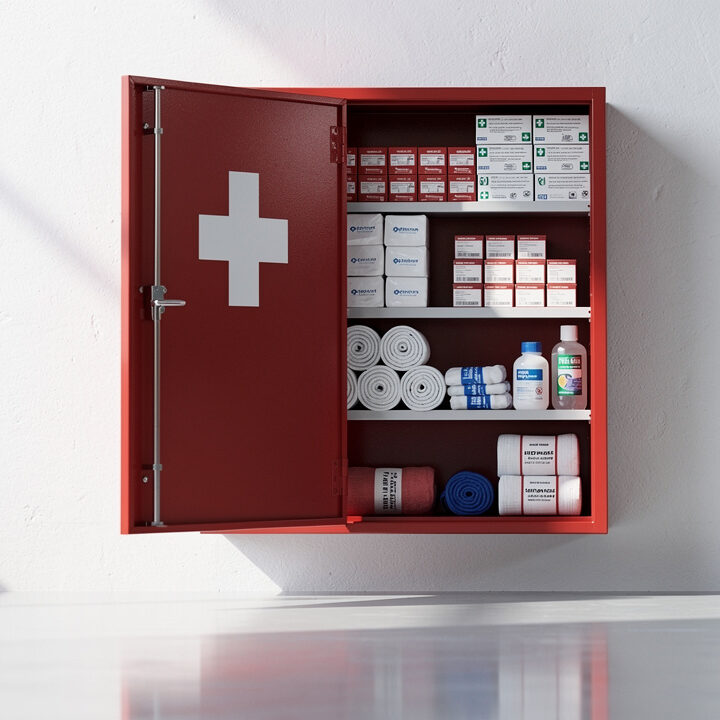
It is not enough to hang a kit in a locked supervisor’s office and call it done. Kits should sit in open, clearly marked spots where trained and untrained staff can reach them fast. Avoid placing them behind locked doors, on high shelves, or inside crowded storage rooms. In multi-floor buildings, plan on at least one kit per floor, then add more in large or high hazard areas so that the distance stays reasonable.Dispersed or mobile work
Field crews, security teams, maintenance staff, and drivers should have portable workplace first aid kits in vehicles or carry bags, because the nearest wall cabinet may be far away. Event venues and large campuses often need both fixed cabinets and mobile kits for staff working crowds, parking, or loading docks. For any area with special hazards, such as a chemical storage room, welding bay, or battery charging room, a dedicated kit nearby is a smart addition.
A simple way to think through how many first aid kits your workplace should have is to follow three steps:
Mark every space where people work or spend time during a shift, including offices, production, loading, and outdoor zones.
Circle areas where injury risk is higher than normal, such as machine lines or chemical rooms, and plan for Class B kits there.
Check walking paths and make sure no one is more than a few minutes from a kit, adding extra kits where distance or doors would slow response.
Choosing Between Class A And Class B First Aid Kits
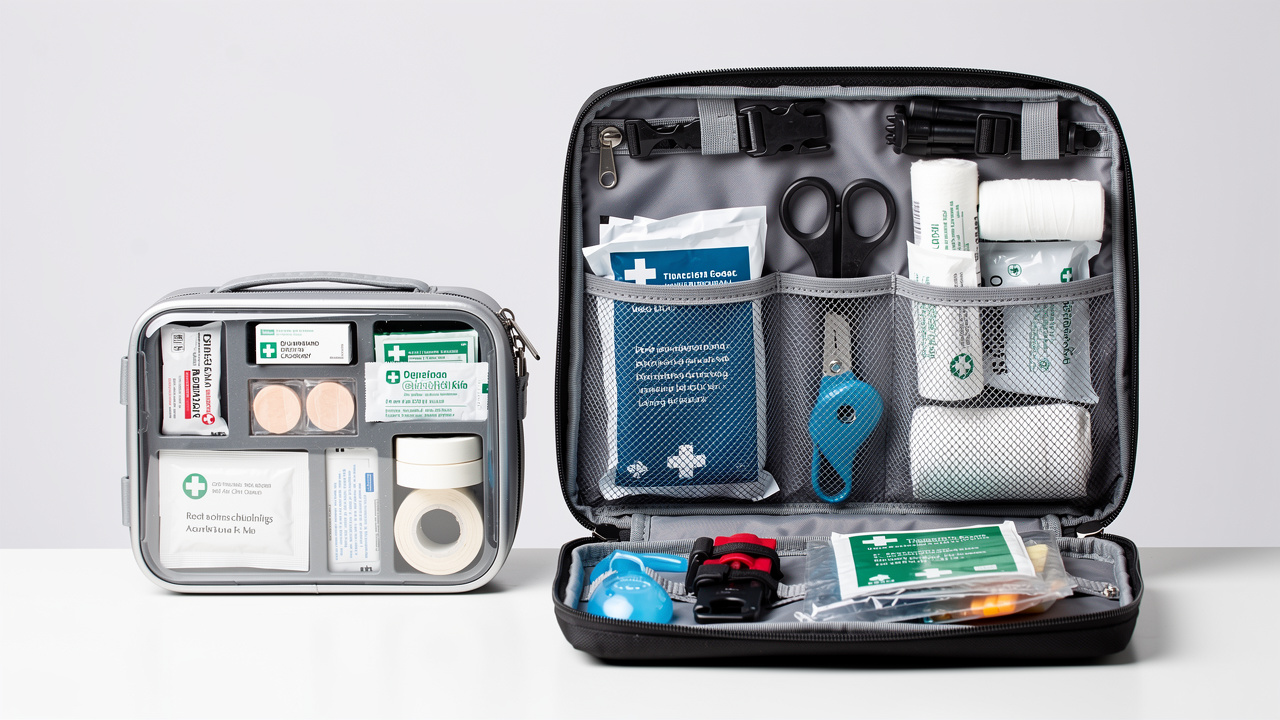
When you have a rough idea of how many kits your workplace needs, the next question is which type to buy for each area. ANSI/ISEA Z308.1 defines two main classes. Class A kits support the most common minor injuries, while Class B kits carry more items and higher quantities for serious risks.
Class A kits focus on everyday problems such as small cuts, scrapes, and minor burns. They include items like 16 adhesive bandages, basic antiseptic packets, a few sterile and trauma pads, one burn dressing, and simple tools such as scissors and tape. These kits fit well in corporate offices, small shops, classrooms, and other places where heavy machinery and sharp tools are not part of the daily work.
Class B kits are built for higher risk settings. They include a broader range and larger count of items, for example, 50 adhesive bandages, 25 antibiotic applications, extra trauma pads, a tourniquet, and a splint for suspected fractures. This makes them better for construction sites, manufacturing plants, busy warehouses with forklifts, auto service bays, food production lines, and similar spaces.
You do not have to pick only one class for an entire site. Many companies use Class A kits in office wings and Class B kits on the production floor or in maintenance shops. If your hazard assessment shows that injuries could include heavy bleeding, broken bones, or deep burns, that is a clear sign that Class B kits should be close to that work. While Class B kits may cost more up front, they can cut time to care in a serious event and may reduce the impact of injuries and claims.
First Aid Longs manufactures both Class A and Class B workplace first aid kits at scale, in controlled, cleanroom settings that support consistent quality. With flexible OEM and private label options, you can match kit class, branding, and packaging to each part of your operation without high minimums.
Comparison Of Class A And Class B Kits
Aspect | Class A Kit | Class B Kit |
|---|---|---|
Typical injury level | Minor cuts, scrapes, and small burns | More serious wounds, heavy bleeding, fractures, and larger burns |
Example workplaces | Offices, retail front areas, classrooms, and small labs | Construction sites, factories, warehouses, automotive workshops |
Core contents summary | 16 bandages, basic antiseptic, a few pads and dressings | 50 bandages, extra pads, tourniquet, splint, and more antiseptic |
Best use | Low risk zones with smaller teams | Higher risk zones or larger groups of workers |
Essential Items In A Workplace First Aid Kit

No matter which class you choose, there are certain items in a workplace first aid kit that you should expect to see. ANSI/ISEA Z308.1 lists the minimum group of supplies that every compliant kit must hold, and these items cover the most common types of injuries at work.
Wound care is the first group. It typically includes:
Adhesive bandages in several sizes
Larger sterile pads
Trauma pads for bigger wounds
Adhesive tape
Roller bandages
Triangular bandages to support or immobilize limbs
Together, these supplies let a responder cover cuts and scrapes, control light bleeding, and protect wounds until medical care is available.
Cleaning and infection control supplies form the next group, such as:
Antibiotic applications
Antiseptic wipes
Hand sanitizer packets
Saline wipes or other eyewash items for eye irritation
An eye or skin wash bottle for more thorough rinsing
These items help clean minor cuts so they do not get infected and give fast relief when dust or liquids reach the eyes.
Protective gear and special treatments are also important, including:
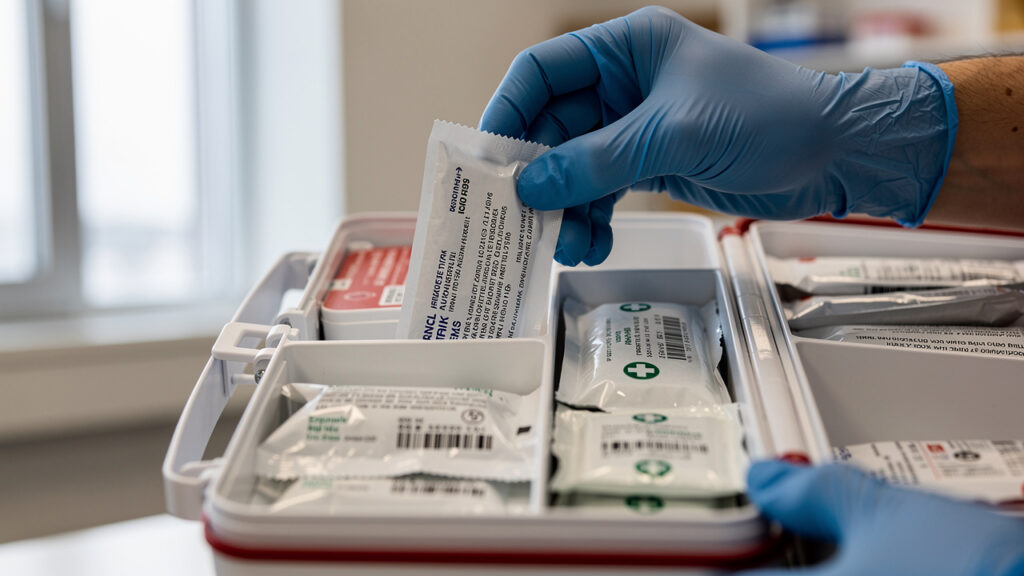
Medical exam gloves to protect both worker and responder
A breathing barrier to give rescue breaths more safely
Burn dressings with cooling gel
Separate burn gel packets, especially useful in kitchens, welding areas, or manufacturing lines
Cold packs to help with sprains and minor bruises
On top of that, tools and guidance complete the kit. Scissors, tweezers in some kits, and a simple first aid instruction guide help people act fast under stress. Many modern kits also set aside a “personal space” area, often a mesh pocket, where you can add workplace‑specific items such as calcium gluconate gel for hydrofluoric acid exposure or extra trauma pads for a high bleeding risk area. When you build or buy kits from a manufacturer like First Aid Longs, you can ask for a workplace first aid kit checklist that matches Class A or B and then add custom items that your hazard assessment calls for.
Secure Reliable First Aid Kit Supplies Today!
Explore Our first Aid Kits designed to reduce delays and stabilize your healthcare operations.
Conclusion
The right number and type of workplace first aid kits depend on how and where your teams work. Square footage, floor count, headcount, and hazard level all shape your plan, along with how quickly someone can walk to a kit when every second feels slow. When you match kit placement to these real‑world details, you give people fast access to care and cut down panic in an emergency.
“Safety doesn’t happen by accident; it is planned, practiced, and reviewed.”
— Common safety training reminder
Following OSHA guidance and aligning your kits with ANSI/ISEA Z308.1 standards is more than a paperwork task because it supports both employee safety and legal protection for the business. A simple hazard assessment, a clear map of kit locations, and regular inspections with refills go a long way.
First Aid Longs supports this work by manufacturing reliable workplace first aid kits and medical supplies in high‑quality cleanroom facilities, with flexible customization and timely delivery across many industries. Now is a good time to walk your site, count and check your kits, and close any gaps, so that when something happens, your people know where to go and find what they need.