Introduction
Are your kitchen teams as safe and successful as your menu deserves them to be? What would happen to that hard-earned reputation if a hidden bandage ended up in a guest’s entrée, or a simple burn sidelined your best line cook during the dinner rush? Those moments are where a restaurant first aid kit either quietly does its job or exposes big gaps. Many operators assume that any off‑the‑shelf office kit checks the box. On paper, it looks fine, but in a hot, fast-paced kitchen full of knives, fryers, and slick floors, a generic kit often fails both staff safety and food safety.
A professional first aid kit for restaurant use must handle cuts, burns, slips, and eye splashes while also guarding against contamination. That means blue detectable bandages instead of beige strips, latex-free gloves, single-use packets, and burn care that actually fits how kitchens work. It also has to support HACCP plans, meet OSHA expectations, and line up with ANSI Z308.1-2021 guidance so you can show clear compliance.
As many kitchen trainers remind their teams, “Sharp knives and hot oil are part of the job having the right first aid ready is what keeps everyone working safely.”
This guide walks you through the complete setup. You will see what should be in a restaurant first aid kit, how OSHA and ANSI rules apply, how to match kit size to your team, and how to keep everything stocked and ready. By the end, you will have a clear, practical roadmap to build a restaurant first aid kit that protects your people, your guests, and your business every single shift.
Key Takeaways
A restaurant first aid kit is different from an office kit because it must protect food as well as people. You need blue, metal-detectable bandages and latex-free items so nothing ends up in a plate or triggers allergies. This focus keeps both staff and guests safer when accidents happen.
OSHA restaurant first aid kit requirements connect directly to ANSI Z308.1-2021, with Class B kits fitting most commercial kitchens. Matching those standards gives you a clear way to show that your supplies are adequate. It also helps you avoid last-minute scrambles during inspections or audits.
A reliable setup covers the right contents, the right container, and an ongoing refill routine. When you match kit size to employee count and run monthly checks, your restaurant first aid kit stays ready for real emergencies instead of sitting as a half-empty box on the wall.
Why Restaurant Kitchens Require Specialized First Aid Kits
Commercial kitchens are high-risk spaces where injuries can happen in seconds, with Work-related injuries and illnesses occurring frequently due to sharp knives, mandolines, slicers, hot grills, fryers, and boiling liquids all mixing with fast movement and crowded workstations. Sharp knives, mandolines, slicers, hot grills, fryers, and boiling liquids all mix with fast movement and crowded workstations. Slippery floors from grease or spills add another layer of risk, so cuts, burns, and falls are far more common than in an office or retail shop.
Standard beige bandages and generic supplies do not fit this reality. If a beige strip falls into a salad or sauce, it can be nearly impossible to see. That lost bandage becomes a physical hazard in food and a serious health code issue. A specialized restaurant first aid kit relies on bright blue, metal-detectable bandages and blue tape so any stray piece is easy to spot and remove before food reaches a guest.
Food safety systems such as HACCP expect you to manage those hazards. First aid supplies sit directly inside that plan because they touch both the injured staff and the food prep areas. A restaurant first aid kit that supports HACCP uses single-use packets, waterproof blue coverings, and latex-free materials to avoid contamination and allergic reactions.
The injury pattern in kitchens is also very different from office environments. You see deep cuts from knives, oil splashes from fryers, steam burns, and blunt trauma from slips. At the same time, you must protect guests from anything that could fall into the food. Failing at either side can lead to lost staff time, claims, health department actions, and serious harm to your public image. That is why a specialized first aid kit for restaurant use is not a luxury but a basic requirement.
Must-Have Components Of A Restaurant First Aid Kit
A well built restaurant first aid kit contains more than a handful of bandages and a bottle of antiseptic. It gathers the specific items you need to treat the most common kitchen injuries while keeping food protection in mind. ANSI Class B standards give you a strong baseline, and food service operations then add blue detectable items and extra burn care on top.
Think of the contents in a few clear groups. Wound care handles cuts and scrapes. Burn care supports staff working around heat and hot liquids. Tools and trauma supplies help with more serious injuries and sprains. Protective gear shields the person giving care, and eye and comfort items round out the kit so you can deal with less frequent but serious problems.
Blue Detectable Bandages And Wound Care
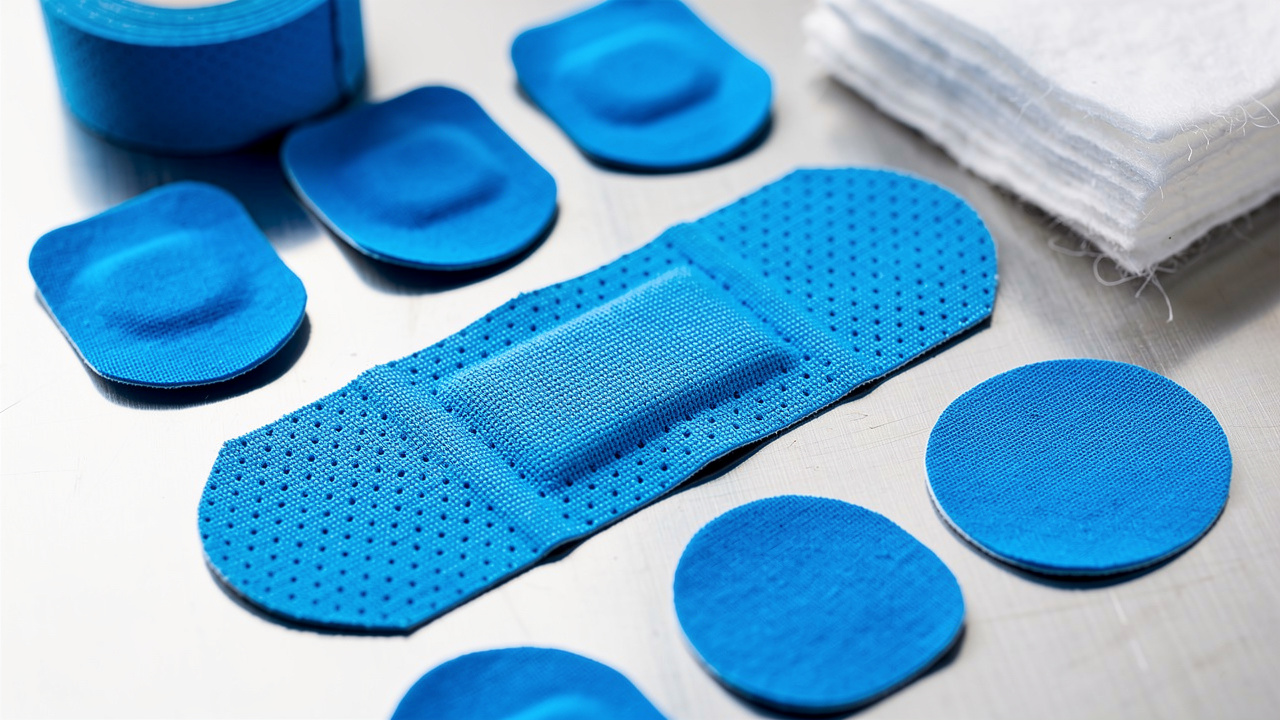
Blue bandages are the signature feature of any serious restaurant first aid kit. The bright blue color is rare in food, so it stands out if a bandage comes loose. Many versions also include a metal strip that can trigger detectors in processing lines, which is vital for larger operations and central kitchens.
A solid kit for about twenty to fifty staff usually includes:
At least one hundred blue fabric bandages in the standard one-by-three inch size
Blue knuckle bandages and fingertip bandages shaped to wrap joints and cover fingertips securely
A box of one hundred or more blue finger cots for bandaged fingers during light tasks
Butterfly closures, at least ten sterile 3×3 gauze pads, and gauze rolls in two and four-inch widths
Blue medical tape, twenty to fifty antiseptic wipes in single packets, and ten to twenty-five packets of triple antibiotic ointment
Burn Treatment Supplies
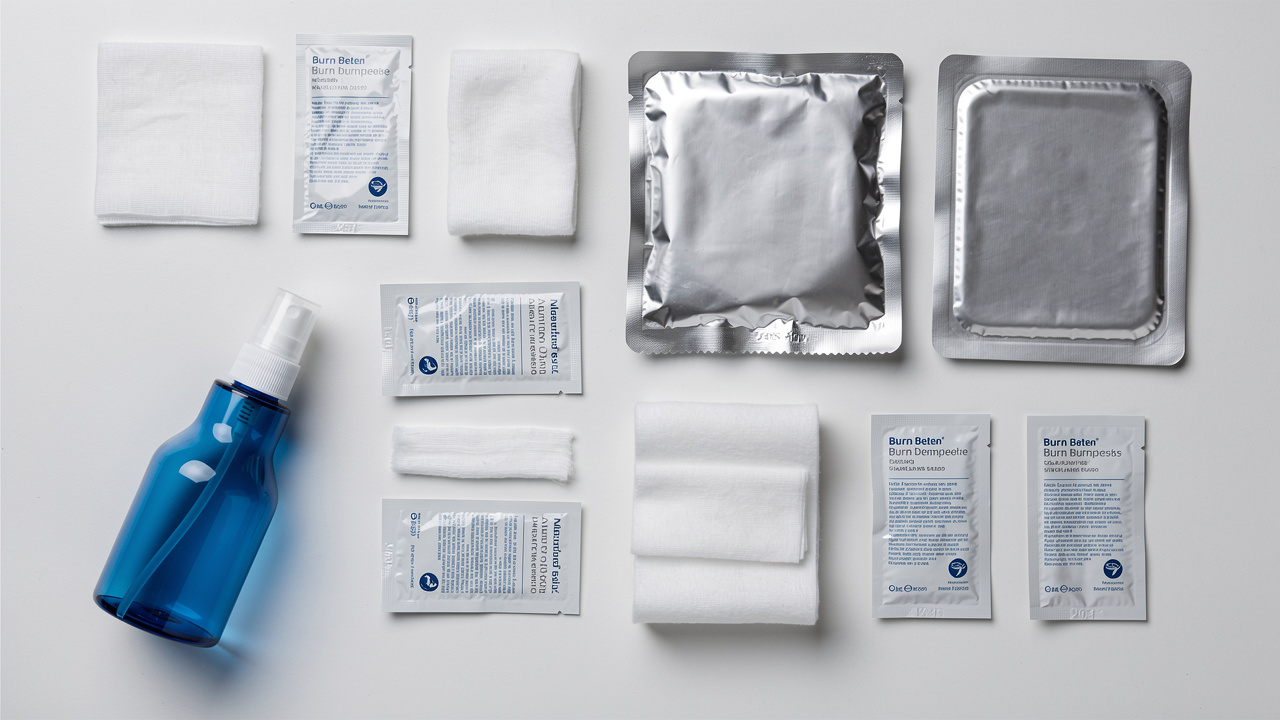
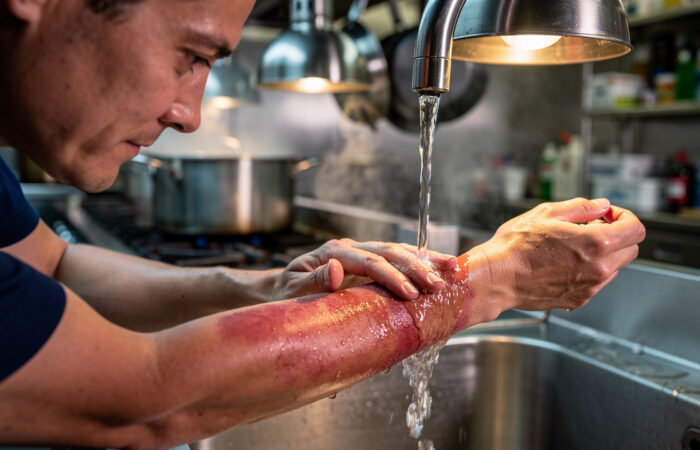
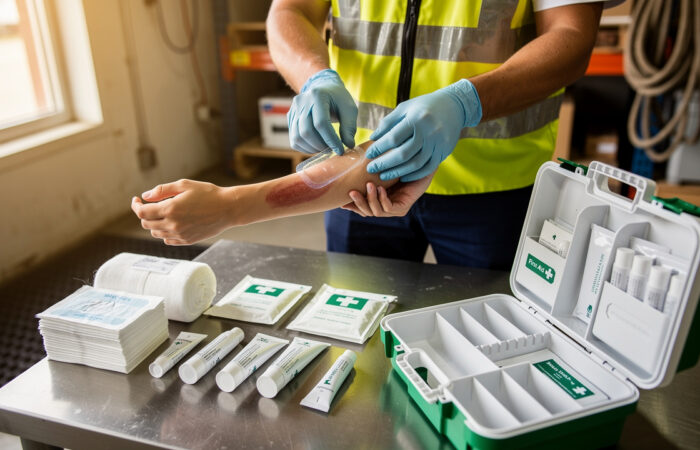
Burns from grills, ovens, and fryers are among the most common kitchen injuries, so burn care is non-negotiable. Hydrogel burn dressings in 4×4 squares work well for hands and forearms, while 2×6 inch strips can wrap around fingers or narrow areas. These dressings cool the burn, ease pain, and protect against dirt without sticking to damaged skin.
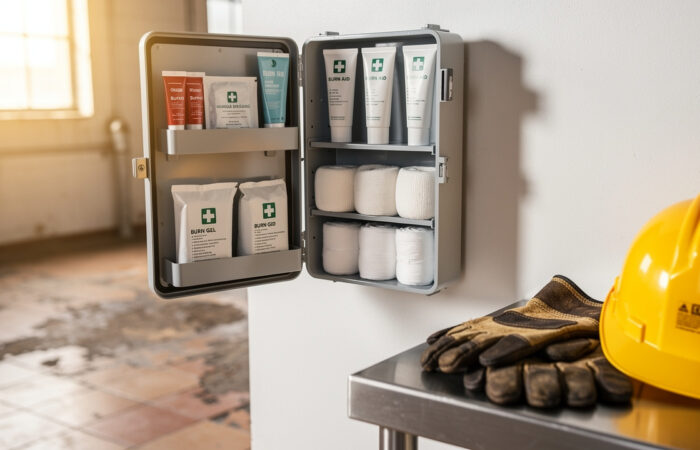
On top of dressings, your restaurant first aid kit should hold at least twenty five packets of burn gel or burn cream. Single-use packets reduce mess and cross-contact. A burn spray adds a touch-free way to cover minor burns quickly, which staff appreciate during busy service. Keep the main burn items stored where people working fryers and ovens can reach them quickly without digging through the entire cabinet.
Tools, Cold Therapy, And Trauma Supplies
Beyond bandages and burn care, you need tools and trauma supplies to manage more serious events. Blunt-tip bandage scissors make it safe to cut tape, gauze, or clothing away from a wound without causing extra harm. Tweezers help remove splinters, glass, or small bits of metal.
Cold therapy items reduce pain and swelling from sprains or bumps. Include instant cold packs in at least two sizes, such as a smaller “junior” pack and a larger version for knees or backs. Cold spray can give quick relief over sore muscles or around a bandaged burn. For heavier bleeding, stock one or two large five-by-nine inch trauma dressings or ABD pads. An aluminum splint and a triangular bandage let you support a suspected fracture or serious sprain until medical help arrives. A tourniquet is reserved for rare, life-threatening bleeding, and staff should receive proper instruction before using it. A two-inch cohesive wrap that sticks to itself helps secure dressings without tape and is kind to skin and hair.
Personal Protection And Sanitation
The person giving first aid needs protection as well. Your restaurant first aid kit should hold several pairs of vinyl or nitrile gloves, never latex, to avoid allergy issues. Four pairs is a sensible minimum, though busy kitchens often keep more on hand.
A CPR mask with a one-way valve lets trained staff provide rescue breaths while staying safer from contact with bodily fluids. Single-use hand sanitizer packets help clean hands before and after care when a sink is not close. Alongside the main kit, plan for a separate bodily fluid spill clean-up kit that can handle vomit or blood on floors or tables. This companion setup protects both staff and guests from exposure and helps you meet health department expectations.
Eye Care And Miscellaneous Items
Grease, cleaners, and spices can all end up in someone’s eyes, so every restaurant first aid kit should include a small bottle of sterile eyewash solution. A four ounce bottle works as a minimum for flushing out irritants, and many operations also install a larger plumbed or station-style eye wash nearby. Sterile eye pads help cover and protect an injured eye while the person waits for medical care.
For comfort and minor issues, add tamper-evident packets of pain relievers such as ibuprofen or acetaminophen along with simple antacid tablets. Ammonia inhalants can help revive someone who has fainted, though you should still seek medical evaluation. Finally, include a clear, easy-to-read first aid guide so anyone can follow step-by-step instructions during stressful moments.
Understanding OSHA And ANSI Compliance Standards
Safety rules in the United States do not list every single item that must be in your restaurant first aid kit, but they do set clear expectations especially important as the First Aid Kit Market continues to grow and standardize across the food service industry. OSHA says that adequate first aid supplies must be readily available for employees. That phrase can feel vague, which is why most safety professionals follow ANSI guidance to know what “adequate” looks like in practice.
ANSI and ISEA created standard Z308.1-2021 to define the minimum contents for workplace kits. The standard groups kits into Class A and Class B sets. Class A covers common minor injuries in low-risk places, while Class B serves higher risk areas with more hazards and more staff. For most restaurants, Class B is the right benchmark.
As many safety auditors like to say, “When you can point to an ANSI Class B restaurant first aid kit, you show inspectors, insurers, and your own teams that safety is more than a checkbox.”
The standard also describes different container types so you can choose a cabinet or case that fits your space. Together, these rules give you a practical map for OSHA restaurant first aid kit requirements and keep your setup aligned with current best practices.
Class A Kits: When They’re Sufficient
Class A kits focus on the simpler side of workplace injuries. They cover minor cuts, scrapes, and small burns with a modest supply count. A basic Class A list includes sixteen adhesive bandages, ten antiseptic wipes, a single burn dressing, one cold pack, two pairs of gloves, and a few sterile pads, along with tape, a triangular bandage, sanitizer, and a first aid guide.
This level can work for very small food operations with low risk, such as a quiet coffee kiosk or pastry counter with three to ten employees and no deep fryers or heavy equipment. If your operation fits that profile and injury risk is limited, a Class A restaurant first aid kit that adds blue bandages may meet your needs.
Class B Kits: The Restaurant Standard
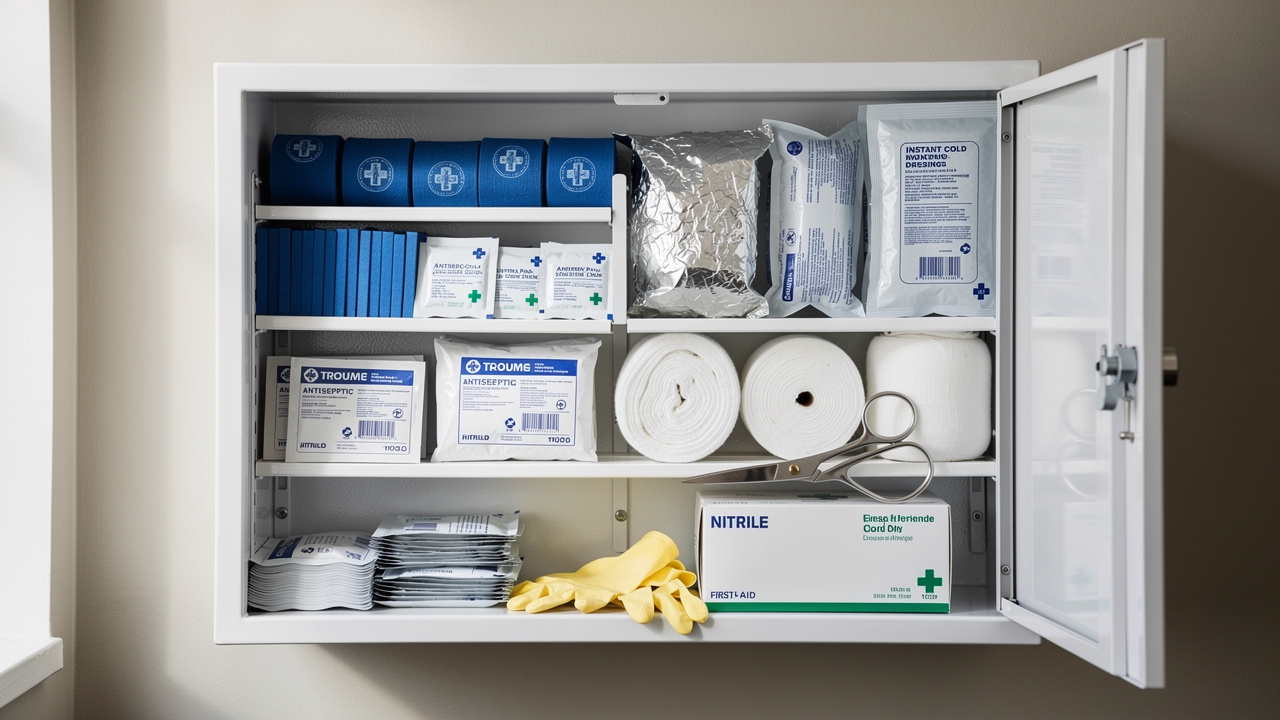
Class B kits are built for busier, higher risk workplaces, which matches most restaurants and commercial kitchens. The ANSI list expands both the number and the variety of items. You see at least fifty adhesive bandages, fifty antiseptic wipes, two burn dressings, twenty five burn treatment packets, two cold packs, four pairs of gloves, more sterile pads, a splint, a tourniquet, and two large trauma pads.
This richer mix handles deeper cuts, more serious burns, and injuries that can occur around fryers, grills, slicers, and heavy prep equipment. If you have ten or more employees on site, work with hot oil, or run long, busy shifts, a Class B restaurant first aid kit is the safer choice. Many products sold as “restaurant first aid kits” fall into either Class B or “Class A Plus,” which means they meet ANSI minimums and then add blue bandages and extra burn care to match food service demands.
ANSI Container Types Explained
ANSI does not stop at contents. It also sorts first aid kit containers into four types based on where and how they are used. Type I covers stationary indoor cabinets that mount on a wall in dry, protected spaces such as the main kitchen or staff room. Type II covers portable indoor kits with handles that can move around inside the building.
Type III containers are designed for mobile use in indoor or outdoor settings and include a seal that resists water and dirt. They work well for food trucks, catering vans, and outdoor bars. Type IV containers are the toughest, meant for harsh outdoor work sites such as construction or marine work, and most restaurants do not need that level. Many high quality restaurant first aid kits meet both Type I and Type II needs, and some also offer Type III protection for operations with off-site service.
Selecting The Right First Aid Kit For Your Restaurant
Choosing a restaurant first aid kit is not just about picking something that looks big enough. The right choice depends on your staff count, floor plan, hazard level, and whether you serve food only on site or also run catering and mobile units. When those factors line up with the right kit, you get better protection and smoother inspections.
Start with risk. A small bakery with a few staff and no fryers faces far fewer serious hazards than a busy full-service kitchen with multiple cooking lines. Then think about how many people work on a shift, not just your total headcount. Your first aid kit must support everyone on site at the same time.
Matching Kit Size To Employee Count
Staff size is one of the clearest guides when you choose a restaurant first aid kit. A small Class A kit can support three to ten employees in a simple setup such as a coffee bar or dessert counter. Once your team grows into the ten to twenty five range, you should look at a Class A Plus or standard Class B kit, especially if you cook with open flames or hot oil.
Kitchens with twenty five to fifty employees benefit from a larger two-shelf Class B cabinet with higher piece counts and better organization. Big venues with more than fifty staff on site rarely get by with a single kit. They usually place several large restaurant first aid kits in different areas, such as the main kitchen, prep kitchen, and front-of-house, with overall piece counts often above four hundred items.
Employee Count | Recommended Kit Type |
|---|---|
3–10 | Small portable Class A with blue bandages |
10–25 | Medium Class A Plus or standard Class B |
25–50 | Large two-shelf Class B wall cabinet |
50+ | Multiple large Class B kits in separate zones |
Choosing The Right Container Type
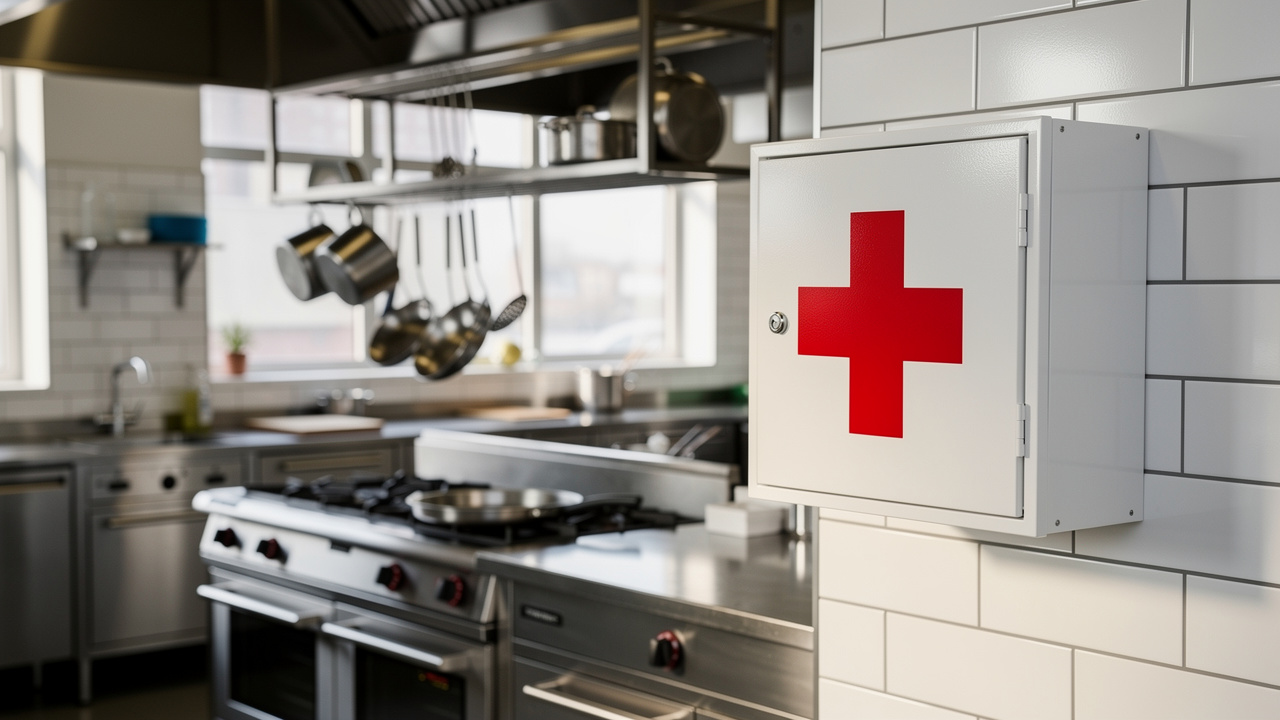
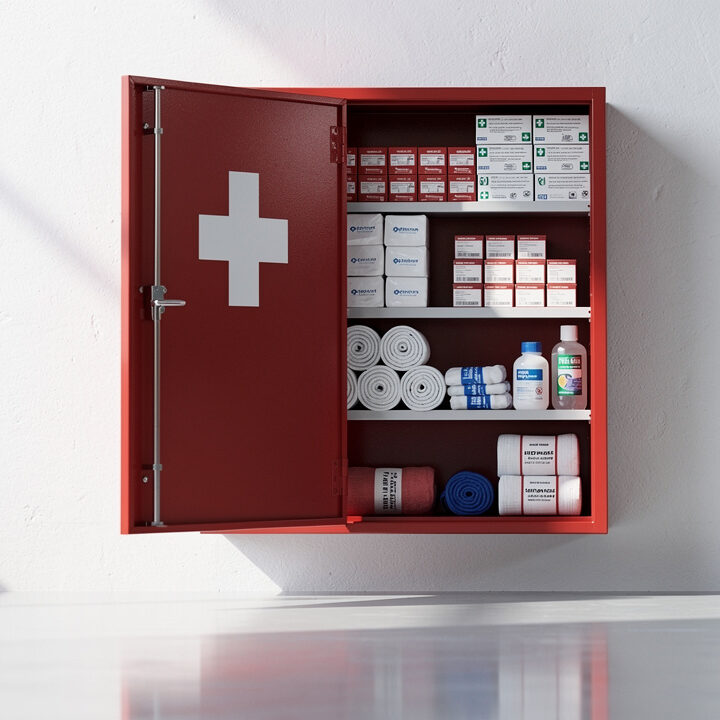
The physical cabinet or case that holds your restaurant first aid kit matters more than many people expect. Metal wall cabinets are a strong choice inside busy kitchens because they resist bumps, are easy to wipe down, and look professional during inspections. Two or three shelf designs keep items sorted by type, and door pouches make it easy to grab the bandages and wipes you reach for all the time.
Plastic cases play a bigger role when you need portability. A quality plastic case with a rubber gasket keeps out moisture and steam, which helps protect sterile items near dish rooms or warewashing areas. These cases are also lighter, so they are perfect for catering teams, food trucks, and pop-up bars. Many modern designs include both wall mounting hardware and a carry handle, so you can keep the kit visible on the wall but grab it quickly when needed.
Placement And Accessibility Strategies
Even the best restaurant first aid kit is useless if nobody can reach it. Mount your main kit in a central, clearly visible place that every employee learns about during onboarding. Avoid hiding it in a locked office or behind stacked boxes.
Large or multi-level restaurants should install kits in more than one area so staff do not lose time running across the building during an emergency. Portable kits are helpful extras for off-site catering jobs or special events away from the main kitchen. No matter the layout, OSHA expects first aid supplies to be readily accessible, which means no blocked cabinets or confusing locations.
Establishing A Kit Maintenance And Refill System
Buying a restaurant first aid kit is only the first step. Supplies get used, items expire, and cabinets can quietly empty out if nobody is watching. A simple, steady maintenance system keeps you compliant, ready, and free from nasty surprises during inspections or real emergencies.
Think of this as a small routine built into your safety program rather than a big project. You want one person in charge, a clear checklist, and an easy way to order refills. When that structure is in place, your restaurant first aid kit stays stocked without waste or panic buying.
As many kitchen managers put it, “The only useless first aid kit is the one that’s empty when you reach for it.”
Assigning Responsibility And Monthly Inspections
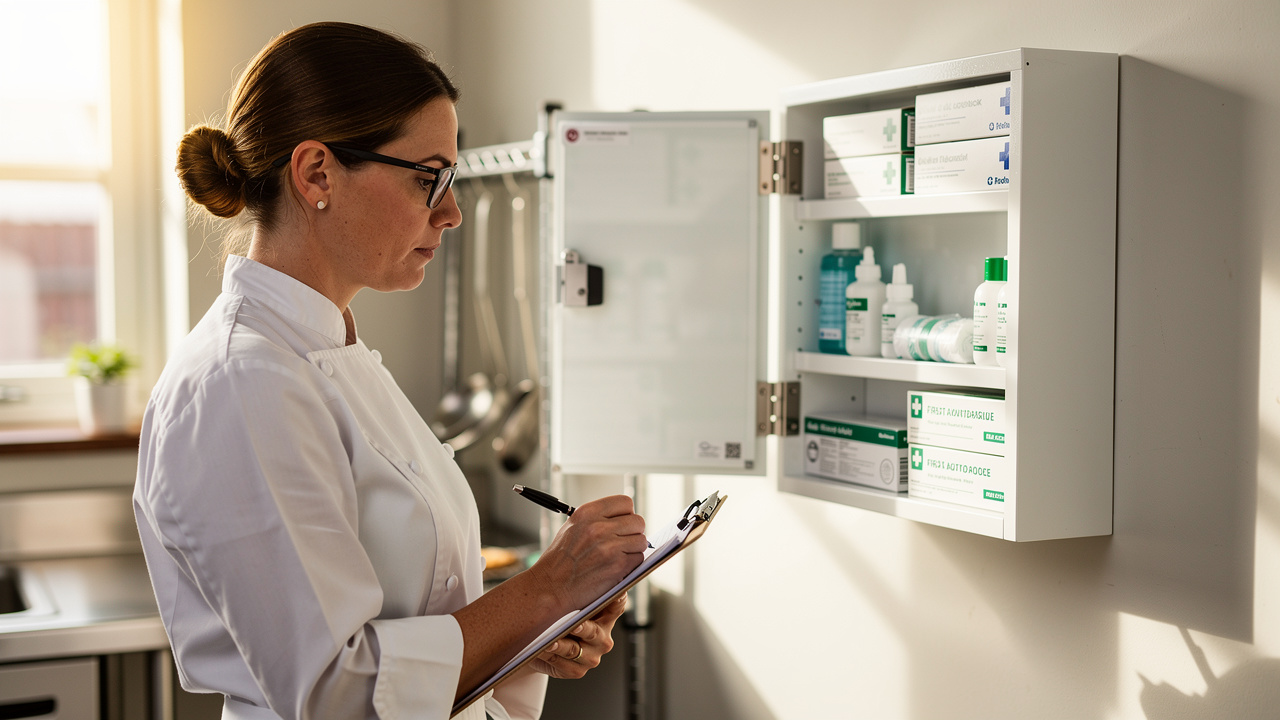
Every restaurant should name a specific person to oversee first aid kits. Often this is the kitchen manager, a shift supervisor, or a safety lead. That person schedules and completes regular inspections, at least once a month, and in very busy kitchens, even weekly.
During each check, they compare current contents with a master list kept inside the cabinet and mark anything low or missing. They also inspect expiration dates on wipes, ointments, dressings, and medications, removing anything that is out of date. Packaging should be clean, sealed, and free from water damage, and the cabinet or case should close properly. Finally, they confirm that the restaurant first aid kit is easy to reach and not blocked by equipment, then note the inspection in a simple log in case an auditor asks for proof.
A quick numbered checklist inside the door helps:
Open the kit and scan every shelf. Note what looks low and write it down at once.
Check dates on all time-sensitive items. Remove expired packs and add them to your reorder list.
Look over packaging and the cabinet. Replace anything torn and wipe the case clean.
Step back and check access. Clear any boxes or carts and make sure staff can see the kit.
Efficient Refill And Restocking Strategies
Smart refilling keeps your restaurant first aid kit ready without wasting money on full replacements. Instead of buying a new kit when a few items run out, order refill boxes or sleeves for the products you use most. This keeps you aligned with ANSI standards and stretches your safety budget further.
Some vendors offer refill systems such as SmartTab style cards that flag when a product is nearly empty. These guides make it easy for your inspection lead to see what to reorder at a glance and help avoid stockouts of blue bandages, antiseptic wipes, or burn gel during peak hours. It also helps to store a small reserve of high-use items in a back office or supply room so staff can top up the main kit right after an incident. Avoid overbuying items with short shelf lives, and keep a standing relationship with a trusted medical supplier so you can reorder quickly when needed.
First Aid Longs can support you here by providing wholesale refill packs and complete restaurant first aid kits with consistent stock and reliable lead times. Their in-house manufacturing and cleanroom packaging help keep quality high, while flexible order sizes match the needs of both single locations and multi-unit groups.
Secure Reliable First Aid Kit Supplies Today!
Explore our first aid kits designed to reduce delays and stabilize your healthcare operations.
Conclusion
Restaurant safety is never just about avoiding injuries. It is about caring for the people who run your kitchen while protecting every plate that leaves the pass. A properly designed restaurant first aid kit sits right at that intersection, guarding employees from cuts, burns, and falls and guarding guests from contamination or unsafe handling.
By now, you have a clear framework to make that happen. You know why food service operations need specialized blue bandages, hydrogel burn dressings, and latex-free gear. You understand how OSHA and ANSI standards fit together and why a Class B restaurant first aid kit is the smart choice for most commercial kitchens. You have seen how to match kit size to employee count, pick the right container, and put a simple inspection and refill routine in place.
The last step is action. Review your current first aid setup, check it against Class B guidance and the items listed here, and note any gaps. Set a schedule for regular checks and assign a clear owner. When you invest in the right restaurant first aid kit and keep it ready, you show staff, guests, regulators, and yourself that safety and professionalism are non-negotiable parts of your operation.