

Introduction
Every year, over 200,000 children under age five visit emergency rooms for injuries linked to childcare settings. Many safety experts estimate that a large share of these cases could be handled on-site if staff had the right supplies, a compliant daycare first aid kit checklist, and current training. That means faster comfort for the child, fewer stressful trips for families, and less disruption for the classroom.
For childcare leaders, a kit is more than a metal box on the wall. It connects directly to licensing, OSHA expectations, insurance risk, and parent trust. Strong first aid readiness means the kit contents match daycare first aid kit requirements, kits are placed in the right spots, staff know how to use every item, and someone checks and restocks on a schedule.
By the end of this guide, you will know exactly what must go into a compliant daycare first aid kit, how many kits your center needs, where to keep them, how to manage medications, and how to keep everything updated. You will also see how a wholesale partner like First Aid Longs can help you stock consistent, high-quality supplies across one site or an entire network of centers.
Key Takeaways
A daycare first aid kit is both a safety tool and a licensing requirement. When you match your state’s daycare first aid kit requirements and keep kits ready to use, you cut response time and reduce the chance that a minor injury turns into an emergency room visit. This also shows parents that safety is part of daily practice, not just paperwork.
Compliance needs more than one box of bandages. You need multiple kits placed around the facility, a clear daycare first aid kit checklist, monthly inspections, and accurate logs. When staff know exactly where kits are and what is inside, they can act fast during stressful moments.
Training links everything together. Even the best-stocked daycare first aid kit is only helpful if staff hold current pediatric first aid and CPR cards, run regular drills, and know how to handle child-specific health plans and medications.
What Are The Basic Daycare First Aid Kit Requirements?
Daycare safety rules sit on top of more than one set of regulations. At the federal level, OSHA standard 1910.151(b) expects employers to provide medical help or first aid supplies for staff. For childcare centers, state licensing agencies build on this and spell out specific daycare first aid kit requirements focused on children, not just employees.
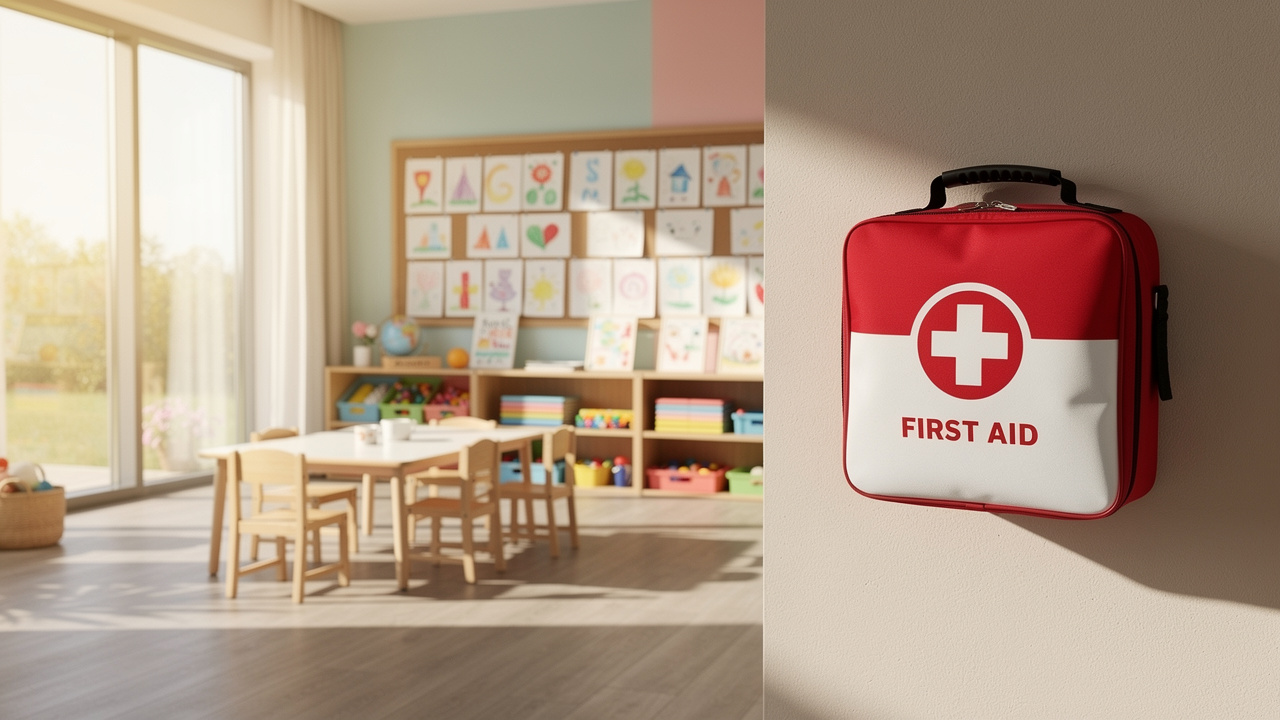
Across states, one core idea repeats again and again: first aid supplies must be easy for staff to reach in seconds, yet kept away from children’s hands. That means kits on high shelves, in wall cabinets, or in locked boxes where every staff member knows the access method. A kit buried in a locked office that no one can open does not meet the spirit of “readily available.”
Most states require at least one main daycare first aid kit for the facility, with extra kits tied to:
The number of classrooms
Overall program size
Special areas such as playgrounds, kitchens, and transportation vehicles
Regulations also call out portable kits that must travel with children on field trips, during outdoor play, and in vehicles used for transport. A key point many centers miss is that a full kit must stay on-site when a group leaves for a trip, so children who remain in care are still protected.
Directors also need to think about documentation. Many licensing rules require written records of kit inspections, dates items were restocked, and who performed each check. When you treat these logs as part of your safety program, not just a form for inspectors, you build a system that keeps every daycare first aid kit ready for real emergencies.
Essential Components Of A Compliant Daycare First Aid Kit
A compliant daycare first aid kit covers far more than bandages. It should handle scrapes, sprains, fevers, eye injuries, and sudden emergencies while staff wait for paramedics. High-quality, child-appropriate supplies keep care safe, fast, and as calm as possible for frightened children.
Wound Care And Bandaging Supplies

Most of the time, your daycare first aid kit will come out for everyday bumps, scrapes, and cuts. That means you need a wide mix of wound care items that fit small faces, fingers, knees, and elbows. Stocking variety also helps staff avoid improvising with supplies that do not really fit the injury.
You will want many sizes of non-medicated adhesive strips. Standard one-by-three-inch strips cover routine cuts, while smaller spot bandages fit finger pricks or tiny scrapes on the face. Larger strips work well for knees and elbows, and special shapes such as knuckle and fingertip bandages stay in place on moving joints. Keeping both plastic (for water resistance) and soft fabric (for flexibility) gives staff options for different activities and skin types, and child-friendly prints can calm an anxious child.
Gauze is the backbone of good wound care. Include individually wrapped sterile gauze pads in several sizes so staff can clean wounds and apply pressure without touching the area directly. A roll of flexible two-inch gauze helps hold pads in place on arms and legs, while a self-adherent wrap that sticks to itself, not skin, makes removal less stressful. Add hypoallergenic medical tape in paper and cloth styles for different levels of hold, alcohol-free antiseptic wipes for cleaning when soap and water are not nearby, at least two triangular bandages with safety pins, and a few individually wrapped sanitary pads that can control heavier bleeding until help arrives.
To keep this section practical, your wound care supplies should at a minimum include:
Adhesive bandages in multiple sizes and shapes
Sterile gauze pads and roller gauze
Self-adherent wrap and hypoallergenic medical tape
Antiseptic wipes (alcohol-free)
Triangular bandages with safety pins
Medical Tools And Instruments
Some items in a daycare first aid kit help staff assess what is going on, not just cover a wound. Good instruments save time and help staff describe the situation clearly to health professionals.
Every kit should include one pair of medical scissors with blunt tips. Staff use them to cut tape and gauze, but also to remove clothing from around a wound without nicking the child’s skin. Fine-tipped tweezers handle splinters, thorns, and small debris. After each use, they should be cleaned with alcohol and returned to their place so staff always know where to find them.
A non-glass, non-mercury thermometer is another must-have. Digital thermometers with disposable covers, temporal artery models that scan the forehead, or tympanic thermometers that read the ear all work well in childcare settings when staff follow the manufacturer’s cleaning guidance. Disposable, latex-free gloves made from nitrile or vinyl protect both staff and children whenever blood or body fluids are present. Finally, a CPR face shield or mask with a one-way valve allows staff to give rescue breaths while limiting direct contact, and it needs to sit in a clearly marked section of the daycare first aid kit for quick access.
Emergency Response Items
Some injuries go beyond everyday scrapes. When a child twists an ankle, gets hit in the face with a ball, or suffers a serious cut, your daycare first aid kit must support fast, calm care while emergency services are on the way.
Instant cold packs are often the first tool staff reach for after a hard fall. Keep at least two in each daycare first aid kit so you are not left empty-handed after a busy day. Teach staff to wrap the cold pack in a thin towel or layer of gauze before placing it on the skin so they do not cause frostbite. Small plastic or metal splints can help hold a finger, wrist, or limb still when there is a suspected fracture or severe sprain, and flexible aluminum splints that can be shaped to the child are especially helpful.
Eye protection items also matter. A sterile eye patch or dressing shields an injured eye from light and rubbing, and a bottle of sterile eye wash nearby lets staff rinse out dust or sand. For power outages or building-wide events, equip your main daycare first aid kit with:
A bright LED flashlight
Extra batteries or a hand-crank model
A loud whistle
A compact radio that can receive weather and emergency broadcasts
These tools help staff guide children, call for help, and stay informed if phone networks or lights are down.
Building Your Daycare First Aid Kit Checklist

A clear daycare first aid kit checklist turns regulations into action. Instead of guessing what to buy or restock, directors and safety coordinators can walk through a simple list and mark what is present, what is low, and what is missing. This also makes it easier to show licensing inspectors that your program matches daycare first aid kit requirements.
You can organize your checklist by category so staff can scan it quickly during monthly checks. The table below gives an example for a mid-size center with about 40–60 children; smaller sites can reduce quantities, and large centers can double them. You can adjust numbers as you see usage patterns grow.
| Category | Core Items | Suggested Quantity |
|---|---|---|
| Personal Protective Gear | Nitrile or vinyl gloves, CPR barrier | 10 pairs, 1 piece |
| Wound Care | Assorted bandages, sterile gauze, roller gauze, tape | 50–60 bandages, 45 pads, 4 rolls, 1 tape roll |
| Medical Instruments | Cold packs, eye patches, and small splints | 1 each, 20 covers |
| Emergency Items | Cold packs, eye patches, small splints | 4 cold packs, 2 patches, 2–3 splints |
| Preparedness And Records | Flashlight, whistle, small radio, notepad, pen, manual | 1 flashlight, 2 whistles, 1 radio, 1 set of records |
| Sanitation And Disposal | Bottled water, soap or sanitizer, wipes, zip bags, red bags | 2–4 bottles, 1 bottle, 20 wipes, 10 zip bags, 5 red bags |
Right under your daycare first aid kit checklist, add spaces for “Last Inspected” and “Inspected By.” Laminating the checklist and taping it to the inside of the kit lid works well because staff see it every time they open the box. For centers with multiple classrooms, you can print one version for small rooms and another for the main office kit, so quantities match use.
If you manage several locations or a large standalone center, working with a wholesale partner such as First Aid Longs can make this easier. Because First Aid Longs manufactures many medical and first aid items in its own 100K Class Cleanroom facilities and offers OEM and ODM services with low minimum orders, you can standardize your daycare first aid kit contents across sites and even add your branding to boxes or pouches. That keeps your checklist, your training, and your reordering process consistent from one classroom to the next.
Special Considerations For Field Trips And Outdoor Play

Children do not stay in classrooms all day. They visit playgrounds, walk to nearby parks, and take field trips. Your safety plan needs to move with them, which means a portable daycare first aid kit for every group that leaves the building.
Many centers use a “go-bag,” usually a bright backpack or handled case, that always travels with the class. Inside, staff carry smaller quantities of the same items from the main daycare first aid kit checklist, such as:
Assorted bandages, gauze pads, roller gauze, and tape
Gloves, scissors, tweezers, and antiseptic wipes
A CPR barrier and one or two instant cold packs
The size of the group and the risk level of the activity guide how much to include; a short walk to a library may need less than a longer hike through uneven terrain.
Off-site activities add extra needs. A field trip go-bag should always include a fully charged cell phone, and in rural areas, some centers also pack two-way radios so staff can talk even if cell coverage drops. Bottled water, hand soap or alcohol-based sanitizer, and wipes help with hand cleaning and rinsing small wounds when restrooms are limited. An “emergency binder” or folder with printed emergency contacts, allergy alerts, medical notes, consent forms, and a current roster stays in the same bag so staff can grab it fast.
Medication planning is especially important outside the building. For any child with asthma, severe allergies, diabetes, or other conditions, staff must bring required emergency medications such as epinephrine auto-injectors, inhalers, or glucagon, stored according to label directions. These items should be in a clearly marked pouch inside the go-bag so trained staff can reach them in seconds. Sealable plastic bags in the kit handle used gauze, gloves, and other waste until the group returns to the center.
Outdoor play yards also need attention. Either bring a portable daycare first aid kit outside every time children go out, or install a weather-resistant first aid cabinet in a staff-only area of the playground. This avoids leaving children unsupervised while someone runs inside to get supplies.
How To Manage Medications And Child-Specific Health Needs

A daycare first aid kit is designed for common injuries that might happen to any child. Medications sit in a different category because they relate to named children, written orders, and strict legal rules. Handling these correctly protects children and shields your program from serious mistakes.
Before any medication is given at your center, you must have written permission from the child’s parent or guardian. For prescription drugs, you also need a current order from a health care provider that lists the child’s name, the medication, the exact dose, how it should be given, and the timing. All medications, even over-the-counter products, must come in their original containers with pharmacy labels or manufacturer labels intact. Loose pills in plastic bags should never be accepted.
Medication storage deserves its own system. Use a locked box or cabinet in a staff-only space, and keep each child’s medications in a clearly labeled bag or bin to prevent mix-ups. Items that require cold storage sit in a locked container or child-proof bin in a refrigerator section away from food, with the temperature checked daily. Emergency medications such as epinephrine auto-injectors and rescue inhalers are a special case; they must be easy for trained staff to grab right away while still out of children’s reach, often in a high, marked cabinet or in a classroom emergency pouch that stays with the lead teacher.
When it is time to give a dose, staff follow the “Five Rights” of medication administration:
Right child
Right medication
Right dose
Right route (such as mouth, inhaler, or injection site)
Right time
After giving the medicine, staff record the details in a Medication Administration Record, including any side effects or if the child refused. Staff who work with children who have allergies, asthma, or diabetes also need hands-on training with devices such as epinephrine trainers, inhalers with spacers, and blood glucose meters so they can act quickly when seconds matter.
“Write it down as if someone else will need to understand what happened three months from now.”
— Common advice in childcare medication training
Strategic Kit Placement And Accessibility Guidelines
Even the best-stocked daycare first aid kit will not help if it is across the building behind a locked door. Placement is about shaving seconds off your response while still keeping children safe from sharp tools and medical products.
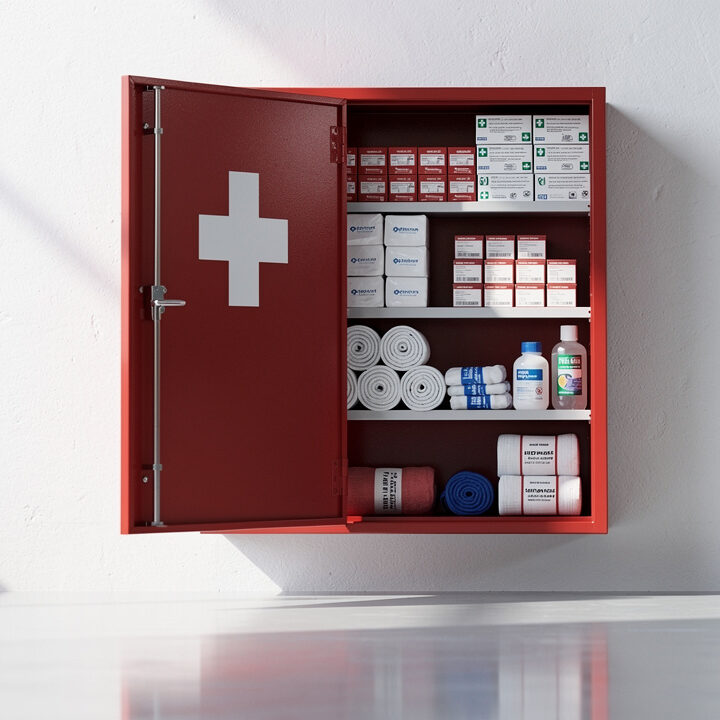
The basic rule is simple: kits must be easy for any staff member to reach right away, yet out of reach for curious children. High shelves in staff-only areas, wall-mounted cabinets, or sturdy boxes stored above child height all meet this goal when every employee knows the locations. If you use locks, the key must be in a known spot or the code shared with all staff, so there is no delay during an emergency.
Most centers need more than one daycare first aid kit. A helpful layout often includes:
A large, central kit in the office or staff room
A smaller kit in each classroom or care area
Dedicated kits in the kitchen and outdoor play space
A separate kit in every vehicle used for transport
Clear signs with a green cross symbol help substitutes, visitors, and even emergency responders spot kits fast when time is tight.
Maintenance, Inspection, And Restocking Protocols
A dusty daycare first aid kit filled with expired items does more harm than good. Regular checks and restocking should be part of your safety calendar in the same way fire drills and playground inspections are.
Set a written schedule for inspections. Many centers choose one day a month when a health and safety lead walks through the building and checks every daycare first aid kit, including classroom kits, the main office kit, playground kits, and vehicle kits. In between those visits, staff should report any time they take items from a kit so it can be topped up instead of sitting half-empty for weeks.
During each inspection, use a short checklist to stay organized. At a minimum, staff should:
Count key items and compare them to your daycare’s first aid kit checklist
Check expiration dates on sterile dressings, antiseptic wipes, ointments, and batteries
Remove and replace anything out of date, torn, damp, or damaged
Test battery-based tools such as flashlights and digital thermometers
Switch on any battery-based tools to confirm they still work, and replace batteries at least twice a year, even if they appear fine.
A simple usage log inside each kit helps you track what is being used over time. Staff can jot down what item they took, the date, and their initials. A central storage closet with extra supplies gives you a single place to restock classroom kits and vehicles while also helping you buy in bulk for better pricing. First Aid Longs is a strong partner here because it offers wholesale first aid and medical products with flexible order sizes and reliable delivery, so your central stock stays consistent across months and across locations.
Finally, keep an inspection log on or inside every daycare first aid kit. Include space for the date, the inspector’s initials, and notes on actions taken, such as replacing expired gauze or adding more gloves. These logs show licensing staff that your center treats first aid readiness as an ongoing duty, not a one-time purchase.
Staff Training Requirements For Effective First Aid Response
A daycare first aid kit by itself cannot care for a child. The real power lies in staff who feel calm, confident, and prepared to use the items inside that kit during stressful moments.
Every staff member who works directly with children should hold current pediatric first aid and CPR cards that cover infants, children, and adults. Training should match the equipment you keep on-site, including any AED units, so staff know how to place pads, follow voice prompts, and switch to child-sized pads when needed. Your admin team can track expiration dates for these cards and schedule classes before anyone lapses.
Classroom learning is only the start, which is why first aid training for childcare providers should combine theoretical instruction with hands-on practice using real equipment from your daycare first aid kit. Regular drills help staff turn knowledge into quick action. You can run scenarios such as:
A child choking during snack
A severe allergic reaction on the playground
A gash from a fall
A seizure in the nap room
During each run-through, staff practice spotting the problem, calling for backup, grabbing the nearest daycare first aid kit, and walking through first aid steps while another person calls emergency services. Short debrief meetings afterwards let teams share what worked, where they hesitated, and what to adjust in their procedures.
New hires also need a tour focused on first aid. During orientation, show them every kit in the building, open one, and review the layout so they know where key items sit. Walk through your written emergency plans, including evacuation routes, lock-in procedures, and individual health plans for children with special medical needs. Finally, train staff on how to write clear, factual incident reports whenever a child needs more than a basic bandage, including what happened, how the child was treated, and how and when families were informed.
“People do not rise to the occasion; they fall to the level of their training.”
— Saying often repeated in emergency response courses
Secure Reliable First Aid Kit Supplies Today!
Explore our first aid kits designed to reduce delays and stabilize your healthcare operations.
Conclusion
A well-planned daycare first aid kit is much more than a licensing checkbox. It is a visible promise to families that you are ready for the scrapes, stings, fevers, and scary moments that come with caring for young children every day.
Strong first aid readiness weaves together several pieces. You need clear daycare first aid kit requirements drawn from your state rules, complete and well-organized supplies in every key area, a practical daycare first aid kit checklist, and smart placement across classrooms, playgrounds, and vehicles. You also need a steady rhythm of inspections, prompt restocking, accurate logs, and staff who stay current on pediatric first aid, CPR, and emergency plans.
When you go beyond the bare minimum and choose sturdy, high-quality supplies, you support calmer responses and better outcomes for children and staff. Partners like First Aid Longs can help you keep those supplies consistent and cost-effective through in-house manufacturing, cleanroom production, and flexible wholesale orders that fit both single sites and large networks.
Take time this week to walk your building, review every daycare first aid kit, and compare what you have against the guidance in this article and your state’s regulations. Update your checklist, refresh staff training dates, and put monthly inspections on the calendar. Every step you take now builds a safer, more confident program for the children and families who trust you every day.


