Introduction
Would your supervisors know the difference between a small kitchen splash that can be handled on site and a third-degree burn that needs 911 right away? Could one quick misjudgment about burn degrees turn a minor incident into lost time, investigations, and long disability claims for your business? Many teams still think any red skin is “just a minor burn,” or they judge burns only by how much they hurt. Electrical burns that barely mark the surface and chemical burns on wet concrete often get brushed off, even though these different burn degrees can be far more serious under the surface. For operations-heavy sites, understanding the types of burn degrees, not only by cause but also by depth, shapes everything from first aid steps to when you call EMS. It also guides PPE choices, training plans, and how well you stay aligned with OSHA and insurance expectations.
This guide focuses on first-, second-, and third-degree burns, how each burn degree looks and feels, and what actions your teams should take. Along the way, you will see how to connect the different types of burn degrees with real workplace risks, and how a medical supplies and consumables partner like First Aid Longs can help you standardize burn readiness across all your locations.
“An accurate early assessment of burn depth and size is one of the most important predictors of outcome.”
— American Burn Association Clinical Resources
Key Takeaways
Before diving into details, it helps to see what you gain by understanding the different types of burn degrees for your sites.
First, second, and third degree burns differ in depth, appearance, and pain level, and these differences drive very different first aid choices and escalation steps for your teams.
Second-degree burns often sit on the line between treating on site and sending to the hospital, so supervisors must read signs like blisters, moisture, and burn size accurately when thinking about types of burn degrees.
Third-degree burns are full-thickness injuries, and they are medical emergencies every time, even when the area is small or the worker feels surprisingly little pain at the centre of the burn.
The cause of a burn, whether thermal, chemical, electrical, friction, or radiation, interacts with the burn degree and can hide more serious damage than the skin shows, especially with electrical and chemical incidents.
Simple visual and symptom cues help your staff separate the different types of burn degrees, such as red dry skin without blisters for first degree, blistered and wet skin for second degree, and leathery or charred skin for third degree.
Degree-specific first aid focuses on cooling, covering, and escalating wisely, while avoiding risky habits like ice on burns, popping blisters, or home remedies that trap heat or add contamination.
When you build clear guidance on types of burn degrees into training, incident forms, and kit contents, and support that with consistent supply from First Aid Longs, you can reduce burn severity, costs, and downtime across your sites.
What Do We Mean By “Types Of Burn Degrees”
People often mix two different ideas when they talk about burns. One idea is to burn type by cause, such as thermal, chemical, electrical, or friction burns. The other is burn degree, which sorts injuries by how deep the damage goes into the skin, and these burn degrees strongly affect healing time and risk.
Burn degrees line up with skin layers:
First degree burns affect only the outer layer, the epidermis.
Second degree burns go through the epidermis and into part of the dermis, so they are called partial thickness burns.
Third degree burns destroy both layers and often reach the fat underneath, which is why they are called full thickness burns.
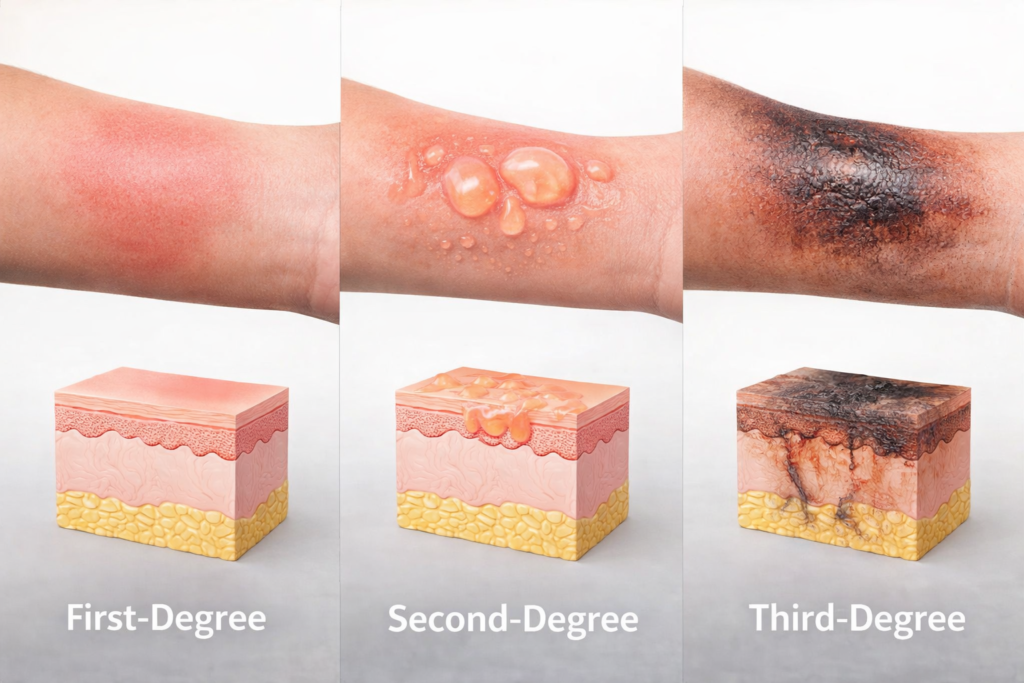
These three types of burn degrees are the ones you will see most often on real sites, and according to Burn Incidence & Treatments data, burns remain one of the most common and costly workplace injuries across the United States.
Modern medical texts often use thickness terms, while many first aid posters and OSHA class materials still use degree language. Because workers may hear both systems, it helps to teach them together when you explain different types of burn degrees. You also need to factor in how much body surface is involved and where the burn sits, because even a “small” second degree burn on hands, face, or joints can be far more serious than a larger one on the back.
| Burn Degree | Skin Depth Involved | Common Surface Look | Typical Pain Level |
|---|---|---|---|
| First Degree | Epidermis only | Red, dry, no blisters | Painful and tender |
| Second Degree | Epidermis plus part of dermis | Red or mottled, blisters, moist | Very painful |
| Third Degree | Full skin thickness, often into fat | White, waxy, brown, or charred | Little pain at center of area |
First-Degree Burns: Superficial But Still A Safety Signal
First degree burns are the shallowest of the common types of burn degrees, with damage limited to the outer skin layer. They often come from quick contact with a hot tool housing, a brief splash of hot water that is wiped away fast, or mild sun exposure during outdoor work at construction sites, events, or on security rounds.
These burns make the skin red, warm, and dry, without blisters or open wounds. The area may feel tight or slightly swollen, and it is usually quite tender even though it looks “clean.” On darker skin tones the redness may be harder to see, so workers and supervisors should also rely on how hot and painful the area feels when judging different types of burn degrees.
To make first degree burns easier to recognize on site, supervisors can think in terms of:
Look: Red, dry, intact skin, no blisters.
Feel: Warm, sore, sometimes slightly swollen.
Function: The worker can move in the area, but it hurts to touch.
First aid for this burn degree focuses on stopping the heat and cooling the skin:
Move the person away from the source of heat, steam, or sun.
Gently remove rings, watches, or tight items near the burn before swelling starts.
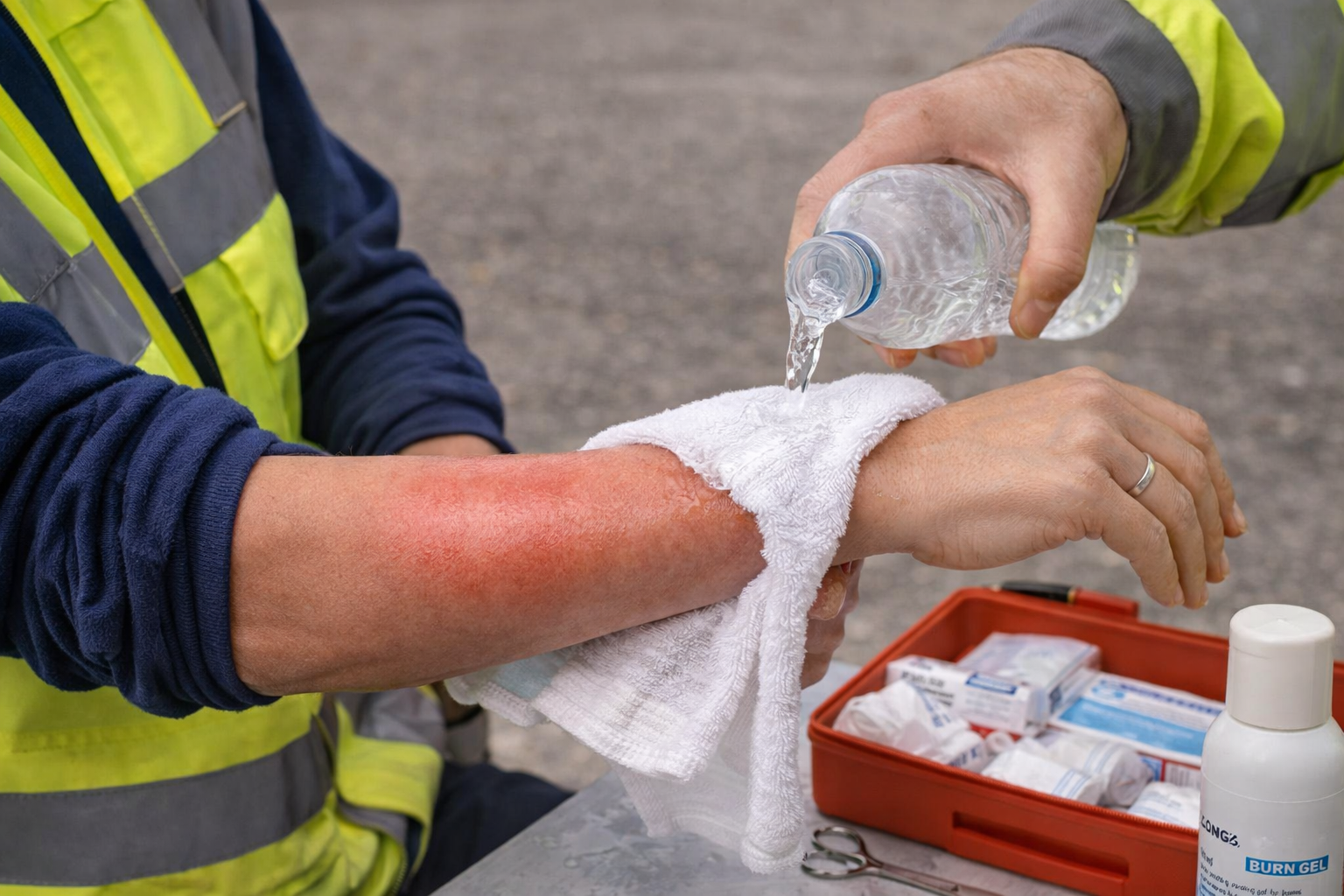
Cool the area under cool running water or with wet cloths for about twenty minutes.
Avoid ice, oils, and thick creams that trap heat or irritate the skin.
Lightly cover the area with a clean, dry dressing if needed for comfort or protection.
Most first degree burns heal within a few days with peeling and no scar, but they still matter for your safety program.
Frequent first degree burns can show patterns that matter more than the single injury. For example:
Repeated small hand burns at a fryer may point to missing guards, poor tools, or rushed training.
Minor burns on forearms around welding tables may mean sleeves, shields, or spacing are not adequate.
Ongoing mild sunburns in outdoor crews may signal gaps in sun protection policies and PPE.
Tracking these “minor” events and supporting your sites with consistent first aid consumables and guidance from First Aid Longs helps you correct hazards before they lead to deeper burn degrees.
Second-Degree Burns Partial-Thickness Injuries That Demand Respect
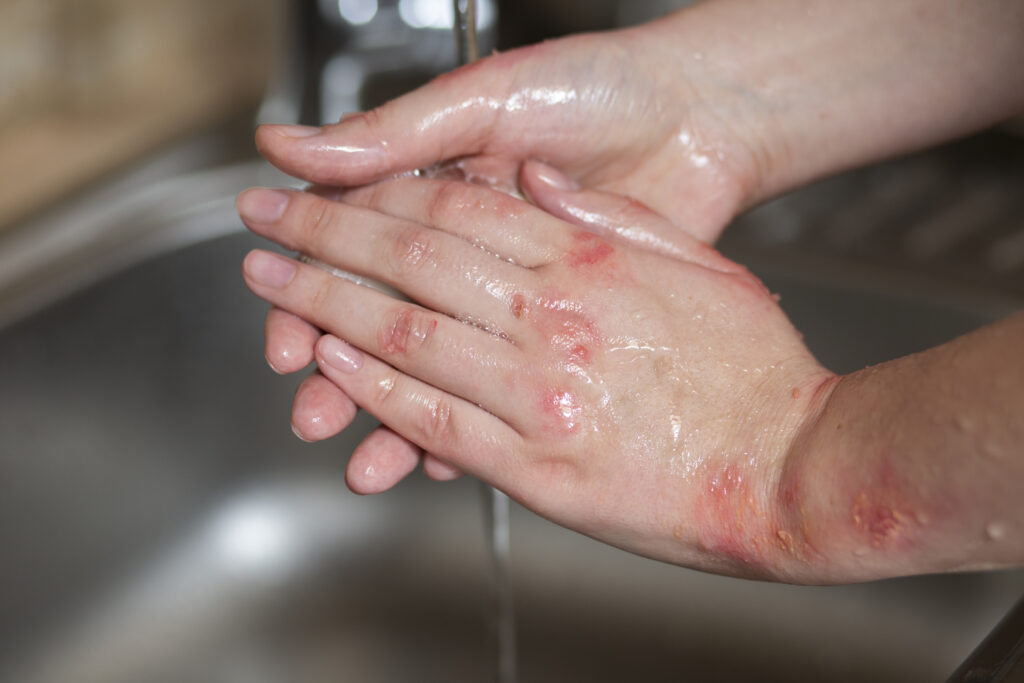
Second degree burns are partial thickness injuries and sit in the middle of the common types of burn degrees. The damage reaches through the outer skin and into part of the dermis, which means the skin barrier is broken and the risk rises. On real job sites, these burns often come from scalds with hot liquids or steam, longer contact with hot metal, some friction events on belts or concrete, and many chemical splashes.
The surface of a second degree burn usually looks red or mottled with clear or yellowish blisters. The area often appears wet or “weeping” because fluid leaks from damaged vessels. Swelling can be marked, and the pain is intense, often sharper than with deeper third degree burns, which is why this burn degree demands more respect than many people give it. In deeper partial thickness injuries, the base may look pale or waxy and pain may drop a little where nerves are more damaged.
Frontline supervisors can remember second degree burns with this quick mental checklist:
Look: Blisters or a wet, shiny surface; red or patchy/mottled color.
Feel: Very painful; the worker may pull away when you try to cool or examine the area.
Risk: Higher chance of infection and scarring because the skin barrier is broken.
Good first aid for this type of burn starts the same way as for first degree, by stopping the source and cooling the area with cool running water as early as possible. Wet clothing and jewelry near the burn come off unless they are stuck, but blisters stay intact because they form a natural, clean cover. After cooling, you place a non-stick, non-fluffy dressing over the area and keep it loosely in place. Thick creams, home remedies, or ointments should wait until a medical team gives advice, except for very small and clearly minor burns.
A practical rule set for supervisors is:
Keep the burn clean and covered.
Do not pop blisters.
When in doubt, send out. (Err toward professional care.)
You should treat many second degree burns as injuries that need professional care. Burns larger than the palm of the worker’s hand, burns on the face, hands, feet, major joints, or genitals, burns that go around a limb, and any partial thickness burns from chemicals or electricity should be checked at a hospital or burn center.
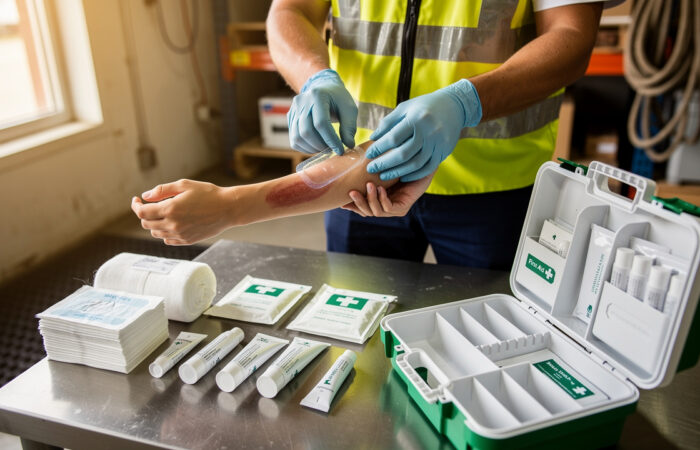
From a management view, these different types of burn degrees are often recordable injuries that lead to lost time and claims. Clear escalation rules and training, supported by structured kits from First Aid Longs that include non-adherent dressings, burn gel, and written burn charts, make a real difference in how consistently your teams respond.
Third-Degree Burns Full-Thickness And Life-Changing
Third degree burns are the deepest of the standard types of burn degrees and destroy the full skin thickness. The injury often extends into the fat layer and may damage muscles, blood vessels, and nerves. In workplaces, these burns come from industrial fires, clothing that catches fire, molten metal or asphalt, very hot surfaces, strong chemicals left on the skin, and high voltage electrical events.
The surface of a third degree burn can look very different from a second degree burn. Instead of bright red and wet, the area may be white, waxy, tan, leathery, or black and charred. The skin often feels dry, stiff, and sometimes sunken. A key sign of this burn degree is that the center may not hurt at all, because nerve endings are destroyed, while the edges, where second degree damage is present, can be extremely painful.
These burns will not heal well on their own and almost always need surgery, such as skin grafts and later reconstructive work. Scarring is heavy and permanent, and when third degree burns cross joints or affect hands and feet, long term loss of motion and strength is common. System wide problems like infection, fluid loss, and temperature control issues are also much more likely with this burn degree, especially when a large area is involved.
Because of that, every third degree burn is a medical emergency. Your teams should:
Call 911 immediately.
Secure the scene so nobody else gets hurt.
Stop burning by removing flames or smoldering clothing that is not stuck to the skin.
Cover the area with a clean, dry, non fluffy material (such as a sterile sheet or dressing).
Keep the person warm and monitor breathing and responsiveness until EMS arrives.
They should not soak large areas in cold water, since that can trigger shock, especially when more than one type of burn degree is present. Electrical and chemical burns that even hint at full thickness damage need hospital care, no matter how small they look.
For your organization, incidents with this degree of burn lead to deep reviews, claims, and public questions, which makes strong prevention, clear protocols, and reliable supplies from First Aid Longs even more important. Standardized kits that include burn dressings, trauma pads, and quick-reference burn charts can support supervisors on the worst days.
How To Apply Burn Degree Knowledge In Your Safety Program
Knowing the different types of burn degrees only helps if your people can act on that knowledge under pressure. The first step is turning these medical ideas into simple, visual rules that supervisors can use on the floor. For example, you can create one-page flow charts that show:
Red, dry, painful skin without blisters is likely first degree.
Blistered and wet skin as likely second degree.
Leathery or charred skin with little pain at the center as likely third degree.
Those quick guides should link burn degrees with actions:
First degree burns usually stay on site with cooling, light covering, and monitoring.
Second degree burns trigger size and location checks, with clear thresholds for sending workers to urgent care or the emergency room.
Third degree burns, and any burns from high voltage, strong chemicals, or suspected inhalation injury trigger a direct call to emergency services.
These simple paths help your teams handle all the common types of burn degrees without long debates.
Training and drills bring those charts to life. Scenario-based practice in kitchens, boiler rooms, labs, and maintenance areas helps staff match real injuries to the right burn degree and response. You can use short tabletop exercises or quick role-play during safety meetings so the language of first, second, and third degree becomes familiar rather than intimidating.
At the same time, you can:
Audit your first aid stations, eyewash units, and shower locations to see whether they match the burn risks at each site.
Check whether SDS sheets, hot work permits, and lockout/tagout procedures mention burn risks clearly.
Review incident reports to see if the described injuries and responses match the actual types of burn degrees.
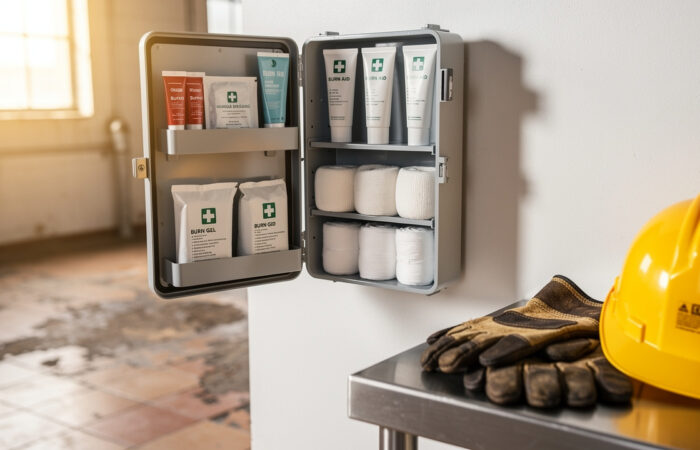
Partnering with First Aid Longs for medical supplies and consumables then helps you keep burn dressings, bandages, and written guidance consistent with your own rules for different types of burn degrees, from small offices to large plants. Over time, tracking burn incidents by degree, cause, and department lets you spot patterns and fix hazards before they reach higher burn degrees.
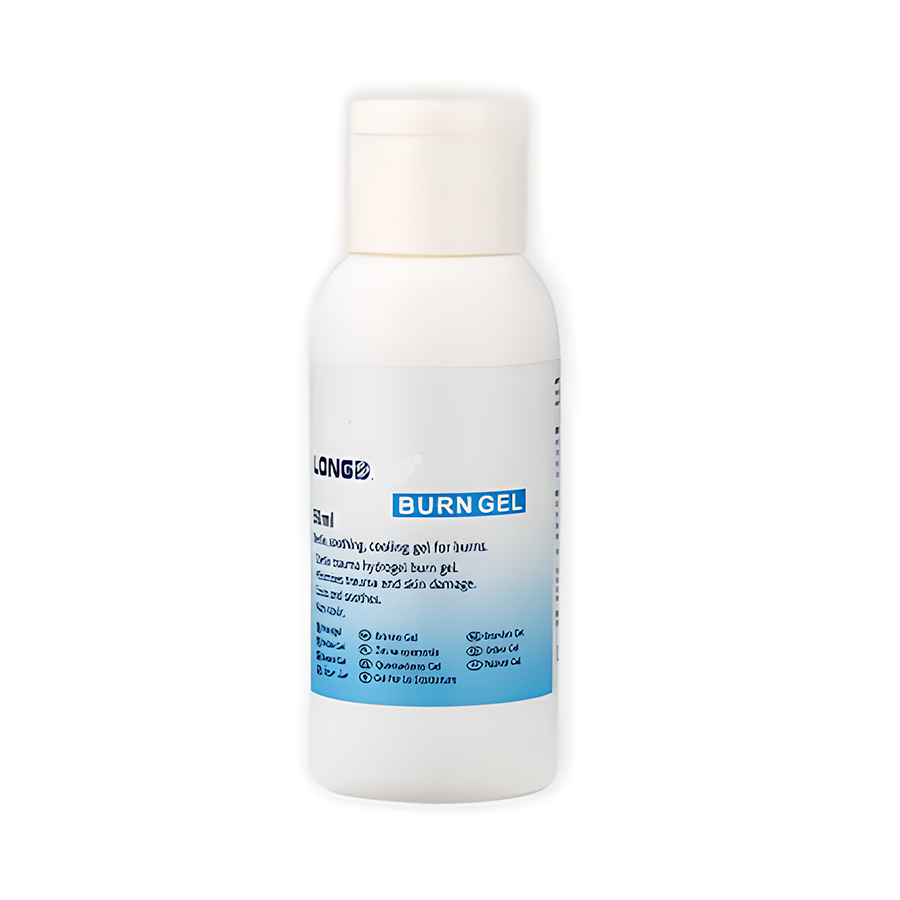
Secure Reliable Burn Gel Supplies Today!
Order our high-quality wholesale burn gels made with safety standards to stabilize your healthcare operations.
Conclusion
First, second, and third degree burns are more than medical labels. They are a clear way to sort injuries by depth and risk, so your teams can act fast and wisely. First degree burns are usually minor, but repeated events still point to hazards and training gaps. Second degree burns are partial thickness injuries with higher chances of infection and scarring, and they often mark the point where on site care must give way to urgent medical help. Third degree burns are full thickness and life changing, and they are emergencies every time, no matter how tough the worker feels.
When your supervisors understand how burn degree, size, location, and cause fit together, they can respond with confidence instead of guesswork. That protects workers, cuts down on complications and downtime, and supports a stronger safety and compliance record across your sites.
As you review your burn policies, training, and first aid stations, consider how a consistent medical supplies and consumables partner like First Aid Longs can help you standardize support for all types of burn degrees from minor first aid cases to the worst day your team hopes never comes.