Introduction
First aid for kitchen burns in the workplace means fast, clear steps that limit tissue damage and downtime. It focuses on cooling, covering, and monitoring burns that happen around stoves, fryers, steamers, and ovens. When these steps are planned and supplied in advance, facilities protect staff, guests, and operations.
Kitchen burns create pain, lost shifts, workers’ compensation claims, and inspection headaches. In busy healthcare and institutional kitchens, even a small scald can disrupt whole meal services.
Effective first aid for kitchen burns starts with simple science based actions. Cool the burn with water, protect the skin, decide when to escalate, and document the event. This guide explains burn types, step by step workplace response, clear escalation rules, prevention policies, and the burn care supplies every kitchen should stock. It also shows how First Aid Longs supports multi site burn readiness with specialized gels, dressings, and kitchen focused kits.
Ready to see how your current setup compares and where to improve burn readiness across your sites? Read on for practical guidance that fits directly into safety programs and purchasing plans.
Key Takeaways
- Kitchen burn readiness matters because burns are among the most common injuries in food preparation areas. They lead to pain, lost time, and claims that can be avoided. A structured plan reduces risk for staff, patients, students, and visitors.
- Core steps of first aid for kitchen burns focus on stopping the heat, cooling with water, protecting skin, and easing pain. A simple written protocol lets any trained team member respond quickly and consistently.
- Staff should escalate beyond on site first aid when burns are large, deep, very painful, or involve high risk body areas. Clear rules on when to call 911 or urgent care cut delays and confusion during stressful moments.
- Essential burn first aid supplies for kitchens go beyond basic bandages. Facilities need nonstick burn dressings, hydrogel pads or gel, gauze, PPE, eyewash, and clear instructions near hot zones.
- First Aid Longs supports multi‑site burn preparedness with in house manufactured hydrogel dressings, burn gels, kitchen‑specific kits, and replenishment programs. This helps large organizations keep every location stocked, aligned, and audit ready.
What Types Of Kitchen Burns Should You Plan First Aid For?
The main types of kitchen burns your facility should prepare first aid for are scalds, hot surface contact injuries, grease burns, flame exposure, and steam burns. These injuries range from mild redness to deep tissue damage that needs emergency care. A simple classification system helps safety leaders match first aid protocols and stocking levels to real risks.
According to the American Burn Association, thermal burns from hot liquids, objects, and flames make up most burns that reach medical care. In food service and institutional kitchens, those same heat sources appear at every workstation. That means planning first aid for kitchen burns can never be an afterthought.

Burn Mechanisms And Risk Patterns In Kitchens
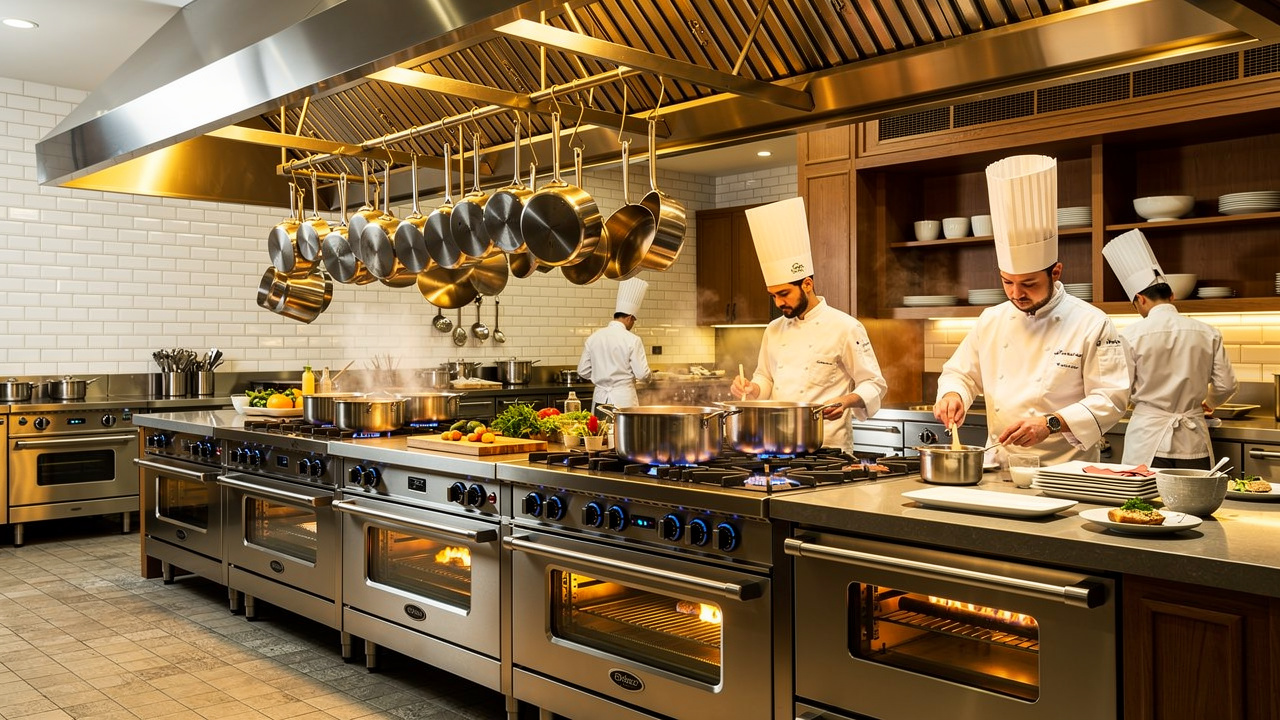
Burn mechanisms and risk patterns in kitchens follow consistent themes that matter for both training and kit placement. Staff move quickly near boiling liquids, high heat appliances, and tight spaces. Small slips easily turn into painful scalds or contact burns.
Common kitchen burn mechanisms include:
- Scalds from boiling water, soups, sauces, coffee, tea, and steam that often hit hands, forearms, and torsos. These are frequent in dish areas, serving lines, and patient tray lines in hospitals.
- Hot oil and grease splashes from fryers and grills that cling to skin and can cause deeper burns. Line cooks and fast food teams face this hazard on every shift.
- Contact burns from pans, oven doors, griddles, steam tables, and heated utensils that workers touch while distracted. These usually injure fingers, palms, and forearms.
- Flame or flash burns from gas flare ups and grease fires that may involve the face and upper body. Poor fire control and lack of Class K extinguishers make these events worse.
- Microwave and covered container steam burns when staff open tight lids or film on hot dishes. These often affect the hands and the face.
Here is a quick reference for where burns usually land in busy kitchens.
| Common Source | Typical Body Areas Affected | Example Location In Facility |
|---|---|---|
| Fryers and woks | Hands, wrists, forearms | Main cook line |
| Ovens and racks | Hands, forearms, face | Bakery, retherm ovens |
| Steamers and kettles | Arms, torso, face | Central kitchen, soup kettles |
| Dishwashers and sinks | Hands, forearms | Dish room |
| Microwaves and hot cases | Hands, face | Break rooms, nurse stations |
High risk groups include line cooks, dishwashers, catering teams, students in culinary labs, and older adults in long term care units with kitchenette access. For these staff and residents, first aid for kitchen burns must be close to fryers, ovens, and dish areas, not locked in a distant office.
Burn Severity Levels And First Aid Implications
Burn severity levels guide whether first aid for kitchen burns is enough or whether staff should call 911 or urgent care. Responders look at depth, size, location, and pain. A simple three level model works well in workplace training.
- First degree burns affect only the outer skin layer. Skin looks red, dry, and painful without blisters. These usually come from brief contact with hot pans or mild scalds and often heal within a week with cool water, protection, and moisturizer.
- Second degree burns extend into the deeper skin layer. Skin looks red, blotchy, swollen, and blistered, and pain is severe. Small, superficial second degree burns on low risk areas can often be handled on site first, then checked in the clinic if needed.
- Third degree burns destroy all skin layers and may reach fat or deeper tissue. Skin can look white, black, brown, or leathery, and pain may be less than expected because nerves are damaged. These are medical emergencies.
A simple table can help first aid teams remember the next steps.
| Burn Degree | What It Looks Like | Typical Next Step |
|---|---|---|
| First degree | Red, dry, no blisters, sore | On site first aid, monitor |
| Small second degree | Red, blistered, very painful, small area | First aid, then clinic follow up |
| Large or deep second degree | Big blistered area, severe pain | Urgent care or emergency department |
| Third degree | Charred, waxy, or leathery skin, odd sensation | Call 911 immediately |
Any burn involving the face, hands, feet, genitals, buttocks, or major joints deserves higher urgency, even if it appears small. Your escalation rules for first aid for kitchen burns should point staff directly to the medical care section of this guide for these locations.
How Should You Deliver First Aid For Kitchen Burns Step By Step?
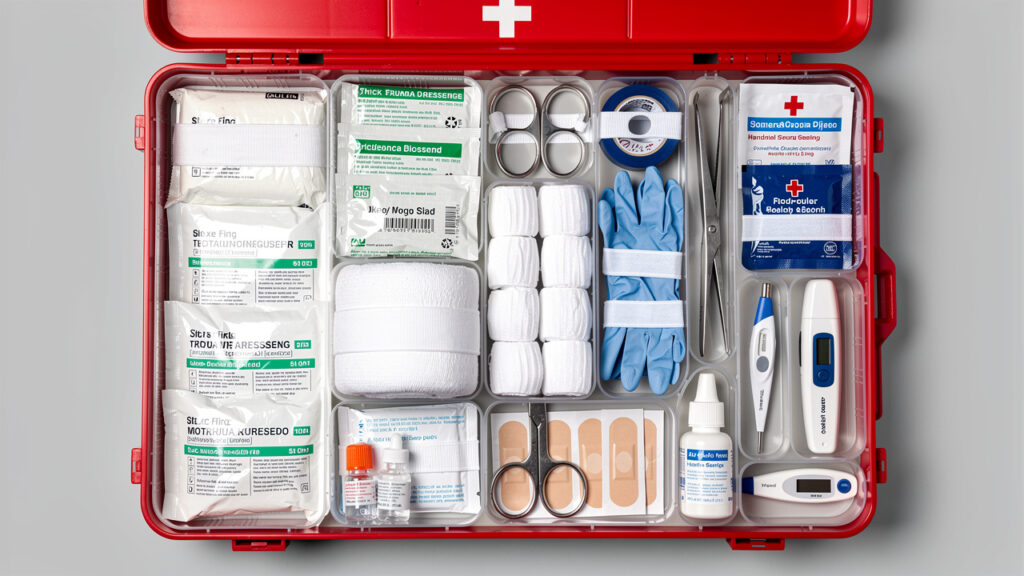
Delivering first aid for minor kitchen burns in a workplace means following a simple, repeatable sequence that any trained staff member can use. The focus is on stopping the heat, cooling the tissue, protecting the skin, and documenting what happened. A well designed protocol turns a stressful event into a calm, predictable process.
Evidence reviewed by the National Institutes of Health shows that early cool water irrigation helps limit burn depth and later scarring. Matching this science with clear workplace instructions is the heart of effective first aid for kitchen burns.
Step By Step First Aid Protocol For Minor Kitchen Burns
A step by step protocol works best when it fits on a wall chart or card clipped to each first aid station. Here is a structure that safety officers can adapt into local procedures and training.
- Stop The Burning Process And Secure The Scene
- Move the injured person away from the stove, fryer, or hot pan as soon as it is safe.
- Turn off burners, fryers, or steamers if you can do so without risk to anyone else.
- Keep other staff out of the splash or smoke zone so the incident does not grow.
- Cool The Burn With Running Water
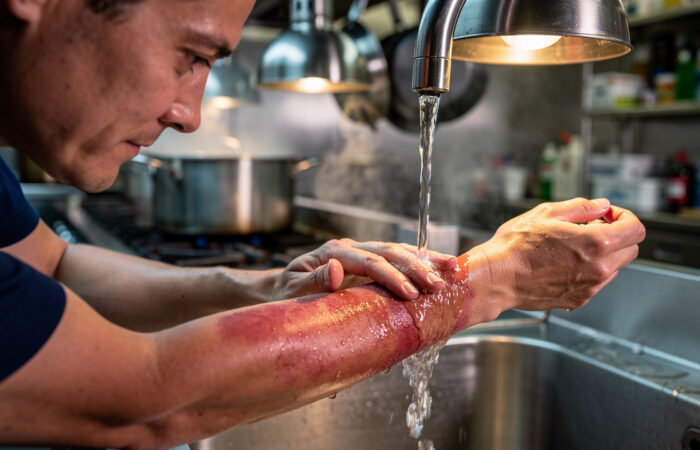
- Place the burned area under cool running tap water as soon as possible.
- Aim for at least ten minutes of gentle flow, with five minutes as the bare minimum, and up to fifteen to twenty minutes for still minor but larger burns.
- Use water that is cool, not icy, because ice can worsen damage.
- If there is no sink nearby, use a clean, cool, wet cloth and refresh it often.
- Remove Constricting Items Early
- While cooling, gently remove rings, watches, bracelets, or tight sleeves near the burn.
- Swelling can build quickly and make these items difficult or impossible to remove later.
- Never pull off clothing that is stuck or melted into the skin because this can tear tissue. Cut around the stuck area and leave the rest for medical staff.
- Gently Clean And Protect The Burn
- After cooling, pat the area dry with a clean, lint free cloth.
- For intact skin, mild soap and water are usually enough to remove surface debris.
- Cover the burn with a clean, dry, loose, nonstick dressing such as a sterile non adherent pad or hydrogel burn dressing.
- This helps keep out dirt and reduces pain from air contact in busy kitchens.
- Manage Pain And Comfort
- Follow your facility policy on over the counter pain medicine, such as acetaminophen or ibuprofen, and check for allergies.
- Cooling and covering the burn often lowers pain on their own, so reassess before repeating doses.
- Encourage the person to sip water, especially in hot work areas, to reduce dehydration risk.
- Monitor And Document
- Record the time of the burn, what caused it, steps taken, and which products you used.
- Proper notes help occupational health, support OSHA recordkeeping, and feed into safety reviews.
- Continue to check the burn for increased redness, swelling, or pain, and follow your escalation criteria if these develop.
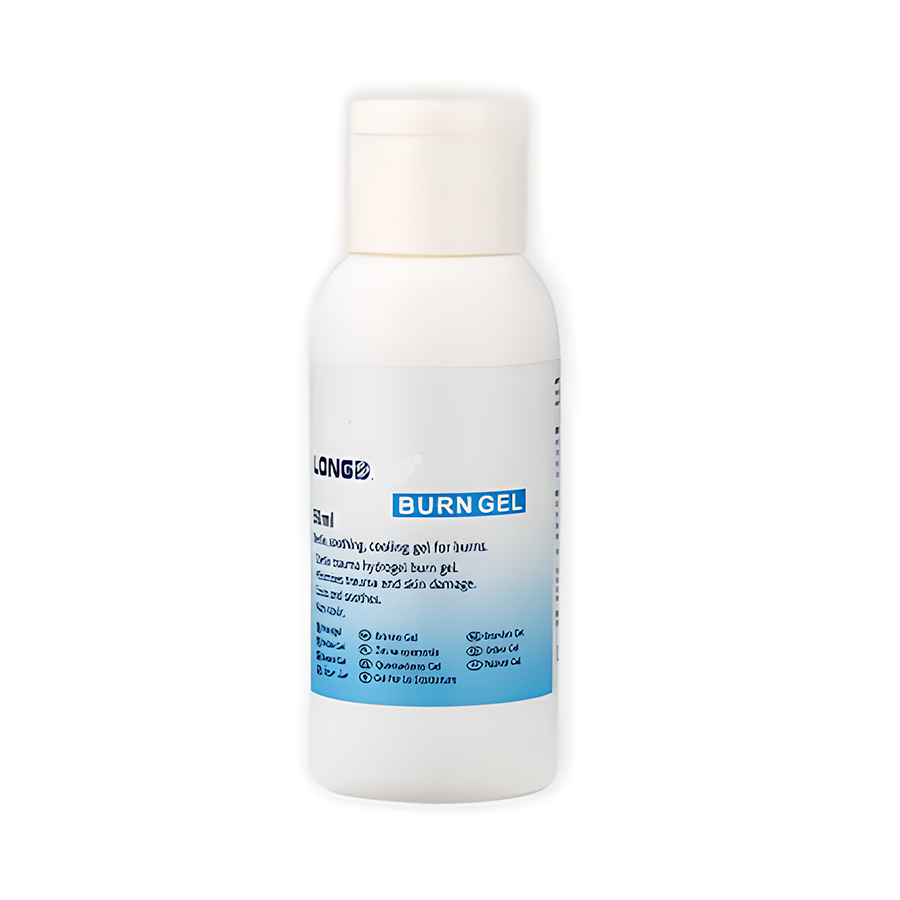
Secure Reliable Burn Gel Supplies Today!
Order our high-quality wholesale burn gels made with safety standards to stabilize your healthcare operations.
Some common habits still found in kitchens can actually make burns worse.
- Do not use ice or ice water directly on any burn. Extreme cold narrows tiny blood vessels and can deepen tissue damage. Large areas cooled with ice also raise hypothermia risk, especially for smaller or frail workers.
- Do not put butter, cooking oil, toothpaste, flour, or egg whites on burns. These materials trap heat in the skin and often contain bacteria or irritants. They also make it harder for clinicians to see the wound and apply modern dressings.
- Do not deliberately pop blisters. Intact blisters protect underlying tissue from infection. Large, tense, or function‑limiting blisters belong in a clinic or occupational health office, not at a prep table.
To reinforce correct steps, many safety teams use a simple comparison table.
| After A Kitchen Burn | Do This | Avoid This |
|---|---|---|
| Cooling | Use cool running water for at least 5–10 minutes | Using ice or ice water |
| Topicals | Apply burn gel or a hydrogel pad only after cooling | Putting butter, oil, or home remedies on the skin |
| Blisters | Protect blisters with nonstick dressings | Breaking blisters with fingers or tools |
According to the American Burn Association, early cooling with water is the single most helpful first step for small thermal burns. Aligning your written protocol with these simple ideas turns basic first aid for kitchen burns into a reliable part of your safety program.
When Does First Aid For Kitchen Burns Need To Escalate To Medical Or Emergency Care?
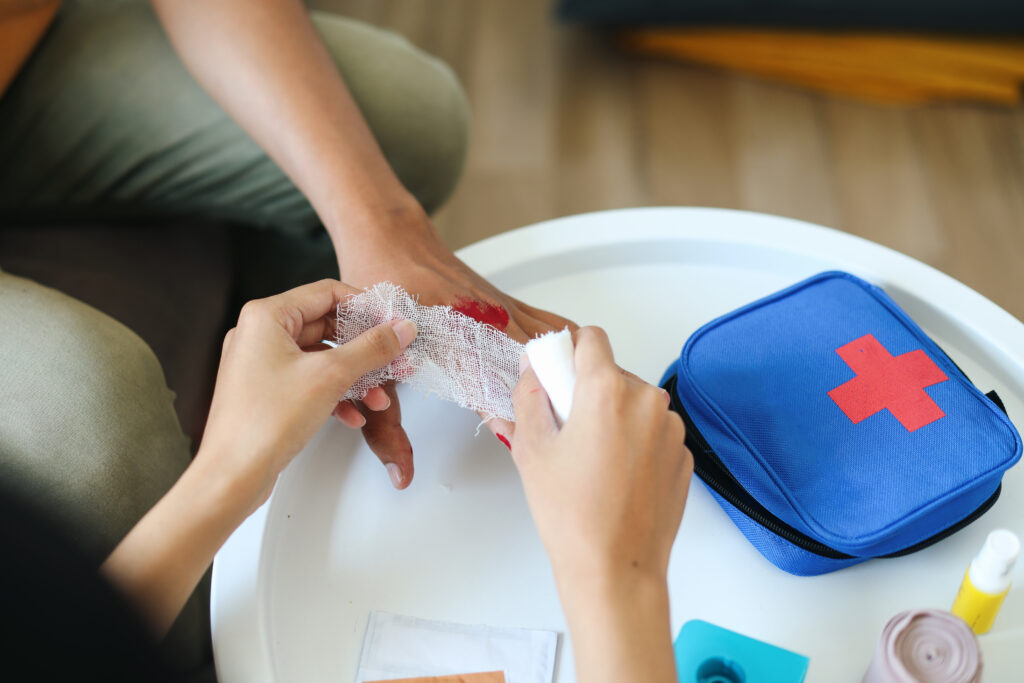
First aid for kitchen burns is only the first layer of protection. Some injuries are too large, too deep, or affect sensitive areas and need urgent medical attention. Clear escalation criteria keep staff from guessing in the middle of a stressful event.
Research from the Centers for Disease Control and Prevention notes that burns cause tens of thousands of hospitalizations each year in the United States. Early referral for serious burns lowers complication rates and supports better long term function.
Escalation Criteria and Follow Up Guidance
Your escalation rules should live on the same posters and checklists as the basic first aid steps. Staff should not have to search a manual while someone is in pain. Two levels usually work well.
Call 911 or activate emergency services immediately if any of these apply:
- The burn looks deep, with white, brown, or black areas or a leathery texture, even if pain seems mild.
- The burned area is larger than the injured person’s open hand or completely wraps around an arm, leg, or torso.
- The burn involves sensitive areas such as the face, eyes, ears, hands, feet, genitals, buttocks, or a major joint like the knee, elbow, or shoulder.
- There are also signs of smoke or airway involvement, such as singed nasal hairs, soot around the mouth, a hoarse voice, or trouble breathing.
- Additionally, the burn comes from electricity or a strong chemical, such as a concentrated cleaner or degreaser.
Arrange an urgent clinic or occupational health follow up if the situation is not life threatening but still raises concerns:
- Pain stays severe or increases several hours after the correct first aid for kitchen burns, despite appropriate over‑the‑counter medicine.
- Signs of infection appear over time, such as spreading redness, warmth, swelling, pus, or a foul smell.
- Blisters are large, over joints, or interfere with normal gripping or walking.
- The worker has not had a tetanus booster in more than five to ten years, and the burn has broken skin.
Good documentation helps both healing and compliance. OSHA’s medical services standard, highlighted on the OSHA site, expects employers to provide appropriate first aid supplies and timely medical attention. Recording burn events, treatment steps, and follow up allows safety teams to refine training and purchasing while also supporting workers’ compensation and internal reviews.
Which Burn First Aid Supplies Should Every Kitchen And Food Service Operation Stock?
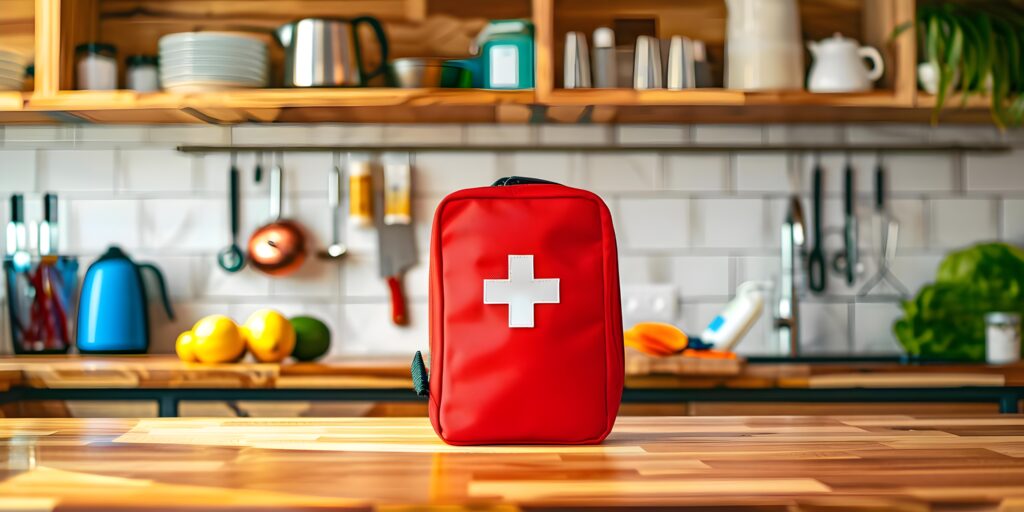
In addition, every kitchen that handles hot food, oil, and steam should have specific burn care supplies, not just a basic box of adhesive bandages. Moreover, well chosen products allow staff to carry out first aid for kitchen burns exactly as outlined in your protocol. As a result, the right mix of supplies saves time, reduces pain, and simplifies audits.
Guidance from ANSI standards and OSHA points toward dedicated burn modules for high heat sites. First Aid Longs designs its kits and components with those expectations in mind, while keeping food safety and cross contamination risks front and center.
First Aid for Kitchen Burns: Essential Tools, Equipment, And Kits
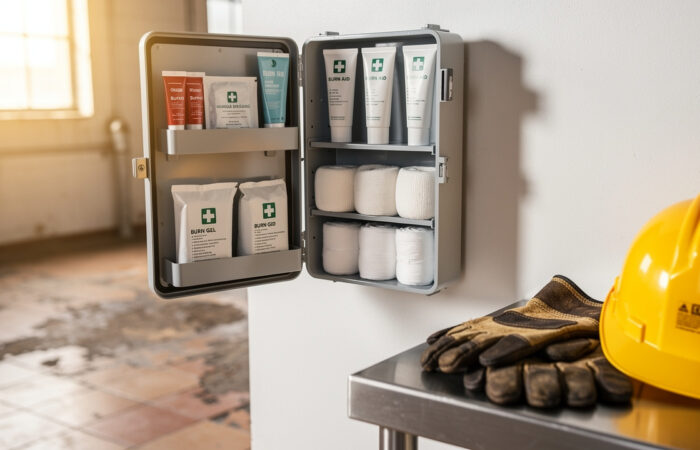
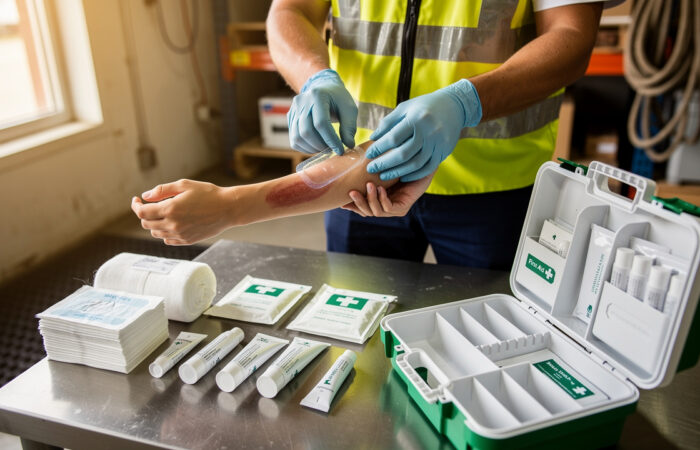
Generic first aid kits often fall short in kitchens because they lack nonstick burn dressings, eyewash, and high visibility bandages. A model burn module brings all key items together in one spot.
For cooling and cleansing:
- Potable running water at sinks in or near hot zones
- Sterile saline pods or ampoules for gentle cleansing of small burns or splashes near the eyes
- Water based burn cooling gels from First Aid Longs as backup when a sink is not close
For dressings and coverings:
- Sterile non adherent pads sized for fingers, hands, and forearms
- Sterile gauze pads, rolled gauze, and soft elastic wraps to secure dressings
- First Aid Longs hydrogel burn dressings, which combine cooling gel with a nonstick pad, protecting fragile tissue and fitting neatly into ANSI‑style kits
For topical support of minor burns (after cooling, where protocols allow):
- Water based gels with aloe vera for soothing moisture
- First Aid Longs BG 02 burn relief gel, with lidocaine hydrochloride for targeted pain relief, plus glycerin and propylene glycol to hold moisture
- Single use burn gel packets from First Aid Longs to reduce cross‑contamination in cafeterias, concessions, and hospital kitchens
For PPE and support items:
- Disposable nitrile gloves
- Eye protection for irrigation tasks
- Adhesive tape suitable for sensitive skin
- Blunt tip scissors
- Blue food service bandages that show up easily if they fall into the food
- Clear, laminated instruction cards from First Aid Longs inside wall cabinets and near cook lines
A simple contents table helps standardize purchasing.
| Recommended Item | Purpose In Burn Care | First Aid Longs Option |
|---|---|---|
| Hydrogel burn dressings | Cool and protect small burns on hands/arms | Sterile gel soaked nonstick pads |
| Burn relief gel | Ongoing comfort for minor cooled burns | BG 02 tube based gel or single use packets |
| Nonstick pads and gauze | Cover burns and keep out dirt | Assorted sterile pads and rolled gauze |
| Saline pods and eyewash | Rinse small wounds and splash exposures | Eyewash solutions and saline wipes |
| Blue bandages and PPE | Protect minor cuts and support food safety | Kitchen specific kits with blue strips and gloves |
Because First Aid Longs manufactures in house and supports OEM and ODM customization, procurement teams can match kit contents to fryer layout, headcount, and risk profile at each site. Bulk supply and organized replenishment programs make it easier for multi‑site operators to keep every kitchen burn‑ready without constant manual checking of each component.
First Aid for Kitchen Burns: Policies and Training That Prevent Injuries
Preventing kitchen burns across healthcare, education, government, and corporate sites depends on both engineering controls and clear behavior standards.
When prevention improves, the need to use first aid for kitchen burns drops, and staff see fewer painful incidents. Safety leaders should link policies, equipment choices, and training into one simple plan.
The National Fire Protection Association reports that cooking equipment remains the leading cause of home fires and fire related injuries, which reflects how often people work near heat. The same pattern appears in institutional kitchens, so burn prevention deserves the same attention as fire safety drills or knife training.
Practical Burn Prevention Strategies For Institutional And Workplace Kitchens

Use a layered approach that covers both the environment and daily habits:
Engineering and environmental controls
- Install temperature regulators and anti‑scald valves on water heaters in the dish rooms and resident areas.
- Use splash guards, tight fitting lids on kettles and fryers, and insulated pan handles.
- Maintain adequate lighting, clear hot zone markings, and anti‑slip flooring around fryers and sinks.
- Position fryers and steamers away from main walkways to cut bump and spill risks.
Administrative controls, PPE, and training
- Develop standard operating procedures for:
- Carrying and pouring hot liquids
- Opening ovens, steamers, and pressure cookers
- Working near tilt skillets and steam kettles
- Encourage short verbal alerts such as “Hot pan behind” or “Opening oven” when moving through crowded lines.
- Train staff on fire basics, including how to use Class K extinguishers and why water never belongs on a grease fire.
- Include regular drills that rehearse first aid for kitchen burns so both permanent and temporary staff stay confident.
Monitoring, documentation, and continuous improvement
- Track burn incidents by cause, location, equipment, and severity to spot trends.
- Review data during safety meetings and update procedures where clusters appear (for example, one problem fryer or dish machine).
- Work with First Aid Longs to standardize kits, refill packs, and signage that match your policies and inspection forms.
Moving Forward With Safer Kitchens And Stronger Burn Preparedness
Safer kitchens start with a clear understanding of how burns happen, how to respond, and when to call for help. Therefore, when first aid for kitchen burns is documented, trained, and supplied across all sites, organizations protect people and maintain steady operations. As a result, staff know exactly how to cool, cover, and escalate instead of guessing during a painful incident.
In addition, specialized burn supplies are now considered best practice for high-risk kitchens. Hydrogel burn dressings, burn relief gels, blue food service bandages, eyewash, and clear instructions turn a basic first aid kit into a dedicated burn care station. According to the National Safety Council, strong first aid programs reduce both injury severity and lost time after workplace incidents. Consequently, aligning products and training makes those benefits real on every shift.
Industry Expertise in Burn Care Solutions
Furthermore, First Aid Longs brings nearly three decades of in-house manufacturing experience, 100K class cleanroom facilities, and work with more than one hundred global clients to solve this need. Its hydrogel dressings, BG 02 burn gel, single-use packets, kitchen-specific kits, and replenishment programs help healthcare systems, schools, manufacturers, and corporate campuses standardize burn readiness.
Finally, now is a good moment to review your current kitchen layouts, burn protocols, and kit contents. Compare them with the steps and supplies in this guide. Then decide where upgrades will have the biggest impact. When you are ready to update or standardize burn care across locations, connect with First Aid Longs to build kits and supply plans that match your real kitchen risks.