

Preface
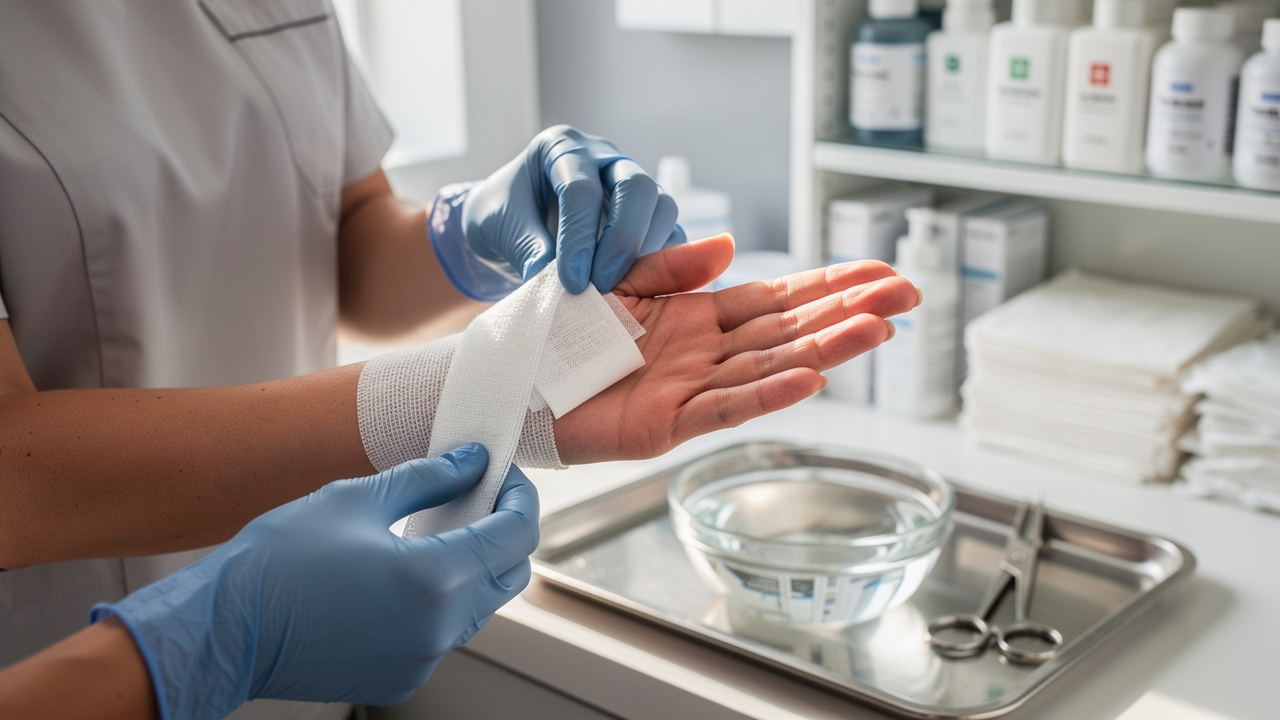
Burn Treatment Supplies give you a clear way to handle burns before they turn into bigger medical problems. In many workplaces, you face hot surfaces, steam, chemicals, or electricity every day. Without a simple, stocked checklist, even a small burn can lead to lost time, complaints, and safety findings.
This article shows you how to match your burn treatment supplies to real hazards, not guesswork. You will see practical tables, placement tips, and stocking ideas you can adapt to one site or many. A Statista report notes that contact with hot objects and substances causes thousands of recordable injuries each year, which confirms how common burn risks are in normal work routines (Statista).
Keep reading to compare your current kits with this checklist and close any gaps now, not after the next incident.
Key Takeaways
- A focused burn checklist turns scattered items into a clear system you can explain. You will group gels, dressings, sheets, and support items by how they are used. That structure lets you talk with managers, nurses, and safety staff in the same simple language.
- Burn risk mapping links supplies to real tasks in your building. You connect ovens, welders, labs, and offices to the right mix of dressings, eyewash, and kits. That link keeps you from overspending in low risk areas while leaving hot zones short.
- Ongoing inspections keep burn care ready on the worst day, not just on paper. You will see simple rules for quantities, expiry checks, and reorder points. With First Aid Longs as a partner, you can repeat the same method across every plant, clinic, or campus.
What Are Burn Treatment Supplies Your Workplace Actually Needs?

Workplace burn treatment supplies are the first aid items you stock to cool, cover, and protect burned skin until a clinician takes over. These supplies match minor burns you treat on site and serious burns where you only provide early care before EMS arrives.
According to the American Burn Association, about 40,000 people in the United States each year require hospitalization for burn injuries. Many of those start as workplace incidents around hot equipment or chemicals. If you want fewer complications and fewer OSHA questions, your list must fit both small and major injuries.
Understanding Workplace Burn Risks And Severity
Workplace burn risk comes from what your people do and where they work. Kitchens, foundries, construction sites, labs, and maintenance shops see the highest heat and chemical exposure. Office areas mostly face minor hazards from appliances or hot drinks.
Clinically, burns fall into superficial, partial thickness, and full thickness groups. Superficial burns are red and painful, partial thickness burns blister, and full thickness burns can look white or charred with less pain. Guidance from Mayo Clinic and the American Burn Association is clear that large, deep, or facial burns always need EMS or a burn center, not only first aid.
Burn size and location also change supply needs. Hands, faces, joints, and genitals need more specialized dressings and careful coverage. OSHA standard 29 CFR 1910.151(b) says that adequate first aid supplies must be readily available, and burn treatment supplies form a key part of that requirement.
Core Categories Of Burn Treatment Supplies
Before you build a checklist, it helps to see the main categories in simple groups:
- Cooling products: hydrogel burn dressings, burn gels, and burn sprays that reduce pain and help remove heat from minor burns
- Cover dressings: non stick pads, gauze pads, and gauze rolls that cover wounds and hold gels in place without pulling on skin
- Large area coverage: burn sheets and burn blankets that cover big areas and help protect against contamination and heat loss
- Support items: eyewash bottles, saline wipes, nitrile gloves, scissors, instant cold packs, foil emergency blankets, and tape
Supplies for full clinical care, like IV fluids and advanced topical drugs, stay in hospitals and are not part of a basic workplace kit.
How To Build A Workplace Burn Treatment Supplies Checklist

A strong burn treatment supplies checklist starts with your hazards, headcount, and layout, then turns that into a short, repeatable item list. You want something you can share with managers, safety committees, and frontline staff without confusion.
Research from the Bureau of Labor Statistics shows thousands of nonfatal workplace burn injuries every year in private industry. Your goal is to keep as many as possible in the minor category by cooling early and covering correctly. That requires a simple method you can revisit each year.
Step By Step Burn Risk Assessment For Your Site
Use this simple sequence when you walk your site:
- Map hot, electrical, and chemical zones on a floor plan.
- List equipment such as ovens, fryers, welders, boilers, steam lines, soldering benches, and labs.
- Include mobile crews who work on construction or service calls and depend on portable kits.
- Review who is exposed and when: employees, contractors, students, and visitors on each shift.
- Check OSHA logs or incident reports for past burns and near misses.
Statista data show that contact with hot objects and equipment is a frequent cause of nonfatal workplace injuries, which matches patterns many safety managers already see. From this, write a short list of likely scenarios such as:
- Small hand burns at a fryer or griddle
- Splash burns in a lab or cleaning area
- Larger burns during a plant fire or electrical event
This scenario list guides both your burn treatment supplies and your training plan.
Complete Burn Treatment Supplies Checklist Table
Use this table as a base you can adjust for your own hazards and headcount. Quantities are per roughly fifty people in a mixed risk workplace.
| Item Category | Specific Item | Purpose | Recommended Placement | Typical Quantity Per 50 Employees |
|---|---|---|---|---|
| Hydrogel dressings | Sterile 4 in x 4 in gel pads | Cool and cover small burns on hands and arms | Near cooking lines, welders, maintenance rooms | 8 to 12 pads |
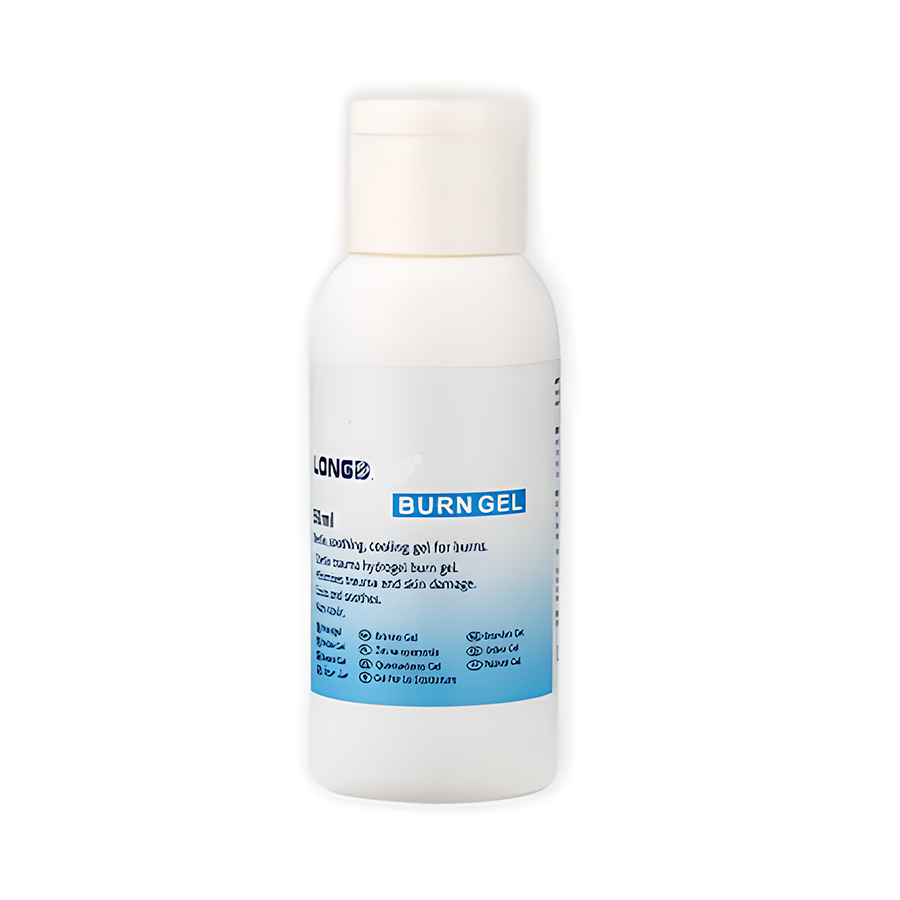
| Burn gels | Tube gel and single use packets | Quick cooling for tiny burns and high traffic spots | First aid cabinets, vehicles, break rooms | 1 tube and 20 packets |
| Non stick dressings | Non stick pads and sterile gauze pads | Protect cooled burns without sticking to tissue | Nurse office, safety room, clinics | 20 to 30 pads mixed sizes |
| Gauze rolls | Conforming gauze and elastic wraps | Hold dressings in place with light support | In every wall mounted kit and trauma bag | 10 rolls |
| Burn sheets/blankets | Sterile burn sheet 60 in x 90 in and burn blanket | Cover large burns and help prevent heat loss | Central safety room, security post, EMS bag | 2 sheets and 1 blanket |
| Eye care | Eyewash bottle and saline wipes | Flush minor chemical or heat splashes | Labs, chemical rooms, battery rooms | 2 eyewash bottles and 1 box wipes |
| PPE and tools | Nitrile gloves, scissors, tape | Protect the responder and trim dressings | Every burn kit and first aid cabinet | 10 glove pairs, 2 scissors, 4 tape rolls |
| Cooling support | Instant cold packs and foil blankets | Comfort for nearby tissue and help with shock | High risk zones and evacuation points | 4 cold packs and 4 foil blankets |
High risk areas such as fry lines or welding bays may need double these numbers near the work area. Office floors can follow the same list with smaller counts and fewer large dressings.
For broader first aid planning beyond burns, review your main safety resource or pillar content on workplace kits and emergency gear. Linking your burn treatment supplies to that wider plan keeps your program consistent across hazards.
Secure Reliable Burn Gel Supplies Today!
Order our high-quality wholesale burn gels made with safety standards to stabilize your healthcare operations.
Which Burn Treatment Supplies Belong In High Risk Versus Low Risk Areas?
High risk areas need fast grab access to burn items, while low risk areas can rely more on central cabinets and nurse stations. You want the right density of kits so response time stays short without over stocking quiet spaces.
According to OSHA, first aid supplies must be available in areas where accidents are likely. That means your checklist must match not only what you buy but also where you place it.
Location Specific Supply Setups

Use these patterns as you assign burn treatment supplies to different zones:
- Commercial kitchens and cafeterias
- Place hydrogel dressings and burn gel packets within a few steps of cooking lines and dish machines.
- Add a small wall cabinet near exits so staff can grab supplies while moving an injured person away from the heat.
- Keep at least one larger burn kit with a sheet and blanket near the manager’s office or main storage room.
- Manufacturing plants and construction sites
- Put compact burn packs on mobile safety carts and in foreman vehicles so crews have gels and dressings at the point of injury.
- Keep larger burn sheets, blankets, and extra gauze in a central safety room or tool room.
- For big sites, add a comprehensive kit in security or the main gate house for incidents near parking or shipping.
- Laboratories and chemical facilities
- Place plumbed eyewash stations where regulations require them, then add portable eyewash bottles and saline wipes at benches.
- Stock chemical safe burn dressings and clear instruction cards for acid and base exposures.
- Work with your medical advisor so burn treatment supplies match your chemical inventory and any safety data sheet warnings.
- Offices, schools, and low risk areas
- Standard first aid cabinets with a small set of hydrogel dressings, burn cream packets, and non stick pads often work well.
- Add one larger burn kit with a burn sheet and foil blankets at the main reception or nurse’s office.
- Make sure staff know which elevator free routes lead to that central kit.
Placement, Labeling, And Training Considerations
Once you own the right items, placement and labeling decide how useful they are during a real event. Every burn kit, bag, and cabinet should look the same across your sites, with clear wording on the front and simple diagrams inside. Products that print use steps on their own packs help non clinical staff act without long manuals.
Training sessions do not need to be long to be effective. Focus on:
- Cool running water first
- Then, gels or dressings
- Then, when to call 911
Guidance from Mayo Clinic warns against ice, butter, or home ointments on burns, so remove those items from work areas. Short drills that ask staff to find the nearest burn kit and start that simple sequence can cut real response time by minutes. For more drill ideas and first aid topics, check your organization’s broader emergency response training guides and cluster content.
How To Stock, Inspect, And Maintain Your Burn Treatment Supplies

Stocking and inspection practices keep your burn treatment supplies checklist real instead of just a document. You need clear quantities, reorder points, and inspection routines that fit into your existing safety program.
Recent data from the American Burn Association highlight that early, correct first aid leads to better outcomes and shorter hospital stays. That benefit only happens when gels, dressings, and sheets are present, in date, and easy to reach.
Setting Quantities And Reorder Points
You can use simple rules of thumb as a starting point:
- For higher risk areas such as kitchens, foundries, and welding bays, plan for at least one compact burn pack and one larger kit per twenty five workers.
- For lower risk office floors, one shared kit per fifty workers may be enough as long as the travel distance stays short.
Separate point of use kits from central bulk storage:
- Keep drawers or bins of extra gel packets, dressings, and gloves in a locked but reachable room so you can refill wall cabinets quickly.
- Use a basic reorder rule, such as: when a cabinet holds fewer than half its starting gels or dressings, the safety lead orders a standard refill from your supplier.
Over time, you can refine counts by watching incident reports and drill feedback. If you track other first aid items like bandages and eyewash in a central system or cluster dashboard, add your burn treatment supplies to the same process for consistency.
Inspection, Expiry Management, And Documentation
Fold burn checks into your normal safety inspection rounds so nothing is forgotten. At least once a quarter, a trained person should:
- Open each kit and confirm seals
- Count key items such as gels, hydrogel pads, and burn sheets
- Read expiry dates on gels, dressings, and eyewash
- Replace anything that is out of date, damaged, or contaminated
Many procurement managers like to place a small sticker on each kit that lists the last check date, initials, and the next due month.
For multi site groups, create one shared inspection form that works everywhere. This helps you show auditors and regulators that your program is active and not just a policy. Guidance from OSHA and ANSI style first aid standards favors documented checks, especially in higher hazard workplaces.
A supplier such as First Aid Longs can help you align kit layouts and refill packs so documentation stays simple across dozens of locations. First Aid Longs product pages on workplace first aid kits and burn care lines give you ready made checklists you can adapt to your own program.
How First Aid Longs Supports Your Burn Treatment Supplies Strategy

A strong checklist works best when you have a supplier who can match it with reliable products and steady stock. First Aid Longs focuses on workplace burn care and first aid, with in house manufacturing that gives you consistency and predictable lead times.
Since 1996, First Aid Longs has produced hydrogel dressings, burn gels, eyewash, and first aid kits for clients around the world. That history, plus 100K Class Cleanroom facilities, helps you meet OSHA and ANSI style expectations without chasing many vendors.
Burn Gels, Dressings, And Complementary Supplies From First Aid Longs
First Aid Longs offers hydrogel burn dressings that are ideal for localized workplace burns on hands, arms, and similar areas. You can place these sterile pads near production lines, auto bays, and commercial kitchens where contact burns are frequent. Tube based burn relief gels and single use packets fit well in offices, break rooms, buses, and any high turnover location.
Non stick burn dressings and specialized pads from First Aid Longs help protect fragile tissue during dressing changes. Paired with sterile gauze pads and gauze rolls, they support safe coverage in dusty plants and food environments. The company also provides eyewash solutions, saline wipes, and complete first aid kits that you can configure for burn heavy sites such as refineries or large cafeterias. Bulk and wholesale options let you align your standard list with long term contracts and central burn treatment supplies planning.
Why Organizations Standardize Burn Treatment Supplies With First Aid Longs
Many organizations choose First Aid Longs because a single manufacturing source simplifies quality control and timing. In house production means tighter checks on materials, packaging, and sterility, which matters when your staff depends on gels and dressings during a real emergency. Client feedback often highlights reliable shipments and responsive support from the team.
“First Aid Longs ensures high quality products that are always delivered on time.”
Client feedback shared with the First Aid Longs sales team
First Aid Longs also helps safety and procurement leaders build risk based stocking lists matched to each location. That support covers site mapping, kit layouts, and refill programs across hospitals, factories, schools, and government buildings. If you manage distribution, the same product range scales well for your downstream customers, too. You can learn more about workplace first aid products on the First Aid Longs website.
Moving From A Burn Risk To-Do List To Real Readiness
You now have a clear picture of how burn hazards link to gels, dressings, sheets, kits, and inspection routines. The next step is a simple action rather than more planning. Compare your current cabinets and kits against this checklist and note where items are missing, expired, or poorly placed. Then adjust your quantities, add larger dressings or burn blankets where risk is higher, and schedule regular checks.
Your goal is a workplace where Burn Treatment Supplies are ready, clear, and standard from one room to the next. Use the methods in this article to update your lists, walk your sites, and train your teams. Reach out to First Aid Longs for help building or upgrading a burn supply plan that fits your risk profile and budget so you can move from loose notes to reliable, well stocked burn care across every location you manage.


