

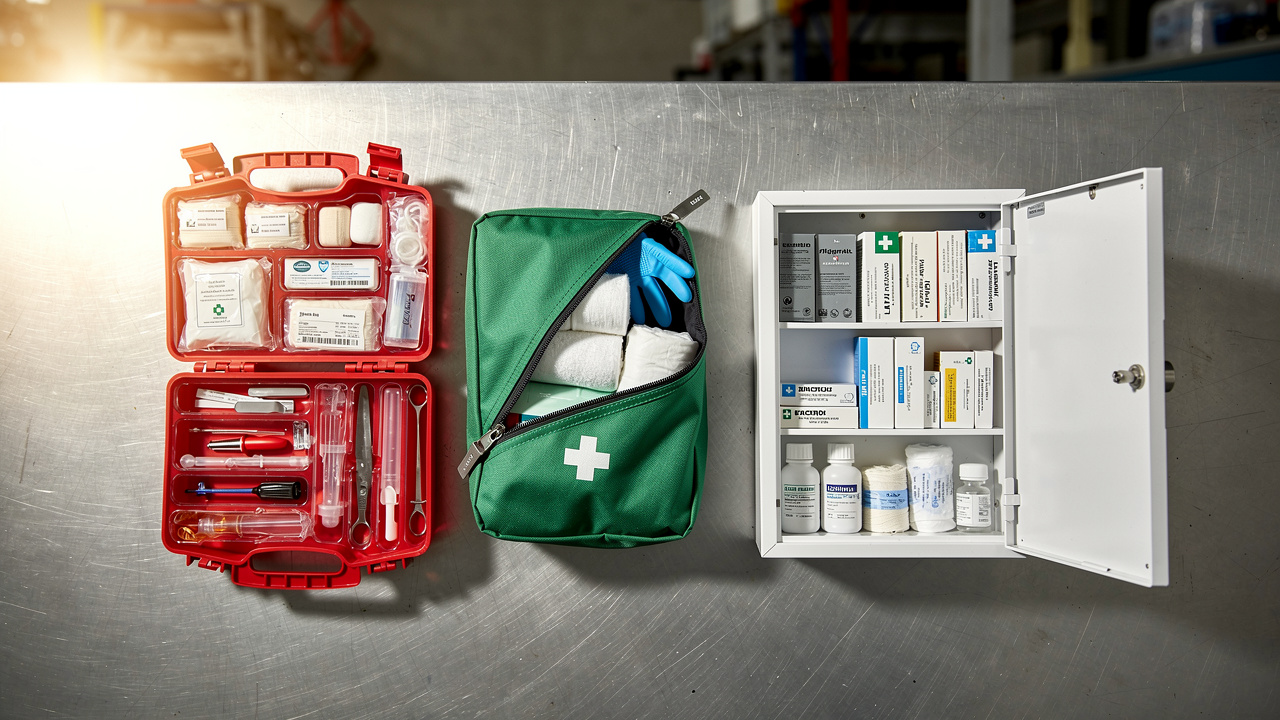
Global first aid kit standard: US vs EU vs UK comparison is what you need when you run sites in several countries and do not want three totally different kit programs. You face OSHA and ANSI in the US, EN style norms in the EU, and HSE guidance in the UK, which can feel messy fast. This guide breaks down how each region handles first aid, where they overlap, and how you can build an aligned approach without risking compliance. You also see how First Aid Longs supports consistent kits for multi country teams, backed by real data and trusted references.
Key Takeaways
Core Elements Of Global First Aid Standards
This point covers what sits inside global first aid standards in plain language. You see how law, guidance, and content lists fit together. That mix explains why rules feel similar yet never quite match.US OSHA ANSI Vs EU EN Vs UK HSE At A Glance
This point highlights how each region defines and polices first aid at work. You get a fast comparison of style, content detail, and naming. That summary helps you avoid copying one region blindly into another.How To Choose The Right Global First Aid Standards For Your Sites
This point focuses on matching kit types to risk, headcount, and layout. You link hazards with Class A or Class B in the US and with EU or UK guidance. That link keeps both regulators and workers satisfied.Multi Country Compliance Made Simpler With Custom Kits
This point explains how custom filled kits reduce confusion across borders. One baseline kit can support different labels and add ons for each country. A flexible manufacturer such as First Aid Longs makes this realistic.Practical Steps To Standardize And Restock Globally
This point lays out simple steps for mapping rules, building a matrix, and planning refills. You learn to control contents, labels, and documents from one playbook. That approach keeps audits predictable, even when sites spread worldwide.
Understanding What Global First Aid Standards Really Mean

Understanding what global first aid standards really mean helps you see why rules look similar yet differ across the US, EU, and UK. Each framework blends law, content lists, and maintenance rules so workers get fast, reliable care when injuries happen.
A global first aid standards approach usually joins binding regulations with detailed technical norms. In the US, OSHA rules sit beside ANSI guidance, while in the EU and UK, you see national law tied to EN style lists and HSE documents. For you, that mix affects how you write specs, choose vendors, and defend decisions during inspections.
What Is A Global First Aid Standards Framework, And Why Does It Matter For You?
A global first aid standards framework is the mix of legal duties and detailed checklists that tells you what to buy, where to put it, and how to keep it ready. Regulations such as OSHA 1910.151, EU workplace directives, and the UK Health and Safety (First Aid) Regulations 1981 create your duty to provide suitable first aid, and a cross-sectional survey of first-aid kit equipment highlights how household and workplace kits alike often fall short of recommended standards. Consensus documents such as ANSI/ISEA Z308.1 and many EN norms then spell out item types, minimum quantities, and inspection expectations.
Regulators often treat these consensus texts as the benchmark for “adequate” first aid. If an inspector in the US sees ANSI Class A or B kits, you already look prepared. According to the U.S. Bureau of Labor Statistics, private industry employers reported over two million nonfatal workplace injuries and illnesses in 2022, which shows why strong first aid cuts both harm and downtime. First Aid Longs designs wholesale kits so their contents and documents line up with OSHA and ANSI in the US, plus widely used lists in EU states and the UK.
How Do Workplace Risk And Environment Shape Global First Aid Standards?
Workplace risk and environment shape how every global first aid standards plan applies to your site. All three regions expect you to link kit contents with hazards, headcount, and distance to outside care. That is why office kits look simple while plant or construction kits hold trauma pads, splints, and tourniquets.
ANSI splits kits into Class A for low to moderate risk, and Class B for higher risk, but European and UK guidance use headcount bands, risk levels, or named kit sizes instead. Guidance from OSHA notes that when medical help is more than a few minutes away, employers must provide ready supplies and trained help on site. Courts often treat a 3 to 4 minute response window as a practical limit. In higher risk areas, you should treat any content list as the floor and add bleeding control, burn care, and extra eyewash. First Aid Longs supports this risk based approach with industry focused kits for construction, labs, food service, marine work, and more.
How US Global First Aid Standards Work: OSHA And ANSI ISEA
How US global first aid standards work depends on both OSHA rules and ANSI/ISEA Z308.1 content lists. OSHA sets the legal duty, while ANSI Class A and B kits give you a clear way to meet that duty.
For you, as a buyer or safety lead, this means you rarely quote OSHA alone. Instead, you link OSHA’s “adequate supplies” wording with ANSI Class A or B specs, adjusted by a site hazard assessment. That approach gives auditors a clear, defensible story.
What Makes Up The US Global First Aid Standards And OSHA Requirements
OSHA requires “adequate and readily available” first aid supplies whenever medical help is not close enough for quick treatment. The rule does not list one single box, but it points to recognized benchmarks and expects you to match kit contents to your hazards. A strong example is OSHA logging standard 1910.266 Appendix A, which lists minimum contents such as gauze pads, bandages, elastic wraps, a splint, a resuscitation device, gloves, and at least one blanket for small field crews.
For larger teams, OSHA expects either more kits or higher quantities inside each kit. Guidance from NIOSH stresses that quick first aid reduces the impact of severe bleeding and shock long before an ambulance arrives. Regular inspections, restocking after every use, and simple records help you show that kits stayed stocked over time, a principle reinforced by research on first aid kit installation at a medium-sized university that evaluated program implementation and ongoing readiness. First Aid Longs supports this pattern through refill friendly cabinets and bulk component packs built around OSHA and ANSI expectations.
How ANSI ISEA Z308.1 Class A And B Kits Define The US Standard

ANSI/ISEA Z308.1 turns OSHA’s broad “adequate” rule into clear kit types. Class A kits serve low to moderate risk spaces such as offices or light assembly, while Class B kits add higher quantities and trauma items for plants, labs, and construction. Recent updates also require a foil blanket and clarify that any tourniquet must be a true bleeding control device.
A helpful summary from the University of Texas EHS program illustrates the differences.
| Category | Class A Baseline | Class B Baseline | Typical Environments |
|---|---|---|---|
| Overall focus | Minor cuts, small burns, basic eye care | Wider range of injuries, larger wounds, fractures | Plants, heavy work, high energy equipment |
| Wound items | Fewer bandages and pads | Many more bandages and trauma pads | Areas with frequent cuts or abrasions |
| Eye and burn care | Small eyewash and burn supplies | Larger eyewash volume and extra burn items | Welding, chemicals, and hot surfaces |
| Special items | Single roller bandage and no splint | Splint, more bandages, purpose built tourniquet | Construction, fabrication, and remote field work |
Bleeding control kits with hemostatic dressings and extra tourniquets sit beside, not in place of, ANSI kits. First Aid Longs manufactures OSHA aligned Class A and B configurations and can add industry specific items so your kits still track the standard while fitting your hazards.
How US Global First Aid Standards Affect Your Buying Choices
US global first aid standards shape how you spec, buy, and review kits. When you standardize around ANSI classes:
You can write simple specs like “Class B cabinet per ANSI/ISEA Z308.1-2021 or better.”
You give auditors a clear reference as soon as they open a kit.
You make training easier because everyone sees the same layout.
Working with a manufacturer that understands both OSHA and ANSI, such as First Aid Longs, keeps this link tight from design through refills.
How EU Global First Aid Standards Differ From US Requirements

How EU global first aid standards differ from US requirements comes down to more prescriptive laws and national norms. Many EU states use detailed kit lists in law or guidance, often tied to headcount and risk levels.
You still see the same bandages, dressings, and thermal blankets, but labels, sizing, and documentation shift. As a buyer, you need to match local expectations instead of shipping an ANSI box and hoping it passes.
What Is The EU Approach To Global First Aid Standards?
The EU approach to global first aid standards starts with general workplace safety directives that require employers to provide first aid equipment, facilities, and trained people. Member states then write national rules or guidance that translate those duties into list style expectations. Many rely on EN type norms and publish “small, medium, large” workplace kits with fixed contents and quantities.
Typical items include sterile dressings, adhesive bandages, elastic wraps, burn gel or dressings, eye pads, and often some type of thermal cover, consistent with findings in the analysis of the design of household first aid kits, which examined how standard content lists translate into real-world readiness. Some national lists tie kit size to employee counts or risk classes, so a small office might need one basic kit while a high risk workshop must hold several large ones. Data from Eurostat shows more than two million nonfatal workplace accidents in EU countries in a recent year, which explains why these lists stay detailed. When First Aid Longs ships to EU customers, its teams check country specific guidance in places such as Germany, France, and Italy before finalizing contents.
EU Versus US: What Changes In Your Global First Aid Standards Plan?
When you adapt a US based program for EU sites, several pieces of your global first aid standards plan change. The medical needs remain similar, but regulators may look for different labels, content codes, and documents. You also see stricter rules on language and symbols so workers can read instructions at a glance.
The table below highlights key contrasts and how they affect your orders.
| Feature | US Model | EU Model | Procurement Impact |
|---|---|---|---|
| Legal style | Performance based OSHA rule plus ANSI | National law with detailed lists and EN influence | You must match named kit types, not only contents |
| Kit naming | Class A and Class B | Small, medium, large, or numbered set types | Specs must map US classes to local kit codes |
| Content detail | Minimum items and counts in ANSI | Often, more item types and fixed headcount bands | Orders need country specific quantity adjustments |
| Documentation | Focus on hazard assessment records | Often more formal records and language rules | Labels and leaflets must fit local language laws |
In practice, you may start with an ANSI Class B style core, then adjust counts and labels to meet the strictest EU rule you face. Some EU buyers also expect built in eyewash or burn modules as part of a standard cabinet. First Aid Longs supports this by supplying empty boxes and custom filled EU facing kits so you can stay with one manufacturer instead of juggling separate regional vendors.
Tips For Aligning EU Sites With Global First Aid Standards
To align EU sites with your wider global first aid standards plan, you can:
Pick one “EU master kit” that meets the highest national list you face.
Add language specific guides and labels for each country.
Keep a simple crosswalk table that maps ANSI contents to EU item codes.
Train local safety reps to compare kits against national checklists.
This keeps your global spec intact while still passing local inspections.
Why UK Global First Aid Standards Don’t Fully Match US Or EU Rules
Why UK global first aid standards do not fully match US or EU rules has more to do with structure than content. The UK leans on broad regulations and HSE guidance instead of a fixed national kit standard.
For you, that means the UK feels closer to the US hazard based style, yet day to day contents still look a lot like EU norms. You need to follow HSE advice and your own assessment rather than chase a single labeled kit size.
How The UK Defines A Workplace Global First Aid Standards Model
The UK defines a workplace global first aid standards model through the Health and Safety (First Aid) Regulations 1981 and supporting HSE guidance. These rules say employers must provide suitable equipment, facilities, and trained people so workers get help when injured or ill at work. HSE does not lock you into one kit label but gives clear examples of what a typical workplace kit should contain.
That example list includes assorted sterile dressings, bandages, adhesive tape, eye coverings, disposable gloves, a resuscitation barrier, and a simple instruction leaflet. Additional items may be advised for high risk sites, such as more dressings or special burn kits. Official pages from HSE explain how many kits you may need for different sizes and types of workplaces. Because there is no national Class A or B, many organizations partner with suppliers such as First Aid Longs to define their own “standard workplace kit” that still fits HSE advice.
How UK Global First Aid Standards Compare To US And EU
UK global first aid standards expectations share pieces with both the US and EU systems. Like OSHA and ANSI, HSE stresses a needs assessment that weighs hazards, staffing, and remoteness. Like many EU states, it also lists practical contents for typical workplaces and suggests travel or vehicle kits.
The table below shows the main parallels.
| Aspect | United States | European Union | United Kingdom |
|---|---|---|---|
| Legal base | OSHA regulations | EU directives plus national law | Health and Safety (First-Aid) Regulations 1981 |
| Content source | ANSI/ISEA Z308.1 Class A and B | EN style norms and national lists | HSE guidance on workplace kits |
| Kit naming | Class A and Class B | National small, medium, large sets | Workplace, travel, and special purpose kits |
| Role of assessment | Hazard assessment expected | Risk and headcount are often built into lists | First aid needs assessment required |
Using a strong content baseline similar to ANSI Class B often lets you match or exceed HSE advice across UK sites. You then adjust labels, leaflets, and a few content choices to fit local expectations. First Aid Longs can supply UK facing labels, tamper evident cabinets, and contents tuned to HSE examples while still tying into your global spec.
Practical UK Considerations For Global First Aid Standards
When you roll out global first aid standards in the UK, keep an eye on:
Coverage for lone workers, remote areas, and shift patterns.
Travel kits for drivers or staff who work off site.
Extra burn care for kitchens, welding, or foundry work.
Alignment between first aid training and kit contents.
This keeps your HSE “suitable and sufficient” duty aligned with your wider global plan.
How To Standardize Global First Aid Standards Across US, EU, And UK Sites

How to standardize global first aid standards across US, EU, and UK sites starts with choosing one strong baseline and then local tweaks. This avoids three separate buying programs and keeps training simple.
Your goal is a content set that would satisfy ANSI Class B in the US, then overlay country specific labels, leaflets, and add ons. When you pair that with a clear matrix by site type and region, audits feel far more predictable.
How First Aid Longs Helps You Maintain Multi Regional Compliance
First Aid Longs helps you hold this global first aid standards plan together by acting as a flexible manufacturing partner instead of just a box supplier. Its in house 100K Class Cleanroom supports medical grade production and consistent quality for kits shipped to US, EU, and UK locations. That setup also shortens lead times and keeps pricing steady for multi site orders.
You can customize kit size, cabinet style, labeling language, and content mix so each variant lines up with OSHA, ANSI, EU lists, or HSE guidance. For example, First Aid Longs can create industrial first aid kits with extra trauma items for plants, plus lighter sets for office or retail spaces. The company also supports custom medical OEM solutions when you want private label kits for your network. To keep everything stocked, you can use bulk first aid refills and standing order programs, paired with tamper evident seals that make kit checks quick for auditors.
Simple Restocking Routines For Global First Aid Standards

To keep your global first aid standards working in real life, you should:
Schedule monthly or quarterly kit checks by named staff.
Use quick checklists that mirror OSHA, EU, and HSE expectations.
Track expiry dates and common high use items like bandages and wipes.
Plan bulk refills instead of one off emergency orders.
This habit keeps kits ready for real injuries and makes inspections far less stressful.
Conclusion
A clear view of global first aid standards helps you protect people and satisfy inspectors across all your sites. US OSHA and ANSI, EU rules, and UK HSE guidance all expect hazard based, well stocked kits, even if they describe them in different ways.
Instead of building three separate systems, you can choose a strong shared baseline and then add country specific touches for labels, guides, and a few contents, supported by a comprehensive first aid guide booklet that helps workers understand kit contents and respond confidently across all locations. That path usually costs less, simplifies training, and still meets the strictest rules at each site. First Aid Longs supports this by manufacturing flexible, refill ready kits that track ANSI Class A and B as well as EU and UK expectations. When you are ready to tighten your global first aid standards across borders, you can work with their team to design custom kits, refill packs, and restocking plans that match your real hazard profile.


