Electrical burns can turn a routine workday into a medical emergency in seconds. Electrical burns at jobsites, plants, clinics, or schools often look small on the skin yet damage the heart, brain, muscles, and kidneys. This guide shows you simple first aid steps, when to call 911, and how to set up the right kits so your teams respond fast and safely. You also see how First Aid Longs helps you keep consistent burn readiness across all your locations.
Introduction
Electrical burns in workplaces threaten life, not just skin. Even a tiny contact mark may hide serious internal damage and dangerous heart rhythm changes. According to NIOSH, about 1,000 deaths and 30,000 nonfatal electrical injuries occur in the United States each year, many on the job.
That gap between how a burn looks and how serious it is creates stress for supervisors and first aid teams. People may shrug off shocks, delay care, or use the wrong supplies while minutes matter. Confusion around when to call 911 or send someone to the emergency department also adds risk.
This article explains what electrical burns are, why they act differently from other burns, and how to give safe first aid without putting yourself at risk. You also get clear rules for when to seek emergency care and how to stock electrical ready first aid stations, with support from First Aid Longs across your system.
Key Takeaways
- Electrical burns can threaten the heart, brain, and deep muscles even when the skin injury looks tiny or almost harmless. You should always treat workplace electrical contact as a serious event. A simple visual check is never enough to judge the level of danger.
- Safe first aid starts with scene safety and power shut off, so you do not become the next victim. After that, you focus on airway, breathing, circulation, and calm burn coverage with sterile, non fibrous dressings. You avoid ice, creams, or home tricks for major injuries.
- Clear rules for 911 calls and emergency department visits protect both workers and your organization. High voltage contact, lightning, chest pain, confusion, or any loss of consciousness all demand emergency care right away. Even small hand or mouth burns at work need medical review.
- Electrical ready first aid stations need non stick burn dressings, gauze, eyewash, thermal blankets that do not shed, and nearby AEDs. First Aid Longs helps you standardize these supplies, size them to each site, and keep kits in line with OSHA and ANSI style expectations.
What Are Electrical Burns And Why Are They So Serious?
Electrical burns happen when electrical energy passes into or over the body and turns into intense heat inside tissues. These injuries affect muscles, nerves, blood vessels, and organs, not just the outer skin. That is why you should treat every significant workplace exposure as a possible medical emergency, even if you only see a small mark.
Research cited by NIOSH shows that electrical injuries account for roughly 5 percent of burn unit admissions in the United States, yet they carry high rates of disability and death. Unlike simple thermal burns, current may travel from one contact point to another, crossing the chest or head. When that path runs through the heart, even short exposure can trigger lethal rhythm problems.
Severity depends on several factors working together:
- Voltage level
- Type of current (AC vs DC)
- Path through the body
- Contact duration
- Skin condition, especially if wet or sweaty
Low voltage, such as a 120-volt tool, can still cause heart arrest if someone cannot let go. High voltage, such as distribution lines, often destroys deep muscle and may later require amputation, even when the skin looks better than the inside.
The key message for you is simple. Never trust the size or pain level of the visible burn. A coin sized mark on a hand or foot may sit at the end of a current path that passed through the chest, kidneys, or brain. For that reason, policies that send every employee to have direct contact with occupational health or an emergency department protect both people and your organization.
Types Of Electrical Burns You See In Workplaces
Types of electrical burns in workplaces fall into four main patterns that you can recognize in your safety training. Each type links to common job tasks and calls for the same basic first aid and medical evaluation rules. Knowing these patterns helps you write clearer incident response policies.
- True electrical injury happens when a person becomes part of the circuit and current travels through the body. This pattern is common when workers touch bare conductors inside panels, use damaged cords or tools, or contact overhead lines with equipment. You may see a small contact point on the hand and another on the foot, while deep muscles and blood vessels in between take heavy damage.
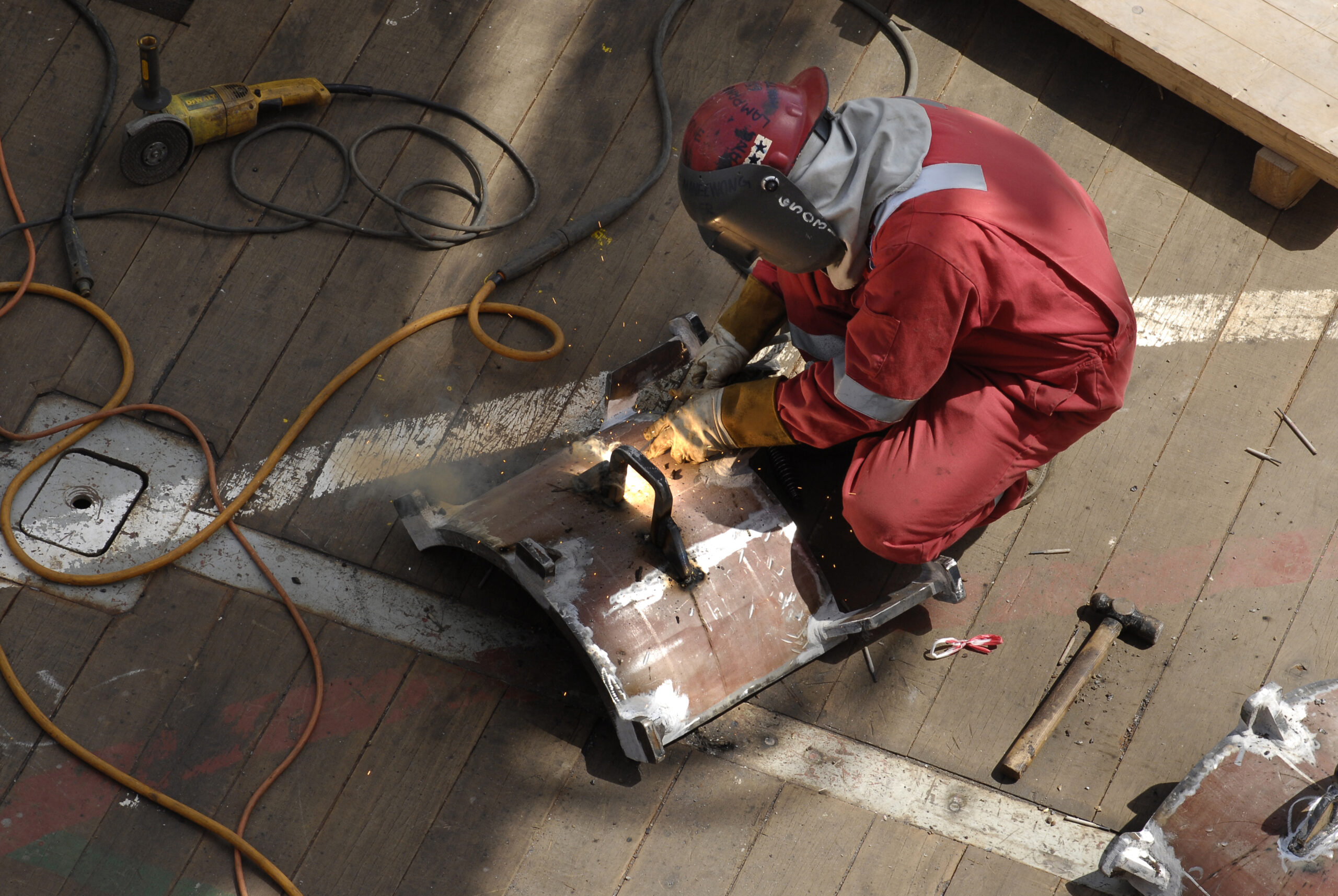
- Flash injury (arc flash) comes from a high temperature electrical arc that jumps through the air between conductors. Current may not enter the body, yet the heat on exposed skin and eyes can be severe. You often see this near switchgear, welding, or when a fault produces a bright flash and loud bang in an electrical room.Flame injury starts when electricity ignites clothing or nearby materials. Synthetic fabrics may melt onto the skin and create deeper burns, along with the risk of smoke inhalation.
- Lightning injuries appear in outdoor work, sports fields, and campuses during storms. According to the National Weather Service, lightning kills dozens of people in the United States each year and injures many more. Any lightning strike or high voltage contact at work should trigger an immediate 911 call, no matter how the skin looks.
How To Give First Aid For Electrical Burns Safely

How to give first aid for electrical burns safely starts with your own safety and power control. You must remove live current before you touch the injured person so you do not add another casualty. Once the scene is safe, you shift to basic life support and simple burn care while you wait for EMS.
According to OSHA, many workplace electrocutions involve helpers who rush in too fast. You can prevent that with clear training that repeats one point: do not touch until the power is off. For low voltage tools or appliances, you unplug them or switch off breakers if you can reach them without risk. For downed lines or suspected high voltage, you keep everyone far back and let the utility and fire department handle it.
After the power is off and the area is safe, check responsiveness, breathing, and pulse. If the person is unresponsive and not breathing normally, start CPR and use an AED if available and dry. AEDs placed in maintenance shops, production lines, and athletic fields have saved many workers after electrical contact, because heart rhythm problems often occur right away.
For visible burns, your goal is simple protection, not treatment at the scene. You cover open areas with sterile gauze or other non stick dressings and avoid fluffy cloth that sheds fibers. You do not remove clothing that has melted into the skin. You keep the person warm with a blanket that does not touch the injured areas directly and keep them still while watching for signs of shock, such as pale, clammy skin or rapid breathing.
Step By Step First Aid Workflow For Electrical Burns
A clear step by step workflow for electrical burns keeps your teams calm under pressure. You can teach this flow in drills and post it beside first aid stations and electrical rooms. The same sequence applies in offices, factories, schools, and clinics.
- Make the scene safe by stopping the power source.
- Turn off the main switch, open the breaker, or unplug the device if that can be done without any risk.
- If you cannot reach the switch safely, use a dry wooden or plastic object to push the source away, and stay far from any downed wires while you wait for trained crews.
- Call 911 for high risk situations.
- Call right away if you suspect high voltage, see burns on the face or large areas, notice confusion or trouble breathing, or witness any loss of consciousness.
- Also, activate your internal emergency number so your site team responds. When you speak with dispatchers, share where the event happened, the likely voltage, and whether a fall or blast also occurred.
- Check breathing and circulation.
- Once the circuit is dead, check the person for responsiveness, breathing, and pulse.
- If the person does not respond and is not breathing normally, start chest compressions and send someone for the nearest AED. Follow your training and the device prompts, staying on a dry surface and not touching the person during rhythm analysis and shocks.
- Cover burns and monitor.
- Cover burns with sterile gauze, large non stick dressings, or clean sheet style covers while you wait for EMS.
- Avoid ice, oils, butter, or any ointment on major injuries. Do not break blisters or peel off burned clothing.
- Keep the person lying flat if possible, support the head and neck after a fall, and watch closely for any change in breathing or awareness.
Secure Reliable Burn Gel Supplies Today!
Order our high-quality wholesale burn gels made with safety standards to stabilize your healthcare operations.
When Should You Seek Emergency Medical Help For Electrical Burns?
When you should seek emergency medical help for electrical burns comes down to voltage, symptoms, and contact location. High energy exposures and any warning signs from the heart, brain, or breathing always need rapid care. Even mild looking contact burns on the hands, scalp, or mouth at work still require professional review.
Electrical injuries behave differently from many other workplace incidents. The heart may look fine at first, then shift into a dangerous rhythm minutes or hours later. Muscles damaged deep inside the limb may break down and release substances that poison the kidneys. According to StatPearls, serious cardiac arrhythmias and kidney injury are well known complications after significant exposure. For that reason, observation, lab tests, and heart monitoring in a clinic or emergency department are often needed.
You should treat any high voltage contact, lightning strike, or shock that knocked someone down or threw them as a medical emergency. That means calling 911 and sending them to a hospital that can manage trauma and burns. The same rule holds for people who report chest pain, heart pounding, confusion, breathing trouble, seizures, or any period where they blacked out.
Smaller injuries still deserve care. A small burned area on a worker’s hand, a child’s mouth, or a scalp near an outlet can mark the entry or exit of current through sensitive tissues. Many safety teams now write policies that require evaluation by occupational health or an emergency department for every electrical contact at work, no matter how minor it appears. This approach lines up with guidance from the CDC and reduces long term health and legal risk for your organization.
Red Flag Symptoms After Electrical Contact

Red flag symptoms after electrical contact give you a simple go or no go rule for EMS activation. If you see any of these signs, you should call 911 and send the person for urgent medical care. You do not wait to see if they feel better.
- Cardiac and breathing warnings include chest pain, fluttering or pounding in the chest, shortness of breath, gasping, or no breathing at all. If the person collapses, has no pulse, or only makes occasional gasps, you treat this as cardiac arrest and start CPR while another person calls 911. Even mild chest tightness after a shock across the chest deserves emergency department evaluation.
- Neurologic changes cover confusion, trouble staying awake, sudden behavior changes, memory gaps, seizures, tingling, numbness, weakness, or balance problems. These signs may show that the brain, spinal cord, or nerves took damage from the current or from a fall. Any lightning strike with confusion or weakness needs immediate EMS response, even if the person later says they feel fine.
- Limb and kidney warnings include intense muscle pain, very firm or swollen arms or legs, and dark red or cola colored urine. These signs point toward deep muscle damage and possible rhabdomyolysis, which can lead to kidney failure. Workers with these findings must go to a hospital for lab tests, strong fluids, and close monitoring.
- Simple policy rule: if a person has any electrical contact on the job, you send them to occupational health or an emergency department, and you call 911 for any high voltage, lightning, chest or breathing symptoms, loss of consciousness, seizures, or severe pain. Aligning your internal protocol with OSHA and CDC guidance supports both safety and compliance.
How To Prepare Your Facility For Electrical Burns And Shocks

How to prepare your facility for electrical burns and shocks links medical guidance with practical safety planning. You reduce risk with smart engineering controls, clear procedures, and electrical ready first aid stations. When an incident still happens, good layouts and supplies shorten response time and lower severity.
Most of the serious events you worry about are preventable through basic controls:
- Ground fault circuit interrupters in wet areas
- Lockout tagout during maintenance
- Arc rated personal protective gear in high energy rooms
- Regular equipment inspection and repair
According to OSHA, proper lockout tagout can prevent many of the estimated 120 workplace deaths each year from electrocution.
From a procurement view, you support safety by placing quality equipment in the right spots and keeping it ready. That includes AEDs in high risk zones like maintenance shops, substations, production floors, and gyms. It also means first aid cabinets near kitchens, labs, and machine areas that carry enough burn supplies for the number of people nearby.
Here is a simple table you can use when planning stock for different areas. You can adapt the quantities to your headcount and risk level.
| Area Type | Key Electrical Hazards | Priority Items In First Aid Station | AED Recommended |
|---|---|---|---|
| Electrical Rooms | Panels, switchgear, arc flash | Non stick burn dressings, trauma pads, eyewash, CPR barrier | Yes |
| Production Floors | Tools, conveyors, cords | Gauze pads, burn gels for minor burns, thermal blankets | Yes |
| Offices And Clinics | Small tools, outlets, devices | Compact kits with burn dressings and eyewash | Maybe |
| Schools And Fields | Outlets, labs, lightning | Larger kits, eyewash, thermal blankets near field access | Yes |
First Aid Longs supports this planning by offering Class B kits, hydrogel burn dressings, eyewashes, and thermal blankets in bulk. Because the company manufactures in house, you can match kit size and contents to each area without long lead times or high minimum orders. Over time, that helps you keep consistent standards from site to site while controlling cost.
Electrical Burn Ready First Aid Stations And Kits

Electrical burn ready first aid stations and kits share a few key features wherever you place them. They must be easy to reach, clearly marked, and stocked with the right mix of burn and resuscitation supplies. Good visibility and layout save precious minutes.
Core supplies include:
- Sterile gauze pads in several sizes
- Non adherent burn dressings
- Hydrogel pads for minor burns that do not need EMS
- Trauma pads for larger wounds
- Thermal blankets that do not shed fibers
- Eyewash bottles or plumbed stations near labs and electrical rooms
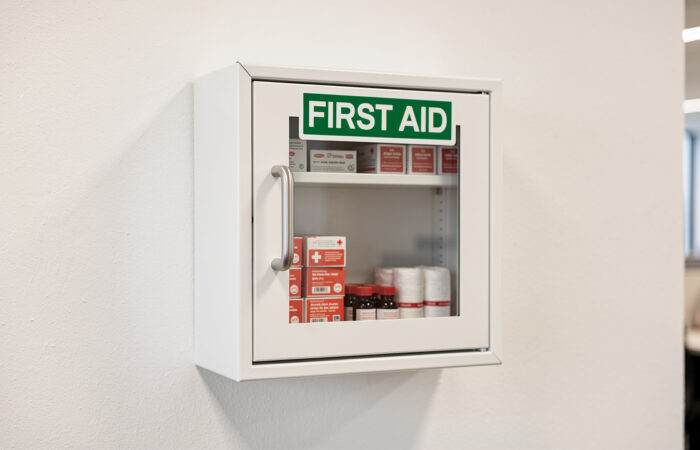
Placement matters as much as content. You position kits near electrical rooms, shop floors, kitchens, labs, and loading docks, not locked away in distant offices. AEDs are mounted on walls in central, high traffic spots such as cafeterias, corridors, and near main stairwells, with clear signs from several directions. For field crews, you place kits and AEDs in supervisor vehicles and on mobile carts.
Written quick reference guides beside these stations help your teams remember the steps under stress. Simple posters that show how to shut off power, call internal codes, start CPR, use an AED, and cover burns give non medical staff confidence. Here again, First Aid Longs can supply standardized kits and components so labels, layouts, and instructions match across plants, campuses, and fleets.
How First Aid Longs Supports Electrical Burn Readiness
How First Aid Longssupports electrical burn readiness centers on quality burn care products, flexible kit design, and reliable stocking programs. For you as a safety or procurement leader, that means fewer gaps between written policy and what people find when they open a cabinet.
First Aid Longs manufactures burn gels, hydrogel burn dressings, first aid kits, eyewashes, and many wound care items in its own cleanroom facilities. That in house control allows tight quality checks, steady supply, and prices that fit large multi site programs. Since 1996, the company has worked with hospitals, factories, schools, and distributors across more than 100 client organizations worldwide.
Another strength lies in customization without large minimum orders. You can build Class B or industry specific kits that match the electrical risk map for each site, whether that is a construction yard, food plant, machine shop, or outpatient clinic. Component packs help you align the contents of hundreds of kits, so every box on every floor carries the same burn dressings, eyewash, and CPR barriers.
Planned refill and replenishment services from First Aid Longs also make your life easier. You can schedule regular checks and bulk refills so kits stay in date and complete after real incidents and drills. Over time, that consistency improves staff trust in the equipment and supports a stronger safety record for your organization.
Burn Gels, Burn Dressings, And Kits For High Risk Sites

Burn gels, burn dressings, and kits for high risk sites need to match the hazards of heavy industry, construction, and clinical care. First Aid Longs designs these items with those environments in mind. That focus shows in the product range and packaging options.
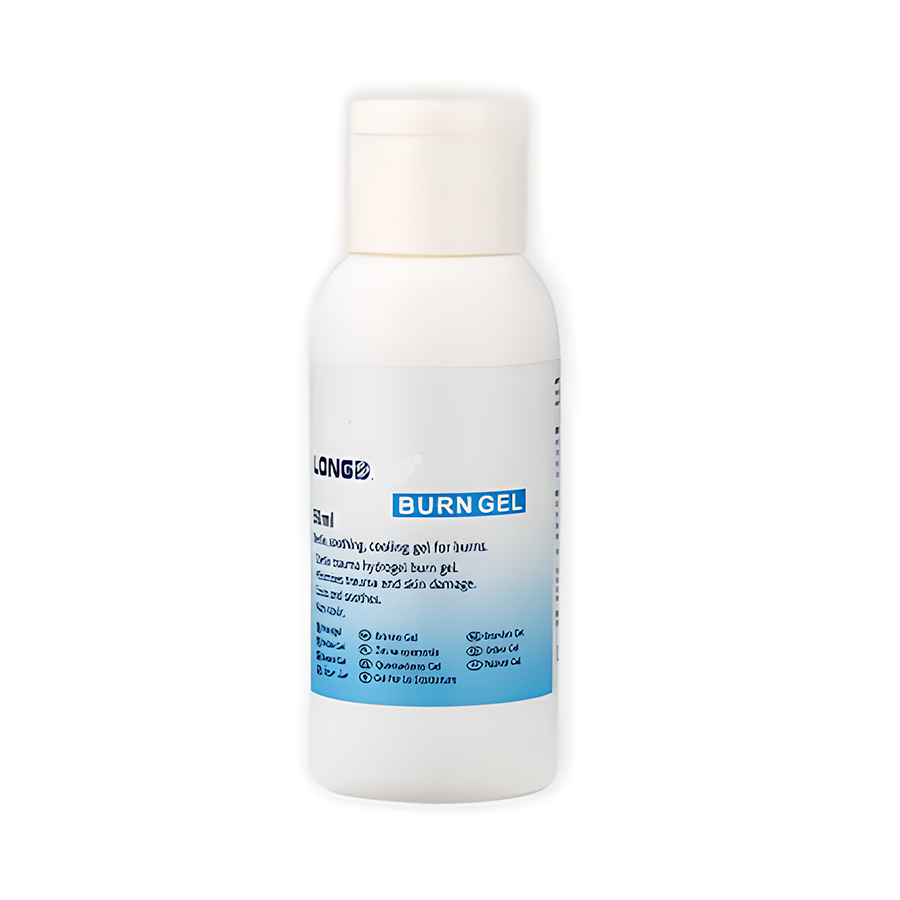
Hydrogel burn dressings from First Aid Longs cool and cover localized burns on hands, arms, neck, or other exposed areas. Their high water content helps draw heat from the skin, while the non stick surface protects tissue until medical staff can review the wound. Tube based burn gel with lidocaine and aloe vera offers compact relief for minor burns that do not require emergency care, such as brief contact with a hot surface in a kitchen.
For broader site coverage, First Aid Longs supplies Class B and sector focused kits in durable Type III and Type IV containers. These cases resist dust, moisture, and rough handling in plants, warehouses, vehicles, and outdoor work. Inside, you can include sterile gauze, non stick pads, trauma pads, eyewash, gloves, CPR barriers, and thermal blankets, all chosen to handle both minor burns and the first minutes of serious events until EMS arrives.
Replenishment and supply programs keep these kits aligned across large systems. Whether you manage a hospital network, a school district, or a fleet of service vehicles, you can set standard lists and let First Aid Longs provide component packs and refills. That approach shortens inspection time for your teams, strengthens compliance, and supports faster, more consistent care when electrical injuries occur.
Conclusion
Moving forward with safer electrical burn response means accepting that these injuries are complex and often hidden. You respond by treating every significant electrical contact as a possible emergency and by giving your teams the tools and training to act fast.
The core sequence stays the same in every setting. You make the scene safe by cutting power, you call for help early, you protect the airway and breathing with CPR and AED use when needed, and you cover burns with clean, non fibrous dressings while you watch for signs of shock. You do not judge by skin appearance alone, and you do not delay medical evaluation for workers or students who have been shocked.
For you as a safety or procurement leader, this is also a chance to review your current kits, AED coverage, and policies. Gaps you fix now can prevent tragedies later. Partnering with a manufacturer like First Aid Longs for hydrogel dressings, burn gels, eyewashes, and standardized first aid kits helps you build a consistent, electrical ready response across all your sites without sacrificing quality or budget control.