Eyewash station maintenance checklist planning can feel confusing when you are not sure a unit will work in a real emergency. That doubt grows fast if checks stay casual or undocumented. You need a simple, clear way to keep every station ready, no matter how busy the shift gets.
An eyewash station sends a soft stream of clean water or saline into both eyes at once to rinse away chemicals, dust, or other irritants. When you build a written checklist and stick to it, you protect people, support OSHA and ANSI rules, and lower the risk of long term eye damage. In this guide, you get weekly, monthly, and annual steps, plus portable and bottle care tips and support from First Aid Longs backed by real data sources.
Keep reading to turn eyewash upkeep into a steady, repeatable part of your safety program that you can actually trust.
Key Takeaways
- Weekly activation and visual checks come first and keep each unit from sitting idle with stagnant water or hidden damage. When you test on a set day, you build a routine your team follows. A short, consistent habit protects you from surprises during an emergency.
- Following ANSI Z358.1 for eyewash station compliance gives you a clear benchmark that OSHA inspectors recognize. You know where to place units, how long they must run, and what “tepid” water really means.
- A structured eyewash station maintenance checklist turns inspections from a quick glance into a reliable system. Written steps, tables, and tags guide staff through access checks, flow checks, and documentation.
- Partnering with a reliable supplier such as First Aid Longs helps you keep stations stocked, labeled, and consistent across many sites. Bulk saline bottles, standardized boxed stations, and OEM options make restocking simple.
Why Eyewash Station Maintenance Matters For Safety And Compliance
Eyewash station maintenance matters because working devices limit eye injury severity and support compliance with OSHA and ANSI rules. Without a plan, units can fail just when you need them most, leaving you open to higher injury rates and fines.
According to NIOSH, about two thousand U.S. workers need medical care for work related eye injuries every day, and research into word level safety communication patterns, as explored in the classical model of type-token systems, underscores how clear labeling and documentation directly influence compliance outcomes. In many of those incidents, fast flushing can be the difference between irritation and permanent vision loss.
What Is An Eyewash Station And Where Do You Need One?

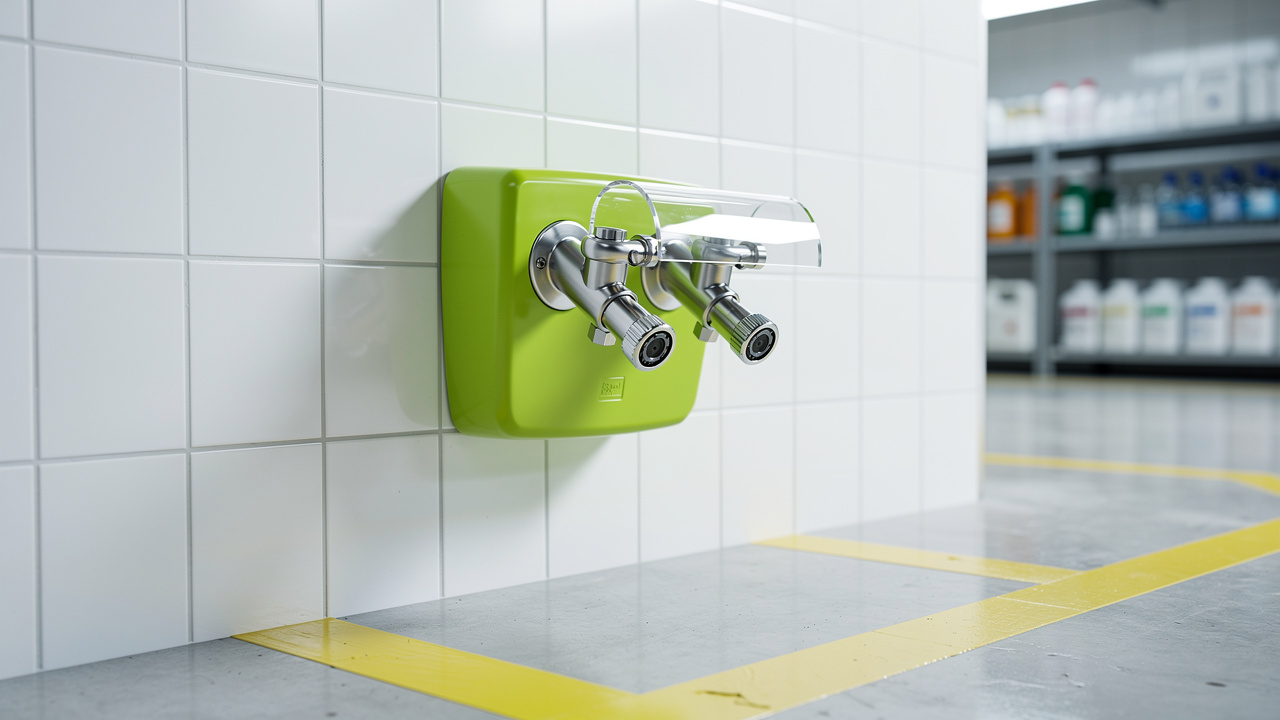
An eyewash station is an emergency fixture or portable unit that sends a soft, continuous stream of clean fluid into both eyes at once. The goal is to rinse out chemicals, biological material, or dust before they can damage eye tissue. ANSI/ISEA Z358.1 sets detailed expectations for how that device should work in practice.
You see plumbed wall units from brands like Guardian, Speakman, Haws, and Bradley in labs, central sterile processing, battery rooms, and chemical mixing areas. Portable gravity tanks and cartridge units often sit on construction trailers, remote maintenance areas, and loading docks. Small bottle stations are common in clinics, classrooms, and maintenance closets as a quick response backup.
OSHA standard 29 CFR 1910.151(c) states that you must provide suitable facilities to quickly drench or flush the eyes where corrosive materials are present. Regulators and safety teams often treat ANSI Z358.1 as the practical guide for what “suitable” means, as summarized by many university EHS programs, such as Princeton University EHS.
How Do Standards Shape Your Eyewash Station Checklist?
ANSI Z358.1 shapes your eyewash station maintenance checklist by turning general safety goals into specific, testable requirements. The standard calls for units within a 10 second travel distance, a minimum of 15 minutes of continuous flushing, and tepid water, often defined as about 60 to 100 degrees Fahrenheit. That standard also expects weekly activation and a full annual performance review.
OSHA inspectors commonly use those details when they decide if your setup counts as “suitable,” according to OSHA. If a unit is blocked, cannot reach full flow in one second, or does not run long enough, you can face citations and higher liability after an incident. Written inspection tags or digital logs show that you test on schedule and fix issues quickly.
High quality equipment from suppliers such as First Aid Longs, built under strict in‑house quality control, helps your stations pass those checks.
What Should Be On Your Weekly Eyewash Station Maintenance Checklist?

A weekly eyewash station maintenance checklist should confirm that every unit is easy to reach, clearly marked, and working at a basic level. This quick cycle keeps problems from piling up between deeper monthly or annual reviews.
A steady weekly routine around your emergency equipment helps you push those numbers down in your own facilities, and eye-tracking research on boosting safety protocol compliance in chemical plants demonstrates that consistent visual monitoring routines measurably reduce missed hazards. It also gives supervisors and safety teams a simple rhythm they can follow across shifts.
Weekly Visual Inspection Steps For Each Eyewash Station
A weekly visual inspection starts with simple questions you can answer in seconds just by walking up to the unit. You look for blocked routes, missing parts, or anything that would slow a worker during an emergency. This part of the eyewash station maintenance checklist is easy to delegate to area leads once you write it down clearly.
- Check that the path to the unit is clear from all directions. If someone has to weave around obstacles, they are already off track from the ANSI 10 second goal.
- Look at signage, lighting, and floor markings so people can find the unit fast. Wall signs should be bright and easy to read. If a bulb is out or a sign is faded, note it for quick replacement.
- Inspect dust covers, spray heads, and protective caps for damage or dirt. If you see mineral buildup, rust, or missing parts, schedule cleaning or repair before the next shift.
- Confirm the unit type still matches the hazard nearby. If you see a gap like that, flag it for your safety manager to handle.
You can use a simple checklist table like this during rounds. Print it on a card or add it to a digital form.
| Visual Item | Pass | Fail | Comments |
|---|---|---|---|
| Path clear and on the same level | |||
| Signs, lighting, floor markings | |||
| Heads, caps, and covers intact | |||
| Unit type fits nearby hazards |
Weekly Functional Test Of Eyewash Station Components
After the visual pass, you perform a short functional test so you know the unit will actually run when someone activates it. This is not a full 15 minute performance test, but a quick proof that valves move and fluid flows smoothly. Keep the test short in clean clinical rooms so you do not spread water in sensitive zones.
- Activate plumbed units with the handle or paddle in one motion and watch how fast the flow starts. If streams are uneven, weak, or spray outside the bowl, add a repair ticket.
- For gravity tanks or cartridge units, open the valve and check for consistent flow with no drips around fittings. Close the valve cleanly and check that the cap or cover can close again without force.
- Note the general temperature of the flushing fluid with your hand, aiming for a tepid feel that people can tolerate for a full flush. Water that feels very hot or cold needs attention from maintenance.
- Record the date, time, and your initials on the inspection tag or in your CMMS. In healthcare areas, follow your infection control team’s guidance and clean any surfaces that get wet during the test.
How To Run Monthly And Annual Eyewash Station Inspections
Monthly and annual inspections go deeper than the weekly walk through and confirm that each unit still meets ANSI performance expectations.
ANSI Z358.1 calls for at least one full review of performance each year, yet many facilities add lighter monthly checks to catch wear early, according to EHS programs such as University of Washington EHS. For you, that mix of monthly and annual work builds confidence that changes in layout, staffing, or processes have not left gaps in protection.
Monthly Eyewash Station Checklist: Beyond The Quick Weekly Check
Your monthly eyewash station maintenance checklist stretches beyond simple flow checks and looks at how each unit fits into current operations. New work tables, added storage racks, or process changes can quietly block access or change hazard levels. A short monthly walk with a floor plan in hand helps you catch those shifts.
Recheck travel paths from the actual hazard points. Walk the same route a worker would take and time it if needed. If the trip now takes more than about 10 seconds, consider moving the unit or adding another one closer to the task.
Inspect signage, labels, and posted instructions for wear or unclear language. In schools, hospitals, and public buildings, you may need multi‑language instructions so all users can follow steps while stressed. Replace torn labels or faded decals.
Annual Eyewash Station Compliance Audit

The annual audit is your formal check that each primary unit truly performs to ANSI Z358.1 criteria, and an analytical framework development for industrial standardization shows how WHO-guided systematic management frameworks improve auditability and compliance traceability across facilities. You can treat it as part of your broader EHS management system and tie it to other annual checks.
- Measure flow rate and spray pattern where practical, using manufacturer data and simple test tools. For plumbed units, ANSI guidance calls for at least 0.4 gallons per minute for 15 minutes, while emergency showers need even higher volume.
- Use a calibrated thermometer to confirm water falls in the tepid range. If temperature drifts, your maintenance team may need to adjust or replace mixing valves or tempering systems.
- Review location choices in light of any new chemicals, processes, or staffing patterns. A relocated mixing station, or a move to more shifts, can all change exposure risks.
- Document all findings, repairs, and improvement plans and store them for at least the period your policy or local rules require.
How To Maintain Portable And Bottle Eyewash Stations On Your Checklist

Portable and bottle units need more fluid management than plumbed fixtures, so your eyewash station maintenance checklist must call out expiry dates, cleanliness, and storage. These devices are especially common on construction sites, in warehouses, and in mobile healthcare settings.
Portable gravity tanks and sealed cartridge units give you coverage where plumbing is not available. Bottle stations add extra protection next to small volume hazards. According to OSHA, these self contained devices must still meet general expectations for quick access and sufficient flushing where used as primary equipment, and a randomized controlled trial on the safety and efficacy of photocatalytic humidifier based eye relief in digital environments further validates the importance of controlled, continuous fluid delivery for effective ocular flushing.
Fluid Management And Expiry Checks For Portable Eyewash Station Units
For tank style units, always follow the manufacturer’s written change interval for the flushing fluid. Many preserved fluids need replacement every three to six months, while tanks filled with plain tap water often need much more frequent changes. Mark the next change date right on the unit and in your inspection log.
During checks, look closely at the fluid through the tank window. Any cloudiness, particles, or discoloration means you should drain, clean, and refill the unit right away. Keep lids closed and caps in place when the device is not in use so dirt and insects do not enter.
Track cartridge expiration dates and tank change dates using a spreadsheet, a CMMS, or color‑coded tags. Assign each portable unit to a specific person or role so accountability is clear. The CDC notes that stagnant water can support microbial growth.
For units used in healthcare or food processing, align cleaning steps with your infection control or quality team. Use approved disinfectants on contact surfaces and rinse according to instructions.
How To Treat Eyewash Bottles And Wall Mounted Bottle Stations
Eyewash bottles and wall mounted bottle stations act as supplemental devices for fast first response, not as a replacement for primary units near strong corrosives. They are helpful near low volume splash risks or where a primary unit sits a short distance away.
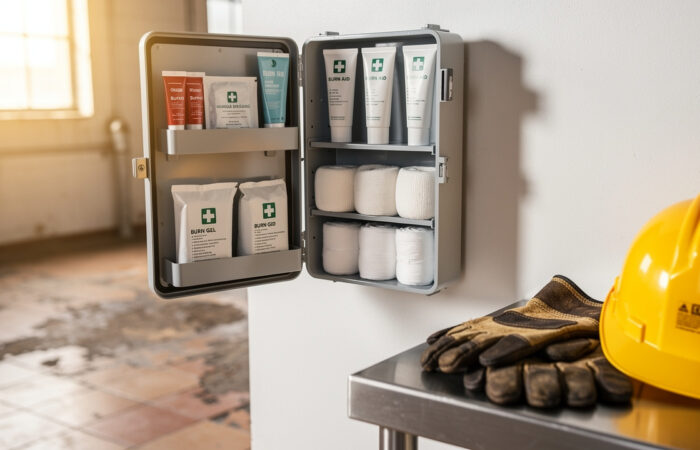
Check that every bottle is sealed, clear, and within the marked expiration date. Replace any missing, dropped, or opened bottle right away, even if some fluid remains. Wipe out the station box, mirror, and brackets.
First Aid Longs supplies boxed stations with two saline bottles and compact 100 ml stations with five bottles and a mirror, which fit well in labs, production lines, and small treatment rooms. Standardizing on 100 ml, 250 ml, and 500 ml bottle formats from one manufacturer helps you simplify restocking across many buildings.
By naming each station in your eyewash station maintenance checklist and tying it to the right refill kit from First Aid Longs, you reduce mix ups.
How First Aid Longs Supports Your Eyewash Station Maintenance Checklist
First Aid Longs supports your eyewash station maintenance checklist by providing reliable equipment, saline bottles, and accessories that fit real workplaces. When your hardware and refills come from one experienced manufacturer, inspection and restocking routines become far easier to manage.
Since 1996, First Aid Longs has supplied medical and safety products worldwide from its in house manufacturing base and 100K Class Cleanroom facilities. The company now serves more than one hundred global clients across healthcare, industrial, and institutional sectors.
Choosing The Right First Aid Longs Eyewash Station For Your Facility
First Aid Longs offers wall mounted, portable, and combination eyewash plus shower units so you can match equipment to each risk area. Wall units work well in fixed healthcare or lab rooms, while portable units fit changing construction or maintenance sites. Combination units help in high hazard chemical zones where both eye and body exposure are possible.
Boxed stations with two bottles mount easily in corridors, workshops, and plant areas where you need quick access but limited wall space. The compact 100 ml station with five bottles and a mirror fits tight rooms such as dental operatories, small labs, or nurse stations. That built‑in mirror lets a user see their own eyes, which can calm them and guide flushing.
OEM options from First Aid Longs let you customize colors, labels, cap styles, and even hazard‑specific configurations. For example, you can pick high visibility colors for industrial plants and a more clinical look for hospital wings. Clear, custom labeling supports your eyewash station maintenance checklist by matching station IDs, hazard classes, or language needs across all sites.
Because First Aid Longs manufactures with quality plastics such as ABS, PS, and HIPS under strict quality control, brackets and housings hold up well to repeated use and cleaning. That durability helps your annual audits, since fewer cracked parts or loose fittings appear during inspections.
How Bulk Supply And Customization Strengthen Your Maintenance Program

Wholesale supply from First Aid Longs lets you keep central stocks of saline bottles, stations, and accessories without straining your budget. Direct manufacturer pricing supports large orders for multi‑site companies and public institutions. You can plan yearly refills by station count instead of placing small last minute orders.
Organized refill programs make it simple to tie each eyewash station to a matching refill kit in your inventory system. When your monthly check shows a bottle near expiry, your staff knows exactly which internal part number to pull from storage. That clarity cuts down on wasted time and reduces expired stock.
Conclusion
A consistent eyewash station maintenance checklist keeps your people safer and your facility closer to OSHA and ANSI expectations. Start by locking in weekly visual and functional checks, then layer on monthly layout reviews and a yearly performance audit. Manage fluid changes and expiry dates for portable units, and treat bottle stations as helpful backup rather than your only line of defense. Now is a good time to review your current practice, close any gaps, and align your checklists.