OEM medical manufacturing sits behind almost every first aid kit, eyewash station, and burn treatment you buy. When quality or delivery slips, you feel it through safety incidents, failed inspections, and surprise costs. You need OEM partners who give you clear quality, steady supply, and real support on compliance. That is where future focused OEM medical manufacturers with in house production and data driven planning can help you stay ahead.
This article explains how OEM medical manufacturing works now, where it is heading through 2026 and beyond, and how in-house partners like First Aid Longs reduce risk. Keep reading to see how your next OEM medical decision can protect both your budget and your audits.
Key Takeaways
You may not have time to read every detail, so this section gives you the main ideas at a glance. Each point links OEM medical choices directly to your daily work. Use these notes as a quick filter when you review current or future suppliers.
- OEM medical is shifting from vendor to strategic partner
In many organizations, OEMs now help design kit contents, plan refill cycles, and support documentation, not just ship boxes. That closer role helps you standardize across sites and cut random product swaps. Over the next few years, the suppliers you treat as partners will shape your safety and audit profile more than any one product. - In-house OEM medical manufacturing reduces supply chain risk
When production, testing, and packing all stay under one roof, you see fewer surprises and shorter lead times. You also get one clear quality system instead of a maze of subcontractors. That structure helps you ride out disruptions and still stock every first aid room and clinic on time. - Customization and private label drive future competitive advantage
More buyers want OEM medical partners who can match kit contents to OSHA and ANSI rules for each site, and still support private label branding. That mix lets you meet standards while keeping a unified brand for staff or customers. It also opens a new margin for distributors and wholesalers who sell under their own name. - First Aid Longs aligns with the medical supply chain 2026 trends
With full in-house OEM medical production, 100K Class Cleanroom facilities, and planned refill programs, First Aid Longs is built for this next phase. The company backs low minimum orders with strong on time delivery for more than one hundred global clients. That mix fits hospitals, factories, schools, and distributors that want both flexibility and control.
What Does OEM Medical Manufacturing Mean Today?

OEM medical manufacturing means the company that actually designs and builds your medical products, even when another brand name sits on the label. When you know who the real maker is, you can judge safety, documentation, and support far better than by logo alone.
In practice, the OEM may sell under its own brand, work as a contract manufacturer, or supply complete white label kits and components. For you, the key point is simple. The OEM controls the materials, processes, and testing that keep your first aid and emergency products reliable when people need them most.
Core Definitions OEM Medical, Outsourcing, And Private Label
OEM medical usually refers to original equipment manufacturers that design and produce medical grade devices, consumables, or complete kits. They might mold plastic cases, fill burn gel packets, assemble eyewash bottles, and pack finished first aid kits, all under one controlled system. Often, that work happens for several brands at once, including private label customers.
Outsourcing happens when a brand or health system pays an OEM to handle design, production, testing, or packaging instead of doing it in house. According to Statista, the global medical device market was valued at more than 530 billion US dollars in 2023 and is still growing, so many brands rely on specialist OEMs rather than build full factories themselves. Own brand labeling, also called private label, means the OEM does the design and manufacturing while another company sells the product under its own name.
Why OEM Medical Choices Matter For Cost, Safety, And Compliance
Your OEM medical choices shape both the total cost of ownership and day to day safety. OEM grade products usually come with stronger traceability, clear lot codes, and instructions that match FDA and ANSI expectations. That makes it easier to satisfy Joint Commission surveyors in hospitals and OSHA inspectors on construction or factory sites.
Cost control also links back to OEM quality. Fewer failures, longer shelf life, and fewer emergency purchases all cut waste over a multi year contract. According to the Centers for Medicare & Medicaid Services, US health care spending already exceeds four and a half trillion dollars each year, so small gains in reliability have a big budget impact.
You can use a simple vendor check to confirm OEM strength:
- Ask who actually manufactures the product and where that facility sits.
- Request current quality certifications and a sample device history record.
- Ask how quickly they can trace and replace a batch if you report a problem, and insist that the answer is clear and specific.
How Is OEM Medical Manufacturing Evolving Through 2026 And Beyond?

The future of OEM medical manufacturing revolves around transparency, resilience, and deeper partnerships instead of one off orders. Over the next three to five years, the OEMs you choose will affect not just price but how smoothly you pass audits and respond to emergencies.
Medical supply chains learned hard lessons from recent global disruptions, and many buyers now favor OEMs with stronger in-house production. At the same time, data tools, automation, and tighter quality expectations are raising the bar across healthcare and industrial safety markets.
Key Trends In The OEM Medical Supply Chain Through 2026
Several trends are already reshaping how you source OEM medical kits, consumables, and devices. One big move is from transactional buying toward long term relationships where OEMs help with co development and shared risk. That might mean working together on kit contents, forecast planning, and compliance paperwork instead of just placing spot orders.
Supply chain resilience also ranks higher on every scorecard. Research from McKinsey & Company shows most companies now plan to increase supplier resilience investments after recent disruptions. Buyers increasingly favor OEMs with in-house production, backup tooling, and proven delivery records over the lowest unit price.
Technology and workforce skills need to keep pace as well. Many facilities now expect OEM medical partners to feed data into their CMMS or inventory systems and support AI informed planning.
| Aspect | Today OEM Medical Sourcing | Next 3–5 Years OEM Medical Sourcing |
|---|---|---|
| Lead times | Variable, frequent surprises on large or custom runs | More stable, supported by in-house capacity and forecasting |
| Transparency | Mixed visibility into factories and quality systems | Routine access to certifications and traceability data |
| Customization | Limited or slow, often treated as special projects | Standardized custom options with clear pricing and timelines |
| Risk and resilience | Focus on price and single source suppliers | Multi source strategies with resilience metrics in contracts |
| Data sharing | Basic shipment notices and paper certificates | Digital reporting, usage trends, and refill analytics |
Regulatory, Quality, And Sustainability Pressures On OEM Medical
Regulators are watching device quality and labeling more closely every year. The US Food and Drug Administration continues to refine medical device quality system rules, and that flows straight down to OEM medical manufacturers. At the facility level, Joint Commission expectations around equipment and supplies, and OSHA and ANSI rules for workplace first aid, all push you to demand better documentation and preventive support.
Sustainability adds another layer. Many buyers now ask about recyclable packaging, greener disinfection chemistries, and reduced waste in refill programs. OEMs that invest in safer materials and cleaner processes not only reduce environmental impact but also lower worker exposure risks.
Why In House OEM Medical Manufacturing Will Be A Competitive Advantage
In house OEM medical manufacturing brings design, production, testing, and packing into a single controlled flow. That tight control often means better quality, faster response, and more predictable costs for you. It also removes many weak links that appear in long chains of subcontracted work.
By contrast, highly outsourced models can hide who is actually making your products and where they come from. That can slow problem solving when something goes wrong and make delivery less reliable during global shocks.
In House Production Vs Outsourced OEM Medical Models
Outsourced OEM medical structures tend to rely on multiple suppliers for components, filling, and final packing. Each extra handoff adds another point where quality can slip and where shipments can stall. When you try to trace a defect or a short shipment, you may face several layers of middle companies rather than one clear owner.
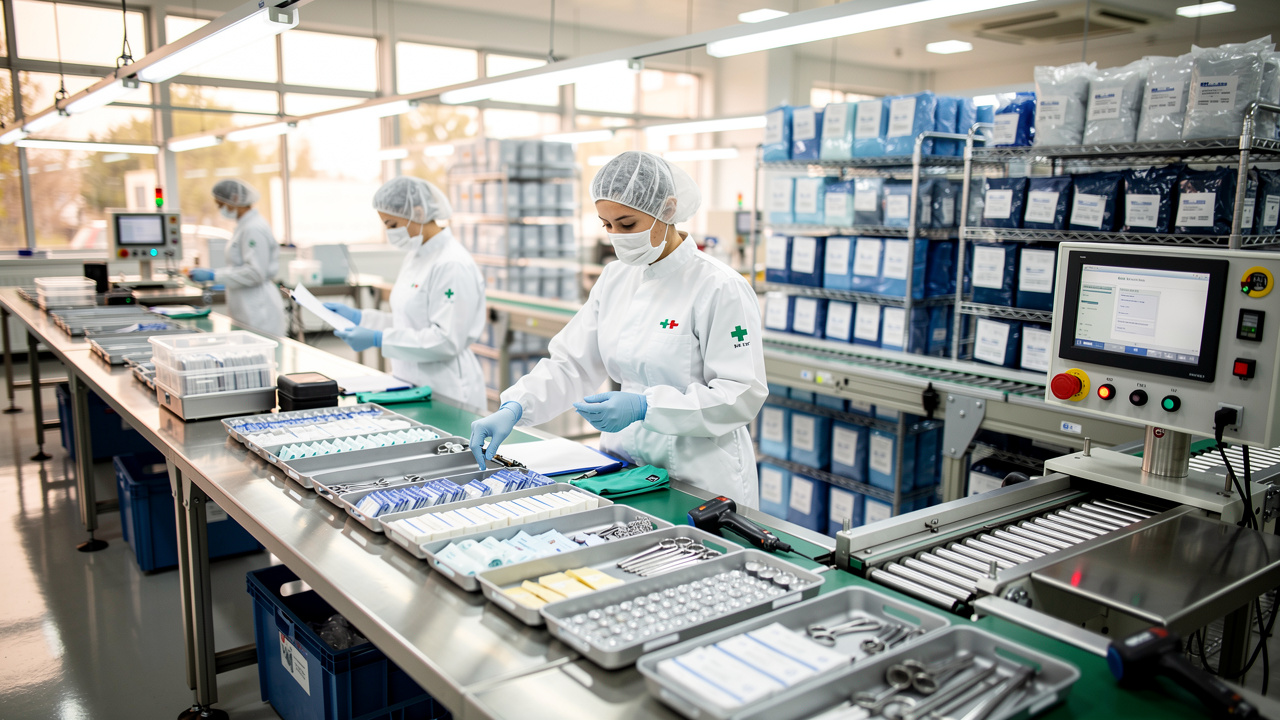
In-house OEM production works differently. The same organization selects materials, runs cleanroom lines, performs tests, and seals final cartons. That alignment supports faster change control, quicker response to feedback, and more consistent product performance.
You can see the contrast in this simple table.
| Factor | In House OEM Medical Model | Heavily Outsourced OEM Medical Model |
|---|---|---|
| Quality control | Single integrated quality team and process | Several quality systems with uneven standards |
| Lead time | Shorter and more predictable | Longer and more sensitive to global disruption |
| Customization | Easier to adjust contents, colors, and labeling | Slower, often requires new subcontracts |
| Scalability | Capacity can ramp with a clear view of equipment and staff | Depends on third parties and shared lines |
| Risk profile | Fewer failure points and simpler root cause analysis | More weak links and harder incident investigation |
How First Aid Longs Embodies The Future Of OEM Medical Manufacturing

First Aid Longs shows how in-house OEM medical manufacturing creates real value for you. Since 1996, the company has focused on designing and building wholesale first aid kits, eyewash products, burn gels, and empty boxes and bags entirely in its own facilities. A 100K Class Cleanroom and tightly controlled production lines support medical grade quality for every batch, following the kind of rigorous approach seen in the development of a patient-specific manufacturing methodology that prioritizes precision and repeatability in medical-grade environments.
Because everything stays inside, First Aid Longs can offer flexible OEM and ODM services with low minimum order quantities. Private label and branding options let distributors and corporate buyers present a unified brand while relying on the same tested OEM medical base.
Typical orders ship within about 45 days, even with customization, which helps your planning and stocking cycles. You can explore more about our OEM medical manufacturing capabilities and see how that model fits your next sourcing project.
How OEM Medical Partnerships Shape First Aid, Safety, And Compliance

Strong OEM medical partnerships will shape how you standardize first aid, manage safety programs, and pass audits across all your sites. Instead of juggling dozens of mismatched kits and refill habits, you can work with one OEM partner on shared designs and clear metrics.
As these partnerships deepen, custom OEM kits, structured refill programs, and bulk agreements will turn into key tools for cost control and uptime.
Use Cases OEM Medical For Healthcare, Industrial, And Institutional Buyers
Hospitals and clinics often struggle with mismatched kit contents and last minute purchases before Joint Commission visits. Imagine a mid sized hospital that switches to OEM medical kits aligned with its own protocols and labeling standards. With standardized content and lot tracking, their safety team spends less time chasing paperwork and more time checking real readiness.
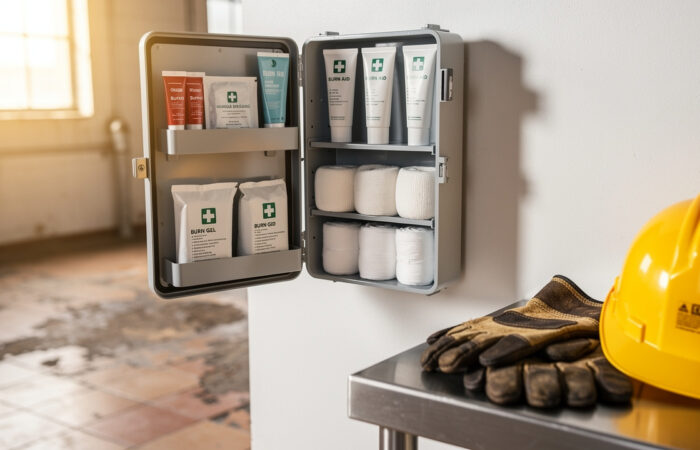
On a large construction site, you might see worn plastic boxes and missing eye wash bottles right when inspectors arrive. An OEM partner can design rugged, wall mounted kits rated for dust, vibration, and weather, all tuned to OSHA and ANSI rules. According to OSHA, employers already pay nearly one billion dollars each week in direct workers’ compensation costs, so fewer injuries and better response time matter a lot.
Customization, Refill Programs, And Data Planning With First Aid Longs
First Aid Longs uses its OEM medical capabilities to support sector specific custom kits. You can design content around risks in construction, logistics, sports programs, healthcare settings, or outdoor education, while staying aligned with OSHA and ANSI guidance. That flexibility also extends to special lines such as pet care or outdoor adventure kits, where contents must match very specific hazards.
Private label and branding options help distributors and corporate buyers tie all these products back to a single, trusted identity. Under the surface, the same in-house OEM medical processes and tests protect quality. Planned refill programs keep stations stocked and audit ready by setting simple reorder points and schedules. Over time, refill data makes it easier to spot usage trends and adjust budgets instead of guessing.
How Should You Evaluate And Select Future Ready OEM Medical Partners?

Choosing a future ready OEM medical partner means looking beyond unit price to quality systems, in house capability, customization, and delivery history. A clear evaluation framework helps you compare suppliers on the factors that affect your safety and compliance, not just the catalog page.
It also helps to build contracts around measurable outcomes such as uptime, refill timeliness, and documentation support. When conditions shift, those outcome based agreements protect you far better than generic terms.
Evaluation Criteria And Questions To Ask OEM Medical Suppliers
You can start with a few simple pillars when you assess OEM medical manufacturers. Quality and certifications sit first, including ISO standards and any FDA related registrations for covered devices. In-house manufacturing scope, customization options, and standard lead times also matter, as do scalability and support programs like planned refills.
Some questions make these topics concrete for your team:
- Which parts of the product does the supplier truly manufacture, and which do they buy from others?
- How do they test each batch, and which records can they share if you request them?
- What are minimum order quantities, normal lead times, and how do they handle urgent orders or surge demand?
Real world proof is just as important as promises. A partner like First Aid Longs, which supports more than one hundred global clients across healthcare, industrial, and educational sectors, can point to a long track record.
Contracting For Outcomes Cost, Uptime, And Compliance
Once you choose an OEM medical partner, the contract should lock in clear, measurable outcomes. You can track on time delivery percentage, stockout incidents, refill accuracy, and product defect rates over each review period. That data gives you real leverage in performance talks and renewal decisions.
Documentation support needs space in the contract as well. Ask for digital access to lot records, test reports, and certificates that line up with OSHA, ANSI, and Joint Commission needs. Sharing refill and usage data also helps your team forecast demand and smooth out budget spikes.
First Aid Longs welcomes transparent expectations around delivery, quality, and refill timing, because the company already builds its processes around those numbers. When you partner with an OEM that thinks this way, you gain a steady base for long term co development instead of a year by year scramble. That steady base lets you support staff safety and patient care with fewer surprises.
Conclusion
OEM medical manufacturing now sits at the heart of safety, cost control, and compliance for hospitals, factories, offices, and schools. The suppliers you choose over the next few years will shape how smoothly you pass audits and keep people protected. If you map your current gaps and then align them with a future ready OEM medical partner, you give your organization a steadier path forward.