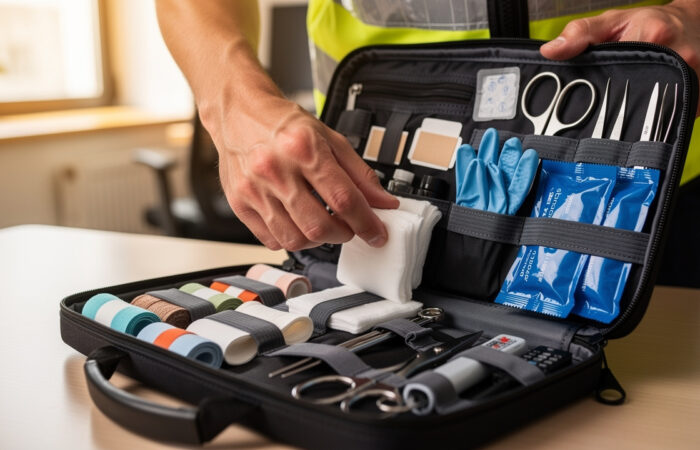
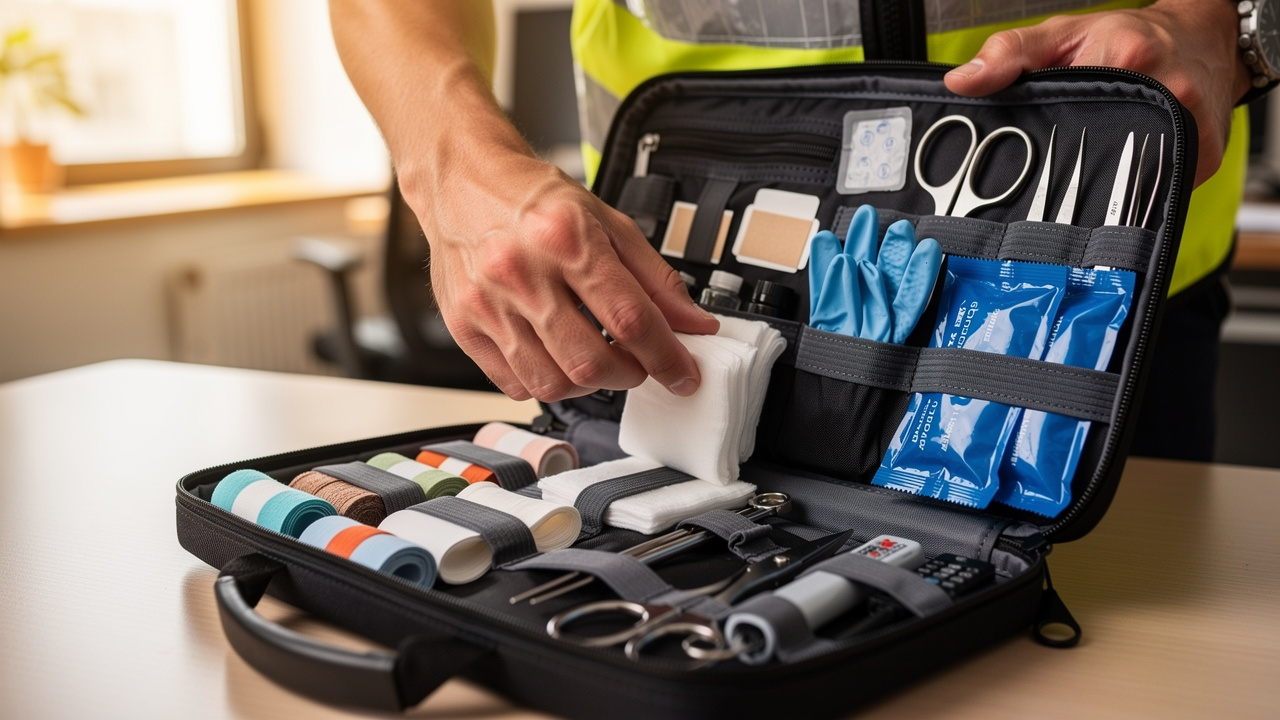
Custom first aid bags give you control over the bag, the contents, and the labeling in one planned package. You learn how to match them to your risks, staff, and sites.You also see how OEM options help with cost, branding, and standard layouts. You get clear steps you can copy without needing medical training. By the end, you know how to choose containers, plan contents, and partner with First Aid Longs for scalable, compliant programs across all your locations.
Key Takeaways
- You see why custom first aid bags work as a planned safety asset, not a giveaway item. They link your hazard profile to real response. This reduces incident impact and stress for your teams.
- You learn how to match bag types and contents to each area, from offices to plants. That match supports faster care and better OSHA readiness. It also keeps layouts familiar across sites.
- You discover what to check in an OEM partner for custom first aid gear. That list covers compliance knowledge, container range, and steady logistics. It helps you pick with confidence.
How Custom First Aid Bags Support Safety, Compliance, And Branding
Custom first aid bags support safety, compliance, and branding by tying your hazard profile to a planned kit design. They also make audits and real incidents easier to handle.
When your bags follow OSHA and ANSI guidance, you reduce gaps that inspectors and staff often notice. At the same time, clear colors and logos help teams spot the right kit in seconds.
According to research on Nonfatal work-related injuries treated in hospital emergency departments, private employers report millions of nonfatal workplace injuries each year, underscoring why ready access to the right supplies matters. That number shows why ready access to the right supplies matters. OSHA standard 1910.151 expects first aid supplies to be “readily available,” which includes suitable contents and quick access.
For US workplaces, you can map custom kits to ANSI or ISEA Z308.1 standards. Class A covers common minor injuries, while Class B supports higher risk areas. Portable bags usually match Type II to Type IV kits, depending on how much dust, moisture, or rough handling they face.

Core Benefits Of Custom First Aid Bags For US Workplaces
Custom first aid bags give you a closer fit between contents and hazards than generic kits. You start from ANSI Class A or Class B, then add trauma, burn, or PPE modules instead of removing items. That approach keeps your compliance base in place.
Guidance from OSHA points to ANSI Z308.1 as the main content reference for workplace kits. Custom bags can follow that baseline while using containers that match Type II portable use or Type IV harsh settings.
Custom layouts improve time to care, as research on Conventional versus task-based package organization for emergency kits shows that structured layouts meaningfully reduce retrieval time when staff feel pressure. Research from the National Safety Council links faster response to better outcomes after workplace events.
Branding and OEM configuration also help operations scale. Here is a simple view.
| Factor | Generic Kit | Custom First Aid Bags Option |
|---|---|---|
| Compliance Fit | Guesswork on contents | Built to OSHA and ANSI targets |
| Risk Alignment | Basic minor injuries | Planned for your real hazards |
| Branding | Plain or random logos | Your logo and clear labels |
| Scalability | Hard to repeat | Repeatable OEM configuration |
Which Types Of Custom First Aid Bags Do You Need For Your Environment?
The right types of custom first aid bags depend on your setting, mobility needs, and exposure to dirt or weather. You pick containers first, then build contents around them. Healthcare wings, factories, schools, and job sites each need different formats. Soft bags suit mobile teams, while hard cases suit fixed points and rough zones.
Soft EMT bags and trauma backpacks work well for mobile response teams and high risk areas, and research on Hiking Backpack Design Development with integrated splint features illustrates how purpose built portable bags can support faster field response. They offer multiple pockets, color coded zones, and space for trauma modules. For example, a large plant may place trauma backpacks near welding lines and loading docks.
Hard plastic or metal wall mounted boxes support OSHA style fixed workplace kits. Offices and classrooms often use plastic Class A boxes, while heavy industry leans toward metal Class B cabinets. These units hold up against bumps and regular use.
Matching Bag Types To Key Use Cases And Risks
You can map your main locations to recommended custom first aid bags and cases. This makes planning easier across many facilities.
| Use Case | Recommended Custom First Aid Bags Type | Notes |
|---|---|---|
| Office or school floor | Wall mounted plastic box | Class A or B, clear “First Aid” marking |
| Manufacturing or warehouse | Metal box plus mobile trauma backpack | Supports heavy use and major injuries |
| Construction or field service | Waterproof hard case plus vehicle headrest pouch | Handles weather, dust, and long drives |
| Hospital or clinic satellite | Modular EMT backpack or oxygen trauma bag | Fits BLS or ALS level response |
First Aid Longs supplies empty bags, boxes, and containers in many sizes, from pocket kits to wall cabinets. You choose plastic, nylon, or fabric so the container matches your durability and portability needs. The team can advise you when you describe your environment and headcount.
How To Design Contents For Custom First Aid Bags Based On Risk And Compliance
Designing contents for custom first aid bags works best when you use modules tied to risk. You keep ANSI as the floor, then add targeted packs. This method lets you support both OSHA expectations and your actual incident history. It also keeps layouts simple for training and restocking.
Start with OSHA and ANSI Class A or Class B lists as your base set. From there, add modules for trauma, burns, PPE, and medications based on hazard assessments. Recent guidance on workplace safety from the Centers for Disease Control and Prevention stresses matching first aid supplies to specific injury patterns.
Document your choices so you can show auditors how each kit supports a known risk. That same document later guides restocking and new site rollouts.
Key Content Modules For Effective Custom First Aid Bags
Think of your kits as a set of repeatable content modules. This helps you standardize across departments and locations. The core first aid module fits every workplace. It includes assorted bandages, sterile gauze, adhesive tape, antiseptic wipes, burn cream, nitrile gloves, small shears, a CPR mask, and a quick first aid guide. This set covers most minor cuts, scrapes, and simple burns.
The trauma and bleeding control module suits manufacturing, construction, security, and public venues. It holds tourniquets, hemostatic dressings, trauma pads, large gauze rolls, chest seals, and trauma shears. Many organizations tie this module to fixed bleeding control stations in high risk areas.
A burn care module serves kitchens, labs, and hot work zones. It adds burn dressings, gels, non stick pads, and extra wraps. A PPE and biohazard module holds gloves, masks, eye shields, gowns, absorbent powder, disinfectant wipes, and red bags for waste.
You may also choose a medications and relief module where policy allows. That can include individually packed pain relievers, antihistamines, oral rehydration salts, and glucose gel. Check local rules and your medical director before you add drugs.
Here is a quick view of where modules fit best.
| Module | Best For |
|---|---|
| Core First Aid | All workplaces and clinics |
| Trauma And Bleeding Control | Industrial sites, construction, public areas |
| Burn Care | Food service, labs, hot work stations |
| PPE And Biohazard | Healthcare, schools, high traffic sites |
| Medications And Relief | Offices, campuses, remote locations |
If you want deeper reference material, you can review an ANSI Z308.1 overview from a state university safety program or NCBI research on first aid preparedness.
Why OEM Custom First Aid Bags With First Aid Longs Are A Scalable Solution

OEM custom first aid bags with First Aid Longs give you consistent containers and branding across every site. They also keep costs controlled through in house production.
You gain a single partner that understands OSHA, ANSI, and your own standards, then repeats your designs on schedule. This reduces variation and ordering headaches.
If you already know exactly what you want, you use OEM support, and innovations like the SafeAmpCase: design and optimization of 3D-printed protective inserts show how advanced manufacturing techniques can safeguard fragile medical supplies inside custom containers.
If you need design help, you use ODM support. Product specialists listen to your risk profile, people count, and storage limits, then suggest layouts and containers. They can also adjust artwork and panel layouts so your logo and safety markings look clean.
OEM/ODM Options And Partnership Advantages With First Aid Longs
First Aid Longs combines almost three decades of experience with full in house manufacturing. That mix gives you steady quality and predictable timing.
The company produces empty first aid bags, plastic boxes, and fabric containers under one roof, following principles similar to those explored in research on the Design and analysis of 3D-printed first aid armbands for first responders, where ergonomic and durable construction directly improves usability. Machinery and tools are sterilized on a regular schedule, and products go through durability tests. This helps large buyers avoid the inconsistent quality that can appear when sourcing from many small factories.
Branding options include logo printing, color selection, and custom labels. If you run a distributor program, you can build private label first aid kits that match your catalog and price points. First Aid Longs already serves clients in construction, manufacturing, schools, sports venues, healthcare, and outdoor activity sectors.
Here is how common buyer needs line up with what First Aid Longs offers.
| Buyer Need | First Aid Longs OEM Response |
|---|---|
| Consistent Quality Across Sites | In house production and strict quality checks |
| Fast, Scalable Rollouts | High capacity trade infrastructure |
| Custom Branding And Labeling | Logo print and color customization |
| Small Pilots And Big Programs | Flexible MOQs from about 50 units upward |
Conclusion
Custom first aid bags work best when they link the right container, smart content modules, and OSHA or ANSI baselines. This turns each kit into a planned part of your safety program. By now, you have seen how to choose bag types, plan modules, and map them to your risks. You have also seen how an OEM partner like First Aid Longs keeps quality steady while helping you control cost and branding for your kits. Take time to review your current kits, note gaps, and decide which custom layouts you need for each site. When you are ready, you can contact First Aid Longs.This gives you a clear, repeatable path to safer workplaces.