First aid training online vs in person is now a core choice for every safety budget and audit plan. You want people ready to act without wrecking shifts or payroll. This guide shows how online, in person, and blended formats work, how they affect compliance, skills, and costs, and how First Aid Longs kits keep training real during emergencies. Keep reading so you match your training plan with risk, readiness, and the way your teams actually work.
Key Takeaways
- Online Vs In Person Are Different Jobs, Not Enemies. You can use online courses for knowledge and in person time for skills. Treat each format as a tool for the right group.
- Compliance Demands Hands On Skills. OSHA, AHA, Red Cross, and NSC expect skills checks for responders. Online only courses rarely satisfy audits for high risk roles.
- Blended Learning Balances Cost And Readiness. Online modules cut classroom time while skills labs protect performance. This mix often works best for multi site operations.
- Supplies Must Match Your Training Format. Staff need kits, eyewash, and burn care that feel familiar. Matching gear to training avoids hesitation when every second matters.
How Is First Aid Training Online Vs In Person Changing In Workplaces?

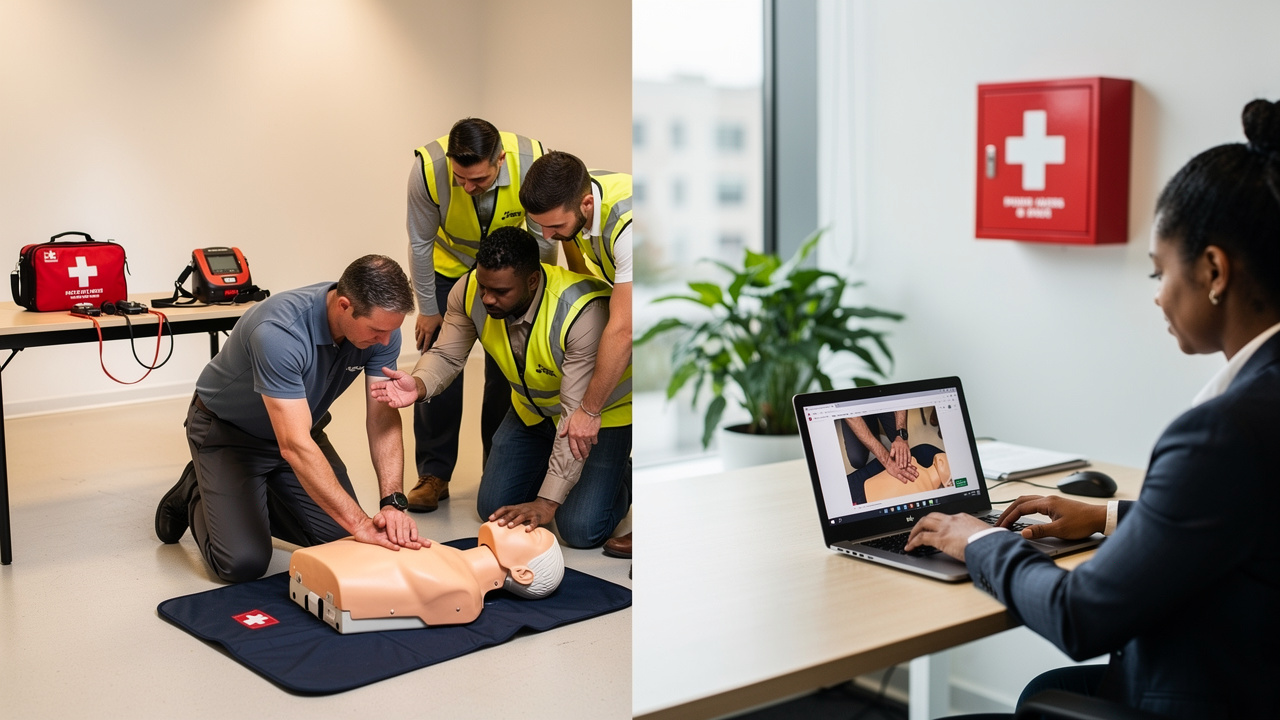
First aid training online vs in person in US workplaces is moving toward blended programs that mix e learning with tight skills labs. You now have more choice and more duty to match format to risk. Online training usually means self paced modules that your staff complete on a laptop or phone. In person training means classroom or on site sessions where instructors guide practice with manikins, AED trainers, and first aid gear.
This shift matters because workplace injuries still happen often. According to the Bureau of Labor Statistics, private employers report about 2.5 million nonfatal workplace injuries in a year. At the same time, Statista shows steady growth in global e learning revenue, which explains why many employers push digital options. Your real task is to use that flexibility without losing hands on performance.
What Does First Aid Training Online Vs In Person Actually Include?
First aid training online vs in person usually covers the same topics but teaches them in different ways. Core content often includes:
- CPR
- AED use
- Bleeding control
- Burns and scalds
- Eye injuries
- Shock care
- Stroke and heart attack warning signs
The main split is between knowledge and hands on skills.
Online courses focus on cognitive learning. Staff watch videos, answer scenario questions, and complete quizzes on topics like the chain of survival or decision steps for severe bleeding. This works well for understanding what to do and when to act. In person classes focus on psychomotor skills. Learners push on CPR manikins, handle AED trainers, place tourniquets, and rinse eyes at a station.
Typical Content In First Aid Training Online Vs In Person
| Topic | Online Focus | In Person Focus |
|---|---|---|
| CPR | Steps, rates, warning signs | Compression depth, rate, recoil |
| AED | When to use, prompts | Pad placement, safety checks |
| Bleeding control | When to apply pressure or pack | Tourniquet use, dressing practice |
| Burns | Types, when to seek help | Cooling steps, dressing application |
| Eye injuries | Risk awareness | Eyewash station use, flushing time |
| Shock and stroke signs | Recognition, call steps | Scenario drills, role play |
Why Compliance Favors In Person Skills Over Online Only Training

Compliance rules in the US lean toward in person or blended first aid training with skills checks instead of online only courses. You protect your organization when you treat online only options as awareness, not full responder certification.
OSHA expects “adequate” first aid and CPR training for named workplace responders. In practice, that means courses based on current science with real skills practice and instructor evaluation. Online only awareness courses rarely meet that bar for high risk roles in manufacturing, construction, and healthcare.
Major providers give the same message. The American Heart Association requires an in person skills test for Heartsaver, BLS, ACLS, and PALS cards. The American Red Cross states that online only CPR is not valid for workplace certification.
How Does First Aid Training Online Vs In Person Affect OSHA And Accreditation?
First aid training online vs in person shapes how OSHA inspectors and auditors judge your program. OSHA does not promote brands, but it does expect responders to actually be able to give care.
According to OSHA, employers must provide trained personnel and suitable supplies when nearby medical care is not available. In many plants, construction sites, and remote jobs, that standard means staff need hands on practice with CPR, AED, and first aid skills, not only online quizzes.
Online only courses are usually fine for general awareness or office staff who are not named in an emergency plan. They are rarely safe for nurses, plant medics, construction leads, or safety teams who must respond by policy or contract. Hospitals, EMS agencies, and state backed school programs often list accepted course types directly.
Online Vs In Person For Compliance At A Glance
| Role Type | Safer Modality Choice |
|---|---|
| Nurses and clinical staff | In person or blended with skills check |
| Plant and site responders | In person or blended with skills check |
| Office staff, low risk | Online awareness or blended |
| School teachers and coaches | In person or blended, per state rules |
How Do Online Vs In Person First Aid Training Impact Skills, Confidence, And Safety Culture?

Online and in person first aid training shapes how well your people perform under stress and how they feel about safety at work. You want staff who both know the steps and feel calm enough to act.
In person and blended classes build psychomotor skills, and a comparison of online and hybrid education models for first aid students confirms that hybrid approaches can match in-person outcomes when skills practice is included. Learners practice chest compressions, rescue breaths, tourniquet use, and bandaging while instructors adjust hand placement and pressure. This kind of guided practice builds confidence that carries into real emergencies.
Online modules shine for theory and refreshers. Short videos and quizzes from providers like the American Red Cross and American Heart Association help people retain key ideas, such as stroke signs or when to use an AED. Research from the American Heart Association shows early CPR can double or triple survival rates in cardiac arrest, so even awareness helps.
Which First Aid Training Format Builds Better Real World Performance?
First aid training formats do different jobs for real world performance. In person sessions give you the best chance that people will move quickly and correctly when incidents happen.
During classroom or on site sessions, staff work with CPR manikins, AED trainers, tourniquets, bleeding control dressings, and eye rinse bottles. Repeating those steps builds muscle memory so actions feel natural instead of forced. Instructors correct common mistakes, like shallow compressions or weak tourniquet tension, on the spot.
Online modules help people remember the why. They explain chains of survival, decision trees for shock, and warning signs of heart attack or stroke in short chunks that staff can replay. This part is ideal for busy shifts or remote staff who cannot travel often.
Blended programs mix both strengths, a finding supported by a randomized controlled trial of asynchronous versus synchronous online teaching formats, which showed equal knowledge outcomes with greater learner acceptance in blended delivery. Learners complete theory online, then attend a focused skills lab where instructors check CPR, AED use, and first aid tasks.
How Formats Compare For Confidence And Culture
| Factor | Online Only | In Person | Blended |
|---|---|---|---|
| Skill confidence | Low to medium | High | High |
| Team bonding | Low | High | Medium to high |
| Culture impact | Awareness level | Strong | Strong |
| Best use case | Awareness and refreshers | Core responders | Mixed risk sites and hospitals |
What Are The Cost And Operational Trade Offs Of First Aid Training Online Vs In Person?

The cost and operational impact of first aid training online vs in person go far beyond course fees. In person training often has a higher direct cost per learner. You pay for instructor time, travel, and sometimes room rental and equipment. You also pay the hidden cost of pulling a group away from production lines or patient care at the same time.
Online courses usually carry lower direct fees, especially at scale. You can enroll hundreds of staff across factories, offices, and clinics without moving them off site. According to the National Safety Council, work related medically consulted injuries cost US employers more than 160 billion dollars in a recent year, so even modest boosts in readiness can pay for themselves.
How Can You Balance Budget, Downtime, And Coverage Across Sites?
Balancing budget, downtime, and coverage starts with your staffing pattern. Multi shift hospitals, manufacturing plants, and logistics hubs need flexible mixes of online and in person learning.
You can start with a few simple steps:
- Assign online theory during low demand periods.
- Group short skills labs by shift or unit.
- Use local instructors to cut travel time.
- Track expirations so renewals spread across the year.
One approach is to assign online theory during quiet windows. Staff can work through modules at their own pace, then attend short skills blocks grouped by shift. This pattern reduces overtime and keeps core services running.
You can also use blended models across regions, as research on statistical analysis on the relationship between content delivery format and learner engagement supports the effectiveness of distributing theory digitally before consolidating skills in a centralized lab.
The table below gives a quick comparison.
| Modality | Compliance Strength | Skills Depth | Scheduling Ease | Per Learner Cost |
|---|---|---|---|---|
| Online only | Low for responders | Low | High | Low |
| In person | High | High | Medium | Medium to High |
| Blended | High | High | High | Medium |
How Can First Aid Longs Support Your First Aid Training Strategy?
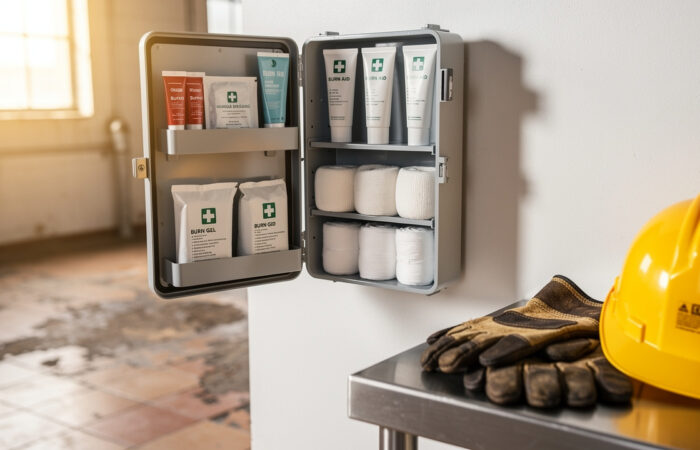
First Aid Longs supports your first aid training strategy by making sure the right supplies are ready wherever your people work or learn. You choose the format, and First Aid Longs backs it with reliable gear. The company manufactures first aid kits, eyewash products, burn gels, and other medical items in 100K Class Cleanroom facilities. Wholesale buyers value flexible minimum order sizes and pricing that fits both single site clinics and large networks.
Because First Aid Longs serves more than 100 clients worldwide, its team understands the daily needs of healthcare, construction, and education buyers. Many customers note steady delivery and quick support when they describe their experience
Why Do Your First Aid Supplies Need To Match First Aid Training Online Vs In Person?

Your first aid supplies need to match first aid training online vs in person because a mismatch slows people down when stress spikes. You want staff to reach for tools that feel familiar from class, not strange packs they have never seen.
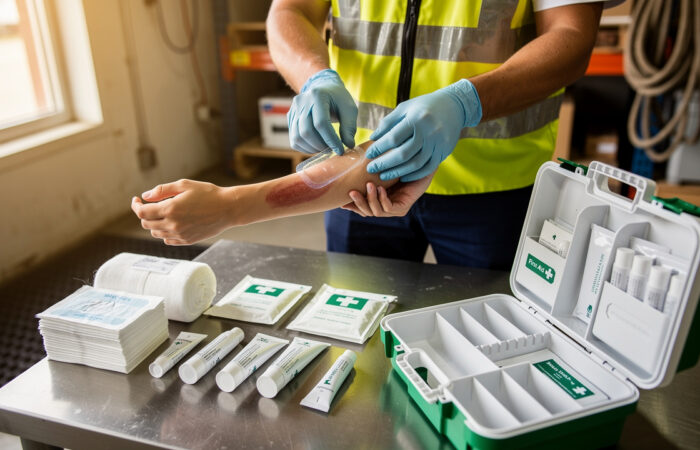
If workers practice bleeding control on certain dressings but find different items in the field, they may hesitate. The same issue appears when staff learn eyewash steps, but your stations do not match those examples. Every extra second spent reading packaging is time a patient does not have.
First Aid Longs offers ANSI Z308.1-compliant first aid kits, eyewash solutions for industrial facilities, and burn gels for manufacturing and construction sites that align with common first aid curricula. You can customize contents, labels, and containers so they mirror what staff see in online modules and on site drills.
Summary
The smartest way to use first aid training online vs in person is to blend formats by risk level. You gain flexibility without giving up hands on skill or compliance. First Aid Longs turns that plan into real readiness with ANSI aligned kits, eyewash products, burn care, and refills that match what people practice. Take time now to map roles by risk, assign training formats, and line up supplies so each group has the right tools close at hand when seconds count.