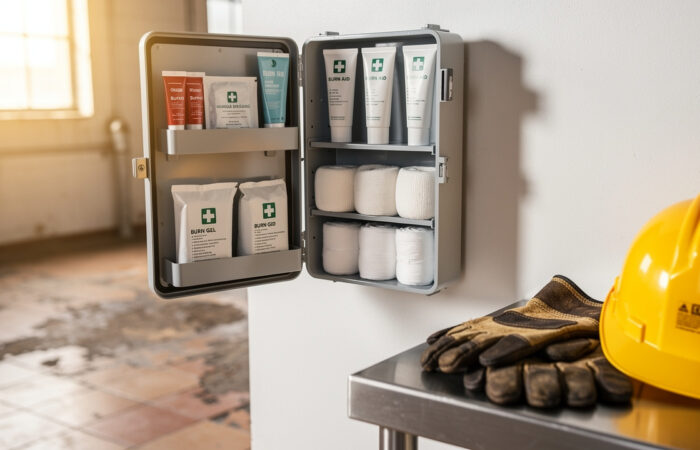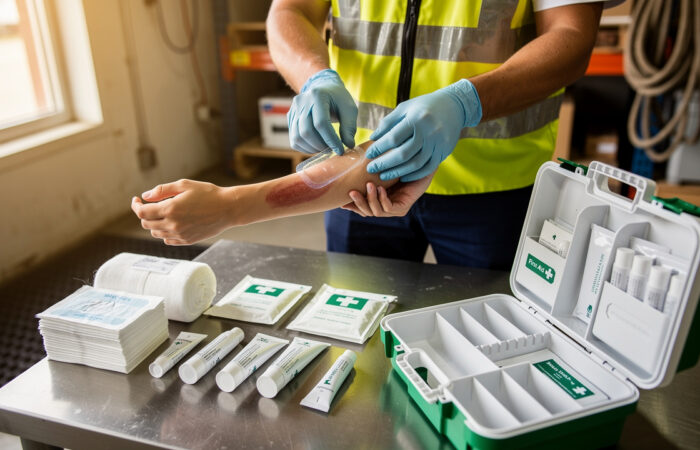
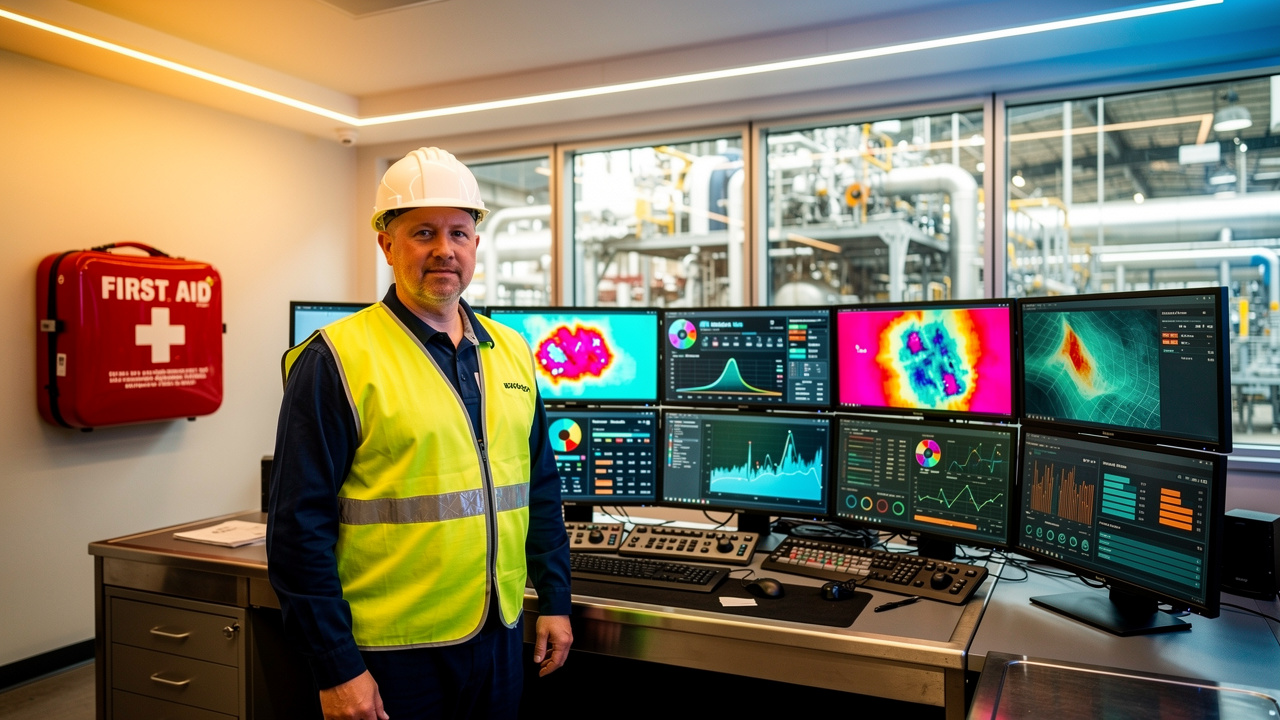
There’s a rising trend in using AI in workplace safety, but we still face preventable injuries and slow emergency response. Sensors and software can spot a problem fast, yet someone still needs the right first aid kit, eyewash, or burn care at arm’s reach to help. When AI alerts line up with well-placed, fully stocked medical supplies and refills, the safety gaps those alerts reveal start to close.
That is the key idea in this article. AI in workplace safety means using tools like computer vision, wearables, and smart buildings to watch risk in real time and predict trouble before it becomes an OSHA recordable case. According to the U.S. Bureau of Labor Statistics, employers report millions of nonfatal injuries each year, so turning digital warnings into fast, hands-on care matters.
You will see how AI tools work, where they bring the most value, what risks they bring with them, and how step-by-step adoption looks in US facilities. You will also see how strong first aid and medical supply programs let AI alerts turn into real protection, not just dashboard numbers.
Keep reading to connect modern safety tech with practical kits, training, and response.
Key Takeaways
AI in workplace safety uses computer vision, machine learning, IoT sensors, and smart PPE to move safety programs from clipboards to continuous monitoring. These tools watch cameras, equipment, and worker health data so you see trouble earlier, with clearer leading indicators instead of only past incident logs.
High value applications include PPE and hazard detection, fatigue and ergonomic monitoring, and support for violence prevention and safety audits. These use cases link directly to metrics such as TRIR, LDR, and serious injury rates, so you can match them to your highest risk zones and budgets.
Strong governance, worker privacy protections, and clear communication keep AI from turning into more surveillance. A simple roadmap that starts with existing cameras, focused pilots, and well stocked first aid stations helps AI fit into daily work. Physical readiness with quality kits, eyewash, and burn care turns each alert into faster, more effective response.
How Is AI Being Used In Workplace Safety Today?

AI in workplace safety today means systems watching cameras, sensors, and health data to spot hazards faster than manual rounds. These tools help safety teams move from reacting to OSHA logs to acting on early warnings. In hospitals, factories, and construction sites, AI also improves documentation for regulators and insurers.
According to recent data from the U.S. Bureau of Labor Statistics, more than five thousand workers die on the job in a typical year, and millions more are injured, a challenge that AI-Powered Computer Vision for ergonomic risk assessment is beginning to address in industrial settings. AI supported monitoring brings more attention to high energy events such as vehicle impacts or falls, which often drive those numbers. For procurement and safety leaders, the question shifts from “what happened” to “what patterns are building toward the next event.”
“The future depends on what you do today.”
Mahatma Gandhi
That quote fits safety well: AI spots the warning signs, but what you do with those alerts determines whether conditions actually improve.
Core AI Technologies That Power Safer Workplaces
Core technologies behind safer, AI supported workplaces include computer vision, machine learning analytics, IoT sensors, and smart PPE. Together, they collect and interpret data that no human team could watch all day. They do not replace supervisors or safety officers, but they give those people much better information.
Computer vision systems watch existing CCTV or IP cameras to spot missing PPE, unsafe postures, or someone entering a restricted zone. Convolutional neural networks, trained on thousands of labeled images, can tell the difference between a nurse with eye protection and one without, or a worker with and without a hard hat. In a hospital corridor, they can also flag clutter or blocked exits.
Machine learning and predictive analytics study past incidents, near misses, maintenance logs, and staffing data to find patterns. For example, they may show that night shifts in a busy emergency department have more needle sticks, or that a certain production line has more line of fire events. That insight supports focused training and preventive maintenance instead of broad campaigns that fail to match real risk.
IoT sensors, wearables, and smart building systems track heat, gas levels, noise, and worker motion. AI then links those readings to fatigue, heat stress, or unsafe lifting patterns. In a construction zone or warehouse, smart helmets and vests can give workers a real time warning when they get too close to moving vehicles.
To keep these tools reliable, safety teams should align their use with recognized references such as OSHA’s employer guidelines.
What Are The Most Valuable AI Safety Applications For Your Facility?
Valuable AI in workplace safety applications are the ones that line up directly with your highest risk tasks and most painful metrics. For many US buyers, that means reducing serious injuries and fatalities, lowering Total Recordable Incident Rate, and cutting musculoskeletal claims. AI does not change your goals; it changes how early you see risk and how targeted your controls can be.
Safety leaders at hospitals, manufacturers, and construction firms often start by asking where human observation simply cannot keep up. Busy loading docks, emergency departments, inpatient corridors, and work at height are hard to watch around the clock. AI monitoring gives those areas more consistent attention while freeing safety staff to coach and improve systems.
High-Impact Use Cases Across Healthcare, Manufacturing, And Construction

High impact AI safety use cases tend to fall into a few clear groups that cross industries. Each group maps neatly to familiar KPIs and compliance requirements from OSHA, NIOSH, and accrediting bodies such as the Joint Commission.
Common examples include:
Automated PPE and hazard detection keep eyes on hard hats, isolation gowns, gloves, and eye protection without constant walk throughs. Vision AI picks up workers under suspended loads, forklifts too close to pedestrians, or cluttered hospital corridors. Every event is time stamped, which helps during investigations and audits.
Worker health, fatigue, and ergonomics monitoring use wearables to track heart rate, skin temperature, and motion. AI evaluates posture for nurses, material handlers, lab staff, and line workers, flagging high risk patterns. NIOSH notes that musculoskeletal disorders account for a large share of work related injury costs, so early ergonomic insight can save both pain and money, a finding supported by AI-Powered Computer Vision for musculoskeletal symptom prevalence studies in operator populations.
Mental health, violence, and behavioral risk tools review incident reports and, where allowed, communication patterns for warning signs. In an emergency department or late night retail setting, AI supported cameras can alert security to escalating behavior. Close partnership with HR, legal, and unions is key here so support, not punishment, stays at the center.
Safety compliance, audits, and decision support platforms pull together near misses, PPE violations, and environmental readings. Dashboards show which units or sites see rising risk, so leaders know where to focus new controls, refresher training, or smarter kit placement ahead of OSHA or Joint Commission visits.
A simple way to compare options is to look at where each use case fits.
| AI Safety Use Case | Typical Setting | Main Metric Helped |
|---|---|---|
| PPE and hazard detection | Construction sites, ORs, loading docks | PPE compliance rate, near misses |
| Fatigue and ergonomics | Nursing units, warehouses, assembly lines | MSD claims, lost workdays |
| Violence and behavioral risk | EDs, late night operations, campuses | Assault incidents, security calls |
When you link those patterns to the placement of ANSI compliant first aid kits, eyewash, and burn stations, your investment in AI has a direct effect on real outcomes.
What Are The Risks, Limitations, And Ethical Concerns Of AI In Workplace Safety?
AI in workplace safety also brings real risks when it is built or used poorly. Data errors, biased models, and privacy problems can hurt trust and even create new hazards. Safety leaders need to treat these systems like any other safety control that can fail, not like magic.
Regulators already expect thoughtful use of monitoring tools. The OSHA General Duty Clause still applies when AI is present, and agencies such as the EEOC and state privacy offices watch how employers handle data and automation. In healthcare, misuse of clinical or biometric data may also trigger HIPAA issues.
Managing Data, Privacy, And Worker Trust

Data quality sits at the centre of safe AI use. If models learn from old or skewed data, they may miss hazards for some job groups or flag one demographic more often than others. That problem damages fairness and can harm health equity. Regular validation, using recent data from your own sites, helps keep performance reliable.
Privacy and surveillance concerns grow when cameras, wearables, and smart PPE run all day. Video of patient care, nurse location, or mechanical movement is very sensitive. Good programs follow clear principles such as collecting only what is needed, shortening retention periods, and limiting who can see raw images or biometrics. Using encryption and strict access controls, as promoted by NIST guidance, reduces cyber risk.
Cybersecurity matters because every connected camera or edge device can become an entry point. AI systems should sit inside the same security program you already use for EHR platforms, maintenance systems, or HR databases. That includes:
Regular penetration testing
Prompt patching of cameras and servers
Clear incident response plans that involve IT and security teams
Human factors may be the hardest piece. Constant monitoring can raise stress and make staff feel watched rather than supported. To lower that risk, leaders explain clearly what AI is tracking, what it is not tracking, and how the data will be used. Workers also need simple ways to question AI driven findings and to keep human review in the loop for serious decisions.
Tip: Involve employees early when designing AI policies. When people help shape the rules, they are more likely to trust the tools.
How Can You Start Integrating AI Into Workplace Safety Programs?
Integrating AI in workplace safety works best when you begin with small, focused steps rather than a giant project. The goal is to use tools that fit your current cameras, building systems, and safety culture. You can grow from early pilots that clearly reduce risk and support staff.
Many US hospitals, factories, and construction firms already have the raw ingredients for AI, such as CCTV networks, building automation, and maintenance databases, and research into Automatic Generation of Job safety reports with RAG-based LLMs shows how these data sources can be unified into actionable documentation. The challenge is to connect those pieces to specific safety questions. Procurement and EHS teams can work together to pick a first use case that matters to leadership and frontline workers.
A Practical Roadmap For AI Adoption In Safety
A simple roadmap keeps the process manageable and links technology to real response on the floor.
Assess What You Have
List existing cameras, building management systems, EHR or occupational health data, maintenance platforms, and any wearables.
Mark your highest risk zones, such as EDs, loading docks, confined spaces, machine shops, and work at height.
Check where first aid kits, eyewash, and burn care already sit and where coverage looks thin.
Define One Or Two Priority Use Cases
Choose use cases tied to metrics you already track, such as TRIR or MSD claims.
Examples: PPE compliance in sterile areas, forklift and pedestrian separation in a warehouse, or smart helmets for confined space work.
Agree on a clear baseline period so you can measure change.
Choose Integration Friendly Tools
Ask vendors how they use APIs with your existing camera systems or building platforms.
Review what security and bias testing they have completed.
For healthcare, confirm how they protect PHI and meet HIPAA requirements.
Pilot, Measure, And Refine
Run a time bound pilot in one unit or site.
Compare PPE violations, near misses, or heat stress events before, during, and after.
Gather worker feedback and adjust thresholds, alert routing, and local procedures.
Scale With Training, Governance, And Physical Preparedness
Form a small AI safety committee with EHS, IT, HR, legal, and clinical or operations leaders, drawing on methodologies like A Proactive Safety Management approach driven by expert knowledge and hybrid retrieval-augmented generation to guide policy and system design.
Teach supervisors and frontline teams how to respond to alerts and when to escalate.
Link alerts directly to playbooks and well stocked first aid stations so response is fast and consistent.
Aligning this roadmap with national resources such as NIOSH’s guidance on safety programs keeps your approach grounded in accepted practice.
Why Choose Us To Strengthen Your AI-Enabled Safety Program
Choosing the right medical supply partner makes AI in workplace safety more practical across many sites. AI can warn you about heat stress, chemical splashes, or cuts, but only real supplies and trained people can change the outcome. A dependable wholesale manufacturer helps you keep that physical layer ready every day.
Safety and procurement leaders in healthcare, manufacturing, logistics, and education need suppliers who understand both compliance rules and real world field conditions. That includes ANSI/ISEA Z308.1 requirements, OSHA expectations, and specific industry hazards. When your first aid and medical products already match these standards, AI monitoring and audits run more smoothly.
A good partner should:
Support multi site standardization so every unit has comparable kits and refills
Offer cleanroom manufactured components for consistent quality
Provide fast replenishment when AI data shows rising risk in certain departments or during peak seasons
Help you align kit layouts with high risk tasks, so an alert about a chemical splash points straight to eyewash and burn gel within a short walk
Buying from a specialist who understands both AI informed risk trends and on-the-ground response makes your overall program more reliable and easier to manage.
How Our First Aid And Medical Supplies Fit Into AI In Workplace Safety
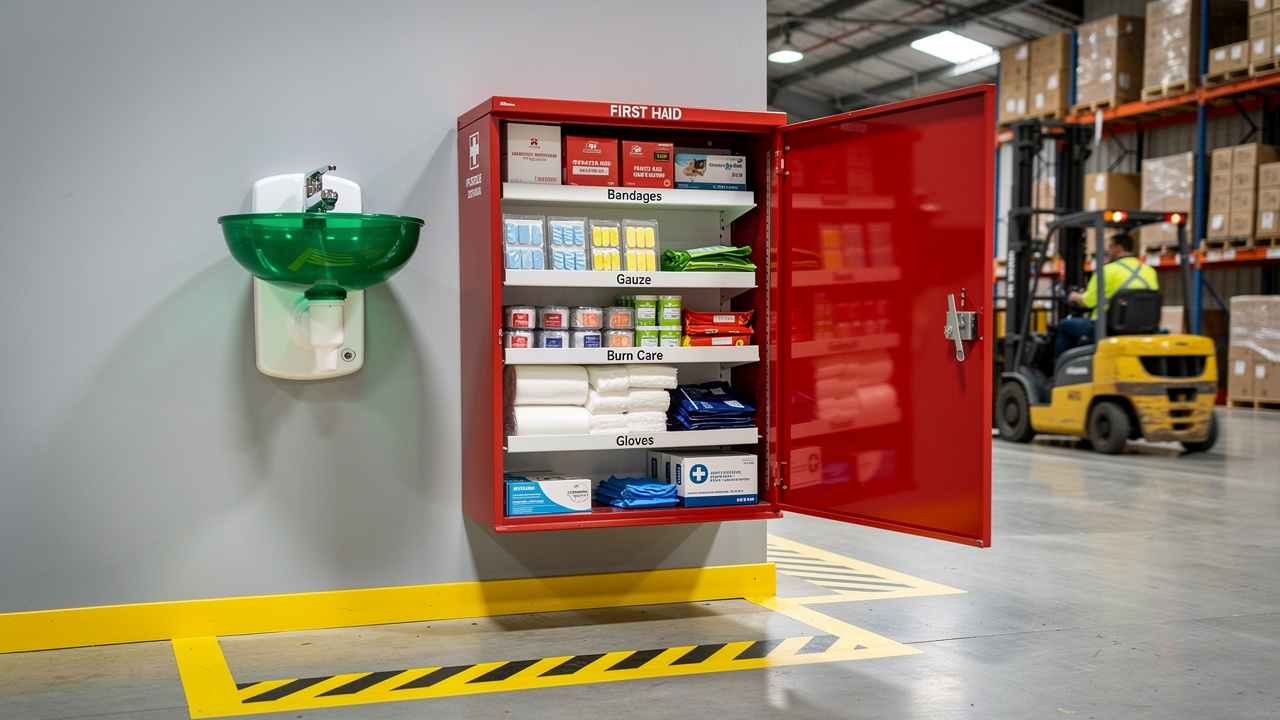
Our company supports AI monitored workplaces by focusing on physical readiness where incidents actually happen. AI in workplace safety often highlights hot spots such as loading docks, machine shops, sterile processing, or chemistry labs. Placing ANSI/ISEA Z308.1 Class A or Class B kits, eyewash, and burn care in those zones turns digital alerts into faster care. You can see suitable options under our ANSI-compliant first aid kits.
Compliance-ready, customizable kits matter because each facility has a different hazard mix. Products manufactured in 100K Class Cleanroom facilities keep quality consistent while you adjust contents for chemical labs, welding areas, food service, or patient care units. We can build custom configurations as well as supply empty boxes and cabinets for teams that want AI informed, hazard specific stations.
Scalable replenishment helps multi site organizations match AI insights with supply levels. When analytics show rising risk in certain units or during peak seasons, refill packs and component sets make it simple to add more dressings, splints, or burn gel where needed. Our in house manufacturing shortens lead times so you can react quickly instead of waiting months for stock. See our range of first aid kit refills for multi-site teams to support standardization.
Partnering with First Aid Longs gives you a wholesale manufacturer with nearly three decades of experience and more than one hundred global clients across high risk sectors. Clients praise on time delivery, reliable quality, and responsive service for first aid kits, bulk eyewash and burn care, and other medical supplies. If you are planning or scaling AI safety projects, buying from First Aid Longs provides the steady physical backbone those projects need.
Ready To Build Smarter, Safer Workplaces?

Smarter workplaces use AI in workplace safety to move from reacting to injuries toward predicting and preventing them. Computer vision, wearables, and analytics shine a light on patterns you might never spot during quick walkthroughs. At the same time, none of that helps a hurt worker if bandages, eyewash, or burn care are missing when the alarm sounds.
The most effective programs connect AI alerts with clear response playbooks, trained staff, and well-placed first aid kits that meet ANSI and OSHA expectations. That blend protects staff, supports compliance with OSHA and Joint Commission reviews, and reduces both downtime and compensation costs.
Now is a good time to:
Review your camera coverage, incident data, and current kit locations
Choose one or two AI use cases that matter most
Make sure your first aid stations and medical supplies match the risks those systems highlight
When you are ready to upgrade kits or standardize refills across sites, consider buying from First Aid Longs to align your physical readiness with your AI enabled safety strategy.