

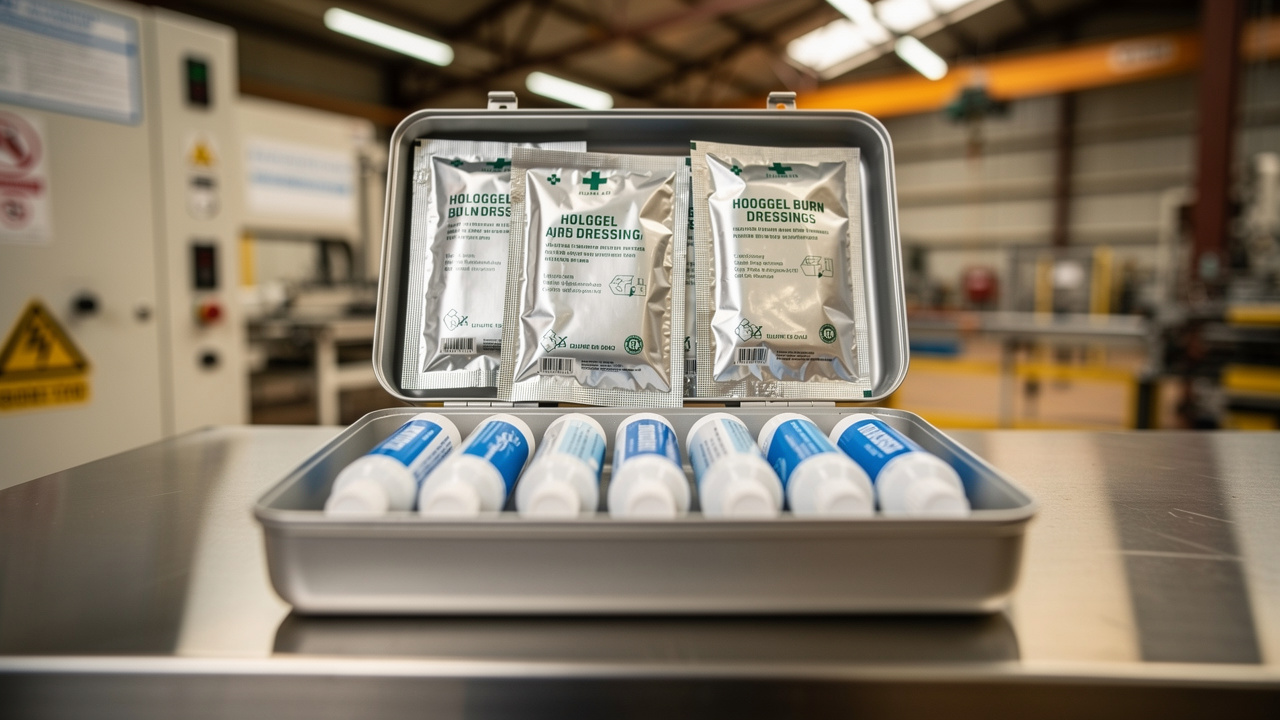
The shout comes from the shrink-wrap tunnel. A line operator has brushed a bare forearm against the hot housing, and the skin is already bright red and burning. Someone hits the stop button, the belt slows, and a small crowd gathers while the operator grips the arm and tries not to swear. One person grabs a tube marked burn gel, another digs for a burn dressing, and no one agrees on which one to use.
Production pauses while people debate cream versus pad and whether the worker needs to leave the floor. The burn keeps stinging, the operator gets anxious, and you watch minutes of output disappear over what should be a simple first aid step. The real problem is not the burn itself but the confusion about when to use a burn dressing and when a small packet of gel is enough.
This guide gives you a clear, workplace-focused answer. You will see what a burn dressing does, what burn gel does, how burn size, depth, and location affect your choice, and how to build a simple burn plan for every site. Everything here lines up with current first aid recommendations, not old ideas like ice or butter, so you can set a standard your teams actually trust and follow.
Key Takeaways
Many managers only have a few minutes, so it helps to fix the core rules first. These points give you a fast way to separate burn gel and burn dressing decisions before you dive into the details.
Use burn gel after water cooling when the burn is tiny, on the surface, and no larger than the worker’s palm. Think fingertip touches on hot trays, brief contact with tools, or mild sunburn on outdoor staff. For these spots, gel on its own is usually enough.
Choose a hydrogel burn dressing or other sterile dressing for burns when the area is bigger, has blisters, or will rub on clothing or gloves. A gel pad cools and covers in one step so fragile skin has a clean shield. This approach suits most production areas, auto bays, and commercial kitchens.
Some burns are never a question of burn gel or burn dressing because they need emergency care straight away. Deep, charred, very large, electrical, chemical, facial, or genital burns move straight into the emergency category. In these cases, you can cool safely as policy allows, add a light sterile cover if advised, and call emergency services rather than reaching for more gel.
What Burn Dressings And Burn Gel Actually Do

In first aid, it is easy to mix up terms, which adds to the delay when a person is in pain. For this guide, burn dressing and burn wound dressing mean a hydrogel pad that is already soaked in cooling gel and sealed in a sterile pack. Burn gel means the loose gel that comes in tubes or single-use packets and can be spread in a thin layer on the skin.
Hydrogel burn dressings use a gel layer with high water content that pulls leftover heat out of the burn after you rinse with cool running water. At the same time, the pad acts as a sterile dressing for burns that keeps air, dust, grease, and clothing away from new tissue. The contact surface is low friction, so it does not stick and tear when a nurse or doctor removes it for assessment. That makes a burn dressing ideal as a temporary cover while you monitor the worker or arrange further care.
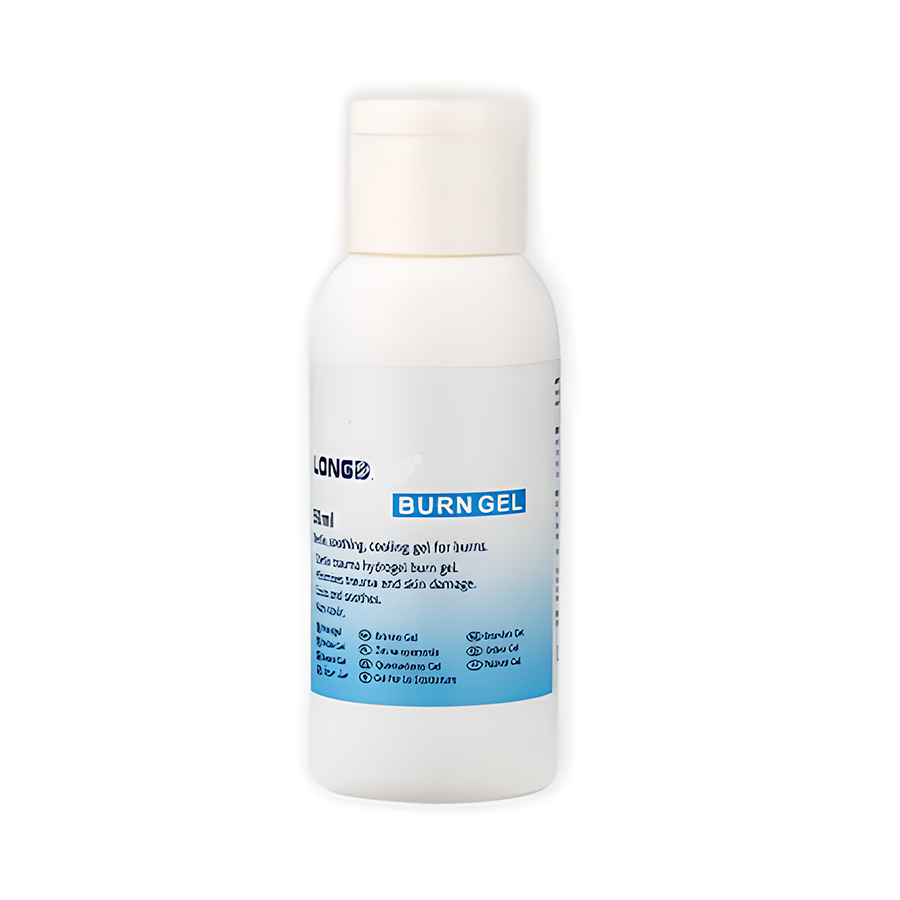
Burn gel on its own is a soft, water-rich layer that you spread gently over small burns after cooling with water. If you have ever wondered what does burn gel do, the short answer is that it keeps drawing heat away, calms nerve endings, and helps keep the skin surface moist. Many workplace formulas add mild anesthetics and skin conditioners that support comfort during the first hours after injury. Used in a thin layer on uncovered small burns, or under a non-stick pad when you want light coverage, burn gel can make a minor incident much easier to tolerate.
Both burn gel and burn dressings sit inside a simple pattern that you can teach across your sites:
Stop the heat source or move the person away.
Rinse the area with cool, clean running water when conditions allow.
Cool and cover with the right product.
Escalate to medical care whenever the burn looks serious rather than trying to fix everything on your own.
When To Choose Burn Gel And When To Choose A Burn Dressing

Every burn response in your workplace should follow the same first steps, so people do not invent answers while someone is hurting. You stop the heat source or move the person away, cool the area with clean, cool running water for around ten to twenty minutes when policy allows, then decide what should touch the skin next. That is where you choose between burn gel, a burn dressing, or a rapid call for help.
Burn gel makes sense when the burn is tiny, on the surface, and easy to keep clean. These are first degree burns that are red and painful without blisters, or very small blisters that sit on a palm-size area or less. When the worker can leave the skin exposed, return to light duty, or go back to a guest-facing role, a thin layer of burn gel is usually all you need.
A burn dressing is the better choice when the burn is larger, blistered, or likely to rub against clothing, gloves, or tools. Second degree burns with clear blisters and weeping fluid, or wide first degree burns on hands, arms, and lower legs, need both cooling and a barrier. A hydrogel burn dressing or other sterile burn dressing gives you a sterile, non-stick cover that protects fragile tissue while you move the person or arrange medical care.
There are also times when neither burn gel nor burn dressing is the main issue. Any burn bigger than the worker’s palm, any deep, white, or charred area, any electrical or chemical burn of size, and any burn on the face, hands, feet, major joints, or genitals needs urgent medical care. In those cases, you still follow your protocol, apply a light sterile cover if it is safe, and call emergency services without delay.
A simple table helps fix this in mind.
| Scenario | Use Burn Gel | Use Burn Dressing | Call Emergency Care |
|---|---|---|---|
| Tiny superficial burn | Yes | No | No |
| Small blistered burn on hand | Maybe | Yes | Maybe |
| Localized moderate burn on limb | No | Yes | Maybe |
| Large or complex burn | No | Maybe | Yes |
You can turn this into a short rule of thumb for staff:
Small and shallow? Think burn gel.
Bigger or blistered? Think burn dressing.
Deep, dirty, or in sensitive areas? Think emergency care.
Building A Simple Workplace Burn Protocol That Uses Both

Clear rules matter more than perfect memory when someone is in pain. It helps to turn the burn gel versus burn dressing choice into a simple protocol that you can use in training and drills. Start by mapping your site into higher risk zones and lower risk zones instead of treating every room the same.
In high heat and high friction areas, you can expect frequent contact burns, steam hits, and splashes, while quiet office and guest areas mostly see the odd coffee spill or mild sunburn. You then match stock to those patterns so staff grab the right item without digging through drawers or guessing.
In production lines, welding bays, commercial kitchens, auto workshops, labs, and warehouses, keep hydrogel burn dressings in several sizes close to the hazard. Add a few tubes or packets of burn gel for fingertip burns and other tiny spots, and post clear signs on cabinets that say Burn Care Inside. Regular checks help these kits stay stocked, sealed, and inside their expiry dates.
In offices, reception desks, classrooms, gyms, and guest areas, focus more on tube-based burn gel and single-use packets in standard first aid kits. These smaller burns rarely need a full burn wound dressing, so gel gives fast relief while keeping supplies simple. Where staff work in the sun, place gel in mobile kits and vehicles so supervisors can respond on the spot.
To make this stick, build a short three-step script your teams can repeat:
Cool: Use cool running water for the recommended time.
Check: Is the burn small and superficial, or larger and blistered?
Choose:
Small and superficial → burn gel.
Larger, blistered, or on high-friction areas → burn dressing.
Serious or uncertain → call for medical help.
Simple posters near first aid stations that match common incidents to your rule set keep everyone on the same page across shifts and locations.
How First Aid Longs Supports Your Burn Gel And Burn Dressing Strategy

Once you know when to use burn gel and when to use a burn dressing, the next step is finding a supplier that can support all your sites with the same reliable products. You want workplace-grade items that staff can understand at a glance, plus steady stock and clear labeling so training matches what people see in the cabinet.
First Aid Longs has focused on workplace first aid since 1996 and manufactures hydrogel burn dressings, burn relief gel in tubes, and single-use burn gel packets in its own cleanroom facilities. Its burn gel has high water content for cooling, along with ingredients such as aloe vera, glycerin, and propylene glycol to keep skin comfortable, and many options add lidocaine hydrochloride for strong pain relief on minor burns and sunburn.
Hydrogel burn dressings from First Aid Longs give you a sterile, non-stick pad that combines cooling and coverage in one step, matching common first aid station standards in higher risk zones. For operations and safety teams, the bigger gain is standardization, because the same tubes, packets, and dressings can be labeled, packed, and shipped in wholesale quantities with short lead times to every facility. You get one clear program for burn gel and burn dressing stock across branches instead of random retail items in every cabinet.
You can also:
Align internal protocols with the exact sizes and formats of dressings and gels on your sites.
Run training using the same packaging and labels that workers will actually see.
Set simple reorder thresholds per area based on usage patterns and risk.
Secure Reliable Burn Gel Supplies Today!
Order our high-quality wholesale burn gels made with safety standards to stabilize your healthcare operations.
Conclusion
Burns on the job will never disappear, but confusion about how to treat them can. After you cool with clean water, very small, superficial burns on limited skin areas are best handled with burn gel for continued cooling and pain relief.
Localized but more intense burns on hands, arms, and other limbs, especially with blisters or weeping, call for a hydrogel burn dressing that gives both cooling and a sterile barrier. Serious, deep, very large, electrical, chemical, facial, or genital burns are not a gel versus dressing choice because they move straight into the emergency category and need rapid professional care.
When you write clear rules and stock both burn gels and burn dressings to match your risks, you cut downtime, reduce stress for supervisors, and support better outcomes for workers and guests. First Aid Longs can help you move from mixed retail products to a standard burn care program, with workplace-grade burn gel at the center and hydrogel burn dressings ready for the incidents that need more protection. Auditing your kits now and closing any gaps in burn gel and burn dressing coverage is a straightforward step that can pay off during the next real incident.


