

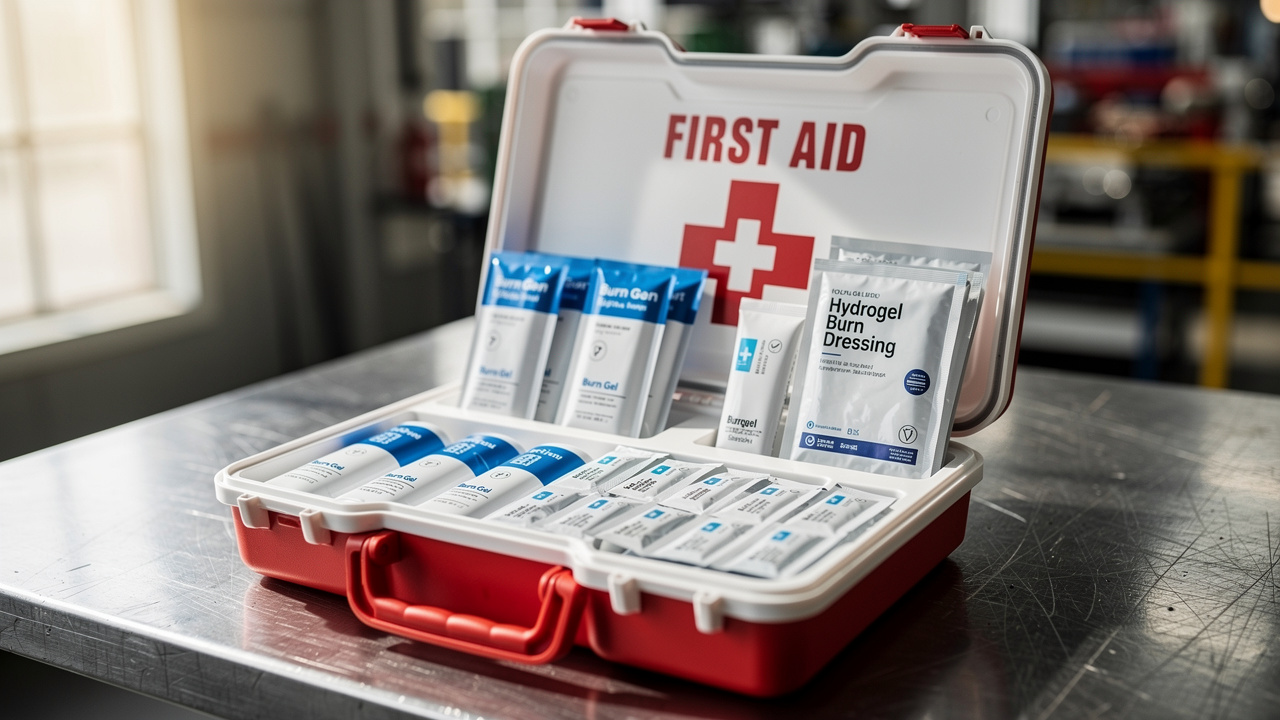
How sure are you that the burn gel for first aid kit in your building would actually protect a worker when the fryer spits or a welder slips? When an auditor opens a box on the shop floor, would that single tired tube of cream really pass the test? These are uncomfortable questions, but they decide how safe your people feel and how calm your next burn incident will be.
Many workplaces still rely on home tricks or any tube that says “burn cream.” Ice straight on the skin, butter on a fryer splash, one small tube shared across a plant, or a product more suited to home use than to a warehouse or construction site. These habits feel familiar, yet they do not match current first aid guidance, and they do not protect your staff, guests, or compliance record.
The real decision you face is simple. You need burn gel that actually works for your risks, fits the way your first aid kits are built, and holds up when a real incident or audit happens. That means thinking beyond “some burn cream in the box” and treating burn care as a planned part of your safety system.
This guide stays practical. You see what burn gel does and does not do, how different formats compare, how to match products to your risk map and kit layout, and how to judge suppliers. By the end, you can choose burn gel for first aid kit stocking with confidence, and you know how to roll that choice out across every site you manage.
Key Takeaways
Burn gel cools and soothes minor burns fast. It eases pain so the person stays calmer, and it adds a light protective layer until you decide on further care.
Burn gel is for minor, superficial burns and sunburn only. You still start with cool running water where possible. Serious or wide burns always need emergency medical help.
Smart buying means matching product format to real burn scenarios in each work area. You check ingredients, pain relief level, sterility, and non stick contact surfaces. You also plan quantities and placement for every risk zone.
Later sections show how to map formats and quantities to construction, manufacturing, kitchens, offices, and public spaces. You also see how working with one strong supplier, such as First Aid Longs, makes it easier to standardize burn gel across all your locations.
What Burn Gel Really Does In Your First Aid Kit

At its core, burn gel is a water rich gel or cream that you apply after the first cooling step with clean, cool water. It is designed for minor workplace burns and sunburns, not major trauma. When you choose burn gel for first aid kit stocking, you are choosing a simple tool that staff can reach for in those first tense minutes.
The high water content in burn gel helps pull leftover heat away from the skin. Many workplace grade products add lidocaine or a similar anesthetic so the area goes numb more quickly and the sting drops. Soothing ingredients such as aloe, glycerin, and propylene glycol hold moisture in the skin surface and reduce that tight, dry feeling that often follows a minor burn.
Used well, burn gel does three main jobs:
Cools and calms the injured area so pain drops fast and the person can focus on instructions.
Creates a moist contact layer that shields the surface from friction, air flow, and light dust.
In hydrogel burn dressings, that layer also sits under a soft non stick pad, which can be removed later without tearing new tissue.
It is just as important to be clear on what burn gel does not do. It never replaces the first step of flushing a fresh burn under cool water, where that is safe and practical. It is not meant for deep, wide, electrical, serious chemical, or facial and genital burns, and it does not replace professional wound cleaning or infection care.
In a workplace context, timely use of the right burn gel makes a real difference. It can stop a small burn from turning into days off, repeated clinic visits, and a workers’ compensation claim. If you ever ask what burn gel does in a first aid kit, the answer is that it limits damage and helps you keep control of the incident when minutes matter.
How To Compare Burn Gel Formats For Workplace First Aid

Format matters more than many buyers expect. Different parts of your operation face different types of burns, and people use first aid very differently on a noisy shop floor than at a hotel front desk. When you choose burn gel for first aid kit layouts, you need to think about how each format actually gets used in your world.
Hydrogel burn dressings are sterile pads that arrive already soaked in cooling gel. You place them straight over a cooled burn, often on a hand, wrist, or forearm. The contact surface is non stick, which protects fragile tissue when the pad comes off for medical review. These dressings line up well with ANSI style expectations for first aid kits in heat exposed sites such as production lines, auto bays, and commercial kitchens.
Tube based burn relief gel works best for very small burns and sunburn. A compact tube is easy to keep in an office cabinet, hotel back office, gym reception, or security desk. Many tubes combine lidocaine for strong pain relief with aloe or similar soothing agents, which makes them ideal when you need to hand something to one person and keep the process simple.
Single use burn gel packets are small sachets with a measured dose of gel. They support hygiene and portion control in high traffic or shared spaces where several people might reach into a kit every day. Because they are compact, you can spread them across cafeterias, classrooms, event venues, vehicles, and mobile kits without using much space.
Here is a quick comparison you can use during purchasing discussions.
| Format | Best For | Key Advantages | Typical Placement |
|---|---|---|---|
| Hydrogel burn dressings | Localized thermal burns on hands, arms, and small areas | Cooling and coverage in one sterile, non-stick pad | Production lines, auto bays, commercial kitchens, site kits |
| Tube based burn gel | Very small burns and sunburn | Strong pain relief, easy for one person to use | Offices, hotels, gyms, outdoor crews, reception and security desks |
| Single use gel packets | Tiny burns in shared or high turnover spaces | Good hygiene and portion control, easy distribution | Cafeterias, classrooms, event venues, mobile and vehicle kits |
Most workplaces do best with a mix of at least two formats. You might back up hydrogel dressings in high heat zones with packets in kitchens and a tube at reception. The goal is to match burn gel for first aid kit choices to how people actually work and move through your sites.
“The best first aid kit is the one people can use correctly under stress.” – Occupational Health Guideline
Buying Criteria: How To Choose The Right Burn Gel For Your Risks

Once you understand the main formats, you can move to a side-by-side buying checklist. This helps you compare brands and decide which burn gel for a first-aid kit really fits your risks, rather than just looking at price. You can share this list with safety committees or procurement teams so everyone is working from the same picture.
Match Product To Burn Severity And Use Limits
Check the label and instructions clearly state that the product is for minor, superficial burns and sunburn only.
Your policies and training should tell staff that deep, large, electrical, serious chemical, or facial burns must go straight to emergency care.
This keeps burn gel in its proper first-aid role and reduces the risk of misuse.
Align Ingredients With Your Workforce And Policies
Decide whether you want lidocaine based products for stronger pain control or anesthetic free options if allergy risk is a concern.
Look for soothing agents such as aloe and humectants that support comfort.
For dressings, choose non stick contact surfaces that protect fragile tissue, and always keep sensitive skin in mind.
Confirm Manufacturing Quality And Safety Standards
Favor sterile hydrogel burn dressings with consistent quality control that matches recognized medical expectations.
Ask suppliers for product specifications and safety data that you can show during audits.
For many buyers, alignment with ANSI style first aid kit layouts is another key check box.
Choose Formats Based On Work Areas And Workflows
High heat production lines, welding bays, and commercial kitchens usually need hydrogel dressings in several sizes right at the point of risk.
Office, hotel, and gym areas may lean more on tube based gels for very small burns and sunburn.
Cafeterias, classrooms, and mobile teams benefit from single use packets that protect hygiene.
Plan Quantities And Coverage Across Your Footprint
Think about headcount, shifts, and how many distinct zones you run.
Set minimum numbers of packets, tubes, and dressings for each wall mounted kit, vehicle kit, and central first aid room.
Build refills into your regular inspection cycle so you are not caught short after a busy period.
Support Training And Clear Instructions
Pick packaging with plain language and simple diagrams that stressed staff can understand at a glance.
Make sure labels explain when to apply, how much to use, and when to escalate the case.
Tie those directions into your written procedures and safety talks so practice matches the label every time.
Standardizing Burn Gel Across Sites With First Aid Longs

After you decide what you want, the next challenge is standardizing burn gel for first aid kit contents across every branch, plant, or campus. Working with one focused supplier saves you from juggling multiple products, training plans, and reorder processes. It also makes it easier to show a clear safety story when regulators, clients, or auditors visit.
First Aid Longs supports this standardization as a dedicated medical supplies partner. The company manufactures burn gels and dressings in high grade cleanroom facilities, with strict quality control and on time delivery as standard practice. You can access flexible OEM and private label options with low minimum order quantities, which helps you keep costs and branding aligned across many sites.
Hydrogel burn dressings from First Aid Longs are sterile, non stick, gel soaked pads that combine cooling and coverage in one step. They fit ANSI style workplace kits and work particularly well on localized burns to hands and arms in plants, auto shops, and industrial kitchens. If you want deeper guidance on sizing, you can review the burn dressing size guide on the First Aid Longs resource page at this link.
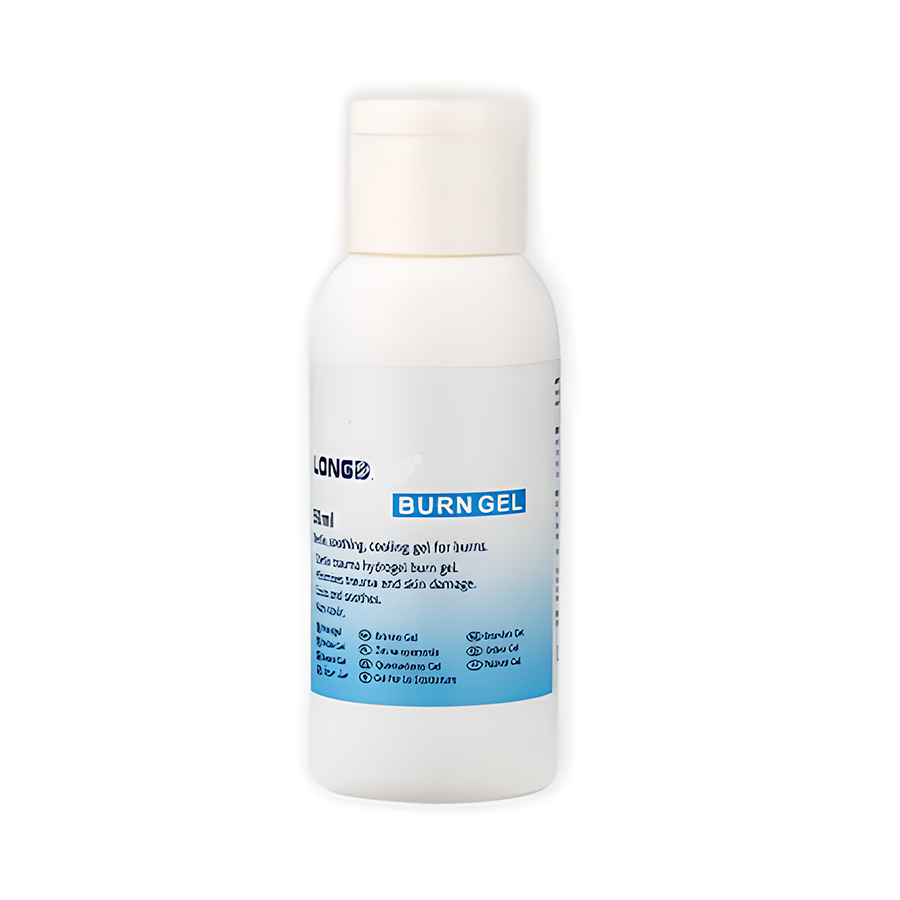
Tube based burn relief gel from First Aid Longs gives you compact, workplace ready tubes with lidocaine and aloe for very small burns and sunburn. These tubes sit neatly in security posts, lifeguard stands, reception desks, and office kitchens. Staff can hand one tube to an employee or guest and still keep usage under control.
Single use burn gel packets from First Aid Longs provide measured doses that support hygiene and portion control. They are ideal for cafeterias, classrooms, mobile kits, buses, and event venues where many people share the same first aid stations. Because they are small, you can stock them widely without crowding the rest of your kit contents.
Beyond products, First Aid Longs helps you plan and repeat a clear stocking pattern:
The team can work with your incident data and risk map to suggest where each format should sit.
They can advise how many units each kit should hold by headcount and activity level.
For multi site organizations, the same burn gel configuration can then repeat across branches or hotel networks, which simplifies training, auditing, and reordering.
To explore this in more detail, you can read the workplace burn gel guide at this link or contact First Aid Longs for a customized stocking plan and wholesale pricing.
Secure Reliable Burn Gel Supplies Today!
Order our high-quality wholesale burn gels made with safety standards to stabilize your healthcare operations.
Conclusion
Choosing burn gel for first aid kit coverage is not about grabbing the nearest generic cream. It is about matching function, format, and quantity to the real burn risks in your operation. When you understand what burn gel does well, where its limits sit, and which formats fit each zone, you can turn a vague first aid line item into a clear, managed asset.
The core decision has three layers:
Know what burn gel does and does not do, so staff use it only on minor burns after cool water.
Select formats and ingredients that fit your work areas, from heavy production to offices and guest spaces.
Standardize products and stocking levels across sites so your safety story stays clear and consistent.
Modern, well planned burn gels and hydrogel dressings help you control pain, protect tissue, cut down on complications, and show that safety truly matters in your business. To move from theory to action, review the burn gel and burn dressing resources from First Aid Longs, then request a customized stocking list that lines up with your risk map, compliance needs, and budget.


