

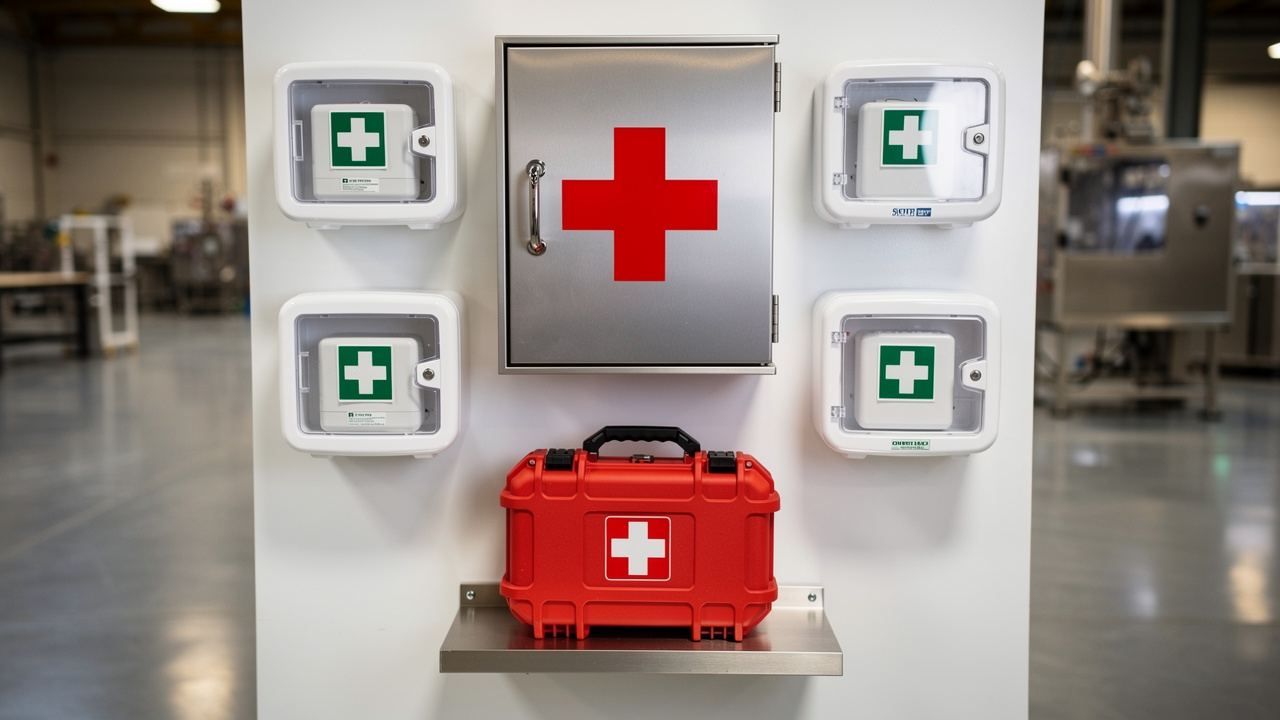
First aid boxes wholesale can feel confusing when you juggle many sites, vehicle fleets, and inspection demands. Mixed container styles and weak hardware create real gaps. You might meet rules on paper, yet still face slow response when someone gets hurt. You need empty first aid containers that match OSHA and ANSI expectations, fit your hazards, and still work with your budget. In this article, you will see how containers support compliance, which box types fit each setting, what to check before you buy, and how First Aid Longs backs you with OEM and wholesale programs.
Key Takeaways
These quick points give you a fast overview you can use right away.
- Empty containers shape how fast your teams reach supplies, how well you meet ANSI and OSHA rules, and how easy audits feel over time. When boxes match across rooms and vehicles, people know where to reach during incidents. You reduce confusion and make refills far simpler.
- Different environments need different containers, from plastic wall boxes to metal cabinets, soft bags, and rugged waterproof cases. A smart mix covers offices, plants, clinics, fleets, and schools without creating dozens of SKUs. With the right plan, you still keep training simple.
How First Aid Boxes Wholesale Support Compliance And Safety Programs

You care about compliance, but you also care about simple, fast response when someone gets hurt. Buying first aid boxes wholesale gives you a stable container base for your safety program across every site. When you standardize cabinets, bags, and vehicle kits, you make OSHA and ANSI expectations much easier to meet.
When you commit to a first aid boxes wholesale strategy, you move away from random retail kits. Instead, you pick a small group of wall cabinets, vehicle boxes, and responder bags that fit ANSI Z308.1-2021.
Why Wholesale Empty First Aid Boxes Matter For Your Organization
Kit contents treat the injury, but containers control access, protection, and speed, a principle supported by Analysis of the Design of first aid kits, which highlights how container design directly influences usability during emergencies. If boxes crack, rust, or overfill, even the best contents become hard to reach. Empty containers sized for Class A or Class B layouts give you room for supplies without stuffing shelves.
Standard wall cabinets in offices and clinics, plus fixed boxes in vehicles, give staff a clear mental map. Responder bags for security or EHS teams close the loop for mobile response. By sourcing containers at wholesale scale, you match this structure across buildings, fleets, and shifts with far less guesswork.
Key Wholesale Buyer Profiles And Use Cases
Different buyers handle different risks, but they still share common needs. For example:
- Healthcare facilities want metal cabinets near nurse stations and soft responder bags for code teams.
- Manufacturing and construction safety officers lean on rugged plastic or metal cases for plants, trucks, and remote crews.
- Corporate, school, and government buyers prefer standard cabinets in public spaces and smaller kits for trips and events.
- Distributors add empty containers to private-label lines and bundle them with refill sets.
According to research on Trends in occupational injuries, private employers report about 2.8 million nonfatal workplace injuries and illnesses each year, underscoring the need for reliable container access across every site.
Which Types Of Empty First Aid Boxes Work Best In Different Environments?

When you plan first aid boxes wholesale, you need to match each container to the way your teams work. Choosing the right mix means matching materials and formats to each setting you manage.
Plastic First Aid Boxes Wholesale For General Workplaces
Plastic boxes made from polypropylene or ABS plastic give you light, impact resistant containers at a fair cost. Common 10, 16, 24, and 36 unit sizes, plus 10, 25, and 50 person formats, line up well with ANSI Z308.1 kits for offices, schools, and many vehicle fleets. When you buy these first aid boxes wholesale, you can roll out the same style across dozens of rooms or trucks.
Non-gasketed plastic cases work well in clean, dry indoor areas. Gasketed models are better in damp warehouses, food plants, and service vehicles that face dust and moisture. Smooth plastic faces also make branding and clear FIRST AID labels easy, which helps staff spot kits under stress.
Quick Tips For Plastic Boxes
- Use non-gasketed models for offices and classrooms.
- Choose gasketed boxes for light industrial and service vans.
- Add bold labels at eye level so people see them fast.
Metal First Aid Cabinets And Boxes For High-Use Areas
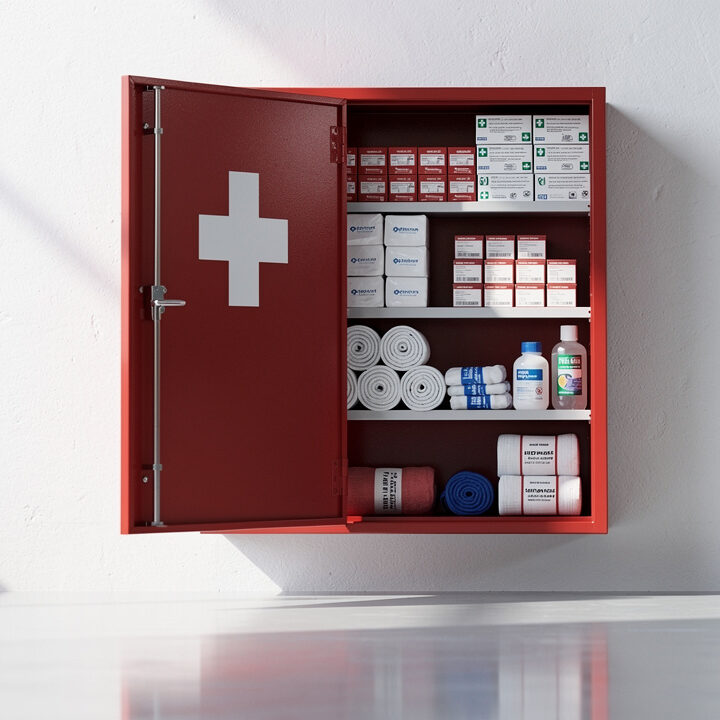
Metal cabinets rule in busy clinics, factories, kitchens, and labs where cleaning and durability matter. 2, 3, 4, and 5 shelf models mount on walls in nurse stations, production floors, and cafeterias and stand up to frequent opening. Baked white enamel finishes wipe clean with common healthcare and food service disinfectants.
Smaller unitized metal boxes, such as #6, #10, #16, #24, and #36, ride in maintenance trucks, forklifts, and work cells. Their rigid shells protect glass bottles, eyewash, and heavier trauma gear. Door pouches and internal dividers keep items in place, which speeds up inspections and refills for your safety staff.
Soft Bags, Backpacks, And Rugged Cases For Mobile Response
Soft first aid bags, fanny packs, and backpacks support mobile roles like coaches, field crews, and campus security. Multiple clear or mesh pockets help people grab gloves, dressings, or tourniquets without digging. Color options and printed crosses make it simple to tell trauma bags from general kits.
Waterproof hard resin cases, including brands with MIL style ratings, protect gear on boats, remote job sites, and extreme environments. Many models use O-ring seals to keep water out. Large groups often pair fixed cabinets inside buildings with mobile bags and rugged cases for field or high-risk teams.
| Environment | Container Type | Practical Notes |
|---|---|---|
| Office or school | Plastic wall box or metal cabinet | Good for Class A kits, easy wall access, simple visual checks |
| Factory or warehouse | Metal cabinet plus vehicle boxes | Handles heavy use, supports Class B layouts, protects from dust and vibration |
| Field crews or fleets | Gasketed plastic box or hard case | Holds up to weather, mounts in vehicles, keeps contents dry and secure |
| Sports, events, campus | Backpacks and fanny packs | Mobile support for staff, simple to carry, fast access during crowd incidents |
How To Evaluate First Aid Boxes Wholesale For Standards, Quality, And Lifecycle

You do not want to buy a box twice because the first one failed fast. To compare first aid boxes wholesale offers, you need a clear checklist that covers materials, protection, standards, and long term use. This keeps you from chasing the lowest unit price and then paying more later in staff time and replacements.
Key Technical Features To Check Before You Buy
Start with material and build quality. For plastic, look for sturdy polypropylene or ABS, not thin shells that flex under normal handling. For metal, check the steel gauge, coating, and welds or seams. Hinges and latches should open smoothly without wobble, even after many cycles in real facilities.
Next, look at environmental protection:
- Do cases include rubber gaskets for dust and moisture control?
- Are hinges and latches strong enough for daily use?
- Are corners smooth and safe in tight hallways?
Inside, shelves, bins, or clear pockets should make high use items easy to reach. Clear FIRST AID markings and any private-label logos from your program or distributor also need to be sharp and durable.
Regulatory Alignment: ANSI Z308.1 And OSHA Expectations
ANSI Z308.1-2021 sets minimum content lists for Class A and Class B workplace kits and defines container Types I through IV, and First aid kit installation research at institutional settings confirms that matching kit type to environment meaningfully improves program outcomes.
- Type I suits indoor fixed cabinets.
- Type II works for indoor portable kits.
- Type III fits indoor or outdoor use with some weather protection.
- Type IV suits rugged, high impact settings.
Your container choice should match how and where you mount or carry the kit.
Why First Aid Longs Is A Smart Partner For First Aid Boxes Wholesale
You want more than a catalog; you need a partner who understands safety and scale. Choosing a manufacturing partner for first aid boxes wholesale affects quality, timelines, and how fast you can respond to new risks. First Aid Longs focuses on in-house production, OEM and ODM services, and low MOQs so you can match containers to your exact program. This matters whether you manage one hospital system or hundreds of construction sites.
Flexible OEM/ODM And Low-MOQ Custom Containers
With First Aid Longs, you can design containers that match your locations instead of forcing sites into generic kits, an approach validated by studies on Real-World Utilization, Outcomes, and safety of pre prescribed emergency kits, which show that tailored kit configurations improve readiness outcomes. OEM and ODM support means you can adjust sizes, layouts, colors, and labels while keeping standard bases. Low minimum order quantities help you pilot designs in one region or facility type before you scale.
Distributors can also use these services to launch private-label cabinets, boxes, and bags. Throughout that process, First Aid Longs stays focused on stable quality and repeatable manufacturing.
In-House Manufacturing, Cleanroom Quality, And Cost Efficiency

Because production stays under one roof, pricing stays competitive even when you need custom work. Timely delivery is a core focus, so safety upgrades and new site openings do not wait on late shipments. This consistency makes it easier to align container orders with your refill plan and your capital budget cycles.
Industry Specific First Aid Boxes Wholesale Solutions
First Aid Longs serves more than 100 clients across healthcare, manufacturing, construction, education, and government. That experience helps the team suggest container mixes that match each sector. A clinic group might lean on metal cabinets and emergency bags, while a utility contractor may need rugged vehicle cases and waterproof trauma kits.
You can explore our first aid kits on First Aid Long’s website.
How To Plan A Cost Effective First Aid Boxes Wholesale Program

You may feel pressure to cut costs while still boosting safety and compliance. A strong first aid boxes wholesale program starts with clear mapping, not random catalog picks. When you plan containers by facility type, risk, and headcount, you cut waste and still raise readiness. You also make audits and refills much easier to manage at scale.
Map Your Facilities, Risks, And Headcount
Begin by listing every facility type you manage, including clinics, offices, plants, warehouses, schools, and vehicles. For each location, note typical hazards, from cuts and burns to chemical exposure or remote work. Use that list to decide where Class A kits work and where Class B layouts make more sense.
The National Safety Council reports that a worker injury happens every few seconds, and US OSHA Recordable Injury rate data by industry confirms that coverage gaps carry measurable compliance and financial consequences. Map actual floor plans and vehicle routes, so you avoid long walks to the nearest cabinet.
Standardize SKUs And Refill Processes
Once you know your patterns, pick three to six core empty container SKUs that cover almost all sites. You might choose a 25 person wall cabinet, a 50 person cabinet, a gasketed vehicle box, and a soft trauma bag. With that base, you can tune contents without changing hardware every time.
- Create one refill pack for each container SKU, including a clear list that matches ANSI requirements and your internal policies, a practice shown to reduce lifecycle costs in research on Maintenance as an Opportunity to improve facility safety through standardized upkeep schedules.
- Build simple inspection checklists that match each container type and refill pack.
- Train local champions so they know which refill code goes with each box style.
When staff sees an empty box on the shelf, they know exactly which stock code to request. Over time, this pattern cuts down on one off purchases from local stores.
Secure Reliable First Aid Kit Supplies Today!
Explore our first aid kits designed to reduce delays and stabilize your healthcare operations.
Conclusion
Empty containers might look simple, but they shape how well your first aid program works every day. When you plan first aid boxes wholesale by environment, standards, and lifecycle, you build a structure that supports OSHA and ANSI goals, and real human needs. First Aid Longs backs that plan with OEM and ODM support, in-house cleanroom manufacturing, low MOQs, and steady delivery. You gain containers that match your risks without blowing up your budget or your SKU list.


