Why do some welders walk away from a job feeling perfectly fine, only to wake up hours later with eyes that feel packed with sand? And is it even possible to get sunburned from a welding arc, the same way you would at the beach? These are common questions on job sites, and the answers matter more than most workers realize.
A welding arc eye flash burn, also called welder’s flash or arc eye, is a painful injury to the cornea caused by intense ultraviolet light. It behaves a lot like sunburn, except it happens to the surface of the eye instead of the skin. This guide walks through what causes arc eye and arc burn skin, how to spot the symptoms before they get worse, and what real first aid looks like once an exposure has already happened.
We will also cover how long recovery usually takes and what facilities can do to stop these injuries before they start. First Aid Longs, a wholesale manufacturer of medical and safety supplies since 1996, has shared some of the practical kit-planning details used throughout this article. Let’s start with what is actually happening inside the eye during a flash burn.
Key Takeaways
Arc eye (welding flash burn) is essentially sunburn on the cornea, triggered by UV radiation from the welding arc itself.
Symptoms often take 6 to 12 hours to appear, which is why so many workers get caught off guard at home or overnight.
Welding can genuinely burn exposed skin too, not just the eyes, producing redness and peeling similar to a sunburn.
Quick first aid such as a dark room, cool compress, and sterile saline rinse speeds healing, while rubbing the eyes or using home remedies on burns only makes things worse.
Most cases heal in 24 to 72 hours, but proper PPE and a stocked first aid station remain the real fix.
What Is Welding Arc Eye and Why Does It Happen?

Welding arc eye, also known as welder’s flash or photokeratitis, is a painful inflammation of the cornea caused by intense ultraviolet radiation from the welding arc. The cornea is the clear, dome-shaped layer at the front of the eye, and its outer surface is not built to withstand UV light at the intensity a welding arc produces. This is why the injury is often described as sunburn for the eye, since the damage pattern is nearly identical to what happens when skin gets too much sun. Arc eye is a well-documented occupational hazard rather than a rare fluke. A 2023 study in BMC Public Health analyzing workplace eye injury data found that eye injuries tied to welding and similar UV exposure affected roughly 1.7 workers per 10,000 in 2020, with production and service industries reporting the highest rates. That number might sound small, but across construction crews, fabrication shops, and manufacturing floors, it adds up to a steady stream of preventable injuries every year. The frustrating part is that most of these cases trace back to a missed shield, a lifted helmet, or an unprotected bystander standing a little too close.
How UV Radiation From a Welding Arc Damages the Eye
The cornea’s outer layer, called the epithelium, works like a thin shield that keeps the eye’s surface protected from debris, germs, and light. When a welding arc fires without proper shielding, the UV radiation it produces is strong enough to injure or destroy these epithelial cells within seconds of exposure. That damage sets off an inflammatory reaction inside the eye, which is the source of the pain, redness, and swelling that follow.
Here is the part that trips people up: the inflammatory chemicals released by this damage build up gradually over several hours rather than firing off instantly. That delay explains why a welder can finish a shift feeling completely normal and then feel like they have sand under both eyelids later that night. The lag is not a sign the injury is minor, it is simply how the healing and pain response works.
What Causes Welding Flash Burns on the Job Site?
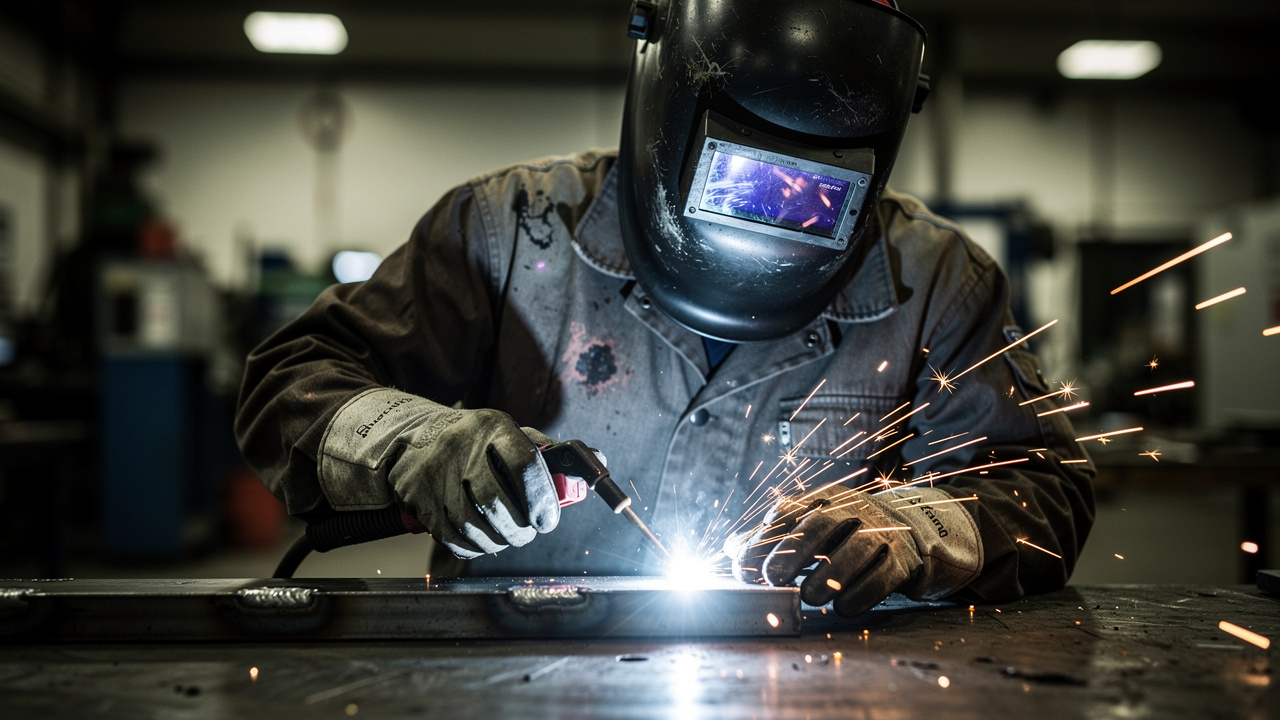
Welding flash burns on the job site almost always trace back to a gap in eye protection somewhere in the process, whether that gap belongs to the welder or someone standing nearby. Arc welding produces UV radiation at levels far beyond natural sunlight, so even a few unprotected seconds can be enough to cause an injury. Most incidents fall into a short list of repeat offenders that safety teams see again and again.
A welder lifts the helmet at the wrong moment, exposing bare eyes to the arc for a split second during ignition or repositioning.
The welding shield or helmet lens has an inadequate shade rating for the process being used, letting through more UV than it should.
Coworkers or passersby are exposed to the arc flash without wearing UV-rated safety glasses of their own.
Someone watches a welding operation from a short distance away without any shielding at all, assuming distance alone keeps them safe.
A cross-sectional study on work-related ocular injuries among welders found that a significant share of workers in small-scale metal industries experience eye injuries tied to inadequate protective practices, reinforcing that arc welding exposure risk is not a one-time event. It repeats every shift, which is exactly why consistent PPE habits matter more than a single safety briefing.
Other UV and Thermal Sources Workers Should Know
Welding is the most common cause of flash burns, but it is far from the only one, and that matters for facilities that run mixed operations. Reflected sunlight off snow, water, or sand can cause the same injury outdoors, while halogen lamps, metal halide lighting, and UV sterilizing equipment have all been linked to photokeratitis cases indoors.
Thermal flash burns are a separate but related risk, caused by sudden heat rather than UV light. Sparks, open flames, and small explosions during hot work can injure the cornea just as painfully, which is why any facility running welding, cutting, or grinding tasks should treat eye protection as a year-round priority rather than a seasonal one.
What Are the Symptoms of Arc Eye, and When Do They Start?
The symptoms of arc eye usually begin with a gritty, sandy feeling in both eyes that can escalate into sharp pain, and they rarely show up the moment exposure happens. Most workers notice nothing in the first 30 minutes after an unprotected exposure, which is part of what makes this injury so deceptive. Symptoms typically start somewhere between 30 minutes and 12 hours later, with six hours being a common turning point, and discomfort tends to build steadily from there, often peaking between the 6 and 24 hour mark.
Recognizing the full symptom picture helps workers connect the dots back to an earlier exposure instead of assuming they caught a cold or an allergy.
Eye pain ranging from a mild grittiness to intense, burning discomfort that worsens over several hours.
Extreme light sensitivity, where screens, overhead lights, or even daylight through a window feel unbearable.
Watery, red, or bloodshot eyes caused by inflammation and the eye’s natural tearing response.
Blurred or hazy vision, along with eyelid swelling or involuntary twitching that makes it hard to keep the eyes open.
Because the delay can stretch past a normal workday, it is worth mentioning any recent welding exposure to a doctor even if the timing seems unrelated.
Can You Get a Sunburn From Welding?

Yes, welding can genuinely sunburn exposed skin, not just injure the eyes, because the UV radiation coming off an arc behaves the same way sunlight does on bare skin. Welders and bystanders who work close to an arc without full coverage can end up with real, measurable sunburn on the face, neck, or forearms, sometimes called welding sunburn.
This skin reaction tends to show up on the same delayed timeline as arc eye, with redness, tightness, and sometimes peeling appearing hours after the shift rather than right away. A worker who steps out of a welding bay feeling fine should never assume that means no exposure happened.
Arc Burn on Skin: What Welder Burns Look Like and Why They Happen
Arc burn on skin is a thermal and UV injury that happens when exposed skin sits too close to the welding arc, hot spatter, or radiant heat for too long. Unlike arc eye, which comes purely from UV light hitting the cornea, a welder burn on skin can involve both UV damage and direct heat contact, which is why the skin reaction often looks more severe than a simple sunburn. The result can range from mild redness and tightness to blistering, especially in areas where metal spatter or sparks land directly on bare skin.
Certain areas take the brunt of this exposure more than others, usually because they are harder to fully cover with standard gear.
The face and neck, especially around the edges of a welding helmet or hood where coverage can gap.
The forearms and wrists, particularly when sleeves ride up or gloves do not fully overlap with a jacket cuff.
Any skin left exposed by loose, thin, or non-flame-resistant clothing that was not designed for welding work.
Full-coverage, flame-resistant clothing closes most of these gaps, but gear only works if it is worn correctly and fits the task.
Recognizing When a Skin Burn Needs More Than Basic Care
Most minor arc burns on skin respond well to simple first aid, but some signs mean a burn has moved past what onsite care can safely handle. Knowing the difference protects workers from a complication that gets worse because it was treated as routine for too long.
A burn should be treated as a medical emergency rather than a standard first aid case if it covers an area larger than about three inches, shows charring or white leathery skin, or comes with signs of shock such as dizziness, pale skin, or rapid breathing. Difficulty breathing after a burn incident, especially one involving smoke or fumes, also calls for immediate medical attention rather than a wait-and-see approach.
How Do You Give First Aid for Welding Arc Eye and Burn Injuries?

Good first aid after a welding arc eye flash burn or a skin burn follows two separate but equally important paths, one for the eyes and one for exposed skin. Speed matters here, since getting the basics right in the first few minutes can meaningfully shorten recovery time and lower the risk of complications later on.
For arc eye, the following steps give the cornea the best chance to heal on its own.
Move to a dim or dark room as soon as possible, since bright light makes the pain and sensitivity noticeably worse.
Remove contact lenses right away if the worker is wearing them, since lenses can trap irritants against the injured cornea.
Rinse the eyes gently with sterile saline eyewash or use preservative-free lubricating drops to ease dryness and grit.
Apply a cool, damp cloth over closed eyes for short stretches to calm swelling and reduce discomfort.
Avoid rubbing the eyes no matter how intense the gritty feeling gets, since rubbing can deepen the damage.
For skin burns from arc exposure or hot spatter, the priorities shift toward cooling the area without making the injury worse.
Cool the burned skin with cool (not ice-cold) running water for several minutes rather than applying ice directly.
Never use butter, oil, or other home remedies, since these trap heat against the skin and can worsen the injury.
Leave blisters alone and never pop them, since broken blisters open the door to infection.
Do not try to remove clothing that is stuck to the burn, and loosely cover the area instead of wrapping it tightly.
Seek medical care quickly for any burn that looks severe, covers a large area, or shows signs listed in the escalation section above.
Building a Welding-Ready First Aid Kit for Your Facility
A welding bay without proper eyewash access is a gap waiting to turn into a serious injury, which is why eye care supplies belong right next to the welding station, not in a cabinet down the hall. Stocking sterile saline eyewash solutions and a dedicated eyewash station, whether wall-mounted, portable, or a combination unit with a shower, gives workers a fast way to flush out irritants the moment something goes wrong.
First Aid Longs builds these stations with options suited to real welding environments, including heated enclosures for cold shops and extra nozzles for more thorough flushing on busy lines. The company also supplies eye pad dressings for post-injury protection and burn gel for cooling minor skin burns and welding sunburn, and its in-house manufacturing team can help facilities plan kit contents that line up with OSHA and ANSI Z308.1 guidance for hot work areas.
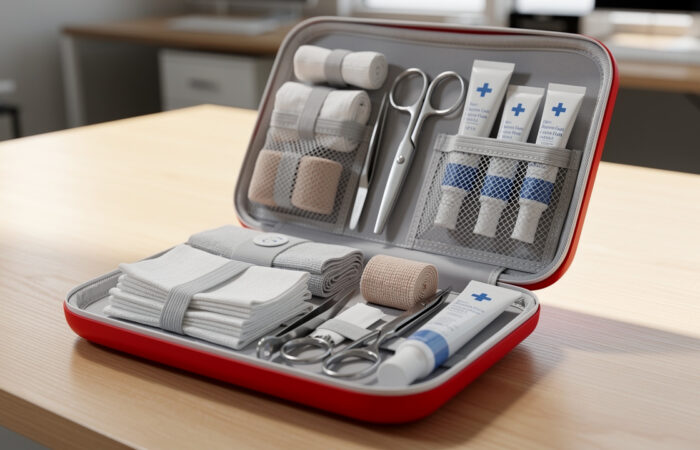
A well-stocked kit for a welding bay typically includes the following:
| Supply | Purpose |
|---|---|
| Sterile saline eyewash | Flushes UV irritation and debris from the eyes right after exposure |
| Wall-mounted or portable eyewash station | Gives workers fast access to flushing without leaving the work area |
| Eye pad dressings | Protects the eye after initial treatment while it heals |
| Burn gel | Cools minor skin burns and welding sunburn |
| Preservative-free lubricating drops | Eases dryness and grit during recovery |
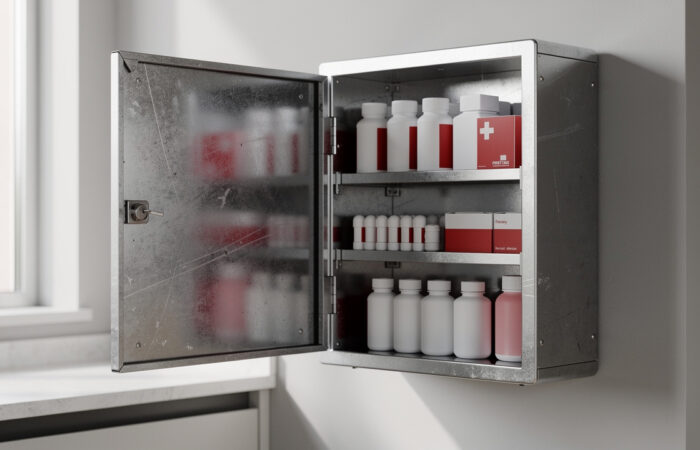
| Flame-resistant first aid cabinet | Keeps supplies protected and within reach near hot work stations |
What Steps Can Prevent Welding Flash Burns and Skin Burns?

Preventing welding flash burns and skin burns comes down to closing the same gaps that cause most incidents in the first place, starting with PPE that actually fits the job being done. OSHA’s guidance on eye protection during welding outlines the required filter lens shade numbers needed to protect against radiant energy, so welders need helmets with the correct shade filter for their specific process, while anyone working nearby needs UV-protective safety glasses or a welding curtain between them and the arc. Full-coverage, flame-resistant clothing should close off the skin exposure risk at the neck, wrists, and forearms where spatter and radiant heat tend to land.
PPE alone will not hold up without consistent habits backing it up across a shift and across a site. Training on UV hazards, short toolbox talks that walk through real burn scenarios, and clear signage pointing to eyewash stations all help turn protective equipment from a rule into a reflex.
The last piece is making sure the equipment stays ready when it is actually needed. Regular inspection and replenishment of eyewash stations and burn care supplies across every site keeps a facility from discovering a shortage in the middle of an emergency, which is the worst possible time to find out.
The Takeaway
Arc eye and arc burn skin are both preventable injuries driven by the same root cause, unprotected exposure to UV radiation and heat from a welding arc. The delayed onset of symptoms, often six hours or more after exposure, is what makes them so easy to dismiss until the pain sets in later that night or the next morning.
Fast, correct first aid, from sterile eyewash and a dark room to burn gel and avoiding home remedies, speeds healing and lowers the odds of complications. If your facility runs welding, cutting, or hot work, equipping those areas with proper eyewash stations, burn care supplies, and trained staff through First Aid Longs’ customizable workplace kits is a practical step toward keeping both symptoms and downtime to a minimum.