First aid cabinet vs kit choices matter a lot when you care about safety, rules, and cost. You want simple gear that helps fast when someone gets hurt. You also want setups that fit how you work, from offices to fleets. A first aid cabinet vs kit plan can cover both your fixed spaces and your moving crews.
This guide gives you clear tips so you can decide what fits each area. You also see how First Aid Longs supports you with stock, refills, and custom fills.
Key Takeaways
A few points give you a quick map before you read further. Each one links to real choices you make as a safety or procurement leader.
- How First Aid Cabinets And Kits Really Differ
Cabinets act as fixed, high capacity stations with clear shelves and door pockets. Kits act as portable boxes or bags that go to the injury scene. You weigh form factor, capacity, and access speed when you decide between them. - Why Most Organizations Need Both
A single format rarely covers every risk across floors, yards, and fleets. Cabinets support day to day injuries in central spots. Kits fill gaps in remote rooms, roofs, yards, and vehicles. - How First Aid Longs Simplifies Your Choice
First Aid Longs supplies ANSI mapped cabinets and kits from the same in house plant. You get custom contents, refill packs, and bulk consumables from one partner. That keeps your program consistent across many sites.
What Is The Difference Between A First Aid Cabinet vs Kit?

The difference between a first aid cabinet and a first aid kit comes down to location, capacity, and mobility. A cabinet stays on the wall, while a kit moves with you. In US workplaces, both formats can meet OSHA and ANSI rules when they are stocked and easy to reach. OSHA 29 CFR 1910.151(b) says that adequate first aid supplies must be readily available to workers, not that you must pick one container type over another (OSHA).
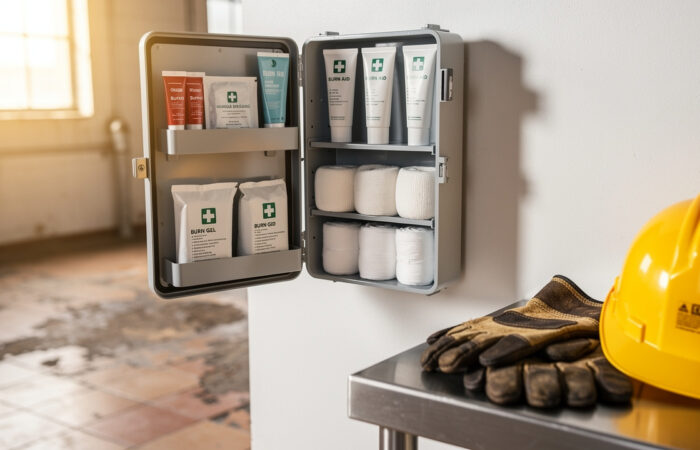
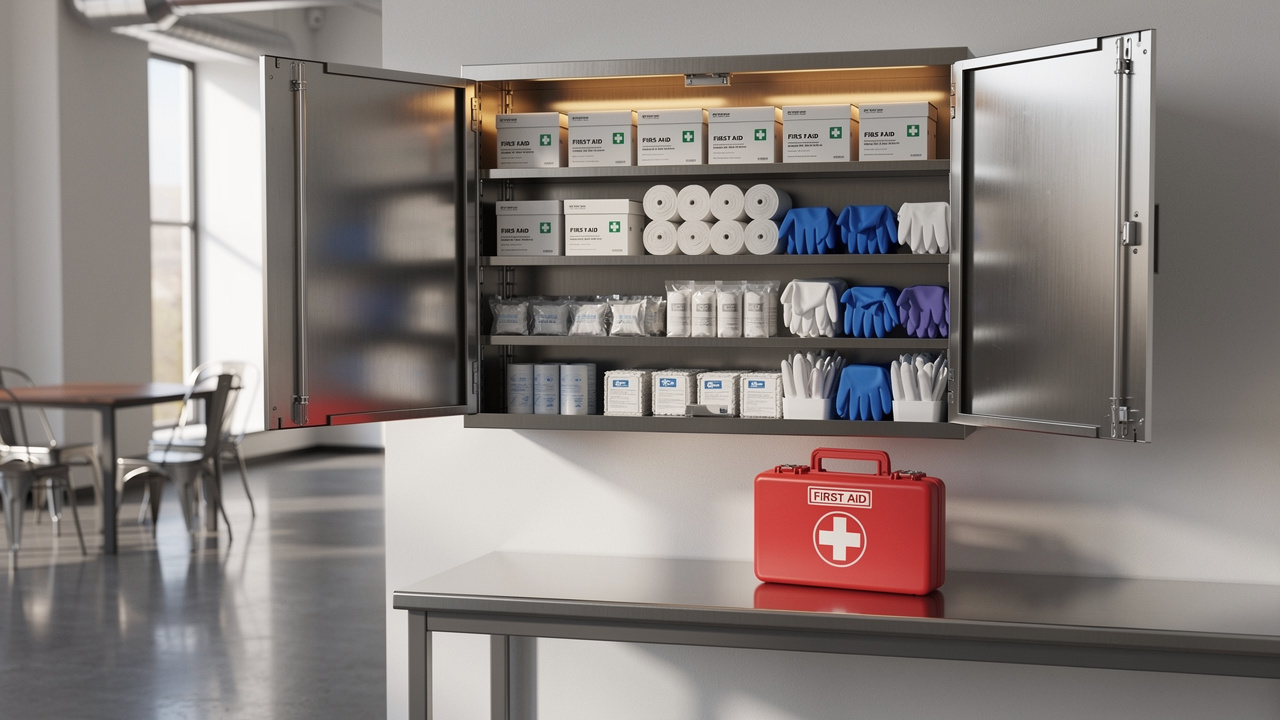
A first aid cabinet usually means a steel box with 2 to 5 shelves and door pockets. It mounts on a wall in a hallway, break room, or staff area and often serves 50 to 200 or more people on a floor.
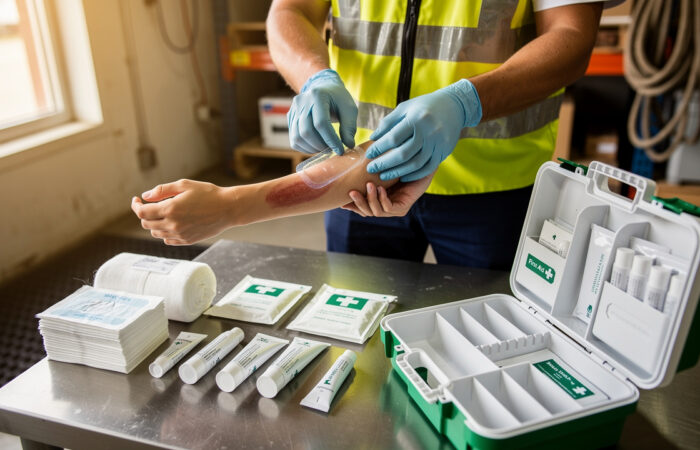
A first aid kit usually means a smaller plastic or metal case, backpack, or soft bag. It may hang on a hook, sit in a truck, or ride with a field crew and often serves 2 to 50 people, depending on the fill.
Core Features Of A First Aid Cabinet Vs Kit
Core features in the first aid cabinet vs kit choice relate to form factor, person count, and organization. Both hold similar types of supplies, yet cabinets hold more units and are easier to scan.
Under ANSI or ISEA Z308.1, Type I containers serve fixed indoor spots, which fits wall mounted cabinets in offices and plants. Types II, III, and IV cover portable and weather resistant cases, which fits first aid kits in vehicles, yards, and field sites.
Here is a simple comparison to ground your decision.
| Aspect | First Aid Cabinet | First Aid Kit |
|---|---|---|
| Form Factor | Steel wall box with shelves and door pockets | Plastic or metal case, soft bag, or backpack |
| Mobility | Fixed, sometimes liftable by handle for short moves | Fully portable, built to go to the injury |
| Typical Capacity | Often 50 to 200 plus people per cabinet | Often 2 to 50 people per kit |
| Best Environments | Offices, factories, warehouses, schools, clinics | Vehicles, remote crews, construction, field service |
| Restocking Effort | Fewer large stations to inspect | More small units to check and refill |
Both cabinets and kits usually include bandages, gauze pads, tape, antiseptic wipes, gloves, scissors, tweezers, a blanket, and directions for calling help. OSHA’s model kit for small logging sites even lists counts for items like gauze pads and triangular bandages for crews of two to three workers.
When Is A First Aid Cabinet The Better Choice For Your Workplace?

A first aid cabinet works best when your people stay in fixed indoor areas, and you have many workers in each zone. In those settings, a wall cabinet becomes the main first aid hub. Cabinets also help you show a clear, repeatable safety setup across multiple floors and sites. That matters when auditors or accreditation teams walk your halls and ask where first aid sits.
You often see cabinets near time clocks, break rooms, production lines, cafeterias, and administrative offices. Because they mount at eye level, staff can spot them quickly, even during a stressful injury.
Ideal Use Cases And Benefits Of Choosing A First Aid Cabinet
Ideal use cases for a cabinet include:
- Medium to large offices and call centers
- Schools, colleges, and training centers
- Restaurants, hotels, and retail stores
- Warehouses and non clinical areas in hospitals
In these places, people walk past the same spots every day, so a fixed cabinet fits daily routines. A wall cabinet brings three key benefits:
- Visibility – people know where to go when a cut or burn happens.
- Simple checks – open shelving and door liners make stock checks quick.
- Higher capacity – you support frequent, low level injuries without constant refills.
A simple rule many safety leaders use is at least one cabinet per floor or per 50 or more employees in a shared zone. Large plants and campuses often install several cabinets in high traffic corridors so staff can reach supplies within a short walk.
Here is a quick guide you can adapt.
| Workplace Area | Suggested Cabinet Setup |
|---|---|
| Office floor with 40–75 staff | One 25–75 person ANSI Class A wall cabinet |
| Manufacturing bay with frequent cuts | One large industrial cabinet near the line, plus backups nearby |
| School or college building | One cabinet near the main office, plus one near gyms or labs |
| Clinic admin and support areas | One cabinet in the break room or staff hall per floor |
First Aid Longs supports these setups with Type I indoor cabinets and large facility wall cabinets. The company also offers empty steel boxes when you prefer to build contents around your own clinical or corporate standards.
When Is A Portable First Aid Kit The Smarter Primary Option?

A portable first aid kit is the smarter primary option when your work happens out in the field, across wide yards, or from vehicles. In those cases, workers cannot reach a fixed cabinet fast enough. Kits let you bring care to the person, which can cut the time between injury and the first bandage or gauze pad. That can lower the impact of many minor injuries and even support response to more serious events until EMS arrives.
ANSI or ISEA Z308.1 covers kit containers as Types II, III, and IV for portable and outdoor ready cases. Vehicle kits and rugged weather resistant boxes help you keep supplies dry, clean, and close to your crews.
Key Scenarios And Advantages Of First Aid Kits
Key scenarios for first aid kits focus on small, mobile groups where a cabinet would sit too far away. Think about:
- A three person repair crew on a roof
- A four person road crew on a highway
- A driver alone in a delivery truck
In these cases, the kit carries the same core categories as a cabinet, only scaled to the team. You still see adhesive bandages, gauze, tape, antiseptic wipes, gloves, a blanket, and a CPR mask, based on OSHA’s model list.
Kits bring three core advantages for you:
- Portability – responders grab one handle and walk straight to the person in pain.
- Flexibility – you match kit fills to risks, like burn focused kits for hot work.
- Spread coverage – lower unit cost lets you support many crews and vehicles.
Here is one way to align kits with real industries.
| Industry Or Task | Recommended Kit Style |
|---|---|
| Construction and roofing | Rugged Type III weather resistant box with extra wound care |
| Utilities and telecom field work | Backpack or hard case kit in every truck or bucket truck |
| School sports and field trips | Medium soft bag kit with added cold packs and elastic wraps |
| Delivery and service fleets | Compact vehicle kits in every cab with ANSI labeled contents |
First Aid Longs supports these patterns with Type II portable cases, Type III weather resistant cases, and mini, medium, and large kits for many sectors. The company also offers specialty kits for vehicles, outdoor work, marine use, sports, food service, and pet care.
Do You Really Need Both A First Aid Cabinet And A First Aid Kit?

Most mid to large organizations do best when they use both cabinets and kits together. A first aid cabinet vs kit debate often ends in a layered plan, not a single choice.This hybrid setup helps you meet OSHA’s requirement that first aid supplies remain readily available, even across complex sites and fleets. Central cabinets cover fixed spaces, while kits protect people who move.
Empty or distant first aid points raised response time from about 2.3 minutes to 8.7 minutes. Longer delays can raise treatment costs and recovery time. You avoid that when you map cabinets and kits across the whole operation.
How To Build A Combined First Aid Cabinet Vs Kit Strategy
You can build a combined first aid cabinet vs kit strategy with a short risk review and a clear placement map. You do not need complex tools, just honest data and a floor plan.
Follow a simple process:
- List each area, how many people work there, and what they do.
- Note special risks such as sharp tools, heat, chemicals, or traffic.
- Record the distance to medical care and to the nearest current first aid point.
- Mark gaps where people would walk too far for supplies.
Next, place wall cabinets in high traffic indoor spots that many people share, such as production lines, offices, cafeterias, and main corridors. Then add portable kits for remote rooms, roofs, parking lots, vehicles, and any crew that spends hours away from a cabinet.
This table shows a simple pattern you can adapt.
| Location Type | Recommended Mix |
|---|---|
| Manufacturing floor | Large cabinet near line, plus supervisor kit and vehicle kits |
| Corporate office | One cabinet per floor, plus small kits for security and field staff |
| School campus | Cabinets in main buildings plus kits for sports and trips |
| City public works yard | Industrial cabinet in shop plus kits in every truck |
First Aid Longs backs this blended plan with ANSI mapped container types and custom fills per hazard profile.You can explore options on the First Aid Longs site.
How Can First Aid Longs Help You Choose The Right First Aid Cabinet Vs Kit Setup?
First Aid Longs helps you choose and standardize your first aid cabinet vs kit setup across offices, plants, schools, clinics, and fleets. The company combines factory level control with flexible fills and branding.
The company serves healthcare facilities, manufacturers, corporate offices, schools, government agencies, and distributors that need wholesale pricing and consistent stock. That range means you can align field crews, admin sites, and clinical support areas under one first aid program.
First Aid Longs Solutions For Cabinets, Kits, And Replenishment

First Aid Longs covers 03 main needs for you. You get cabinets, portable kits, and long term replenishment from the same source. That keeps part numbers and training simple.
For cabinets, the company offers Type I fixed indoor models for offices, labs, and maintenance rooms. Large facility wall cabinets match higher headcounts in warehouses and production halls. Empty cabinet boxes support teams that want to load contents based on internal rules or government contracts.
For kits, First Aid Longs supplies Type II portable indoor cases and Type III weather resistant cases. Mini, medium, and large formats align with crew size, and specialty kits fit sectors like vehicles, marine, sports, laboratories, and food service. Custom printing and labeling help you add logos, contact details, or language versions your staff needs.
Replenishment support includes refill and component packs, plus bulk bandages, wipes, gloves, burn gel, and eyewash. You can set regular restock cycles so cabinets and kits stay ready across many locations. OSHA expects items to remain serviceable and unexpired, so a planned refill program protects both workers and audit results.
Here is how offerings from First Aid Longs match common challenges.
| Need | Challenge | First Aid Longs Answer |
|---|---|---|
| Multi site compliance | Different sites buy random kits | Standard cabinets and kits built to ANSI with clear labels |
| Consistent stocking | Empty or mismatched contents across units | Refill packs and bulk consumables for the same layout everywhere |
| Custom risk coverage | Generic kits miss key hazards | OEM or ODM fills built around your tasks and local rules |
Conclusion
Cabinets and kits both matter when you plan first aid for real workplaces. A cabinet sits on the wall as a central, high capacity hub. A kit rides with teams so supplies reach the injury site fast. For most organizations, the smartest path is not first aid cabinet vs kit as an either-or choice. You mix cabinets for shared indoor zones with kits for vehicles, roofs, yards, and trips. Now is a good moment to review your current setup. Map where people work, where supplies sit, and where gaps hide. Then partner with First Aid Longs to design or upgrade a first aid cabinet vs kit program that fits every corner of your operation.