Introduction
The First Aid Kit Market research shows that a clear, detailed first aid kit RFQ changes that approach fundamentally. When you send a structured Request for Quotation that spells out kit type, contents, performance standards, logistics, and contract terms, suppliers all quote the same thing. You get apples‑to‑apples pricing, stronger documentation for audits, and kits that actually match your risk profile.
In this guide, you see exactly how to build a first aid kit RFQ from the ground up, with practical checklists, sample structure, and industry‑specific tips.
“By failing to prepare, you are preparing to fail.”
— Benjamin Franklin
Key Takeaways
A cross-sectional survey of workplace injuries shows that recent OSHA data records around 2.8 million nonfatal workplace injuries in U.S. private industry each year, many of which need immediate first aid. When first aid kits are missing, out of date, or poorly stocked, small injuries can turn into expensive claims, lost time, and legal exposure. For regulated sites, weak first aid coverage can also mean fines and reputational damage.
A surprising amount of this risk comes from sloppy procurement. Vague requests for quotes, “standard kits” with no clear spec, or copy‑paste lists that ignore hazards on site, all lead to the wrong products. That means non‑compliance, limited real‑world use, and no way to compare prices fairly across suppliers.
You learn what RFQ means, what RFQ stands for, and why a first aid kit RFQ is the right tool when specifications are clear. This helps your team separate RFQs from RFPs and RFIs and pick the right process for each purchase. With the right method, you gain faster cycles and less confusion.
You see which technical identifiers matter for accurate ordering, such as item names, NATO Stock Numbers (NSN), Federal Supply Class (FSC) codes, and National Item Identification Numbers (NIIN). When these codes apply, they remove guesswork for both your buyers and your suppliers. Even in private sector deals, clear labeling reduces mis‑ships and rework.
You get a detailed view of the contents and physical requirements that belong in a strong first aid kit RFQ. This includes itemized components, container materials, mounting systems, and OSHA or ANSI/ISEA compliance points for your site. With that level of detail, you can compare quotes line by line instead of guessing.
You understand how to vet suppliers for regulatory compliance, certifications, and production capacity, not just price. This covers FDA registration, ISO standards, quality systems, and delivery history. Better vetting keeps your organization away from quality failures and supply gaps.
You learn how to structure pricing sections so that unit costs, volume discounts, shipping, and shelf life all sit in clear view. That makes it easier to see the real total cost of ownership instead of just the lowest line on the page. Over time, that structure saves money and reduces waste.
You walk through a practical RFQ template structure that you can adapt for your own business. This template links technical specifications, logistics, contract terms, and evaluation criteria into one coherent document. Suppliers such as First Aid Longs can then respond with accurate, complete offers that match your expectations.
What Is an RFQ and What Does RFQ Stand For?

Before you write a first aid kit RFQ, it helps to clear up the basic terms. RFQ stands for Request for Quotation. It is a formal document your organization sends to one or more suppliers to ask for prices and commercial terms on a clearly defined product or service. The key point is that the specification is already known and stable when you send it out.
Many teams mix RFQs with RFPs and RFIs:
An RFP (Request for Proposal) suits projects where you want suppliers to design an approach or
concept, such as a full safety program that may combine kits, training, and software.
An RFI (Request for Information) fits early research when you want to understand what the market can offer before you define your need.
A first aid kit RFQ works best when you already know what the kit must contain and how it must perform.
RFQs fit well when you are dealing with standardized items. First aid kits are a prime example, because OSHA rules, ANSI/ISEA Z308.1 standards, and your risk assessment give you a clear list of contents and performance needs. Instead of long narratives about “safety outcomes,” you specify item codes, quantities, container features, and service expectations, then ask suppliers to quote against that same list.
The basic RFQ process starts with need identification. Your safety team and operations group review current kits, incidents, and regulations, then define what kits are required, where they will be placed, and what standards they must meet. Procurement then drafts the RFQ, issues it to a short list of pre‑qualified suppliers, collects written responses, and coordinates a structured evaluation. After that, your organization selects a supplier, negotiates final points, and issues a purchase order or contract.
Used well, RFQs bring several benefits. You get transparent price comparison, a defensible audit trail, and clearer expectations on lead time, warranty, and support. For first aid kits, where regulations and standard contents are common, an RFQ also protects your organization by turning vague expectations into contract terms. That means fewer unpleasant surprises when boxes arrive at your dock and much better alignment between what your teams expect and what ends up on the wall in a production line or lab.
A quick comparison can help teams choose the right approach:
| Document Type | Main Purpose | When To Use It |
|---|---|---|
| RFQ | Get prices on a defined item or kit | Contents, standards, and quantities are already clear |
| RFP | Compare different approaches | You want ideas, program design, or bundled services |
| RFI | Gather market information | You are still learning what products or services exist |
Essential Components of a First Aid Kit RFQ
Product Identification and Classification Requirements
Clear product identification is the first building block of any first aid kit RFQ. When item names, codes, and classifications are vague, suppliers guess, and each bid may cover a slightly different product. That makes comparison hard and creates room for the wrong kit to slip through, especially across global operations with several buyers and warehouses.
Start with a precise item name that matches how the kit will be used. For example, you might request an “Industrial First Aid Kit Class B, Wall Mount” for a factory, an “Individual First Aid Kit” for personal issues in the field, or a “Vehicle First Aid Kit for Fleet Use”. Consistent naming helps your internal teams and suppliers talk about the same product.
For government, defense, or some large healthcare buyers, standardized identifiers come into play. A NATO Stock Number (NSN) is a thirteen‑digit code that refers to a specific standardized item, such as 6545‑01‑682‑2629 for a certain individual first aid kit. The last nine digits form the National Item Identification Number (NIIN), which narrows the record even further. The first four digits are the Federal Supply Class (FSC), for example, 6545 for replenishable field medical sets. At a higher level, codes such as National Stock Group 65 group items under medical and dental equipment.
In military and public sector contracts, these identifiers are often mandatory and must appear in your RFQ and on all related documents. In the private sector, they may be optional yet still helpful, especially when you want alignment with defense or hospital standards. When you are unsure how to classify your kits, it helps to work with a manufacturer that understands these systems. First Aid Longs supports clients with product mapping, NSN alignment, where relevant, and clear internal part numbers so your RFQ points to one precise configuration instead of several similar ones.
Detailed Kit Contents Specifications
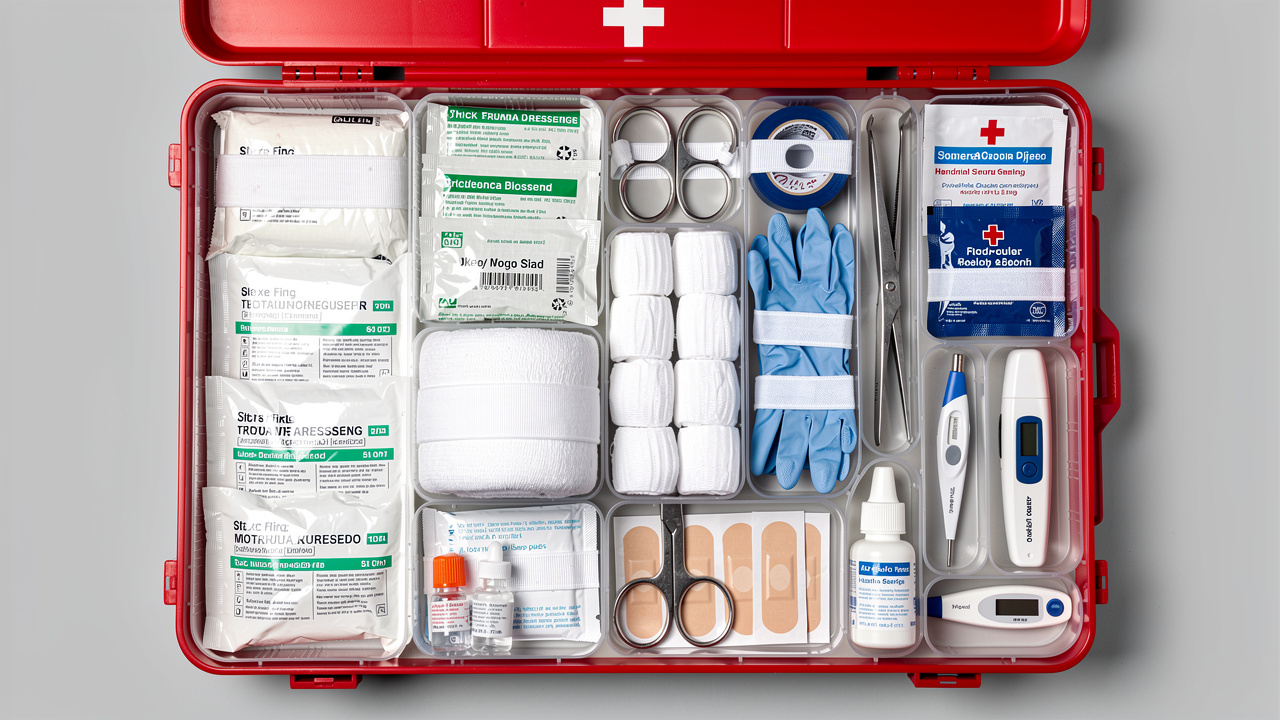
Once the kit is clearly named and classified, the contents section does most of the heavy lifting in your first aid kit RFQ. This is where many organizations stay too vague, using phrases such as “assorted bandages,” which can mean very different things to each supplier. To get comparable quotes and the right stock on site, every component needs a clear description, quantity, and performance detail.
Instead of saying “tourniquet,” you might specify:
One Combat Application Tourniquet, adult size, with a particular part number and, if relevant, an NSN.
One unit of Z‑fold combat gauze with clear size and performance expectations.
Specified types of trauma dressings, chest seals, and burn dressings with sizes and materials.
Medical gloves with defined size, material, and quantity per kit.
Cutting tools such as trauma shears or rescue hooks with minimum performance standards.
Adhesive tape, markers, and any specialty products required by your incident history.
When the pouch or box is part of the kit, describe that too, so you do not receive a soft bag from one supplier and a hard case from another.
Different industries bring extra needs. For example:
Construction may require more trauma supplies for falls, crush injuries, and lacerations.
Manufacturing often needs eye wash and face‑flush options due to machinery and chemicals.
Food production may need blue, metal‑detectable plasters and bandages so any lost items can be spotted by visual checks or detectors.
Your RFQ should call out these hazards in plain terms and link them to required components.
Quantities per kit also matter. If your site deals with frequent small cuts and burns, an undersized supply of bandages will drain fast, leading to constant reordering or improvised topping up from other boxes. Use incident data, employee counts, and shift patterns to decide how many of each consumable item you require, and state that number in the RFQ. OSHA and ANSI/ISEA Z308.1 provide minimum baselines for workplace first aid kits that you can use as a starting point.
For larger operations, it often makes sense to define different kit types across the site. A warehouse may need forklift‑area kits focused on trauma, office kits closer to standard corporate sets, and specialized response kits for chemical zones. First Aid Longs works with clients across manufacturing, construction, logistics, and healthcare to align kit contents with both regulations and real‑world incident patterns. With insight into medical supply chain trends through 2026 and beyond, their team can help you balance clinical quality, supply availability, and cost when you finalize the contents section of your RFQ.
Technical Specifications and Physical Requirements
Container Material and Durability Standards
The best contents do little good if the container fails during daily use. Your RFQ should spell out how tough the first aid kit housing needs to be and which conditions it must withstand. A wall‑mounted box in a climate‑controlled office has very different needs from a pouch on a marine security officer’s vest or a kit riding in a rough off‑road vehicle.
Start with the base material and weight. For soft pouches used in the field, many buyers specify 500D nylon or similar, which offers strong resistance to tearing and abrasion while staying light. In harsher environments, you might ask for heavier fabrics or hard plastic cases tested for impact. If sand, dust, or water are concerns, call for water‑resistant or waterproof materials and sealed seams. In marine roles, extra protection against salt spray can be important.
Hardware details should not be left to chance either. For zippers, you may specify self‑repairing designs and covered pulls, such as 550 cord pulls that stay quiet and easy to grip. For hard cases, you might ask for latches that can be opened with gloves and that stay shut during drops. If your teams will move kits often, handles and hinges should be tested for a certain number of open‑and‑close cycles without failure.
Color and visibility also need attention. High‑visibility colors such as bright red or lime green work well on busy factory floors and construction sites. Tactical units or security teams may prefer black or coyote brown to match existing gear, but large, clear first aid markings remain important so the kit is easy to find under stress. For outdoor or vehicle‑mounted kits, you may also specify resistance to UV exposure so the case does not crack or fade too fast. When you include these points in your first aid kit RFQ, you reduce the risk of receiving containers that look fine in a catalog yet fail on your actual site.
Mounting Systems and Accessibility Features
How a kit mounts and opens matters as much as what is inside. In an emergency, people should not waste precious seconds wrestling a bag off a wall or digging through a cluttered box. Your RFQ is the right place to define how first aid kits will be stored and reached across your buildings, vehicles, and field operations.
Mounting systems can range from simple wall brackets to advanced modular setups:
Fixed locations: Wall‑mounted cabinets or brackets keep kits visible and off the floor in offices, warehouses, and schools.
Mobile teams: Belt clips, shoulder straps, or panel mounts inside vehicles support workers on the move.
Tactical and security users: MOLLE‑style attachment systems let individual first aid kits clip to vests, belts, or packs.
If you have existing mounting hardware, your RFQ should note the dimensions and attachment style so new kits are compatible.
Physical footprint and dimensions keep storage practical. In tight spaces such as vehicle cabs or crowded mechanical rooms, you may need maximum length, width, and depth limits. For example, a tactical pouch might need to occupy no more than two vertical by three horizontal MOLLE rows. A wall cabinet may need to fit in standard cutouts or between studs. Listing these numbers in the RFQ helps suppliers design or select a kit that fits without modification.
Access style is another key design choice. Clamshell openings that zip open flat give full visibility of all contents, which suits trauma kits and tactical pouches. Top‑loading or front‑door wall cabinets may be better where space is limited, as long as contents can be reached quickly. Fast‑release buckles, tear‑away panels, or break‑open seals can speed access during serious events, but may not be needed in quiet office environments. Your RFQ should also call out labeling and visibility needs, including clear first aid symbols, reflective elements for low light, and any OSHA sign requirements in your jurisdiction.
Finally, consider the balance between accessibility and security. Some sites handle controlled supplies such as certain drugs or strong chemicals. In those cases, you may ask for lockable drawers, tamper‑evident seals, or restricted‑access cabinets while still keeping basic bandages and dressings open to all. A clear description in the RFQ helps suppliers, such as First Aid Longs, match the right mix of security features and open access for each kit type across your network.
Supplier Qualification and Vetting Criteria
Regulatory Compliance and Certification Requirements
No matter how strong your specification, the wrong supplier can put your organization at risk. That is why your first aid kit RFQ should include firm requirements around regulatory compliance and quality systems. These criteria help you filter out vendors who cannot support you long term.
For medical devices and many first aid components, FDA registration at the manufacturing level is a key starting point. Your RFQ can ask suppliers to state their registration status, the device categories covered, and the scope of their manufacturing or relabeling activities. For kits sold into workplaces, ANSI/ISEA Z308.1 compliance is another anchor. Asking suppliers to confirm which kit classes they provide under that standard makes it easier to match offerings to your OSHA‑related needs.
Quality management systems round out the picture:
ISO 13485 for medical device quality is especially relevant when you buy sterile items or device‑based components.
ISO 9001 for general quality management and process control.
GMP (Good Manufacturing Practice) principles for consistent production and control.
Your RFQ can require current certificates from accredited bodies, with scope statements that clearly cover the plants where your kits will be made or packed. Because regulations vary across states and localities, your RFQ may also ask suppliers to disclose any state licenses or registrations that apply to them, particularly for healthcare, pharmacy‑related items, or hazardous materials.
To support these claims, ask for:
Certificates of conformity
Test reports
Material safety data sheets (SDS)
Sample labels
Strong suppliers will expect this level of review and will make verification easy. First Aid Longs, for example, builds its manufacturing around high cleanroom standards, formal quality systems, and full documentation, which helps your team show regulators and internal auditors that you take safety procurement seriously.
“Quality is not an act, it is a habit.”
— Attributed to Aristotle
Supply Chain Reliability and Capacity Assessment
Price and certificates are not enough on their own. Your chosen partner must also prove that they can deliver the right kits, in the right volumes, on time again and again. Your first aid kit RFQ should therefore guide suppliers to explain their production capacity, flexibility, and logistics strength in clear terms.
You can start by asking for:
Monthly and annual production capacity for the kit types you plan to buy
Any limits on surge output during peak demand
Minimum order quantities (MOQs) and the lowest economic batch sizes for customized kits
Projected volume increases on your side, so suppliers can confirm whether they can scale with you
Lead times deserve careful attention. Ask suppliers to state standard lead times for first orders and for reorders, broken down by kit type and order size. Suppliers with in‑house manufacturing, like First Aid Longs with its 100K Class Cleanroom capabilities and OEM or ODM services, can often give more dependable lead times than traders who rely on multiple upstream factories. You can also request descriptions of safety stock policies, regional warehousing, and backup manufacturing sites so you understand how they cope with disruptions.
Beyond production, probe quality control and service. Ask about:
Incoming inspection and in‑line checks
Final release testing and typical defect rates
Complaint handling process and replacement times for defective kits
Customer service expectations, such as access to technical staff and emergency replacement procedures
Suppliers who track medical supply chain trends into 2026 and share insights on freight, raw material constraints, and regulatory shifts help you plan ahead rather than react late. First Aid Longs positions itself in this category, giving enterprise clients early warnings and options when global conditions affect cost or delivery timing.
“You get what you inspect, not what you expect.”
— Often attributed to W. Edwards Deming
Pricing Structure and Cost Analysis Requirements
Unit Pricing and Volume Discounts
A well‑written pricing section turns your first aid kit RFQ into a clear comparison tool instead of a pile of mismatched numbers. The goal is to have each supplier quote the same structure so you can see how unit costs change as volumes and contract terms shift. That clarity protects your budgets and avoids surprises after the award.
Begin by asking for unit pricing per complete kit, with all specified components included. If your RFQ describes several kit configurations, request a separate unit price for each model and each packaging style. Make it clear that partial contents or alternate items must be listed as exceptions, so you can see where a quote diverges from your spec instead of hiding changes in fine print.
Volume discounts are another key element. You can ask suppliers to quote price tiers, such as:
10 kits
50 kits
100 kits
500+ kits
The exact break points should reflect your buying habits and storage space. If you plan multi‑year agreements, ask suppliers to show prices under different annual volume commitments, which can reveal useful savings options.
Your RFQ should also cover pricing validity and terms. Ask suppliers to:
Keep proposed prices firm for a set period during evaluation (for example, 60–90 days)
State the currency
Confirm standard payment terms and any early‑payment discounts
Provide a clear breakdown for customized kits (base kit price plus added or reduced cost of specific modifications)
Some buyers also ask for optional component‑level pricing, especially when they expect to buy refills or replacement items over time. With its wholesale manufacturing base, First Aid Longs often uses scale to offer competitive unit prices, which becomes clear when each supplier responds to the same detailed structure.
Total Cost of Ownership Considerations
Unit price tells only part of the story. Your lowest quote on paper can end up being the most expensive option once shipping, short shelf life, returns, and downtime are taken into account. That is why your first aid kit RFQ should ask for details that help you see the full total cost of ownership (TCO) over the life of the contract.
Key TCO drivers include:
Shipping and handling
Ask suppliers to itemize freight costs by shipping method, region, and volume bracket. For large orders, packaging and palletization can change freight classes and handling fees, so clarity here matters. If your organization has special delivery needs, such as liftgate trucks or inside delivery, note them so suppliers can price these services up front.Shelf life and stock rotation
Kits that arrive with only one or two years of remaining shelf life may need replacement long before they are fully used, while those with five years remaining provide more value. Your RFQ can require a minimum remaining shelf life, for example, 60 months on delivery, and can ask suppliers to confirm how they manage stock rotation to meet that target.Returns, replacements, and warranties
Ask suppliers to describe their return policy for damaged or non‑conforming goods, including who pays freight and typical turnaround times. Warranty terms for cases, mounting hardware, and non‑sterile components should spell out what is covered and for how long. Training materials, instructions for use, and regulatory documentation may carry costs if they are extensive, so it is wise to request that these costs be stated clearly.Support services and inventory programs
Some suppliers offer inventory monitoring, automatic replenishment suggestions, or consignment programs where stock sits on your site but remains on their books until used. Your RFQ can ask if such programs exist and how they are priced.
When you compare responses, look at the total cost of ownership over several years, weighing price alongside quality, reliability, and service. First Aid Longs, with its mix of manufacturing scale and logistics insight, works to keep that long‑term picture favorable, not just the first invoice.
Logistical and Delivery Specifications
Delivery Timelines and Distribution Requirements
Logistics often decide whether a good contract feels smooth or painful in daily life. Even the best‑designed first aid kit RFQ falls short if it ignores how kits actually reach your many doors, job sites, and vehicles. Setting clear delivery expectations in the RFQ keeps both sides aligned once orders start to flow.
Begin with lead times for first shipments. Ask suppliers to state the number of days from receipt of a clean purchase order to shipment and to arrival at your main receiving points. For recurring orders, such as quarterly top‑ups, request standard lead times and any cut‑off dates for scheduled runs. If your organization has peak seasons or shutdown periods, note them so suppliers can plan around those dates.
If your company runs several sites, warehouses, or project locations, make sure your RFQ asks about split shipment capabilities. You may need one large order for pricing reasons, but deliveries are spread across many addresses on different days. Suppliers should confirm whether they can stage such shipments, follow specific delivery windows, and coordinate with local facility managers. Mention any requirement for appointment scheduling, limited receiving hours, or security checks at gates.
Emergency needs are also worth covering. Ask suppliers if they can handle urgent orders for critical kits or refills, what lead times they can support in those cases, and what surcharges apply. For organizations with distributed operations across the United States, or in several countries, spell out which regions must be served and whether cross‑border shipments are part of the plan.
Tracking and communication round out this section. Your RFQ can require shipment tracking numbers, advance ship notices, and regular status updates for large or time‑sensitive loads. For high‑volume orders that strain site storage, you may also ask suppliers to coordinate phased deliveries so you do not flood a small warehouse with pallets all at once.
Packaging and Shelf Life Management
Good packaging protects your kits and simplifies storage. Poor packaging causes damage, confusion, and wasted time. Your first aid kit RFQ should describe how individual kits and bulk orders should be packed, labeled, and documented so they move smoothly from your dock to their final locations.
Start with unit packaging requirements. Explain whether each kit must be individually boxed, shrink‑wrapped, or sealed in a bag to keep contents secure and clean during handling. Ask for clear labels on each kit with product name, internal item code, lot number, and expiration date where relevant. If some kits will be displayed in public areas, you may want a more finished retail‑style look, while back‑room kits can have more utilitarian packaging.
For bulk shipments, specify:
Box counts and maximum carton weights
Preferred pallet patterns that work with your equipment
Outer labels showing product codes, quantities, and barcodes or QR codes compatible with your warehouse systems
When you work with public sector standards, you might also reference established packaging levels that define environmental protection requirements.
Weight and dimension data play a strong role in planning. Your RFQ can ask suppliers to provide unpackaged kit weight and size, as well as the weight, dimensions, and cube of a single packed kit and of standard master cartons. This information helps your logistics team estimate freight charges, storage space, and handling needs. For temperature‑sensitive items, such as certain gels or medications, ask suppliers to state storage ranges and any special insulation or cold chain needs.
Shelf life management deserves its own paragraph. As noted earlier, you may require a minimum remaining shelf life on delivery, often around 60 months for general workplace kits. To support stock rotation, ask suppliers to print clear expiration dates and lot numbers on both kits and outer boxes. Your RFQ can also require packing lists, certificates of analysis where applicable, and any compliance documents needed for your sector. With that groundwork, you can run first‑in, first‑out inventory and avoid unpleasant discoveries of large batches that expire soon after arrival.
Contract Terms and Award Criteria
Contract Type and Duration
Beyond the product itself, your first aid kit RFQ should guide how the business relationship will work over time. Contract type and length affect pricing, service levels, and the flexibility you have if conditions change. Setting these expectations early prevents confusion during negotiations.
Common options include:
One‑time purchase order
A simple order for a defined number of kits. This approach fits small organizations or initial rollouts where you want to test a supplier before a longer commitment.Blanket purchase agreement
Prices and terms are set for a period (for example, one year), and your teams place releases as needed up to a total value or quantity limit.Multi‑year contract or indefinite delivery agreement
Better for larger or ongoing needs. The scope and prices are agreed, but exact quantities and dates are set later through individual orders.
Contract language in your RFQ should mention renewal options, performance review cycles, and how contract changes are handled. That might include periodic reviews of service levels, formal change requests for scope adjustments, and clear termination rights for both parties. Price adjustment clauses deserve attention too, especially in long contracts. You might allow index‑based changes tied to inflation or raw material indices at defined intervals. Finally, cover topics such as force‑majeure events, supply chain disruption plans, and rules around subcontracting or assignment so you know who is actually making your kits and what happens if unexpected events hit the market.
Supplier Evaluation and Selection Criteria
A transparent evaluation method protects your organization from bias and supports clear explanations if suppliers ask why they did or did not win the award. Your first aid kit RFQ should outline how you intend to score proposals, even if you keep exact weightings flexible until all responses arrive.
Many organizations use a weighted scoring system with several categories:
Price – Often 30–50% of the total score, depending on how cost‑sensitive your project is.
Technical compliance – How closely each offer matches your contents list, physical specifications, and regulatory requirements.
Supplier qualifications – Manufacturing capacity, certifications, financial strength, and experience with similar clients or industries.
Service and support – Delivery capabilities, customer service access, training support, and issue resolution processes.
Added value – Optional inventory programs, reporting tools, or safety training aids.
Your RFQ may invite shortlisted suppliers to present their offers or to provide sample kits for hands‑on review. If you plan this step, describe how it fits into the evaluation and what you expect from suppliers during presentations. Make it clear that only information in the final written offer will form part of the contract.
Finally, describe documentation needs once you select a winner. That might include internal approval forms, formal award letters, and structured debriefs for unsuccessful bidders. When you align your criteria with broader organizational goals such as cost control, safety performance, compliance, and supply resilience, you move your first aid kit RFQ from a simple buying exercise to a key risk management tool. Suppliers like First Aid Longs, who understand these priorities, can respond in a way that lines up with your scoring model and long‑term objectives.
Industry-Specific Considerations for First Aid Kit RFQs
Manufacturing and Industrial Facilities

Manufacturing plants, warehouses, and heavy industrial sites face higher injury risks than standard offices, so their first aid kit RFQs must reflect that reality. OSHA guidance links kit requirements to employee count, layout, and distance to professional medical care, so your RFQ should reference those factors rather than copying a basic office kit spec.
Industrial operations often need more advanced trauma options, including:
Extra bleeding control items
Larger trauma dressings and splints
Burn treatments
Strong eye care support for dust, chips, and fluids
Where chemicals are present, you may also need specific neutralizing agents, spill response aids, or integration with fixed eye wash and shower stations. These needs should appear both in your hazard description and in the itemized kit contents.
Durability and visibility are key. Industrial kits must cope with dust, vibration, temperature swings, and occasional rough handling by busy staff. Your RFQ can specify hard‑wearing cases, dust‑resistant seals, and high‑visibility colors that stand out among machinery and racks. In large plants, a tiered system often works best, combining personal belt kits, departmental stations, and central trauma kits near high‑risk zones. Your RFQ can define these kit levels and ask suppliers, such as First Aid Longs, to propose coordinated configurations that work as a whole.
Construction and Outdoor Work Environments

Construction and outdoor work bring their own hazards and environmental challenges. Kits may ride in trucks, move from one temporary location to another, and sit under changing weather for weeks. A generic indoor kit often fails in these conditions, so your first aid kit RFQ needs to spell out rugged, mobile, weather‑aware requirements.
Protection against rain, dust, mud, and temperature extremes should appear in your container specifications. Cases may need waterproof ratings, strong seals, and materials that stay stable in heat and cold. Portability matters as crews shift between work zones, so your RFQ can call for carry handles, shoulder straps, or mounts suited to vehicles and equipment. Bright colors and reflective markings help workers spot kits quickly in cluttered or low‑light areas.
Construction injuries tend to involve falls, cuts from tools, and crush injuries. Your RFQ should therefore ask for more trauma‑focused contents, such as tourniquets, heavy dressings, splints, and burn dressings. Vehicle‑mount kits for foremen or safety officers can act as mini trauma stations near active zones. On large or multi‑phase projects, you may describe a plan where each crew carries a base kit while central kits sit near site offices, cranes, or laydown yards.
Link your RFQ to OSHA construction standards that apply to your work, and ask suppliers to confirm how their proposed kits match those expectations. Manufacturers like First Aid Longs can then shape configurations around your job types, from road work and roofing to large civil projects.
Food Production and Healthcare Facilities
Food production and healthcare settings face strict hygiene and contamination rules, which strongly influence first aid kit design. Your RFQ must address those rules head-on, or you risk receiving kits that clash with your quality or infection control programs.
In food plants, bandages, plasters, and some dressings often need to be metal‑detectable and blue for easy visual spotting. Your RFQ should state these needs for any items that might fall into product streams. FDA expectations around food contact and materials may also apply, so ask suppliers to confirm compliance and to provide documentation where needed. Single‑use, individually wrapped components support cleanliness and traceability, which fits both food safety and basic hygiene.
Research Article: The Impact of first aid training programs demonstrates that healthcare and lab settings bring different but equally strict demands. Kits here often need more protection from bloodborne pathogens, including gloves, masks, and biohazard disposal items. Sterile packaging and clear lot‑level traceability are vital. Your RFQ can ask for components free from latex to protect staff and patients with allergies, and can call for materials compatible with facility disinfectants.
Placement rules also differ. In clinical zones, kits must be easy to reach but may not be allowed in certain sterile areas. Your RFQ can describe these constraints and ask suppliers to propose cabinet styles or mounts that keep kits close without breaking isolation rules. First Aid Longs, with its cleanroom manufacturing and experience across sectors, can help adjust kit design and packaging to meet these strict contamination‑control expectations while still meeting OSHA and ANSI/ISEA standards.
Sample First Aid Kit RFQ Template Structure
A clear structure makes your first aid kit RFQ easier to write, read, and evaluate. The outline below gives you a starting framework you can adapt to your own organization, sites, and risk profile. Each section guides suppliers through the information they need to quote accurately.
Introduction and Background
In this section, you describe your organization, your operations, and why you are requesting quotes for first aid kits. You explain the scope of the project, such as a single facility rollout, a multi‑site standardization, or a global program. This context helps suppliers understand your environment, hazards, and priorities.General Terms and Conditions
Here you set the submission deadline, contact details for questions, and the required proposal format. You may outline confidentiality expectations and state which laws and internal policies apply. Clear terms at the front reduce confusion later.Product Identification and Classification
This part lists the kit names, internal item codes, any NSN or FSC codes if relevant, and the quantities you plan to buy. You can separate standard kits, industry‑specific kits, and refills if needed. Suppliers then know exactly which products they are quoting.Detailed Specifications
In this section, you insert the contents lists, container materials, durability requirements, mounting systems, and performance standards. You link each kit type to hazards, OSHA or ANSI/ISEA rules, and any special needs, such as blue detectable bandages. This becomes the heart of your first aid kit RFQ.Supplier Qualifications
Here, you describe the regulatory and quality expectations laid out earlier in this article. You request proof of FDA registration, ANSI/ISEA compliance, ISO certificates, GMP adherence, and relevant licenses. You can also ask for financial information and references from similar clients.Pricing Requirements
This part explains how suppliers must present unit prices, volume tiers, and any multi‑year or contract pricing options. You state your currency and standard payment terms and ask for separate lines for shipping, customization, and optional services. A consistent layout here makes comparison much easier.Delivery and Logistics
In this section, you define lead times, delivery locations, split shipment needs, and packaging standards. You can include shelf life expectations, pallet patterns, and labeling rules. This aligns your service expectations with each supplier’s capabilities.Contract Terms
Here you outline your preferred contract type, expected duration, renewal ideas, and performance review cycles. You describe price adjustment rules, termination rights, and any limits on subcontracting. Suppliers know the commercial framework they are bidding into.Evaluation Criteria
This section shares the broad scoring model covering price, technical fit, qualifications, and service. You can describe the review timeline, any presentation steps, and how you will communicate award decisions. That transparency encourages serious, well‑structured responses.Submission Requirements
In the final section, you list all required documents, such as completed pricing sheets, certificates, sample labels, and signed forms. You explain the submission method, file formats, and how questions should be submitted by a given deadline. For large or complex projects, you may also describe a pre‑bid meeting where suppliers, such as First Aid Longs, can clarify details before they submit.
You can add appendices for technical drawings, facility maps, compliance checklists, or standard terms. Straightforward language throughout keeps your RFQ clear, even for teams that are not procurement specialists.
Common Mistakes to Avoid in First Aid Kit RFQs
Specification Errors That Compromise Procurement
Many problems with first aid kit purchases trace back to weak or inconsistent specifications. When details are missing or confusing, even good suppliers will fill gaps in ways that may not suit your operations. That is why your first aid kit RFQ must avoid certain common errors.
Frequent specification problems include:
Using vague component descriptions such as “assorted plasters” or “standard dressings”
Skipping key technical details (for example, fabric type for pouches or protection level for cases)
Failing to state whether ANSI/ISEA or OSHA requirements apply
Listing items without stating quantities per kit, which forces suppliers to guess
Including conflicting requirements within the same RFQ, such as asking for both waterproof and vented cases with no explanation
Setting very short delivery deadlines that no qualified supplier can meet
Forgetting to specify minimum remaining shelf life on delivery
Ignoring industry‑specific needs, such as blue detectable bandages for food plants or chemical‑specific treatments for labs
Any of these issues can leave you with kits that look complete at first glance but fall short when you compare them to regulations, internal policies, or real incident patterns.
Process and Evaluation Mistakes
Even a strong specification can be undercut by weak process management. Your first aid kit RFQ should therefore avoid common procedural mistakes that waste time and create friction with suppliers.
Typical process errors include:
Rushed timelines for proposals that give suppliers only a few days to respond
Vague or missing evaluation criteria make it hard to compare offers consistently
Changing requirements mid‑process without clear written amendments shared with all bidders
Issuing RFQs to unvetted suppliers who cannot meet your quality or capacity needs
Focusing only on the headline price while ignoring the total cost of ownership
Leaving safety officers, facility managers, or compliance staff out of the drafting and evaluation stages
Accepting incomplete proposals or making optimistic assumptions about missing data
Skipping reference checks and failing to document the decision process
When you treat the RFQ as a structured process rather than a quick formality, suppliers such as First Aid Longs can respond more clearly, and your organization gains stronger long‑term value.
“Safety does not occur by accident.”
— Common safety saying
Secure Reliable First Aid Kit Supplies Today!
Explore our first aid kits designed to reduce delays and stabilize your healthcare operations.
Conclusion
Well‑crafted first aid kit RFQs do far more than collect prices. They turn your safety, compliance, and operational needs into a clear, shared blueprint for suppliers to follow. By defining product identification, kit contents, physical performance, supplier qualifications, pricing structures, logistics, and contract terms in one coherent document, you protect your organization from weak products, hidden costs, and supply gaps.
A thoughtful first aid kit RFQ also supports your legal and regulatory duties. Detailed contents and standards help you match OSHA and ANSI/ISEA expectations, while good documentation backs up your audits and incident reviews. When evaluation criteria and contract terms are explicit, you move from ad‑hoc buying to structured risk management and build stronger partnerships instead of one‑off purchases.
Writing this kind of RFQ takes time and cross‑team input, yet the returns run deep. You gain better pricing over the life of the contract, fewer emergency rush orders, cleaner inventories, and kits that actually work for your sites, from factories and construction projects to offices, schools, and clinics. First Aid Longs stands ready to support that effort with in‑house manufacturing, 100K Class Cleanroom facilities, flexible OEM or ODM options, low minimum orders, and reliable delivery performance for clients across many regions.
As medical supply chains continue to shift through 2026 and beyond, having supplier partners who understand both safety standards and logistics trends makes a real difference. Investing that care into your next first aid kit RFQ will pay off in safer workplaces, fewer surprises, and smoother procurement cycles. If you are planning a new RFQ or want to upgrade your current kits, you can reach out to First Aid Longs for help with specifications, compliance checklists, and customized configurations that fit your exact risk profile.