
About 2,000 U.S. workers need medical care for job related eye injuries every day, according to NIOSH. Many of these incidents involve chemicals that damage eyes in seconds when flushing is late or missing. That is exactly what OSHA rules for emergency eyewash and safety showers are written to prevent. Under OSHA, you must provide emergency eye flushing and sometimes safety showers whenever workers’ eyes or bodies may contact injurious corrosive materials. These OSHA eyewash station requirements expect “suitable facilities” located for immediate use, and inspectors commonly look to OSHA guidance and ANSI/ISEA Z358.1 for details on flow, temperature, and access. Meeting these rules also means following emergency eyewash station requirements for design, training, and regular checks.
This guide explains when eye and safety shower equipment is required, how to assess your facility, what ANSI Z358.1 demands, how often stations must be checked, and which station types fit different workplaces. Use it to turn a vague rule into a clear, practical plan you can act on now.
Key Takeaways
Busy safety leaders often want the headline points first, then the details. This summary highlights how OSHA rules, ANSI standards, and day to day practices fit together. You can review these points now, then return to each section while updating your program.
OSHA’s Legal Trigger For Eyewash Stations explains when corrosive chemicals require emergency flushing. The rule is hazard based, not industry based, so labs, warehouses, hotels, farms, and schools all fall under it. Missing or blocked units can lead to citations when workers face real chemical risks.
ANSI Z358.1 As Your Practical Design Rulebook turns short OSHA text into clear design rules. It covers flow rates, 15 minute flush time, tepid water, and the 10 second reach rule. Following it gives you a clear standard during audits and incident reviews.
Where And When Eyewash And Showers Are Required depends on your chemical inventory and tasks. Normal work, maintenance, spills, and sealed systems all need review. A conservative approach reduces both injury severity and compliance risk.
Inspection and Maintenance Expectations center on weekly activations and yearly performance checks. Simple logs show OSHA that stations actually work when needed. Clear housekeeping rules keep access paths open at all times.
Choosing The Right Eyewash Stations For Your Facility means matching unit types to hazards and layout. Plumbed, portable, and combination units each have a role. Personal bottles and drench hoses help, but cannot replace primary stations.
What Does OSHA Actually Require For Eyewash And Safety Shower Stations?

OSHA rules for eye and shower equipment require quick flushing where corrosive chemicals can injure eyes or skin. In practice, that means employers must install emergency stations close to those hazards and keep them ready for immediate use.
For the general industry, 29 CFR 1910.151(c) states that where the eyes or body may be exposed to injurious corrosive materials, you must provide suitable facilities for quick drenching or flushing in the work area. Construction has a similar rule in 29 CFR 1926.50(g). According to OSHA, this obligation is triggered by the hazard, not by your industry label.
OSHA does not spell out flow rates, water temperature, or exact distances in these sections. Instead, compliance officers and safety professionals commonly rely on ANSI/ISEA Z358.1 (overviewed by ANSI) as the yardstick for what “suitable facilities” mean. Equipment that meets ANSI requirements for flow, reach time, and tepid water is usually accepted as meeting OSHA’s intent for both eyewash and OSHA safety shower requirements.
If eyewash or showers are missing, blocked, or clearly inadequate, OSHA can cite the employer under the medical services rule, other chemical standards, or the General Duty Clause, as outlined in the Federal Register: Occupational Safety and Health Standards interpretation of that clause. According to the BLS, the U.S. records hundreds of thousands of nonfatal workplace injuries with days away from work each year, and a review of Occupational Eye Injuries | patterns and prevention underscores why regulators expect employers to treat emergency flushing as basic worker protection, not an extra feature.
Understanding OSHA’s Legal Trigger
OSHA’s legal trigger focuses on exposure to “injurious corrosive materials,” meaning chemicals that cause visible destruction or irreversible damage to tissue. Examples include:
Strong acids such as sulfuric or hydrochloric acid
Caustic alkalis like sodium hydroxide
Many oven or drain cleaners
Battery electrolyte
These categories are discussed in CDC/NIOSH guidance. If workers’ eyes or skin may contact these substances during any task, emergency flushing equipment is required.
Corrosive hazards are the clear legal trigger, while non corrosive irritants usually fall under best practice decisions rather than strict rules. Still, many employers treat severe eye irritants and strong oxidizers as reasons to provide eyewash, because injuries and compensation costs rise sharply when rinsing is slow or too short. Other OSHA standards, such as the Bloodborne Pathogens Standard and the Laboratory Standard, also call for rapid flushing in certain labs and healthcare settings. You can review those requirements in OSHA’s bloodborne pathogens overview.
The trigger is task based rather than job title based. That means battery rooms, hotel laundries, supermarket back rooms, school labs, and construction mixing areas all fall under the same expectation if corrosives are present. When inspectors see those hazards without nearby eyewash or when access is blocked, they may cite under the medical services rule or the General Duty Clause for failing to protect workers from known chemical risks.
How Do You Determine Where Emergency Eyewash And Shower Stations Are Required?

Finding where to install eyewash and showers starts with a simple idea: follow the chemicals and the tasks. You need to look beyond normal production and include maintenance, spills, and rare but realistic errors.
A structured review begins with your chemical inventory and Safety Data Sheets. For each chemical, identify any that:
Cause severe skin burns or eye damage
Recommend at least 15 minutes of flushing after eye or skin contact
Pay close attention to concentrated products that are corrosive before dilution, even if the final solution is milder.
Next, map where those products are stored, mixed, and used. That includes:
Drum or tote filling
Line connections and hose changes
Spray applications
Lab benches
Janitorial closets
Battery charging areas
Chemical mixing stations
According to NIOSH, many chemical injuries occur during handling and transfer steps rather than during normal steady operation a pattern confirmed by research on Eye wash devices in workplace and clinical settings so these points need careful review.
Do not ignore sealed dispensing systems. If a concentrated product inside a cartridge is corrosive and workers handle that cartridge or service the dispenser, OSHA expects you to treat exposure as realistic. Emergency eyewash and shower requirements still apply when leaks, mis‑connections, or broken containers are reasonably possible.
Step-By-Step Hazard And Task Assessment
A simple step sequence helps you apply OSHA eyewash station requirements across one site or an entire network. Start with a short written plan, then repeat the steps consistently.
Review your chemical list and Safety Data Sheets.
Flag any product corrosive to the eyes or skin.
Flag any product whose first aid section calls for 15 minutes of rinsing.
Note both ready to use chemicals and concentrates used in dilution systems.
Map tasks and locations that can expose workers.
Include storage, mixing, pumping, spraying, sampling, line breaks, filter changes, and routine maintenance.
Add spill response, drain cleaning, and cartridge changeouts, since many real injuries happen during these less frequent jobs.
Factor in layout and people flow across shifts.
Consider contractors in battery rooms, students in labs, housekeeping staff in hotels, and maintenance teams in supermarkets or hospitals.
When in doubt, many safety leaders treat a clear SDS call for long flushing as a strong reason to provide a nearby station, even when the chemical is not formally classified as corrosive.
Tip: OSHA encourages employers to go beyond bare minimum rules when simple controls can sharply cut injury risk. Extra eyewash coverage in borderline areas is often cheaper than one serious eye injury claim.
What ANSI Z358.1 Eyewash Station Requirements Mean For Design And Installation

ANSI Z358.1 turns a short OSHA paragraph into detailed design rules that buyers, plumbers, and inspectors can follow. It explains how fast units must work, how long they must flow, and how close they must sit to hazards.
This consensus standard expects primary eyewash stations to deliver at least 0.4 gallons per minute of flushing fluid for a minimum of 15 minutes. Safety showers must deliver at least 20 gallons per minute for the same time. Combination units must meet both numbers at once so that workers can rinse eyes and body together when full body exposure occurs.
The standard also sets practical access rules that many inspectors apply during OSHA safety shower requirements reviews, and research on Boosting Safety Protocol Compliance through observational monitoring shows how adherence to these access rules measurably reduces incident severity. The unit should sit within about 10 seconds of the hazard, on the same level, along a clear, well lit path with no locked doors. According to ANSI/ISEA, these access rules reflect real incident data where even small delays increase injury severity.
Water temperature is another key point. ANSI defines tepid water as generally between 60 and 100 degrees Fahrenheit. Water that is too cold or too hot makes injured workers stop flushing early, which can leave chemicals in contact with tissue and increase damage. Many facilities use mixing valves or tempering systems so water stays in a comfortable range all year.
Core ANSI Eyewash And Safety Shower Specifications
The most important ANSI details affect your purchasing, plumbing, and layout choices. Once you grasp these points, you can evaluate any product against them.
Flow and duration are the heart of the standard.
Eyewash units must deliver at least 0.4 gallons per minute for 15 minutes.
Showers must deliver 20 gallons per minute for 15 minutes.
Combined units must reach both targets at once, not one after the other.
Activation and hands free operation matter during real emergencies.
Valves must activate in one second or less with a single motion.
Valves must stay open without hand pressure.
Controls need to be easy to find and easy to push, even for workers who cannot see clearly after a splash.
Location, access, and installation details complete the design picture.
Units should be reachable in about 10 seconds along a level, uncluttered path with clear signage and lighting.
Nozzles need covers that keep dust out yet open automatically when the unit starts.
Drainage planning should prevent standing water that creates slips or contamination.
For a deeper technical breakdown, many safety teams refer to an internal ANSI Z358.1 summary or a related standards overview page when drafting specs.
How Often Should Eyewash Stations Be Checked, and What Maintenance Does OSHA Expect?

Eyewash equipment only protects workers if it works instantly when someone pulls the handle. That is why questions about how often eyewash stations should be checked come up in almost every safety meeting and audit.
OSHA’s rule does not give fixed inspection intervals, but enforcement officers often point to ANSI Z358.1 for reasonable practice. ANSI recommends weekly activation of plumbed units and a full performance review at least once a year. Regular checks help you avoid clogged nozzles, closed valves, unsafe water temperature, and blocked access.
Self contained and portable units need even closer attention to fluid quality and temperature. Flushing fluid must be clean and within its shelf life, and tanks need cleaning on the schedule given by the manufacturer. In hot or cold climates, portable units may require insulated or heated enclosures to keep water within the tepid range for emergency use.
Weekly, Annual, and As-Needed Checks
A simple testing rhythm keeps your program on track and gives you solid records for any OSHA visit or insurance review. The same pattern works for factories, hospitals, schools, and job sites.
Weekly quick checks focus on basic function.
Briefly activate plumbed stations to clear stagnant water.
Verify that valves open instantly.
Confirm that spray patterns reach both eyes without harsh jets.
During the same visit, look for missing dust caps, physical damage, or boxes and carts blocking the access path.
Annual performance verification looks at deeper performance.
Measure flow rates with a simple test device.
Confirm water temperature stays within the tepid range.
Check that every hazard area still sits within a 10 second walk of a station.
Review changes in chemicals, new equipment, or layout shifts to see whether you now need extra or different units.
Maintenance of self contained units centers on fluid and weather control.
Replace flushing fluids on the schedule recommended by the manufacturer, often every three to six months for treated solutions.
Clean tanks and check activation mechanisms.
Protect units from freezing or extreme heat so that emergency eyewash station requirements continue to be met all year.
Keep simple tags or a central log so test dates and repairs are easy to track.
Which Types Of Eyewash And Safety Shower Stations Fit Different Facilities?

Emergency eyewash and shower requirements can be met with several types of equipment, and the right mix depends on your hazards and layout. Different industries usually combine plumbed, portable, and combination units to cover all realistic exposure points.
A basic eye wash station definition describes a device that directs a gentle flow of clean fluid into both eyes at once for at least 15 minutes. Primary units can be plumbed or self contained, while small personal bottles are considered supplemental only. Safety showers drench the entire body, and combination units provide both shower and eyewash in one frame.
Stable facilities such as manufacturing lines, university labs, hospital departments, where NABH Physical Infrastructure Standards govern equipment placement and corporate offices often rely mainly on plumbed stations. More mobile or remote operations, including construction sites, farm fields, outdoor loading docks, and temporary event spaces, lean on self contained units that can move with the work. For high risk transfer areas and open tanks, many employers add combination shower eyewash stations to handle full body splashes.
Matching Station Types To Your Hazard Profile
Choosing the right mix starts with understanding what kind of exposure each area might see. Then you match that pattern to station types that actually fit the space and work style.
Plumbed eyewash stations fit permanent layouts.
Well suited to factories, school labs, hospital pharmacies, and warehouse battery rooms where plumbing is available, and equipment locations rarely change.
Benefits include a steady water supply, easier control of tepid temperatures, and fewer fluid change tasks for maintenance teams.
Portable or self contained units support changing or remote work.
Construction crews, farm operators, outdoor maintenance teams, and temporary event venues often rely on gravity fed or pressurized units filled with safe flushing fluid.
These units must still meet ANSI flow and time requirements, and they need frequent fluid changes along with weather protection.
Combination shower and eyewash stations protect against full body splashes.
Tank cleaning, drum or tote filling, plating lines, and bulk chemical unloading in logistics yards can all send corrosive liquids across clothing and skin.
In those areas, a combination unit gives workers both body drenching and eye flushing in one place.
Drench hoses and eyewash bottles can support quick first rinsing or reach tight spaces, but they cannot replace a properly installed primary station.
In real facilities, you will often mix all three types. An automotive service center might use a plumbed eyewash near the battery bench, a portable unit near a wash bay, and personal bottles in each work bay as a backup. A supermarket or food plant might place plumbed stations in chemical mixing rooms, with compact wall mounted bottle stations in smaller janitorial closets.
Why Choose First Aid Longs For OSHA-Ready Eyewash Stations?
Once you understand what OSHA and ANSI expect, the next step is choosing gear that actually hits those marks. This is where your supplier choice really matters.
When you buy from First Aid Longs, you get:
OSHA aligned eyewash designs
Products built around ANSI Z358.1 performance expectations for flow, duration, and access.
Options for plumbed, self contained, and combination units so you can match protection to each area.
Cleanroom grade production and quality materials
Manufacturing in 100K Class cleanroom facilities for consistent, reliable eye care products.
Durable ABS, PS, and HIPS construction, clear covers, and simple controls that staff can understand quickly in an emergency.
Real world sizes and formats that match your tasks
Wall mounted eyewash stations for fixed hazard points.
Portable self contained units for changing job sites.
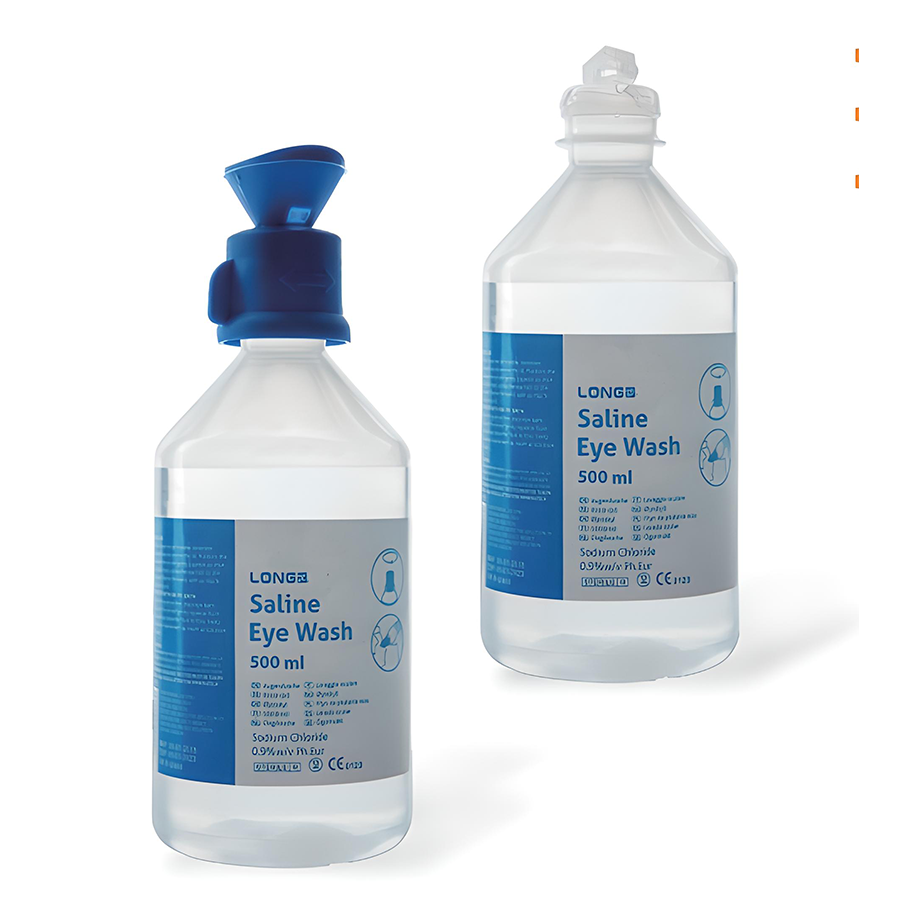
Saline eyewash bottles in 100 ml, 250 ml, and 500 ml sizes for supplemental rinsing in tight spaces.
Wholesale and OEM flexibility for multi site operations
Flexible wholesale quantities and short lead times to cover everything from a single facility to a national network.
Private label and OEM options for color, labeling, packaging, and accessories such as heated enclosures.
If you are updating your chemical safety program across several locations, working with a single, reliable supplier keeps your eyewash standard consistent and simplifies training and inspections. You can explore the current range of wholesale eyewash stations and saline solutions while you review your hazard map and inspection plan.
Ready To Upgrade Your Eyewash Compliance Program?
Refreshing your eyewash and shower program starts with an honest look at hazards, layout, and existing gear. With OSHA eyewash station requirements and ANSI Z358.1 as your guides, you can close gaps before an inspector or an injury reveals them for you.
You can also use a focused planning resource, such as the detailed eyewash station solutions guide, to compare station types and plan locations before you order.
Secure Reliable Eyewash Supplies Today!
Order our high-quality eyewash products made with safety standards to stabilize your healthcare operations.
Conclusion
OSHA eyewash station requirements and ANSI benchmarks work together to protect eyes and skin from corrosive chemicals across factories, warehouses, hospitals, schools, hotels, and more. When you map your hazards, place stations within 10 seconds of each risk point, and keep units in good working order, you sharply cut the chance of serious eye injuries and citations. A short written program that covers inspection schedules, training, signage, and recordkeeping gives your efforts structure and helps new staff follow the same steps.
From there, reviewing station types for each area and replacing aging or non compliant units turns a patchwork of equipment into a consistent safety system. For many safety leaders, this is the ideal moment to standardize equipment and supplies through a dedicated eyewash partner.
If you are planning upgrades or a new rollout, take a look at the full range of eyewash station solutions and saline supplies from First Aid Longs and use that lineup to build an OSHA ready program that workers can trust when seconds matter.