Saline eyewash vs water is the choice you face whenever you set up eyewash protection for your site. Both liquids matter, but they do different jobs for eye safety. Sterile saline feels gentle and works well for debris and irritation, while water from proper emergency eyewash stations handles chemical splashes and long flushes. In this guide, you see where each one fits, what OSHA and ANSI expect, and how to build a smart mix for your facilities. You also get practical planning tips, data, and examples you can use right away.
Key Takeaways
- Saline and water play different roles, not direct competitors. You use sterile saline eyewash for debris and comfort, while water stations handle heavy chemical flushes. Seeing them as a team helps you avoid gaps in protection.
- Saline eyewash works best for minor issues. You reach for it when workers get dust, grit, or pollen in their eyes, or for gentle rinsing in clinics. Its isotonic, sterile nature makes it comfortable for short rinses.
- Water based eyewash stations are non negotiable for chemicals. For acids, alkalis, and solvents, only plumbed or self contained water systems can give the 15 minute, hands free flush that safety standards describe.
- A layered eyewash plan keeps you compliant. You map hazards, place water eyewash hardware near chemicals, then add saline eyewash bottles and stations for low risk areas and supplemental rinsing.
- First Aid Longs is a reliable saline eyewash partner. As a wholesale manufacturer with in house production and cleanroom filling, the company supports you with consistent quality, customization, and on time delivery.
What Is The Real Difference In Saline Eyewash Vs Water?
The real difference in saline eyewash vs water comes down to chemistry, sterility, and how each one is delivered in your eyewash program. Saline is a medical liquid, water in plumbed or self contained units is a high volume emergency rinse.
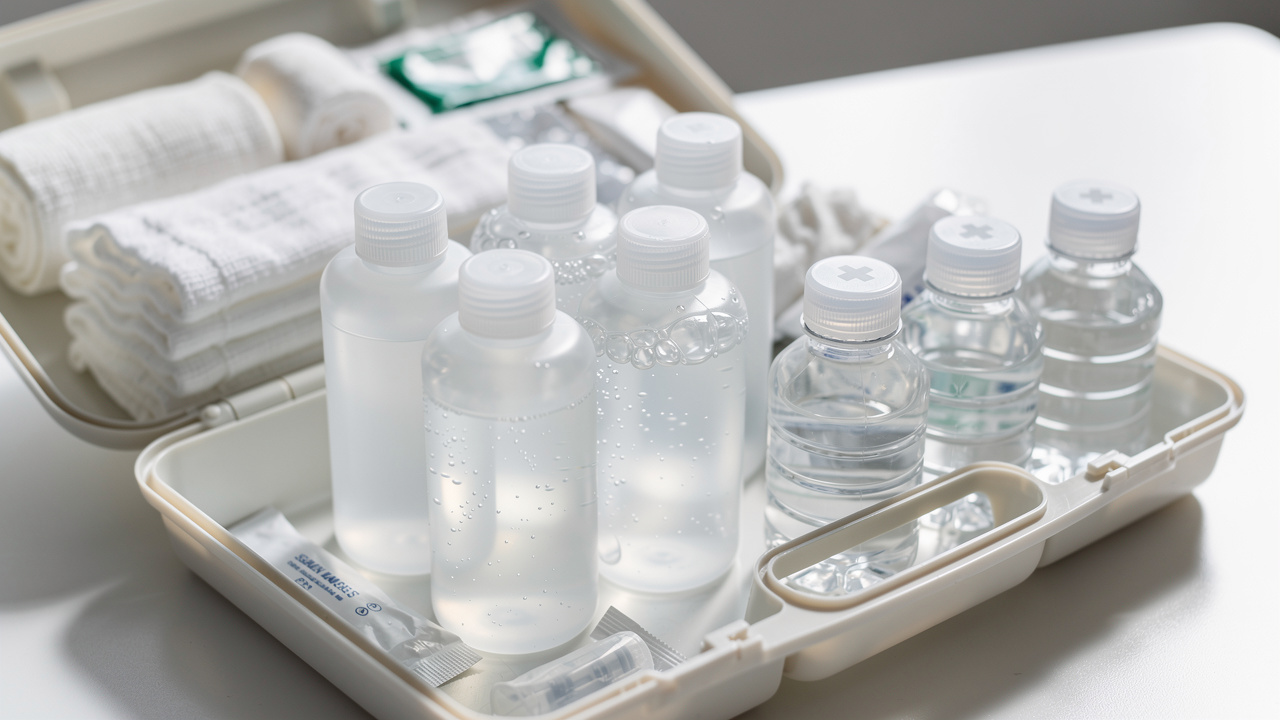
Saline eyewash is usually a sterile 0.9 percent sodium chloride solution that is close to human tears. That isotonic balance makes it feel gentle on the eye surface during short rinses. By contrast, water in workplace eyewash systems is typically tempered, potable tap water delivered through plumbed or gravity fed equipment, so you get volume and time, not perfect comfort.
Composition And Eye Safety In Saline Eyewash Vs Water

In this section, you see why saline’s chemistry feels comfortable and why water still dominates emergency eyewash hardware. Normal saline contains 0.9 percent salt in purified water, a formulation detailed under Normal Saline by NCBI, which matches the salt level of blood and tears. That balance reduces stinging and helps eye tissues avoid swelling or shrinking during a quick rinse.
Municipal tap water is treated for drinking, not for sterility or perfect eye comfort. It may contain trace minerals and microbes that are safe to swallow, but less ideal inside the eye. Guidance from the Cleveland Clinic warns that homemade saline can support bacterial growth within about a day, so you should never mix your own eyewash for eye use. Only sterile, commercially prepared ophthalmic eyewash is safe for regular workplace or clinic flushing.
Here is a simple comparison.
| Factor | Sterile Saline Eyewash | Water In Eyewash Stations |
|---|---|---|
| Isotonicity | Matches tear fluid, gentle on eye cells | Not matched, may sting during long rinses |
| Sterility | Filled and sealed under sterile conditions | Potable, not sterile, depends on plumbing and maintenance |
| Comfort | High comfort for short, controlled rinses | Good enough, comfort varies with temperature and water quality |
| Best Use | Debris, allergens, supplemental flushing | Long, high volume flushing, especially chemicals |
How Standards Treat Saline Eyewash vs Water In The US
Here, you connect the chemistry to OSHA and ANSI expectations so your eyewash setup stays aligned with guidance. OSHA’s 29 CFR 1910.151(b) requires suitable facilities for quick drenching or flushing where corrosives are present, and ANSI/ISEA Z358.1 describes how eyewash equipment should perform. Both push you toward water based eyewash or eye face wash units for chemical risks.
According to OSHA, emergency fixtures are assumed to use tempered water unless another tested fluid meets the same performance. Sterile saline bottles are treated more like medical devices and first aid items, not as full replacements for those fixtures. You can still pair them with your stations for comfort and portability.
| Use Case | Preferred Medium | Reason |
|---|---|---|
| Chemical splash | Plumbed or self contained water station | High flow, 15 minute flushing, both eyes at once |
| Dust or small debris | Sterile saline bottle | Gentle rinsing, sterile, easy to keep in first aid kits |
| Allergens or smoke | Sterile saline bottle | Comfort and quick relief in clinics or low risk areas |
| Remote locations | Portable water unit plus saline | Water unit for big events, saline for minor irritation |
When Is Saline Eyewash Better Than Water?
Saline eyewash is better than water when you deal with debris, mild irritants, and comfort in controlled settings. You rely on it for quick, gentle rinses where a full eyewash station would be excessive.
Because saline is sterile and isotonic, staff tolerate it well during short use. In low risk areas and clinics, that comfort means people are more likely to rinse early instead of waiting until irritation worsens. According to NIOSH, about 2,000 US workers need medical treatment for eye injuries every day, many from small particles that saline can help rinse away quickly.
Everyday Use Cases For Saline Eyewash In Workplaces And Clinics

In daily operations, you reach for saline first when the problem is irritation, not a heavy chemical. For example, you might see:
- Warehouse staff getting dust, cardboard fibers, or sawdust in the eye
- Outdoor crews dealing with pollen, windblown grit, or smoke from nearby burning
- Recreation staff handling eye irritation after swimming in chlorinated pools
In healthcare, urgent care, and outpatient clinics often keep single use sterile saline close to exam chairs to rinse small debris before eye assessments. Research from NIOSH notes that tiny particles and splinters are common causes of work related eye problems, which means ready access to gentle rinses matters. You can stock saline eyewash bottles and pods in first aid kits, nurse stations, security vehicles, and supervisor trucks so help is close to where people work.
How First Aid Longs Saline Eyewash Supports These Scenarios
First Aid Longs focuses on saline eyewash for exactly these everyday eyewash needs. Since 1996, the company has produced sterile saline bottles in 100 ml, 250 ml, and 500 ml sizes, filled in a 100K Class cleanroom for consistent quality. You can place 100 ml bottles in personal kits, keep larger bottles at fixed first aid points, and still use the same trusted formulation across your sites.
For wall mounted eyewash, First Aid Longs offers boxed stations and a compact 100 ml eyewash station holding five bottles and a mirror. Saline wipes add another option where liquid is hard to store, such as tool pouches and small kits. OEM and ODM options let you match bottle colors, labels, and caps to your safety branding, which helps workers spot eyewash fast. You can review formats and customization options on the First Aid Longs eyewash page.
| Use Case | Recommended First Aid Longs Product Type |
|---|---|
| Office or call center | Small saline bottles in wall first aid kits |
| Clinic exam room | 100 ml or 250 ml bottles in a 100 ml wall station |
| Remote work site | Portable eyewash station plus spare 500 ml bottles |
| Light lab support | Boxed wall station with two saline bottles |
When Is Water Based Eyewash The Only Safe Option?
Water based eyewash is the only safe option when eyes are exposed to corrosive or toxic chemicals. In those cases, standards point to plumbed or self contained water systems as the primary response, not small bottles.
After a chemical splash, your goal is fast, steady irrigation with a lot of fluid, and research comparing Buffered solutions versus 0.9% saline for critical care confirms that solution volume and delivery method significantly affect tissue outcomes. ANSI/ISEA Z358.1 describes eyewash units that activate in about one second, run hands free, and rinse both eyes for at least 15 minutes. According to OSHA, the long flush helps limit burns and deeper tissue harm.
Chemical Exposures: Why Water Eyewash Stations Beat Bottles

During a chemical event, every second matters. A plumbed or gravityfed eyewash station lets a worker start flushing almost instantly by pushing a paddle, pulling a lid, or stepping on a foot control. Flow then continues without any squeezing, so the worker can hold eyelids open and move the eyes around in the stream.
Most saline bottles hold only a few ounces and require continuous squeezing, which quickly leads to weak, uneven flow. Even a 500 ml bottle empties in under a minute at a strong squeeze, far short of the 15 minutes that ANSI describes. For alkalis and strong acids, that shortfall can mean deeper burns and a higher risk for vision loss.
| Feature | Saline Bottle | Plumbed Or Self Contained Station |
|---|---|---|
| Activation | Twist cap and squeeze | Single motion, immediate start |
| Hands Free Use | No | Yes, both hands free |
| Typical Duration | Seconds to a minute | At least 15 minutes |
| Coverage | Often one eye at a time | Both eyes and much of the face |
High Risk Locations That Must Prioritize Water Eyewash
Certain areas in your sites simply cannot rely on bottles alone, such as:
- Chemical manufacturing and blending rooms
- Food and beverage plants that use caustic cleaners
- Hospital sterile processing units and central supply
- School or college science labs and technical classrooms
- Construction zones that work with concrete, fuels, and solvents
Common US guidance interprets the ANSI standard as placing eyewash within about a 10 second travel distance, on a clear path, at the same level as the hazard. You might use plumbed units where water and drains are handy, gravity fed tanks on walls near process lines, or pressurized portable stations in changing or outdoor work areas. In colder climates, heated or insulated enclosures keep water within a comfortable range so workers keep flushing for the full 15 minutes.
How To Build A Saline Eyewash vs Water Strategy For Your Facility
You build a strong saline eyewash vs water strategy by matching equipment to hazards, not by picking one liquid and ignoring the other. The goal is a layered plan that keeps chemicals covered with water stations and everyday irritation covered with saline.
In practice, that means pairing hazard mapping with smart product selection and clear training. You look at where chemicals, dust, and people intersect, then decide which eyewash assets should sit within reach. This approach also helps you justify purchases and maintenance budgets to leadership, safety committees, and auditors.
Step By Step Eyewash Planning With Saline And Water

You can follow a simple 4 step process to shape your eyewash program:
- Map hazards
- List every chemical storage and use point.
- Mark dusty or debri prone zones, such as cutting, grinding, and packaging areas.
- Check Safety Data Sheets for eye exposure instructions, and consider clinical evidence such as the Sutureless Dehydrated Amniotic Membrane study, which illustrates how advanced ocular treatments build on foundational eye rinse protocols to inform best practice facility planning.
- Assign equipment tiers
- Tier one: plumbed or self contained water based eye or eye face wash units for any place with meaningful chemical risk.
- Tier two: saline eyewash bottles and small stations for debris, allergens, and supplemental rinsing.
- Plan maintenance
- Schedule weekly or monthly activation of eyewash units to clear lines and check flow.
- Log saline eyewash expiration dates and rotate stock so bottles are used before they lapse.
- Train your teams
- Teach people that water stations are for splashes and serious contamination, while saline eyewash is for dust and post flush comfort.
- Use clear signs that separate decontamination units from first aid eyewash so no one hesitates in an emergency.
- Tie this training into your broader first aid and PPE programs, including refresher drills.
Why First Aid Longs Is A Strategic Saline Eyewash Partner
First Aid Longs fits neatly into this layered strategy by covering your saline eyewash needs at scale. The company manufactures saline eyewash and stations in house, which gives you consistent quality, short lead times, and pricing that works for bulk orders. Hospitals, clinics, factories, construction firms, schools, and government facilities in many regions already use these products inside their safety programs.
If you distribute medical products, OEM and customization options let you brand eyewash bottles and stations with your own label and choose formats that match your market. Customer feedback often highlights reliable delivery and helpful support, which matters when you manage inventory across many sites.
For wholesale quotes or customization talks, you can contact First Aid Longs at sales@firstaidlongs.com, call +86 13590669317, or visit the eyewash product page.
Conclusion
When you compare saline eyewash vs water, you are not picking a single winner. You are assigning each one to the job it does best. Saline belongs in first aid kits, clinics, and vehicles for debris, allergens, and comfort, while water based eyewash stations stand watch over chemicals and higher risk tasks.
A quick hazard review and equipment audit can show you where you need more stations, more saline, or clearer signs and training. As you update policies, build purchase lists, and brief staff, treat First Aid Longs as your saline eyewash supplier and keep your water eyewash hardware aligned with OSHA and ANSI guidance. That mix gives your people stronger protection whenever the next eye incident happens on shift.