Recent data from the Health and Safety Executive suggests around half a million workers in Great Britain suffer non‑fatal injuries each year. Many of those cases depend on fast, simple first aid during the first few minutes. When a kit is empty, outdated, or hard to find, avoidable harm often follows. Under UK law, workplace first aid kit requirements come from the Health and Safety (First-Aid) Regulations 1981 and HSE guidance. Employers must provide at least one suitably stocked first aid kit, plus trained people and facilities, based on a written first aid needs assessment. BS 8599‑1 workplace kits give a strong benchmark, but they are guidance rather than strict law.
This guide explains how to meet HSE expectations without guesswork. It walks through legal duties, how to run a needs assessment, what a typical kit should hold, how to manage and place kits, and how a specialist supplier can help keep every site ready.
Table of Content
- What Are The Legal Workplace First Aid Kit Requirements In The UK Under HSE?
- How Do You Carry Out A First Aid Needs Assessment That Drives Kit Requirements?
- What Should A UK Workplace First Aid Kit Contain For HSE Compliance?
- How Should You Manage, Check, And Position Workplace First Aid Kits In The UK?
- Why Choose A Specialist Supplier For UK Workplace First Aid Kits?
- Why Choose First Aid Longs?
- You’re Ready To Align Your UK First Aid Kits With HSE
- Frequently Asked Questions
What Are The Legal Workplace First Aid Kit Requirements In The UK Under HSE?

Legal workplace first aid kit requirements in the UK come mainly from the Health and Safety (First-Aid) Regulations 1981 and HSE guidance. These rules say every employer must provide equipment, facilities, and people so employees receive immediate attention if they are injured or taken ill at work.
The regulations apply to all employers, from a one-person startup to a large hospital network, plus the self-employed working on your premises, including those in exposure-prone environments covered by guidance such as the UK emergency healthcare workers framework. They do not give a fixed contents list, but they stress that first aid must be adequate and appropriate for your hazards, headcount, and working patterns. That is why a written first aid needs assessment sits at the heart of workplace first aid kit requirements in the UK.
Every UK workplace must meet three basic provisions. You need:
At least one suitably stocked first aid kit
An appointed person or trained first aider
Clear information for staff about how to get help
According to the Health and Safety Executive, inspectors look for these basics during investigations after an incident.
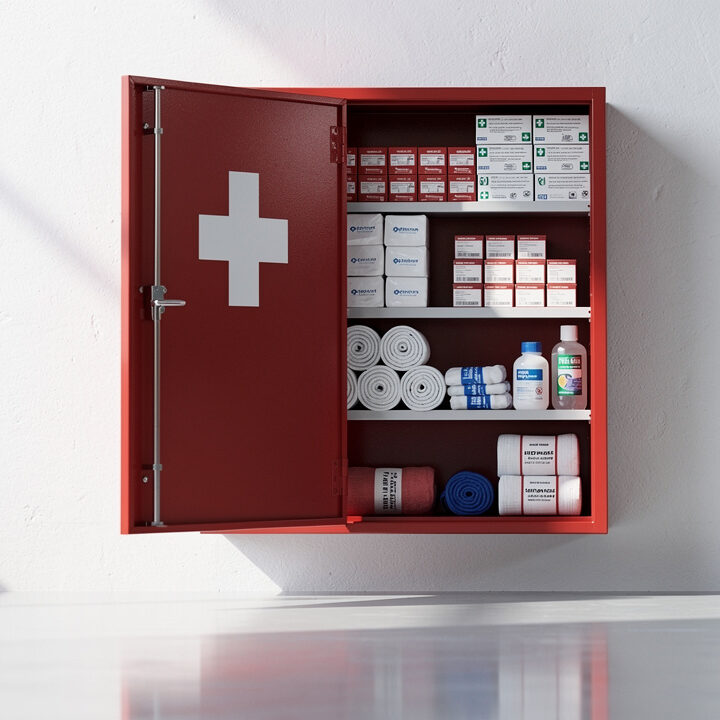
A suitably stocked kit matches your risk profile. A small office may only need a standard box with dressings, plasters, and gloves, while a warehouse or construction site may require larger kits and trauma dressings. The key point is that supplies are present, in good condition, and easy to reach when someone is hurt.
An appointed person or first aider makes sure first aid works in practice. The appointed person looks after kits and calls emergency services, and a trained first aider can give hands‑on care. Larger or higher‑risk workplaces usually need several first aiders across shifts, so cover stays solid during sickness and holidays.
Employee information turns a kit and a name on paper into real help. Staff need to know where kits sit, who the first aiders or appointed person is, and how to reach them quickly. Many employers use wall signs, intranet pages, and induction training to keep this simple.
Failing to meet these expectations can lead to fines, civil claims, and serious damage to trust. HSE’s own enforcement news often shows six‑figure penalties where basic health and safety duties, including first aid, were ignored.
How Do You Carry Out A First Aid Needs Assessment That Drives Kit Requirements?

A first aid needs assessment for UK workplaces links your hazards, people, and layout to clear first aid kit decisions. HSE expects this risk‑based approach instead of a fixed list, and it is the backbone of workplace first aid kit requirements in the UK.
Start by looking closely at what work happens at each site. Office, retail banking, and standard corporate environments tend to have lower physical risk. Construction, manufacturing plants, warehouses, food production, agriculture, gyms, and event venues face higher chances of cuts, crush injuries, burns, and eye damage. Special hazards, such as chemicals or work at height, often require extra eye care, burns dressings, or trauma supplies, a pattern confirmed by occupational inhalational accidents research tracking UK workplace injury trends from 1999 to 2018.
When you assess each location, consider:
People and working patterns
How many people are on site at peak times?
Do you run nights, weekends, or shift work?
A single nine‑to‑five office floor needs fewer kits and first aiders than a multi‑shift distribution center. Night or weekend work still needs first aider cover and kit access that matches those hours.
Layout and distance to help
Map the physical layout of each location.
Multi‑floor buildings usually need kits on every level so no one walks far during an emergency.
Large sites, such as warehouses or university campuses, often place kits near loading bays, workshops, sports areas, and reception points, with extra kits in isolated plant rooms or security posts.
Lone, mobile, and remote workers
Drivers, field engineers, security patrols, and farm workers may need personal or vehicle first aid kits.
They also need clear ways to call for help, such as radios or reliable mobile coverage, because distance from colleagues slows response.
Workforce profile, visitors, and the public
Young workers, pregnant employees, and people with long‑term health issues may raise overall risk.
Public‑facing sites like supermarkets, hotels, gyms, and schools often choose to cover visitors as well as staff, so kit size and numbers increase.
The World Health Organization reports that work-related diseases and injuries cause millions of deaths globally each year, which shows why planning for more than the bare minimum is sensible.
Location and emergency access
Check how far you are from emergency medical help.
Rural plants, agricultural land, and remote logistics hubs may face longer ambulance times.
Those sites often justify larger kits, more first aiders, and extra items such as blankets and airway barriers.
Write down your findings, decisions, and assumptions for each site. If the Health and Safety Executive ever reviews an incident, this document shows that your workplace first aid kit requirements in the UK are grounded in a clear, reasoned assessment, not guesswork.
What Should A UK Workplace First Aid Kit Contain For HSE Compliance?
Workplace first aid kits in the UK should contain items that match your risks and reflect HSE guidance, rather than a fixed legal list. HSE expects a “suitably stocked” kit and accepts BS 8599‑1 kits as a strong starting point when paired with a solid needs assessment.
In practice, that means you choose content that covers likely injuries for your sector. Low‑hazard offices focus on minor cuts and sprains, while production lines, warehouses, and construction sites prepare for heavier bleeding, burns, and eye injuries. There is no legal upper limit, so you can add extra items as long as the kit stays tidy and easy to use.
Some things should not sit in a general workplace kit. HSE guidance advises against any tablets or medicines, including painkillers and antihistamines, to avoid dosing mistakes and liability. Personal medication, such as inhalers or EpiPens, should stay with the individual or in separate controlled storage in schools or childcare. If your medical adviser recommends keeping aspirin for a suspected heart attack, store it outside the main kit under a clear protocol. You can refer to NHS first aid advice when building those protocols.
For settings with children, such as schools and youth sports venues, named medications usually follow a separate policy. These items stay in secure but accessible places, with staff trained to use them, rather than inside the standard kit. The key message is simple: contents must follow your risks and policies, not just an online shopping list.
Typical Kit Contents And British Standard Guidance

Typical kit contents for UK workplaces provide a practical baseline that many HSE inspectors expect to see. For low‑risk sites, you can use BS 8599‑1 contents as a sensible template, then adjust from there using your assessment.
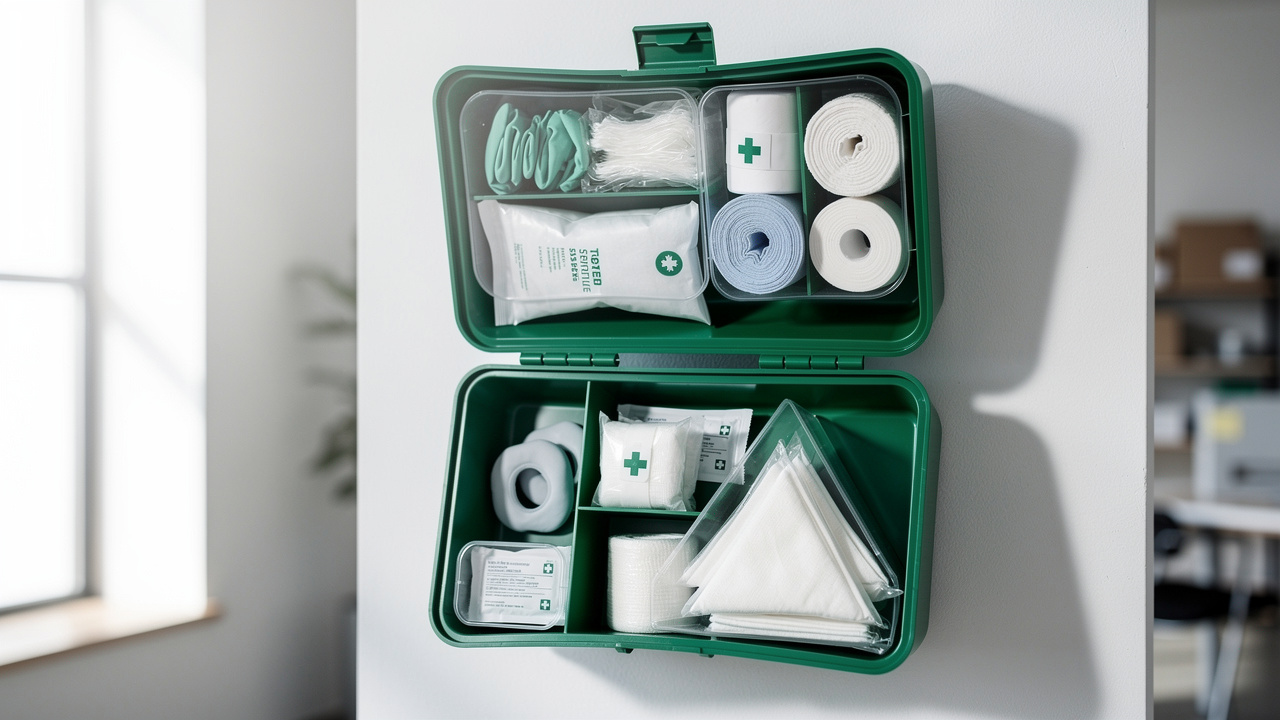
Core items for low‑risk workplaces usually include:
First aid guidance leaflet
Assorted sterile plasters
Sterile eye pads
Triangular bandages
Medium and large sterile wound dressings
Safety pins
Several pairs of nitrile gloves
These items help you cover minor cuts, larger bleeding, eye protection, and limb support until professional help arrives. They also protect the first aider from blood and body fluids.
Widely recommended extra items include:
Alcohol‑free cleansing wipes
Adhesive tape
Face shields or pocket masks
Foil blankets
Small scissors
Optional blister plasters
Wipes help clean skin before dressings, tape secures pads where bandages are awkward, and face shields cut infection risk during rescue breathing. Foil blankets are especially helpful where shock or exposure is possible, such as loading bays or outdoor work areas.
Higher‑risk environments often need:
More bandages and dressings
Extra eye pads and a nearby eye wash
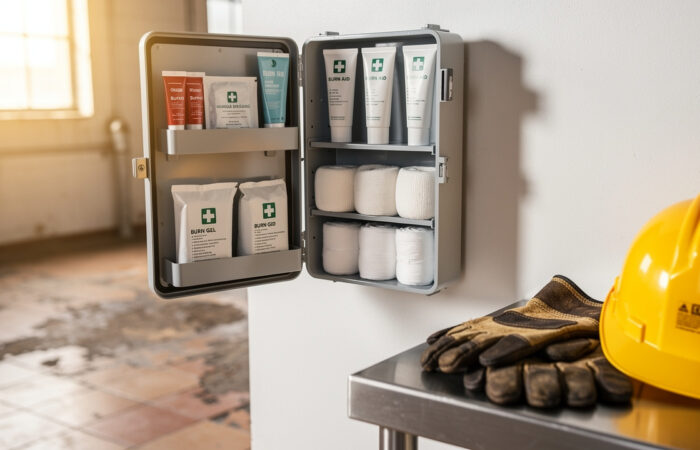
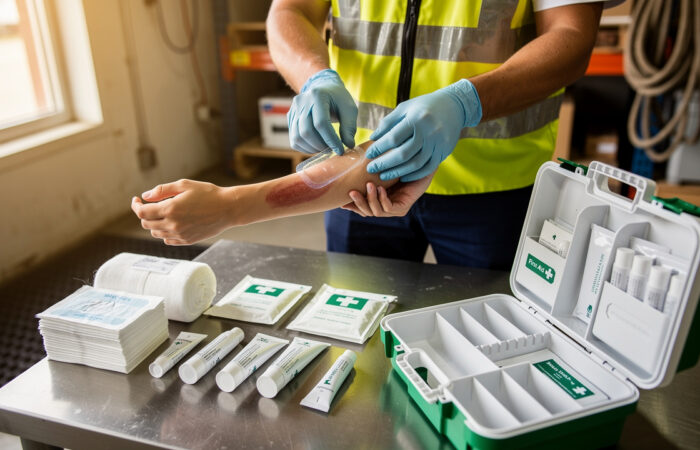
Burns dressings and gel
Trauma dressings for heavy bleeding
A busy production line, warehouse, or construction project may hold several larger BS 8599‑1 kits in different zones, so supplies stay close to the workfront. BS 8599‑1 sets out small, medium, large, and travel kit sizes, and the British Standards Institution describes how these suit different headcounts and risk levels.Multi‑site standardisation
Many multi‑site employers standardize on BS 8599‑1 style kits across all locations, then add sector‑specific items per site.
This helps training, stock checks, and purchasing, because teams know what “standard” looks like while still having flexibility for local hazards.
It also supports audit trails when you explain workplace first aid kit requirements in the UK to senior leaders or external auditors.
How Should You Manage, Check, And Position Workplace First Aid Kits In The UK?

Managing, checking, and positioning workplace first aid kits in the UK turns a stocked box into real protection. Buying kits once and forgetting them does not meet HSE expectations or real incident needs.
HSE expects you to keep kits in good condition, in the right places, and ready for immediate use. That includes making someone responsible for inspections, keeping simple records, and replacing anything used or out of date. In many sites, the appointed person or lead first aider takes this role, with health and safety or facilities teams giving overall oversight.
Roles around first aid should be clear. The appointed person looks after supplies and calls emergency services when needed. Trained first aiders give direct care, including CPR and use of any onsite AEDs. According to the American Heart Association, survival from sudden cardiac arrest can double or triple when CPR and defibrillation happen quickly, which shows why kit and AED location choices really matter.
For multi‑site businesses, central coordination helps avoid gaps, particularly in high-risk deployments where structured procedures, such as those outlined in the HART deployment procedure, demonstrate how formal protocols prevent critical supply failures. A group safety manager might set standard contents and inspection templates, while each branch or plant assigns a local kit owner. Simple shared checklists or digital forms create an audit trail that supports both internal reviews and any future HSE questions.
Maintenance, Inspections, And Accessibility
Maintenance, inspections, and accessibility for workplace first aid kits keep your HSE compliance alive day after day. A short, steady routine works better than rare, complex checks that nobody completes.
Set a clear inspection schedule
Monthly checks for busy or higher‑risk areas
At least quarterly in quieter, low‑risk offices
Confirm that every listed item is present, packaging is intact, and sterile products and wipes are within expiry dates. Replace anything used, damaged, or out of date straight away so the kit is never half empty when someone needs help.
Watch for hidden deterioration
Handle items without visible expiry dates with care.
If elastic bandages have lost stretch, adhesive tape no longer sticks, or packaging looks dirty or split, remove and replace those items even if no date is printed.
Track usage and recurring injuries
Simple log sheets inside the kit, or a basic digital form, help staff record what they used after each incident.
This highlights recurring injury types, such as frequent minor burns, that may call for extra training or changes to processes.
Place kits where they are easy to reach
Put kits close to higher‑risk zones, on every floor, and near reception or security for visitor access.
Lone or mobile workers may need personal or vehicle kits, so supplies stay with them across shifts.
Use standard green‑and‑white first aid signage and, in large sites, arrows or maps that point to the nearest kit and any AEDs.
Explain the arrangements to everyone
Communicate first aid arrangements clearly during induction, toolbox talks, safety meetings, and through your intranet or staff handbook.
Make sure information is easy to understand for employees with limited English or literacy by using clear icons and simple wording.
The National Health Service also offers public first aid guidance that you can reference in training, which supports staff confidence when using kit items.
Tip: Combine first aid kit checks with other safety inspections so they become a routine habit rather than an extra job people forget.
Why Choose A Specialist Supplier For UK Workplace First Aid Kits?

Specialist suppliers for UK workplace first aid kits help you standardize contents, control costs, and stay aligned with HSE expectations across all locations. They replace random retail purchases with kits that match your risk profiles and your first aid needs assessment.
Many organizations face similar issues:
One site has a nearly empty box
Another uses different brands and contents
A third buys emergency kits from a local pharmacy after an incident
High‑risk areas end up with basic office kits that do not match real‑world injuries
All of this weakens your workplace first aid kit requirements in the UK and makes audits harder.
A specialist wholesale manufacturer solves these pain points:
You receive consistent content lists and labelled compartments
Refill codes make restocking quick and accurate
Bulk purchasing reduces total cost compared with last‑minute shopping
Standardized kits support training, inspections, and board‑level reporting
Recent enforcement stories on the Health and Safety Executive website show how poor planning across sites can lead to heavy fines, so a structured partner adds real value.
Why Choose First Aid Longs?
When you want workplace first aid kits that are easy to manage and match your real risks, it makes sense to work with a trusted specialist. This is where First Aid Longs stands out.
Regulation‑aware kit design
Aligns kits with HSE guidance and BS 8599‑1 expectations
Uses a 100K Class Cleanroom facility for consistent, medical‑grade quality
Has supplied dressings, antiseptics, burn gels, and eyewash since 1996
Kits built around your environment
Workplace first aid kits for low‑risk offices and high‑risk sectors like construction, logistics, and food production
Industry‑specific options such as blue detectable plasters for food sites, heavier trauma items for industrial plants, and fast‑access eye care for laboratories
Makes it easy to turn your first aid needs assessment into the right kit selection instead of forcing a generic retail box into every space
Simple refills and audit‑ready layouts
Component packs and scheduled replenishment programs so you top up only what you use
Clear item lists that help you control expiry dates and keep an accurate audit trail
Trusted by over one hundred global clients across construction, manufacturing, logistics, healthcare, and education
If your current kits feel inconsistent or hard to control, now is a good time to review your sites and switch to a more structured, wholesale provider such as First Aid Longs.
You can explore workplace kits, refills, and bulk medical supplies directly on the First Aid Longs product pages and cluster articles, then order the combinations that fit your first aid needs assessment.
You’re Ready To Align Your UK First Aid Kits With HSE
Aligning UK workplace first aid kits with HSE guidance means linking law, risk assessment, kit contents, and daily management. There is no fixed legal list, so your own assessment and records sit at the centre of workplace first aid kit requirements in the UK.
A strong approach looks like this:
You understand the Health and Safety (First-Aid) Regulations 1981
You run and document a needs assessment for each site
You choose kits that match your hazards using BS 8599‑1 as a guide
You keep those kits stocked, in date, clearly labelled, and easy to reach
You name people who are responsible for checks, refills, and incident reporting
Now is a good time to walk your sites, check what is on the wall, and compare it with what your assessment says you need. If you spot gaps, standardize your kits, set simple maintenance routines, and buy your workplace first aid kits, refills, and bulk medical supplies from First Aid Longs so your first aid arrangements stay practical, consistent, and aligned with HSE guidance.
Secure Reliable First Aid Kit Supplies Today!
Explore our first aid kits designed to reduce delays and stabilize your healthcare operations.