

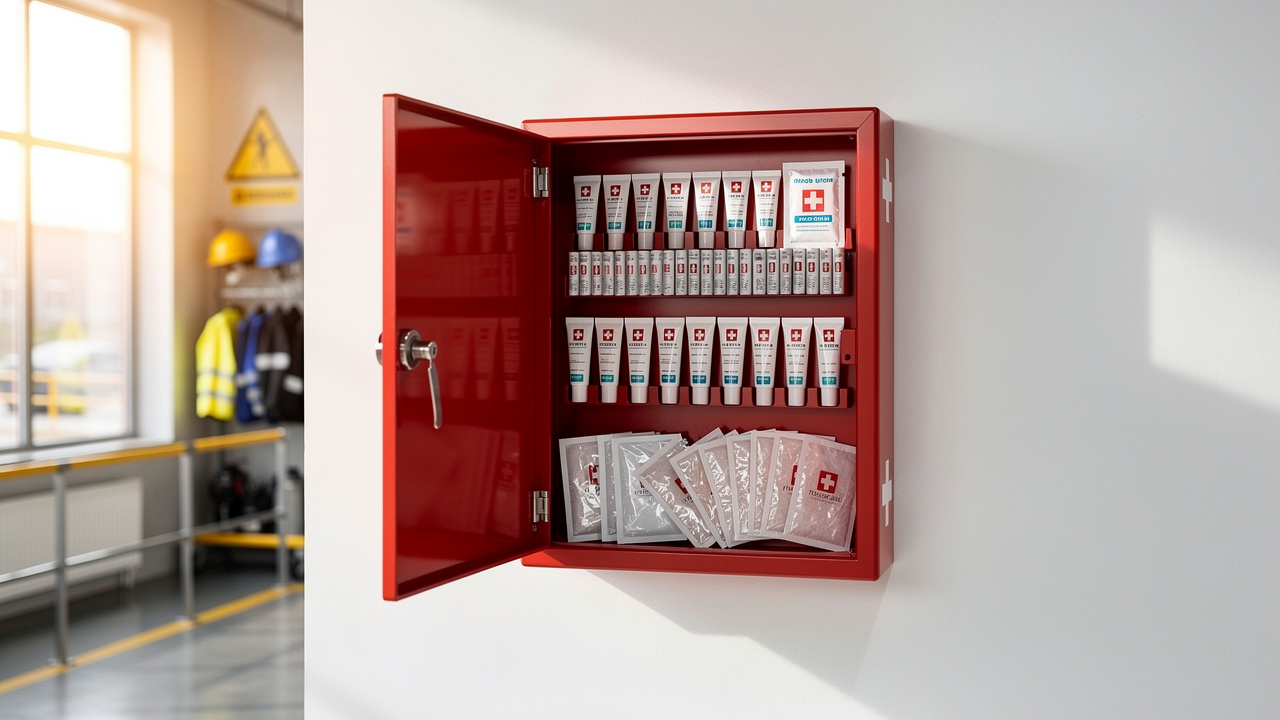
According to the American Burn Association, around 486,000 people in the United States seek medical treatment for burns each year. Many of those start on shop floors, in commercial kitchens, and on construction sites. For any employer, every burn brings pain, paperwork, and potential claims. Private label burn gel gives your organization a simple way to treat minor burns while keeping your own brand on every tube, sachet, and dressing. It is a water rich gel for minor burns and sunburn, produced by a manufacturer but sold under your name, with custom manufacturing options that match your kits and facilities. Used after cool running water, it cools the skin, eases pain, and protects the area until a clinician takes over.
This guide explains how private label burn gel fits into OSHA and ANSI style first aid plans, which formats work best in different facilities, how to choose a manufacturer, and how a proven partner can support multi site rollouts. Keep reading to turn random burn creams in your cabinets into a planned, branded burn care program.
How Private Label Burn Gel Fits Into Your Workplace Safety Strategy

Private label burn gel supports your workplace safety strategy by giving teams a fast, standard way to treat minor burns while carrying your own logo and safety message. It links everyday burn first aid with OSHA expectations for adequate supplies and ANSI style first aid kit layouts.
Burn injuries are common in normal work routines. Data highlighted by the Bureau of Labor Statistics shows thousands of nonfatal workplace burns every year in private industry. When those burns meet a clear, branded first response, staff feel supported and audits are easier to handle.
Across your sites, private label burn gel can sit in wall cabinets, tool cribs, vehicles, cafeterias, guest areas, and event kits. Every packet looks the same, uses the same instructions, and reminds staff to follow your burn policy instead of home remedies like ice or butter.
Some key advantages when you build a private label program into your safety plan:
Supports compliance
You can stock the same contents in every ANSI or OSHA style kit and document them clearly during inspections. When auditors visit, they see a repeatable standard instead of a mix of unrelated items.Builds fast recognition in an emergency
A single branded product line helps staff recognize the right item under stress. When every packet, tube, and dressing shares your colors and wording, workers learn to trust that item and stop reaching for unapproved creams from a drawer.Simplifies purchasing and inventory
Central purchasing gets easier, because you order the same codes for every plant, school, or office instead of juggling many small brands. That cuts down on errors, simplifies training materials, and supports cleaner inventory reports.
For more background on placement and policy, you can also review the guide on burn gel for workplace first aid.
What Exactly Is Private Label Burn Gel And When Should You Use It?
Private label burn gel is a water rich gel for minor burns and sunburn that carries your brand instead of a national label. You use it only after removing the heat source and cooling the area with clean, cool running water.
Public guidance from MedlinePlus, the Centers for Disease Control and Prevention, and the American Burn Association follows the same simple steps:
Move the person away from the source of heat.
Remove rings or tight items before swelling starts.
Run cool water over the burn for about ten to twenty minutes when practical.
Then apply a thin layer of burn gel and, if needed, a light non stick dressing.
Private label burn gel suits small first degree burns and small superficial second degree burns that do not cover large areas. Typical examples include:
Brief contact with hot surfaces
Small kitchen splashes
Light friction burns
Mild sunburn on limited skin
It does not suit deep or wide burns, burns to the face, airway, or genitals, or most electrical and chemical burns, which must go straight to medical care or 911.
When your gel sits inside OSHA aligned kits that follow ANSI/ISEA Z308.1 guidance, it helps your program meet the rule in OSHA 29 CFR 1910.151(b) for adequate first aid supplies. Because you control the private label layout, you can print simple icons that repeat the water step, gel step, and clear triggers for emergency care on every unit.
Which Private-Label Burn Gel Formats Work Best for Different Facilities?

Private label burn gel can take several shapes, and each format fits different rooms, tasks, and risk levels. Tubes, single use sachets, and hydrogel dressings all support fast care but serve very different workflows. The right mix keeps high heat zones ready without overstocking low risk areas.
A report cited by Statista notes that contact with hot objects and substances causes thousands of recordable injuries each year. Those incidents happen in kitchens, labs, warehouses, and gyms, not only heavy plants. Format planning decides whether the right item is close by when that next incident occurs.
In practice:
Small tubes suit offices and guest areas
Single use sachets fit shared kits and food settings
Hydrogel dressings belong near welders, fryers, and auto bays
A good private label program lets you cover all three under one visual style.
Comparing Key Burn Gel Formats For Private Label Programs
This section compares the main formats you are likely to include in a private label burn gel range so you can match them to your own map of hazards and headcounts.
| Format | Volume Or Size | Primary Use | Typical Locations |
|---|---|---|---|
| Burn gel tube | 50 ml | Ongoing use for very small burns and sunburn | Offices, security desks, hotel front desks, gyms, vehicles for supervisors |
| Burn gel tube | 125 ml | Frequent use in staffed clinics and high risk zones | Nurse rooms, maintenance shops, production control rooms |
| Burn gel sachet | 3.5 g | Single dose for tiny burns in shared spaces | Cafeterias, classrooms, event venues, buses, wall mounted kits |
| Hydrogel dressing | 10 cm x 10 cm | Cooling and coverage for small local burns | Production lines, auto bays, commercial kitchens, construction job boxes |
Manufacturing plants, warehouses, and automotive centers often place hydrogel dressings at fixed burn stations, 125 ml tubes in maintenance rooms, and sachets in tool boxes and forklift kits. Food production sites, supermarkets, and hotels focus on sachets and dressings near fryers, ovens, dishwashers, and buffets, with 50 ml tubes in guest facing locations.
Construction, agriculture, and outdoor services usually depend on 50 ml tubes and sachets in vehicles, tool bags, and PPE pouches, with dressings kept in job box kits for more serious first aid while waiting for EMS. Education, offices, and gyms lean toward smaller tubes in clinics and reception areas, with sachets in shared kits.
A few practical tips when planning your range:
Combine formats under one look
A strong private label range usually brings tubes, sachets, and dressings under one shared style. Staff learn one brand and one layout, no matter which format they grab during an incident. It also helps your trainers use the same photos and terms across toolbox talks and e-learning.Standardize by zone
When you standardize formats by zone, your burn supplies match real tasks instead of guesswork. High-risk lines get more dressings and larger tubes, while low risk offices rely on a few small tubes and sachets — a zone-based approach informed by emerging burn care research such as the An Injectable Thermosensitive Chitosan/Astaxanthin/Ibuprofen hydrogel study, which highlights how injury type and severity should guide treatment selection. This structure lines up with the stocking ideas in the burn treatment supplies checklist.
What Should You Look For In A Private Label Burn Gel Manufacturer?

Choosing a manufacturer for private label burn gel means choosing whose science, paperwork, and packaging will sit under your logo. The right partner protects staff, supports compliance, and keeps your brand safe on every tube and packet.
In the United States, many burn gels with actives such as lidocaine or menthol count as over the counter drug products under the U.S. Food and Drug Administration. That means the underlying producer must follow current Good Manufacturing Practice, keep drug listings up to date, and use correct Drug Facts layouts. Your name may appear on the front, but the regulator still looks closely at how the formula is made and labeled.
A capable manufacturer also supports your OSHA and ANSI goals. They provide Safety Data Sheets, lot numbers, shelf life data, and pack sizes that match your first aid cabinets, wall kits, and refill plans.
Key Evaluation Criteria For Custom Manufacturing Partners
Use this short checklist to compare private label proposals side by side during vendor calls and while reviewing quotes.
Quality And Compliance Checklist
Look for in house manufacturing instead of scattered outsourcing, because one site helps keep batches consistent over many years. Ask whether the plant operates under cGMP style systems and whether it already produces over the counter burn gels. Request sample Drug Facts panels and Safety Data Sheets, and confirm that the manufacturer understands OSHA, ANSI, and workplace first aid expectations.Formulation And Performance
Your private label burn gel should use a high water content to support cooling and to help draw heat from the skin, a principle supported by research into advanced hydrogel systems such as an Amino Acid-Based Protein-Mimic Hydrogel developed for burn wound healing. Many workplace formulas also include lidocaine HCl for pain relief, menthol for a cooling feel, and soothing ingredients such as aloe vera, glycerin, and propylene glycol, with poly herbal approaches evaluated in research such as the Formulation and Evaluation Poly herbal cream study for burn treatment. For hydrogel dressings, ask about non stick behavior so the pad lifts away from fragile tissue without tearing during dressing changes.Packaging And Customization Options
Strong partners can supply tubes, sachets, and hydrogel dressings within one private label program, all matching in color and logo use. They should support custom artwork, safety slogans, QR codes that link to your policies, and multilingual layouts where needed. Case pack sizes should match your refill cycles, for example carton counts that line up with the number of kits in each plant or campus.Logistics And Ongoing Support
Ask about typical lead times, minimum order quantities, and how the manufacturer handles spikes in demand. A partner that manages its own production can often shorten waiting times and keep quality steady from batch to batch. Also check how they support multi site rollouts, from helping plan stocking tables through to advising on expiry checks and reorders.
If you want a deeper buyer checklist, the guide on wholesale burn gel OEM manufacturing gives more detail on questions to ask during supplier selection.
Why Choosing The Right Private Label Partner Matters For Cost, Consistency, And Safety
The manufacturer you choose for private label burn gel shapes costs, consistency, and safety across every site you manage. A strong partner helps you hold down cost per use while keeping the same instructions, labels, and formats everywhere.
When every location uses the same burn gel codes, your teams can build simple standard operating procedures and training modules. Safety slides, toolbox talks, and e learning show the same packets staff will hold on the shop floor. That cuts confusion and reduces the chance that someone grabs the wrong product in a rush.
From a compliance view, a unified private label line supports audits. Inspectors see the same labeled items in each kit, your inventory reports match physical stock, and OSHA style checks on OSHA 29 CFR 1910.151(b) become easier to pass — and standardized documentation practices are outlined in resources such as the Burn BlendFINALCOMPLETE_MEDICAL.pdf medical reference for burn care supply planning. Bulk orders also bring better pricing, especially when you can compare cost per sachet or per dressing instead of just case price.
According to the American Burn Association, around 40,000 people in the United States require hospitalization for burn injuries every year. Many of those start as small events in workplaces, so steady early care with planned supplies can make a real difference in outcomes and costs.
How A Strong Private Label Program Pays Off Across Multiple Sites

A strong private label burn gel program pays off when you run many plants, campuses, or branches. Multi site standardization means every location uses the same SKUs, artwork, and step by step instructions, which makes training and refresher drills far simpler. Your health and safety team can update one procedure or one online course and know it applies everywhere.
Operational and financial gains add up over time:
Fewer product variations, so you can negotiate sharper pricing per dose
Less waste from slow moving or duplicate items
Easier forecasting, because you track one main line of burn gels and dressings, not a long list from many vendors
Sector examples make this clearer:
Manufacturing and logistics
Plants and warehouses might use hydrogel dressings and 125 ml tubes at fixed burn stations, with sachets in forklift and fleet kits.Food service and retail
Food operations and supermarkets would place high sachet counts near fryers and ovens, and dressings near steam lines and dishwashers.Offices, schools, hospitality, and gyms
These sites can rely on compact tubes in front desks, nurse rooms, and staff kitchens for quick support of minor burns and sunburn.
Your private label also supports safety culture. Every packet carries your name, colors, and a simple burn message, which reinforces that the company takes minor injuries seriously. That presence makes staff less likely to try home remedies and more likely to follow your written first aid plan, as discussed in the article on bulk burn gel wholesale.
Why Choose Us For Your Private Label Burn Gel Program?

When you are ready to move from generic burn cream to a planned private label burn gel program, experience and tight manufacturing control matter. You want a partner that has produced medical and first aid products for decades, with burn gel production handled inside its own facilities, including cleanroom areas that support consistent quality.
The ideal burn gel range should cover the main formats operations teams rely on:
Larger tubes that cool, soothe, and relieve pain from minor burns, scalds, and sunburn in busy clinics and maintenance shops
Compact tubes for offices, security posts, hotel desks, and mobile supervisors
Single use sachets that give hygienic dosing in high turnover spaces such as cafeterias, classrooms, gyms, and buses
Hydrogel dressings in practical sizes that combine cooling and coverage for localized workplace burns on hands and arms
Formulations should use high water content to support cooling, along with workplace grade ingredients such as lidocaine hydrochloride for pain relief and soothing moisturizers like aloe vera, glycerin, and propylene glycol — consistent with findings from research on Opuntia ficus-indica leaves extract-derived topical creams validated through in vivo, in vitro, and in silico burn healing studies. Hydrogel dressings benefit from a low friction, non stick contact surface to protect tissue when dressings are removed or changed.
Our Burn Gel Formats, Custom Options, And Partnership Approach
A good supplier offers more than single products. You should expect a private label system that fits how real facilities run:
Burn Gel Formats That Match Your Risks
A full range covers 125 ml and 50 ml tubes for clinics, offices, and guest areas, 3.5 g sachets for cafeterias, classrooms, and shared kits, and 10 cm x 10 cm dressings for production lines, auto bays, and commercial kitchens where localized burns are more common.In House Manufacturing And Quality Focus
Long standing manufacturers that produce their burn gels and dressings in their own facilities support consistent batches and reliable lead times. Strong quality control runs from raw material checks through filling and packaging, which also keeps pricing competitive for private label buyers, including those with many client sites.Flexible Private Label And Custom Manufacturing Options
All burn gel formats should be able to carry your brand name, logo, and colors, along with custom wording that matches your safety program. Labels can show your contact details, QR codes, and multilingual layouts where needed. If your supplier also produces first aid kits, eyewash, saline wipes, and empty bags and boxes, your burn gel packaging can match a wider first aid range.Support For Multi Site Standardization
Look for a team that helps you map facility types and headcounts, then recommends format mixes and quantities for each zone. You can standardize burn gel contents in wall kits, vehicle kits, and high risk burn stations across plants, campuses, and fleets.
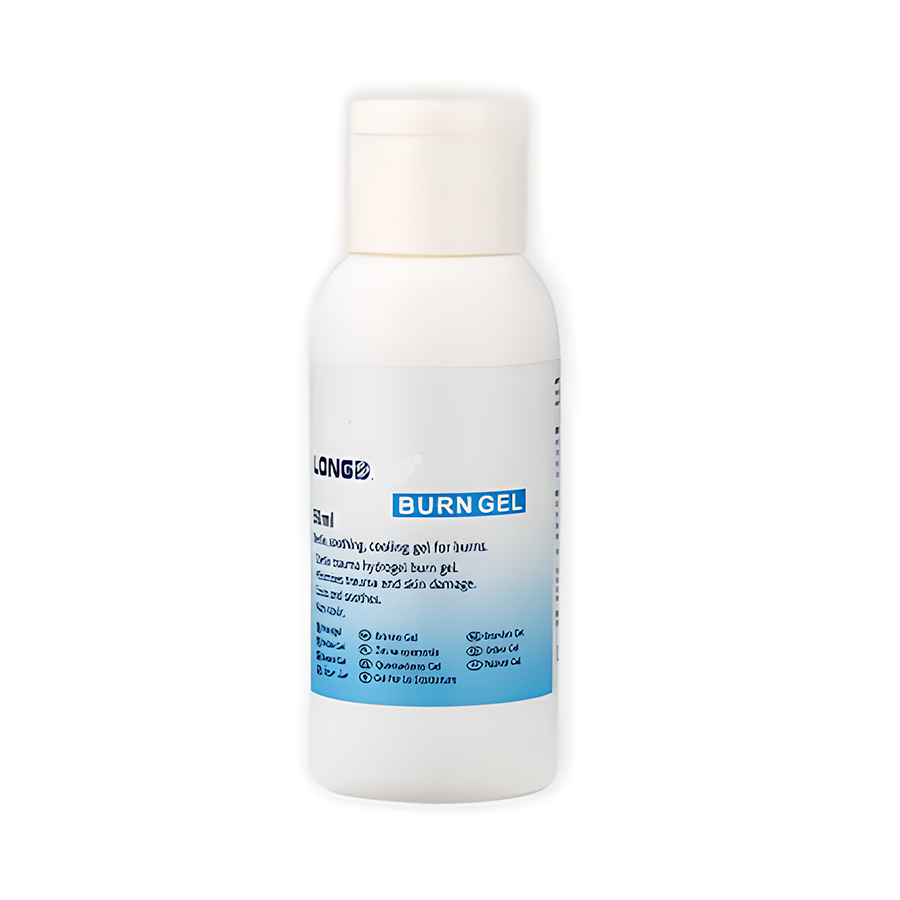
If you want a private label burn gel line that works in real workplaces and reinforces your brand, it makes sense to buy from First Aid Longs and use its long manufacturing track record to your advantage. You can review the dedicated private label burn gel program page to see format options and branding ideas before speaking with the team.
Secure Reliable Burn Gel Supplies Today!
Order our high-quality wholesale burn gels made with safety standards to stabilize your healthcare operations.
In Summary
Minor workplace burns are common, and they are not minor for the person who gets hurt or for your safety record. A planned private label burn gel program gives you standard, branded, clinically suitable first aid across every site, kit, and vehicle.
Matching tubes, sachets, and hydrogel dressings to different zones in your operation helps staff find the right item fast, whether they work on a line, in a kitchen, in an office, or outdoors. Careful selection of a manufacturer with strong quality systems, solid documentation, and helpful logistics support protects both your workforce and your brand.
If you are ready to put a consistent burn care strategy in place, take a look at the burn gel product page, explore the related workplace guides in this article cluster, and consider buying your private label range from First Aid Longs so you can build a clear, reliable burn care standard across all your locations.


