Staying compliant, keeping staff safe, and still hitting performance targets can feel like competing goals. How do you know when your burn care setup truly supports safety success, not just minimum boxes on a checklist? And when you see a CE certified burn dressing in an EU catalog, are you looking at real regulatory assurance or just another logo? A CE certified burn dressing EU is a regulated medical device that meets the EU Medical Device Regulation (MDR) rules for safety and performance. For you as a US decision maker, that mark means the dressing has passed a structured review, with technical data, clinical evidence, and quality controls similar in strength to FDA expectations. This article explains what CE marking means under MDR, which burn dressings matter for workplaces, how US organizations can evaluate and deploy them alongside OSHA and ANSI guidance, and how manufacturers and distributors, including First Aid Longs, can support a consistent program.
If you want burn care that supports real results instead of guesswork, keep reading to see how CE markings fit into your wider safety plan.
What Does “CE Certified Burn Dressing” Mean Under EU MDR?

A CE certified burn dressing under the EU MDR is a medical device that meets European rules for safety, performance, and quality management. For workplace buyers, it signals that the dressing has passed a defined regulatory process before it reaches your first aid kits.
Under EU MDR 2017/745, burn dressings sit inside the wider medical device framework, along with wound dressings and advanced wound care. The CE mark is not a prize; it is a legal symbol that the manufacturer has completed the required conformity steps and signed a Declaration of Conformity. For a CE certified burn dressing in the EU, that includes correct device classification, a reviewed technical file, risk management, and an audited quality system.
CE Marking Basics For Burn Dressings
CE marking for burn dressings is a legal declaration that the device meets every EU rule that applies to it. The letters “CE” on the pack show that the manufacturer accepts legal responsibility for safety and performance across all EU and EEA countries.
Burn and wound dressings are treated as medical devices under EU MDR 2017/745. Most simple, non‑active dressings fall into Class IIa, while more advanced dressings, such as some antimicrobial or negative pressure products, may be Class IIb. Higher class means higher perceived risk, so the review is deeper.
Classification affects how the CE certified burn dressing in the EU reaches the market. Lower‑risk dressings may follow a route with more internal assessment, while higher‑risk products, such as advanced skin substitutes reviewed in a narrative review of laboratory-generated skin substitutes for burn treatment in Europe, need review by a notified body, which is an independent organization appointed by an EU country. Once approved, the CE mark lets the dressing move freely across the EU and EEA, but it still needs ongoing monitoring by the manufacturer.
How CE Certification Is Achieved For Burn Dressings
A burn dressing does not gain CE marking by filling out a form; the manufacturer has to follow a structured path defined in law. That path links design, evidence, and quality systems into one package.
Key steps usually include:
The manufacturer chooses the right legal path and class for the dressing. They look at intended use, duration on the skin, and whether the product contains active substances such as silver. This step sets the level of scrutiny and whether a notified body must be involved.
The company builds technical documentation for the CE certified burn dressing in the EU. That file covers design drawings, materials, packaging, sterility methods, and test reports on absorbency, adherence, and biocompatibility. It also includes a risk analysis that looks at infection, allergic reactions, delayed healing, and other hazards.
Clinical evaluation comes next. The manufacturer reviews published studies, existing clinical experience, and sometimes fresh trials to show that the burn dressing helps healing and does not create unacceptable side effects. For advanced systems, such as negative pressure interfaces, this evidence can be quite detailed.
The business runs a quality management system, most often certified to ISO 13485:2016, and has it audited by a notified body for many device classes. After a positive review, the notified body issues EC certificates that list covered families such as burn pads, elastic burn wraps, and negative pressure dressings. Only then does the manufacturer sign the EU Declaration of Conformity and place the CE symbol, plus the four‑digit notified body number where required, on the packaging.
Ongoing post‑market surveillance, complaint handling, and periodic certificate renewals keep the device within the MDR framework throughout its life on the market.
Which Types Of CE‑Certified Burn Dressings Are Relevant For Workplaces?

Types of CE certified burn dressing in the EU range from simple pads to interfaces for advanced therapies, and each one fits different workplace risks. Understanding these families helps you stock dressings that match real hazards rather than buying generic burn kits.
In sectors like construction, manufacturing, warehousing, hotels, gyms, schools, and food production, most burns seen in first aid rooms are partial‑thickness, scald, contact, friction, or small chemical injuries. CE‑marked dressings give you predictable performance when those events occur, but only if you choose the right combination for your environment.
Core Categories Of CE‑Marked Burn And Wound Dressings
In EU catalogs, you will see recurring families of CE‑marked burn and wound dressings. They often share one Full Quality Assurance certificate that lists the entire range.
Common categories include:
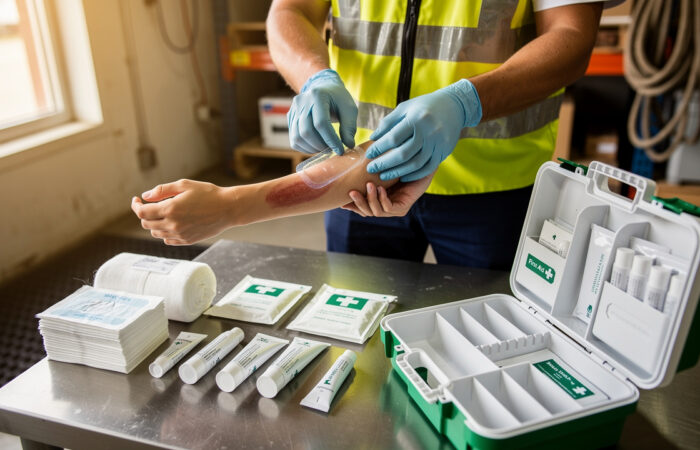
Non‑adherent wound contact dressings sit directly on the burn surface. They are designed to avoid sticking to fragile tissue, keep a moist healing environment, and limit pain during changes. In many kits, these are the first layer placed after cooling the burn with clean water.
Burn pad dressings provide larger coverage in sterile pad form. Some versions contain cooling gels or antimicrobial components such as silver to help manage infection risk. They are a practical choice for scalds, hot surface burns, and donor sites in both workplace and clinical settings.
Elastic burn wrap dressings hold primary pads in place and offer light compression. Their stretch helps them conform over joints and curved areas, which is important when staff need to move while the dressing stays stable. Good wraps also protect against contamination and friction.
Wound pad and island dressings combine an absorbent pad with an adhesive border. In burn care, they protect smaller areas and graft sites from knocks and dirt. They also work well for abrasions and minor injuries that often appear alongside burns in active workplaces.
Wound packing strips and negative pressure dressings serve deeper or more complex wounds under clinical oversight. Packing strips fill cavities so they drain and heal from the base, while negative pressure interfaces connect to suction pumps that manage heavy exudate. These devices are not for casual first aid use, but they may appear in on‑site clinics or hospital partners that support your staff.
You might also encounter hydrogel dressings, foam dressings, and film dressings; a recent systematic review and meta-analysis of hydrogel dressings found they can support cooling or moisture balance, and they are normally selected according to local medical protocols.
Matching Dressing Types To Typical Workplace Risks

Each workplace has a distinct mix of burn risks, so the right CE‑certified dressings will differ across your sites. Matching products to hazards keeps kits practical for your teams.
For manufacturing, metalworking, and automotive facilities, thermal and electrical burns around machinery, welders, and hot components are common. Larger non‑adherent burn pads, elastic wraps, and a few extra large dressings for limb coverage are usually the most useful.
Food production plants, supermarkets, and commercial kitchens face frequent scalds from steam and hot liquids, along with oil burns. Here, focus on sterile, non‑adherent burn pads in small and medium sizes, kept near prep areas, fryers, and dishwashing stations rather than only in a central room.
Cleaning teams, agriculture, and labs face chemical burn risks from detergents, solvents, or fertilizers. After flushing with water according to your protocol, clear instructions for use and simple, non‑reactive dressings matter more than complex features. CE‑marked pads with obvious pictograms and neutral materials support quick, safe application.
Warehouses, logistics operations, and gyms often see friction and contact burns from equipment, floors, or ropes. Quick‑apply pads and wraps at wall‑mounted stations near high‑traffic areas help supervisors respond within minutes.
Some higher‑risk or healthcare‑adjacent sites, such as hospital networks, large hotels with in‑house clinics, or stadiums, may add antimicrobial dressings, including options studied for dermatan and chondroitin sulfate dynamics during burn-wound healing, and interfaces that work with negative pressure systems. These products, when CE marked, usually sit under medical oversight due to their stronger claims.
When you map these risk patterns across your portfolio, it becomes easier to standardize a small family of dressing types that fit most locations, with a few specialist options held in higher‑risk or clinical areas.
How Should US Organizations Evaluate And Deploy CE‑Certified Burn Dressings?
For US organizations, CE certified burn dressing in the EU signals structured oversight, but it does not replace OSHA, ANSI/ISEA, or FDA rules. Instead, CE marking can raise your quality baseline for workplace first aid while you keep domestic requirements front and center.
A clear approach to evaluation and deployment helps you avoid weak points such as expired stock, incorrect sizes, or products with unclear regulatory status. It also supports due diligence during audits or claims, where your documentation can show that you chose medical‑grade supplies with care.
Compliance And Documentation Checks For CE‑Marked Dressings

Before you add any CE‑marked burn dressing to your kits, it pays to check that the mark is genuine and supported by documents. A few simple checks reduce the chance of stocking weak or misleading imports.
Useful steps include:
Look closely at the CE symbol on the packaging. The letters should follow the standard shape, be easy to read, and at least 5 mm high unless space is limited. For many burn dressings that need a notified body review, a four‑digit number sits next to the CE mark to show which body carried out the assessment.
Confirm that full manufacturer details appear on the label. The pack should show the legal manufacturer’s name and address, not just a reseller. That information lets you match the product to EC certificates and the EU Declaration of Conformity if you request them.
Ask your supplier for key documents and check that they match what you plan to buy. These usually include an EC Full Quality Assurance certificate listing burn pads, wraps, or negative pressure dressings, plus an ISO 13485:2016 certificate for the quality system. Watch out for “CE‑style” logos or voluntary certificates that do not reference MDR 2017/745 or a real notified body.
Keep copies of certificates and Declarations of Conformity in your safety files. For large organizations, this supports internal audits, customer reviews, and questions from insurers or regulators during incident investigations.
Review instructions for use against your procedures. Make sure cooling guidance, wear time, and change frequency align with your medical director’s protocols or occupational health advice.
Selecting The Right Mix Of Burn Dressings For Your Sites
Once you trust the certification, the next question is which dressings to stock. A clear baseline, with thoughtful add‑ons, keeps kits useful without overwhelming staff.
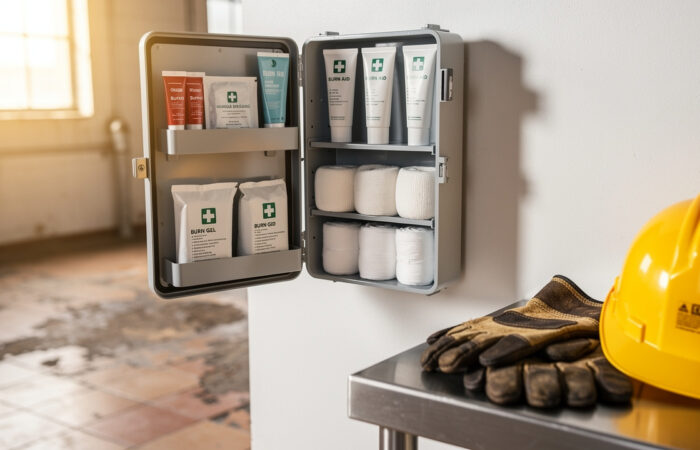
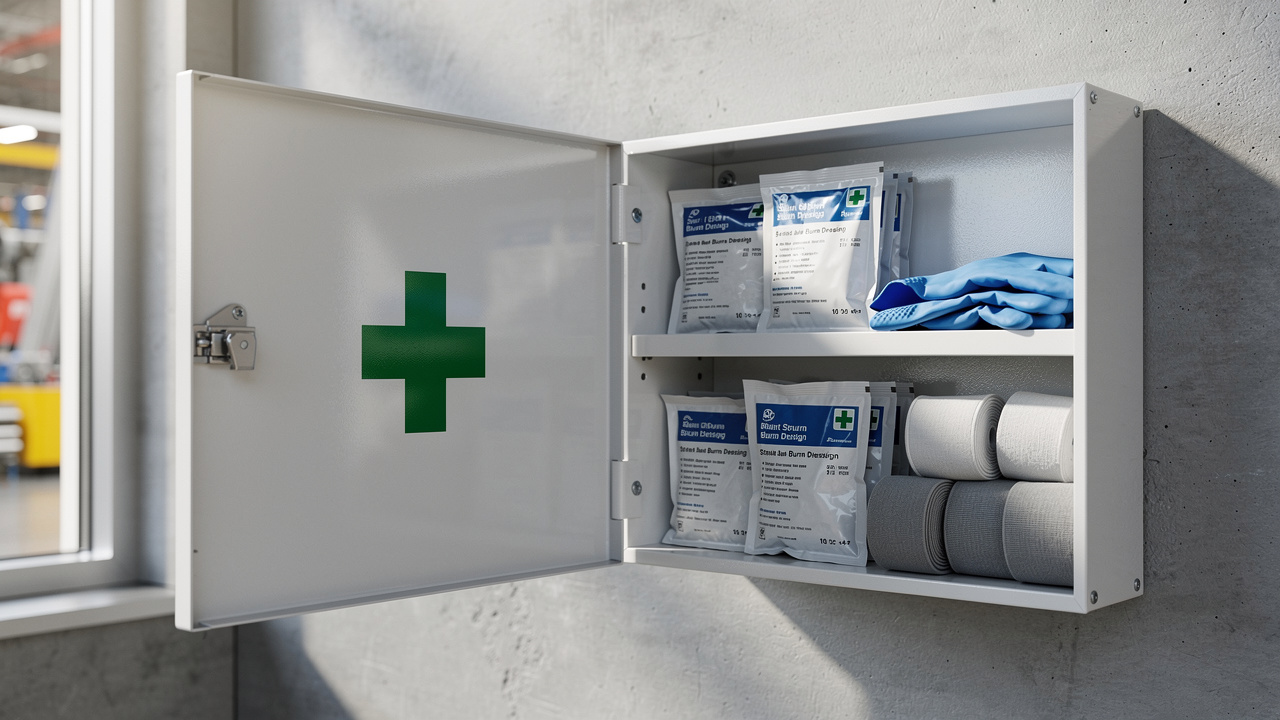
For most offices, retail sites, and lower‑risk workplaces, a base set works well. That usually means sterile, non‑adherent burn pads in small and medium sizes plus elastic wraps to hold them in place. These items fit easily inside ANSI/ISEA Z308.1 Class A or Class B kits and support OSHA’s call for adequate first aid.
Higher‑risk operations such as foundries, heavy manufacturing, food processing with hot oils, or industrial kitchens may need more. Alongside the base set, they often add:
Larger burn pads for torso and limb coverage
A limited number of antimicrobial dressings specified in local protocols
Wound packing strips or advanced dressings for use under clinical advice
In multi‑national groups, using the same CE certified burn dressing in the EU and US sites can make training and stocking simpler. Staff traveling between locations see familiar products and instructions, which cuts confusion during incidents.
Labeling matters as much as product choice. Look for clear pictograms, plain language, and simple instructions that fit your written burn response procedures. That way, non‑clinical first aiders know when to cool, when to apply, and when to hand over to EMS or a clinic.
Practical Deployment, Placement, Training, And Restocking
Good products only help if staff can reach and use them when seconds count. Placement, training, and restocking turn dressings into real‑world readiness.
Consider these practices:
Place burn dressings where burns actually occur, such as weld bays, kitchens, boiler rooms, and near high‑risk machinery, not just in a front office kit.
Integrate their use into first aid drills that cover cooling times, correct pad size, wrap tension, and monitoring until medical care arrives.
Train supervisors and designated first aiders to check expiry dates and packaging integrity when they perform broader safety inspections.
Build a simple schedule for inspections and shelf‑life checks, and record restocking, so you avoid empty hooks or expired stock when a burn happens.
Where you work with third‑party service providers to maintain cabinets or vending systems, confirm that their replenishment programs use consistent product ranges and keep CE and ANSI references on file for your records.
How Can First Aid Longs Support You With CE‑Standard Burn Readiness?

Specialist partners can help you blend CE‑marked dressings with OSHA and ANSI guidance so your burn care is both practical and defensible. That support matters across construction sites, manufacturing, logistics, hospitality, education, and more.
First Aid Longs brings decades of experience as an in‑house first aid manufacturer serving organizations that follow OSHA 29 CFR 1910.151(b) and ANSI/ISEA Z308.1‑2021, in a regulatory landscape where substance-based medical devices in wound care continue to evolve alongside therapeutic innovation. While its documented regulatory focus centers on US standards, the company works with clients that also rely on CE‑marked products, so burn care programs can reflect both EU‑grade devices and US expectations.
Standards‑Based, Scalable Burn‑Care Support From First Aid Longs
Since 1996, First Aid Longs has designed and built first aid kits and components around written standards instead of guesswork. Its lines align with ANSI/ISEA Z308.1‑2021 Class A and Class B kits, which many safety managers use as their benchmark for OSHA’s adequate supplies rule.
The company produces kits for construction, manufacturing, food service, laboratories, schools, marine use, sports, and more. Each kit can be configured to include appropriate burn dressings, including options that match the performance of a CE certified burn dressing in the EU where clients request that level of assurance. Cleanroom manufacturing and ISO‑style quality controls support consistent sterility and packaging.
For multi‑site organizations, replenishment and component pack programs help keep hundreds of kits aligned with the same burn care standard. Standing orders and simple reorder codes let local teams refill burn pads and wraps without changing the core configuration. OEM and branding options also allow businesses and distributors to align kit labels and documentation with their internal safety programs.
The platform’s consultative support can extend to:
Reviewing current kit contents against ANSI/ISEA Z308.1 and company policy
Recommending appropriate burn dressing families for each risk profile
Coordinating phased upgrades so older stock is replaced in a controlled way
This type of structured support helps safety leaders sustain burn readiness across changing operations, headcounts, and sites.
Final Thoughts On CE‑Certified Burn Dressings
CE certified burn dressings are not just another logo on a box; they are regulated medical devices under EU MDR with defined technical files, clinical support, and quality systems behind them. For US organizations, that CE mark adds an extra layer of reassurance on top of OSHA, ANSI/ISEA, and, where relevant, FDA clearance.
By understanding the main dressing families, from non‑adherent pads to elastic wraps and advanced interfaces, you can match products to real burn risks in your plants, sites, and venues. Simple checks on certification, labeling, and documentation help you spot real CE markings and avoid look‑alike claims.
Now is a good moment to review where and how burns might occur across your operations, then compare that map to what is actually inside your kits and wall stations. Filling gaps in product type, placement, and restocking rhythm will pay off the first time a serious burn happens. Partners such as the platform can support you in building a consistent, standards‑based burn care program that works across every location you manage.