How do you prove your safety culture and brand values on a UK site when you sit in the US? How do you show staff, contractors, and guests that your logo stands for more than sales? How often do you link success, lower incident rates, and reputation to the way you handle minor injuries? For many organizations, branded first aid kits in UK locations offer a simple, visible link between safety and brand promise.
A custom branded first aid kit manufacturer designs, fills, and prints kits so they match your logo and local rules. When those kits are aligned with UK Health and Safety Executive guidance and British Standards, they support compliance and real incident response at the same time. In this guide you will see why these kits matter, which types UK sites use, how to choose them, and how a specialist like First Aid Longs can support a reliable program.
Why Branded First Aid Kits Matter For Your UK Operations

Branded first aid kits matter for UK operations because they support compliance, risk control, and trust in your name. When you standardize these kits, you give staff clear tools for minor injuries while signaling that safety is part of your brand.
In the UK, employers must provide adequate and appropriate first aid. Many safety teams align kits with BS 8599-1:2019 for workplaces and BS 8599-2:2014 for vehicles so they match familiar guidance from bodies such as the British Standards Institution and the Health and Safety Executive. If a cut, burn, or strain happens, a clear, well stocked kit reduces severity and disruption. That supports both your lost time metrics and your duty of care.
Key benefits include:
Branded kits help you meet expected first aid standards across offices, warehouses, and plants. They make boxes easy to spot, reassure visitors, and show auditors that your approach is planned, not pieced together from retail items. Providers such as St John Ambulance and the British Red Cross promote similar content lists, so aligning to those patterns keeps your teams in step with UK practice.
Kits with your logo become durable reminders of your values in meeting rooms, gyms, and shop floors. Staff see your name on something designed to help them on a bad day, not just on marketing banners. Over time that shapes how they talk about your organization, especially when contractors, inspectors, and customers notice aligned, professional first aid across sites.
Standardized kits also make training easier. First aiders know what to expect inside each box, wherever they are on site, which cuts down hesitation and confusion during incidents.
For US leaders running UK operations, this mix of compliance support and brand reinforcement is attractive. One purchasing project gives you years of visible safety presence in high traffic, high trust spaces.
What Types Of Branded First Aid Kits Do You Need In The UK?

The main types of branded first aid kits you need in the UK cover workplaces, vehicles, portable use, and special risks. A blended set of these kits helps your sites match real hazards rather than using one generic box everywhere.
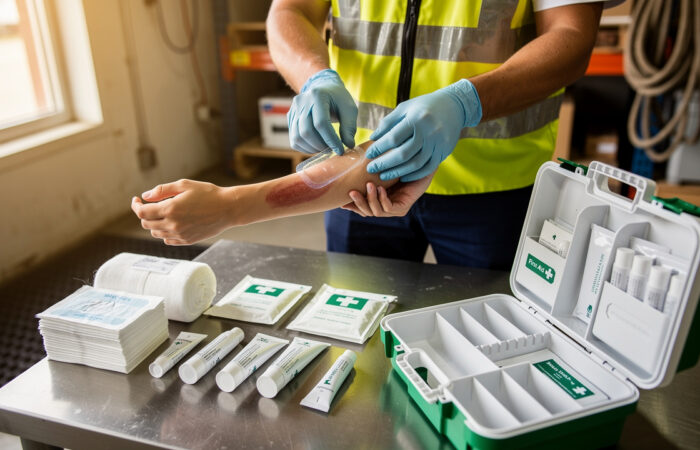
Workplace kits sit at the center of first aid in most offices, factories, and stores. They often follow BS 8599-1:2019 sizing for low, medium, or higher risk settings. Suppliers such as St John Ambulance offer versions in wall mounted boxes and grab bags that work well once branded with your logo and safety message.
Vehicle and travel kits support drivers, sales teams, and field engineers who spend hours on the road. Higher spec models align with BS 8599-2:2014 for cars, vans, and small buses. UK promotional ranges, including MyKit Car First Aid Kit and MyKit Travel Plus, can carry your colors while still giving basic help for roadside cuts and minor trauma.
Portable grab bags suit construction supervisors, agriculture teams, event stewards, and security patrols. These bags move with the person into remote plots, loading yards, stadia, or hotel grounds. A high visibility printed bag is easier to find in a hurry than a plain box stored in a cabin that no one can reach in time.
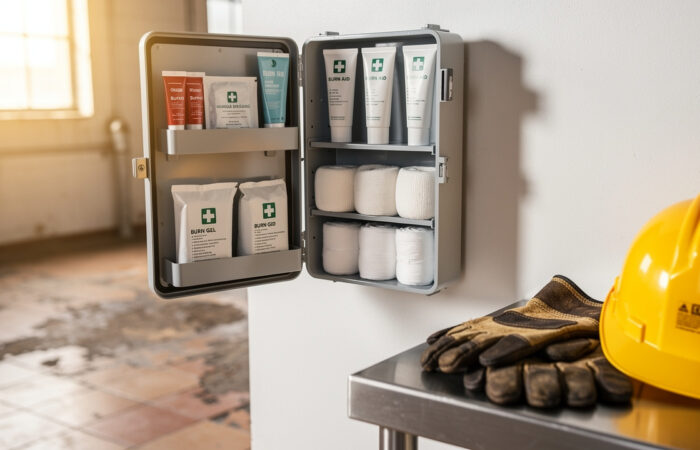
Specialist and mini kits target specific risks and promotional needs. Burns kits sit beside fryers, weld points, and ovens in food production and garages. Pocket plaster packs, keyring CPR masks, and mail size mini kits work for gyms, schools, and remote staff, and they act like long life business cards that people actually keep.
Across UK operations, most organizations combine these types, rather than relying on a single workplace box, so every task and location has something suitable.
To decide what mix you need at each site, consider:
The type of work carried out (office, warehouse, manufacturing, retail, hospitality, transport)
The number of people on site at peak times, including contractors and visitors
The distance between work areas and possible obstacles such as security gates or stairs
Any special risks such as hot surfaces, chemicals, heavy lifting, or sharp tools
How To Choose The Right Branded First Aid Kits For UK Sites

Choosing the right branded first aid kits for UK sites starts with a clear view of risk, headcount, and layout. Your goal is simple: put suitable kits within a short walk of the hazards that can hurt people.
Begin with a basic first aid needs assessment for each location. Offices with desk based work and small visitor numbers might use smaller BS 8599-1 style kits per floor. Construction projects, logistics hubs, and manufacturing plants usually need larger kits in multiple zones, plus burns or trauma kits where hot processes, chemicals, or moving machinery increase harm potential.
When assessing needs, walk your sites and note:
Where people spend most of their time
Where visitors and contractors enter and sign in
Areas with past incidents or near misses
Places where access might be slow in an emergency
Next, look closely at contents quality and packaging. Reputable suppliers follow patterns used by groups such as St John Ambulance, with sterile plasters, dressings, bandages, eye pads, gloves, wipes, scissors, and a clear guidance leaflet. For fleets, choose vehicle kits aligned with BS 8599-2:2014 and add personal mini kits for lone workers who may be far from the main box.
Also think about design details such as:
Clear labeling and printed icons so non native speakers can find items quickly
Durable cases that withstand damp, dust, and transport vibration
Tamper tags or check seals that show at a glance if kits have been opened
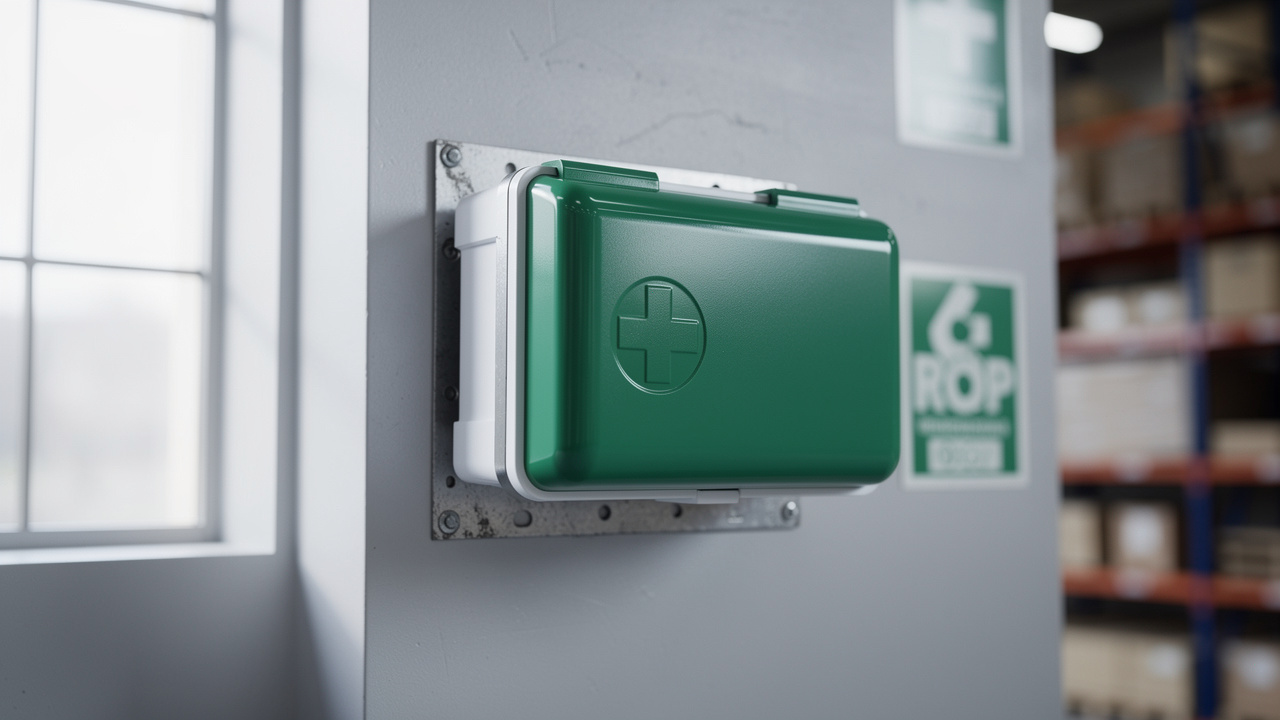
Wall brackets and signs so boxes do not get moved or hidden behind furniture
Finally, plan maintenance by assigning checks, keeping simple logs, and using refill packs so branding and contents stay consistent across sites. A short checklist and a standard refill order form make it easy for site managers to keep every kit ready without overbuying spares.
How A Specialist Manufacturer Like First Aid Longs Supports Your UK Kit Program

A specialist manufacturer like First Aid Longs helps you move from ad hoc buying to a planned, consistent UK kit program. Instead of sourcing boxes, contents, and printing from separate vendors, you work with one team that manages the full build.
This manufacturer runs in house production with 100K Class Cleanroom facilities, so filling plasters, dressings, and eyewash stays under tight control. OEM and ODM options let your safety group choose every content item or lean on expert layouts linked to OSHA and ANSI guidance while still meeting UK expectations. Because capacity covers both pilot runs and large global rollouts, you can test a design in one region, then extend it across UK warehouses, plants, and offices without starting over.
Typical support from a specialist can include:
Joint review of your current kits against BS 8599 patterns and site risks
Recommendations for workplace, vehicle, portable, and specialist kits by site type
Custom case colors and print to match brand guidelines and safety signage
Standard refill packs so restocking is quick and consistent
Batch tracking and documentation to assist with audits and quality checks
For US based teams, having one point of contact for UK compliant, branded kits removes guesswork about local expectations and helps maintain a consistent standard across all locations.
Conclusion

This conclusion brings the main messages together for your cross border safety planning. Branded first aid kits link legal duty, everyday risk control, and the story your name tells on each UK site. When every office, warehouse, and vehicle carries a clear, consistent kit, you reduce confusion and support faster, calmer responses to minor incidents. That, in turn, helps protect people, uptime, and reputation.
A planned program also saves time for operations and health and safety teams. Instead of chasing retail boxes, you work from a standard range tied to BS 8599 guidance, mapped to each risk level, and supported by refill packs. By reviewing your current stock, spotting gaps on simple site plans, and then partnering with a specialist manufacturer such as First Aid Longs, you can shift from scattered kits to a stable, branded system that works across all your UK operations.