
Workplace burns from hot oil, steam, tools, and chemicals happen every week across factories, kitchens, and gyms. Many first aid kits include aloe vera gel for burns, yet staff often treat it as a gentle home remedy. That belief can push cooling with water or proper triage into second place. In a busy shift, that delay matters for pain, healing time, and recordable injury risk.
In reality, research shows aloe-based gels can help small, shallow burns heal faster and feel better, but they are not a cure-all. This article explains what clinical studies found about aloe vera gel for burns, how those findings apply to real workplaces, and where the limits sit. You will see when aloe vera is good for burns, when it is not enough, and how to fold it into OSHA friendly first aid plans.
By the end, you can tighten your burn protocol, train first aiders with clear steps, and review the products on your shelves. Start with the evidence so staff understand why aloe helps in some cases and not others. That shared understanding makes it easier to set clear policies.
Key takeaways
You may not have time to read every section. The points below highlight what evidence says about aloe vera in simple terms. Use them as a checklist while you review your own burn kits.
Aloe vera gel for burns can shorten healing time for small first and second degree injuries when used after proper cooling. The gel cools tissue, keeps the wound surface moist, and can reduce stinging discomfort. That means less downtime and better comfort for workers with minor burns.
Aloe alone is never enough for deep, large, chemical, or electrical burns that need rapid medical care. Trying to use aloe as the main treatment in those cases can hide serious damage and delay help. Clear escalation rules must always override any plan to apply more gel.
Workplaces get the best results when aloe-based burn gels sit inside written first aid protocols and standard kits. Staff training explains step-by-step use, safe limits, and warning signs to watch. Reliable suppliers provide medical-grade formulas and package sizes that match each area of your site.
What does the evidence say about aloe vera gel for burns?

Evidence on aloe vera gel for burns shows real benefits for small partial-thickness injuries, but it does not replace modern burn care. So the short answer to is aloe vera good for burns, and to does aloe vera gel help burns, is yes for minor cases within clear limits. Research on aloe vera gel utilization for skin wound healing found that matched burn areas treated with aloe gel healed several days faster than areas covered with plain petrolatum gauze. For safety managers, this points to a useful tool for minor burns, not a stand-alone cure.
Key clinical findings on aloe vera gel for burns
A clinical trial followed 27 patients who had partial-thickness burns similar to many second degree scalds seen in kitchens and workshops. Each patient had 2 comparable burn zones, one treated with aloe vera gel and the other with petrolatum gauze dressing. On average, the aloe-treated areas healed in about 11.9 days, while the petrolatum areas took about 18.2 days to close. That gap of nearly a week is meaningful for pain, infection risk, and lost time at work.
Researchers also looked at tissue samples from the healing burns under a microscope. They saw earlier epithelialization, meaning faster regrowth of the outer skin layer, in the aloe gel areas. Side effects were rare and mild, limited mostly to brief discomfort or stinging in a few cases. No serious complications were linked to the aloe treatment in this study.
Benefits and limits you should know
Taken together, the science suggests several ways aloe gel may support burn healing, including reduced inflammation, better blood flow, a moist wound surface, and a mild antimicrobial effect. Workers often report that the gel gives a pleasant cooling feel, which can ease distress after the first aid wash. At the same time, the research base is modest, with small samples and older study designs that focus on partial-thickness burns only. That is why aloe should stay a supportive tool inside a broader, guideline-based burn protocol rather than a cure for every injury.
When is aloe vera gel good for burns – and when is it not enough?

Aloe vera gel for burns is well suited to first degree burns and small superficial second degree burns on low risk body areas. It is not enough for deep, large, chemical, or electrical burns that can threaten life, limbs, or long term function. For workplace policies, this means aloe belongs in the same bucket as bandages and over the counter pain relievers. It helps with discomfort and recovery in minor cases, while more serious burns move straight to emergency care.
Types of burns where aloe vera gel can help
First degree burns affect only the top layer of skin, so the area looks red, dry, and painful but has no blisters. These burns often happen from brief contact with hot equipment, quick splashes of hot drink, or mild sun exposure during outdoor work. With good cooling and clean care, they usually heal within 3 to 7 days without scarring. In this setting, adding aloe vera gel for burns after cooling can reduce pain and dryness while the skin repairs itself.
Superficial second degree burns reach a bit deeper and often form clear blisters, but the base is still pink and very sensitive. When these burns are under about 3 inches across, clean, and located on arms, legs, or small torso patches, many companies treat them as minor injuries. Healing often takes 10 to 21 days, and the evidence suggests aloe can shorten that window when used correctly. For small hand or foot burns that do not affect grip or walking, aloe-based care may also be reasonable if movement stays normal.
Burns where aloe vera should not be your primary treatment
Aloe gel should never be the main response for third or fourth degree burns, where skin may look white, black, charred, leathery, or even numb. It is also the wrong focus for burns bigger than the injured worker’s palm, or for any burn on the face, eyes, ears, genitals, or across major joints. For true electrical or chemical burns, including cases where the skin looks mild, the priority is long flushing with water and immediate medical review, not aloe vera for chemical burns. If a burn that first seemed minor later shows spreading redness, pus, foul odor, fever, or rising pain, stop gel use and send the worker for clinical assessment.
How to use aloe vera gel for minor burns at work (step-by-step)

Using aloe vera gel for burns safely at work follows a clear sequence that starts long before the bottle comes out. First, stop the heat source and cool the burned area under clean, cool running water for about 20 minutes. Then clean gently, assess depth and size, and decide whether the burn meets your internal rules for minor care. Only when the injury is small and superficial should staff apply aloe gel, cover the area, and begin regular monitoring and documentation.
Safe first-aid steps before you reach for aloe vera gel
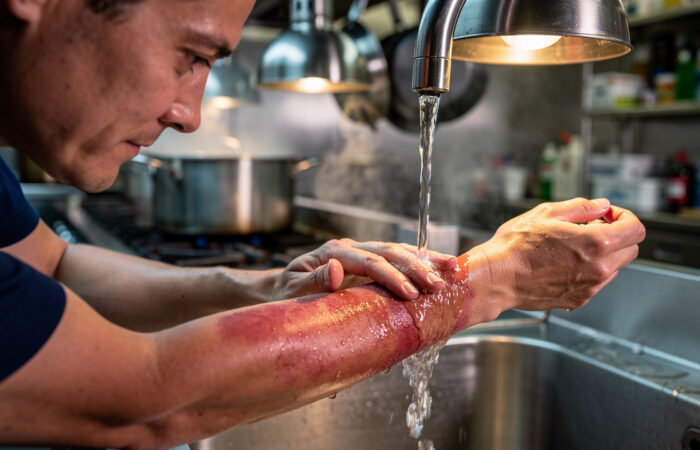
When a burn happens, the very first priority is to stop exposure. Move the worker away from the heat or chemical and remove any hot or soaked clothing that is not stuck to the skin. Next, place the burned area under cool running tap water, not ice or very cold water, for about 20 minutes. If a sink is not nearby, use clean, cool, wet cloths and refresh them often so the area keeps losing heat.
After cooling, wash the burn gently with mild soap and water, without scrubbing or breaking any blisters. Remove rings, watches, or tight clothing around the area before swelling makes that impossible. Then take a quick but structured look at depth, size, and location to see if the burn fits your aloe eligible criteria. Any doubt about severity should trigger a call to occupational health, urgent care, or 911, not another layer of gel.
Applying aloe vera gel and dressing the burn
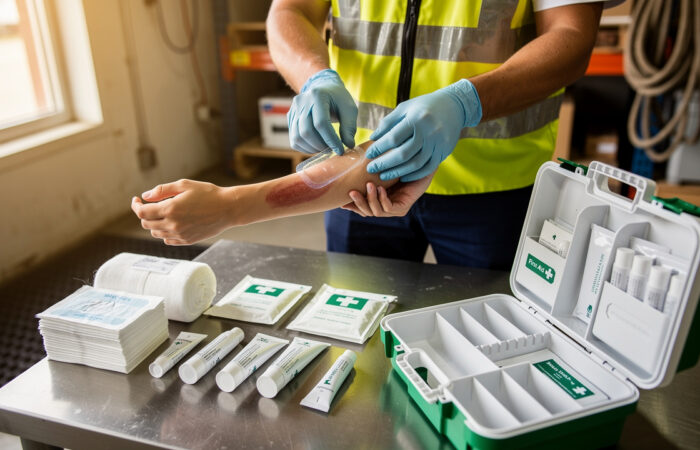
Once you decide the burn is minor, pat the skin dry with a clean cloth or sterile gauze. Choose a medical-grade aloe vera gel for burns or workplace burn gel that is fragrance free, alcohol free, and labeled for first aid use. Apply a thin, even layer that leaves the skin glossy but not caked, so air can still reach the surface. The worker should feel gentle cooling, not sharp burning or itching, and any strong irritation means the gel needs to be rinsed off and the plan rechecked.
If small blisters have opened, company policy may allow a light layer of antibiotic ointment on those spots before covering. Place a sterile, non stick dressing or hydrogel burn pad over the treated area, and wrap it loosely so there is no extra pressure. Avoid fluffy cotton that sheds fibers onto the wound. Recheck the burn at least daily for pain, redness, drainage, and movement, and escalate to medical care if healing stalls or signs of infection appear.
Choosing workplace-ready aloe vera burn products (and where First Aid Longs fits)

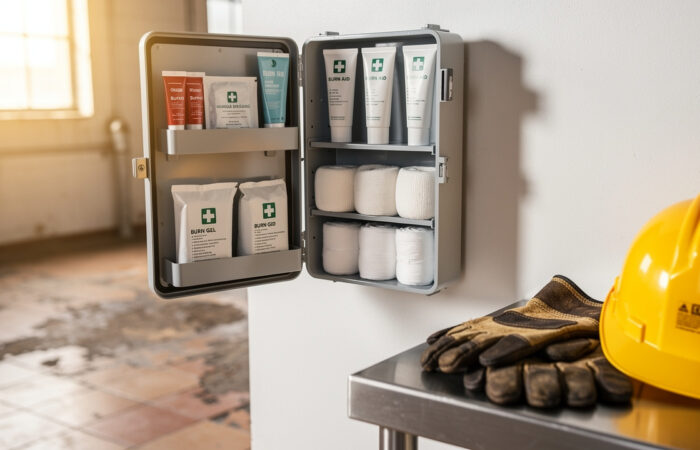
Selecting aloe products for workplace burns means picking gels and dressings that match your risk profile, first aid protocols, and regulatory duties. Look for medical-grade aloe gels with clear labels, high water and aloe content, and no strong fragrances or added alcohol. For multi site operations, it helps to standardize on a small range of compatible gels and hydrogel dressings so training and restocking stay simple. Suppliers that manufacture in controlled facilities and understand OSHA and ANSI first aid expectations, along with NIOSH guidance, can support that standardization across plants, offices, and public venues.
What to look for in aloe vera gel for workplace burns
Before you add or replace aloe products in your first aid cabinets, use a simple checklist so every site stocks gels that are safe and practical. This helps purchasing teams compare different brands and avoid cosmetic products that are better suited to sunburn at home than to workplace injuries. It also supports consistent training across departments.
Product labeling should state that the gel is for first aid or burn care, list aloe high in the ingredient order, and include clear use directions. Transparent labeling makes it easier for staff to pick the right tube in a stressful moment. It also supports auditors who review your kits.
Formulation should be gentle, fragrance free, and alcohol free to reduce sting on open skin. Humectants such as glycerin or propylene glycol can help hold moisture at the surface without feeling greasy. Avoid gels that add strong plant oils or dyes, which may raise the risk of irritation.
Packaging and shelf life need to fit where the gel will live, whether that is a wall cabinet, a forklift kit, or a front desk. Tubes, pump bottles, and single use sachets each have roles, as long as expiry dates are easy to read and stock rotation is simple. Check that the gel works smoothly with non stick dressings and hydrogel pads already in your kits.
How First Aid Longs supports your burn care program
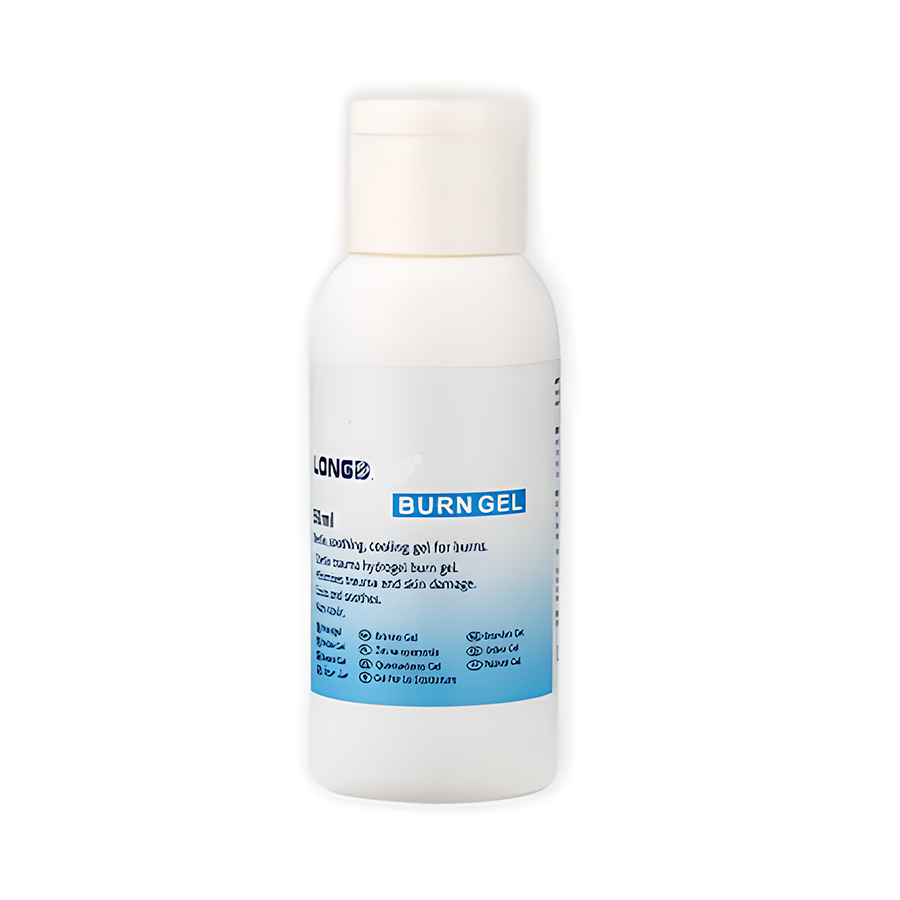
First Aid Longs manufactures workplace burn gels and dressings in its own cleanroom facilities, with formats suited to many settings. Larger 125 milliliter and 50 milliliter bottles suit fixed stations in production lines, commercial kitchens, and automotive bays. Compact 3.5 gram sachets fit high traffic areas such as cafeterias, classrooms, and mobile kits, where single use portions support hygiene. Hydrogel burn dressings and tube based burn relief gel with lidocaine and aloe add options for painful but minor burns and sunburn, helping multi site organizations align products across locations.
Secure Reliable Burn Gel Supplies Today!
Order our high-quality wholesale burn gels made with safety standards to stabilize your healthcare operations.
Putting it all together

Taken as a whole, the evidence says aloe vera gel for burns can help minor workplace injuries heal faster and feel less painful. Those gains only appear when staff still follow proper cooling and cleaning steps first. It fits best with first degree and small superficial second degree burns on low risk areas such as arms and lower legs. Deep, large, electrical, and chemical burns remain medical emergencies that belong in the hands of clinicians, not in the break room first aid kit.
For safety and operations leaders, the practical next step is to review burn incident logs, current first aid kits, and written procedures. Update protocols so they spell out cooling times, simple burn assessment rules, clear aloe eligible criteria, and red flags that trigger escalation. Then align purchasing with those rules, choosing medical-grade aloe gels, hydrogel dressings, and related items from a reliable partner such as First Aid Longs. A short policy review now can pay off in safer responses, fewer recordable injuries, and more confident staff across your sites.