


Workplace burns can look minor at first yet quietly turn into weeks of lost productivity. Understanding burn healing stages by type helps you judge which injuries will settle quickly and which will not. These stages describe how different burns move from early damage through repair and long scar remodeling.
For operations and safety leaders, knowing how thermal, chemical, friction, and sun burns tend to heal guides first aid, documentation, and return to work decisions. It also helps you spot when a “small” blister, chemical splash, or superficial partial thickness burn is drifting off a normal healing path.
This guide explains burn healing stages by type in clear language for real job sites. You will see how depth and cause shape each stage, how blistered and superficial partial thickness burns usually progress, and what that means for duty changes and escalation. First Aid Longs also appears as an example of how specialist burn dressings, gels, and eyewash support safer outcomes.
How burn depth and cause shape healing stages

How burn depth and cause shape healing stages is the starting point for understanding real recovery timelines. Burn depth has more impact on healing time, scarring, and time off work than any other single factor. Cause matters too, because thermal, chemical, friction, and sun injuries tend to damage skin in different patterns and may continue to worsen after the first minutes.
When clinicians and groups such as the American Burn Association describe burns, they focus on degrees that match how much of the skin is damaged. First degree burns damage only the top layer, second degree burns reach into the dermis, and third degree burns destroy the full thickness of skin. A brief touch on a hot tray in a commercial kitchen is very different from a slow chemical soak in a lab sink, even if both cover the same area on the arm.
Burn depth basics from superficial to full thickness
Burn depth basics from superficial to full thickness explain why some wounds heal in days while others need surgery. First degree superficial burns involve only the outer epidermis, so they look red, feel painful, do not blister, and usually peel and clear within about 5 to 10 days without scars. Second degree partial thickness burns reach into the dermis and may be either superficial partial thickness with bright red, moist, very painful skin and thin blisters, or deeper partial thickness with paler, less sensitive areas and thicker blisters that heal more slowly. Third degree full thickness burns destroy the entire skin layer, often look leathery or white, may feel numb in the center, and generally need surgical management of the burn wound and skin grafting, and many workplace injuries have a mix of these depths in one zone.
Common workplace causes thermal, chemical, friction and sun
Common workplace causes thermal, chemical, friction and sun help you link healing patterns to specific tasks and settings. Thermal burns from hot surfaces, molten metal, steam lines, fryer oil, or flames in construction and manufacturing sites often cause first or second degree injuries, though long contact or trapped clothing can push them into deep partial thickness or full thickness damage. Chemical burns from acids, alkalis, solvents, and cleaners in labs, food plants, or automotive bays can keep damaging tissue until fully rinsed away, so what first looks like mild redness may deepen over hours. Friction burns from conveyor belts, ropes, moving belts, or fitness equipment strip away skin and add heat damage, while sun or other ultraviolet burns on outdoor crews, security staff, or sports teams usually start as first degree but can turn into blistered superficial partial thickness wounds with enough exposure.
What are the universal burn healing stages
What are the universal burn healing stages is a question that points to the shared biology under every burn type. All burns move through three broad stages inflammation, proliferation or repair, and maturation or scar remodeling, although the depth and cleanliness of the wound change how long each stage lasts. Shallow, clean burns pass through the early steps quickly, while deep, contaminated, or infected burns may stay stuck in the first stage, a pattern confirmed in a systematic review and meta-analysis of hydrogel dressings, leading to higher infection risk, thicker scars, and longer time away from normal duties.
During inflammation, blood flow increases and immune cells move into damaged tissue to clean up debris and microbes. The proliferation stage follows, when new blood vessels, collagen, and surface skin cells grow in to close the defect. Maturation starts once the surface has closed and continues for months or even years, as collagen is reorganized and scars slowly soften and fade but never fully regain the strength of uninjured skin.
Stage 1 inflammation reaction phase
Stage 1 inflammation reaction phase starts the moment a worker touches a hot surface, chemical, or other source. Blood vessels widen, the area feels hot, turns red, swells, and hurts because chemical signals such as histamine and prostaglandins increase nerve sensitivity. In partial thickness burns, clear or straw colored fluid can collect under the damaged top layer, forming blisters that are often seen in sun and scald burns.
Stage 2 proliferation repair phase
Stage 2 proliferation repair phase usually begins around day 3 once the wound is clean and early swelling settles. Fibroblast cells build granulation tissue, a moist, bumpy, red base made of new collagen and many tiny blood vessels that feed the healing area. At the same time, new skin cells slide in from the edges and from surviving structures such as hair follicles, which lets superficial and superficial partial thickness burns close much faster than deep partial thickness or full thickness wounds that often need surgical help.
Stage 3 maturation remodeling and scar phase
Stage 3 maturation remodeling and scar phase begins after the wound surface has closed yet healing is far from finished. Over weeks and months, early collagen strands that were laid down in a loose, random pattern are broken down and replaced with more organized fibers, and blood vessels slowly shrink so scars flatten and lighten in color. Deeper burns, large wounds, and grafted areas have a much higher chance of raised, tight scars and contractures that limit joint movement, which means managers should factor this long phase into long term job planning, not just the initial closure date.
How burn blister healing stages affect recovery

How burn blister healing stages affect recovery matters because blisters signal a partial thickness injury, which is deeper than simple redness and soreness. Blisters are very common with superficial partial thickness thermal burns from hot liquids and with more intense sun exposure, and they change how each stage feels and looks. Intact blister roofs often protect the tissue underneath, while torn or removed roofs expose raw dermis, increase pain, raise infection risk, and can slow every healing stage.
On a busy manufacturing line, in a hotel kitchen, or in a school science lab, a worker may try to pop or peel a blister so they can keep using a finger or palm. That quick fix often backfires and leads to more downtime, because bacteria from tools, food, and shared surfaces can now reach the moist dermis. Following consistent guidelines recommended by groups such as the Centers for Disease Control and Prevention and the National Institute for Occupational Safety and Health helps keep blistered burns on a safe path.
Some key ways blisters change recovery are helpful to spell out.
An intact blister acts like a natural sterile dressing, so when it stays whole, pain often settles faster and re-epithelialization progresses smoothly under the clear roof in line with normal superficial partial thickness timelines.
A blister that tears or is deliberately opened exposes sensitive dermis, which makes inflammation more intense, lifting pain, swelling, and fluid leakage, and gives bacteria such as Staphylococcus aureus and Pseudomonas aeruginosa an easier way in.
Large or multiple blisters across finger joints, palms, or the sole of the foot can turn simple tasks like gripping tools, walking long distances, or wearing gloves into real challenges, so planning modified duties during the first 1 to 2 weeks is often wise.
What happens during burn blister healing
What happens during burn blister healing lines up with the same three stages, just with a more visible surface story. In the inflammation phase over the first days, fluid collects under damaged epidermis, the area looks bright red and wet, and pain is often intense when touched or when gloves or shoes press on the spot. During proliferation, the blister roof may flatten or start to peel at the edges while new pink skin grows from dermal islands and wound edges, which for small superficial partial thickness blisters usually leads to closure in about 10 to 21 days. In the maturation phase, this new skin at first appears thin and pink, then slowly thickens, becomes less sensitive, and begins to match surrounding color over the next several months.
Practical dos and do nots for blistered burns on site
Practical dos and do nots for blistered burns on site help supervisors protect staff and keep injuries from worsening. After immediate cooling with clean, cool running water, the area should be gently washed and then covered with a non stick or hydrogel dressing that cushions and protects the blister roof. Gloves, tools, shoes, or tight personal protective equipment that rub on the area should be adjusted or swapped to avoid friction that can tear the roof and expose raw tissue. Workers should be told not to pop or peel blisters on purpose and to report red flags such as spreading redness, new or stronger pain after day 2 or 3, cloudy or pus like fluid, fever, or failure to see gradual improvement within a week so that medical review can happen quickly.
Superficial partial thickness burn healing stages and timelines

Superficial partial thickness burn healing stages and timelines are especially important because this depth is very common in kitchens, warehouses, construction sites, and gyms. These burns involve the upper part of the dermis, so they cause brisk pain, bright red moist skin, and thin blisters that respond well to good first aid. If kept clean, cooled, and covered in a moist but not soggy environment, in line with research on moist wound healing strategy and burn recovery time, most heal in about 2 to 3 weeks with little or no lasting scar, but infection or friction can push them toward deeper damage and much longer recovery.
Day by day course of superficial partial thickness burns
Day by day course of superficial partial thickness burns gives you a simple way to picture what is normal. During days 0 to 3, inflammation dominates, so pain is strong, swelling is obvious, and blisters rise over skin that looks red, shiny, and very tender to air, water, and contact. Many workers find sleep and fine hand tasks difficult during this time, and records from organizations such as the Occupational Safety and Health Administration show that even small hand burns can disrupt key tasks when not managed well.
In days 3 to 7, early proliferation brings steady change as pain starts to ease, intact blister roofs feel less tense, and new pink tissue shows at the edges or under any small areas where the roof has lifted. From days 7 to 21, proliferation merges into early maturation, the wound area shrinks, and most small superficial partial thickness burns on the hand, arm, or shoulder close by 2 to 3 weeks. After 3 weeks the thin, pink new skin enters the longer maturation phase, when it is still fragile, easily damaged by sun or friction from tools and straps, so extra protection and gentle moisturizers are needed at work.
What you can do at each stage to support safe healing
What you can do at each stage to support safe healing turns these timelines into daily action.
In the first days, focus on correct cooling with running water, careful cleansing, and non adherent or hydrogel dressings, and remove jewelry or tight clothing early before swelling traps them against skin.
During the proliferation stage, keep the wound clean and moist with planned dressing changes, avoid duties that expose the area to heat, chemical splash, or repetitive rubbing, and record progress with simple notes or photos when allowed.
In maturation, allow breathable personal protective equipment when possible, schedule brief breaks for workers to stretch stiff joints and reapply fragrance free moisturizer and sun protection on new skin, and seek prompt burn center or clinician review if a wound has not closed by 3 weeks or if redness and pain begin to rise again.
How healing stages differ by burn type thermal, chemical, friction and sun

How healing stages differ by burn type thermal, chemical, friction and sun matters because the same looking redness today can behave very differently tomorrow. Thermal and sun burns often have a clearer depth pattern right away, a distinction outlined in current advancements in wound healing research, while chemical and friction injuries may deepen or reveal more damage over hours or days. For employers in sectors the National Fire Protection Association lists as high risk such as manufacturing, construction, and hospitality, having simple protocols for each burn type reduces the chance that an early stage injury turns into a complex claim.
Thermal and sun burns with fast onset and often clear depth
Thermal and sun burns with fast onset and often clear depth are easier to judge in the first minutes. A splash of boiling water or a brief touch on a welding torch usually shows as either red, non blistered skin that behaves like a first degree burn or as a blistered area that fits a superficial partial thickness pattern. Healing stages for these burns are often predictable, with first degree injuries moving through inflammation in a few days and then quiet maturation over a week or two, and small superficial partial thickness burns closing in about 10 to 21 days if kept clean and protected. Sun burns on outdoor crews and security staff start as first degree but can shift into blistered partial thickness after long or repeated ultraviolet exposure, so cooling with water, avoiding oil based home remedies, and using simple products endorsed by groups like the American Academy of Dermatology help protect the healing stages.
Chemical and friction burns with deeper risk and slower healing
Chemical and friction burns with deeper risk and slower healing demand more caution for the same visible size. Chemical burns from alkalis, strong acids, or solvents keep damaging tissue while the agent remains on the skin, so inflammation can last longer, swelling can be more severe, and deeper layers may be harmed than first appear in the first hour.
Healing stages for chemical burns often show a longer inflammation phase, slower proliferation, and more chance that areas convert from partial thickness to deep partial thickness or even full thickness if flushing is short or incomplete. Friction burns, such as those from moving belts in a warehouse or treadmills in fitness centers, combine scraping with heat, so outer skin can be stripped off, leaving a moist, exposed dermis with high infection risk even though the worker may feel only moderate pain.
First aid for chemical burns focuses on long, thorough flushing with clean water, or eyewash in the case of eye exposure, followed by non stick coverage and early medical review because damage can continue for hours. For both chemical and friction burns, low pain does not always mean a shallow injury, so pale, leathery, or numb zones should be treated as possible deep partial thickness or full thickness wounds, consistent with clinical diagnosis and treatment guidance for burns, and sent urgently to an emergency department or burn center for assessment.
How First Aid Longs supports better outcomes across burn healing stages

How First Aid Longs supports better outcomes across burn healing stages centers on giving workplaces the right burn care tools in the right places. The company manufactures hydrogel burn dressings, burn relief gels, eyewash stations, and ANSI aligned first aid kits that match OSHA expectations and real burn risks in factories, kitchens, labs, and outdoor sites. By pairing these supplies with stocking plans and replenishment support, employers can apply best practice first aid across inflammation, proliferation, and maturation stages rather than improvising with unsafe home remedies or empty boxes.
Matching burn care supplies to stages and burn types
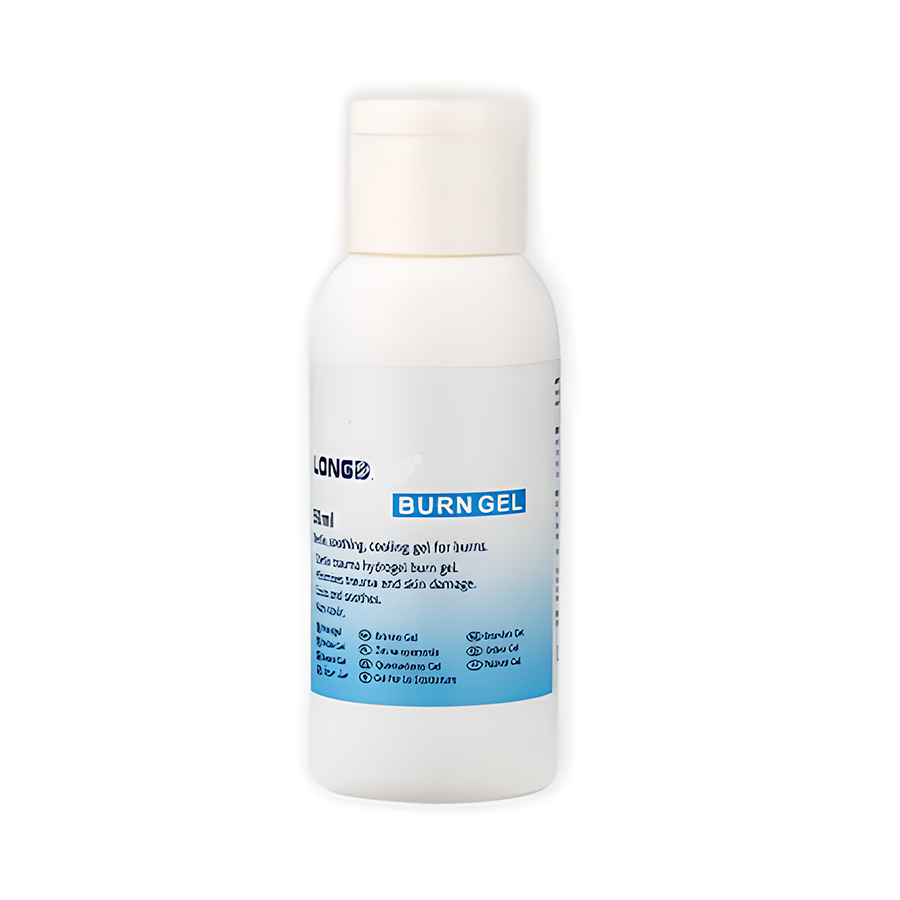
Matching burn care supplies to stages and burn types helps safety teams design kits that reflect their actual hazards. Hydrogel burn dressings made by the company provide a high water, cooling layer that soothes minor thermal and sun burns during the inflammation phase, removing residual heat while forming a low friction barrier that protects fragile blister roofs and new epithelium. Burn relief gel packets and tubes that include lidocaine for pain, along with aloe and glycerin for moisture, give quick comfort and help keep superficial and superficial partial thickness burns from drying and cracking, which suits high traffic or guest facing areas in hotels, schools, and fitness centers.
Eyewash stations and sterile solutions placed in labs, automotive bays, and chemical processing areas are essential for immediate response to chemical splashes, since long irrigation is the single most helpful step for limiting deeper damage and later scarring. Class A and Class B first aid kits stocked with hydrogel pads, burn gels, sterile gauze, and gloves, plus replenishment programs and component packs, help multi site organizations keep supplies in line with OSHA 29 CFR 1910.151 and ANSI guidance, cut response time, and adapt burn care contents to the risk profile of each specific facility.
Secure Reliable Burn Gel Supplies Today!
Order our high-quality wholesale burn gels made with safety standards to stabilize your healthcare operations.
Summary
Summary brings together the main ideas on how different burns move through inflammation, proliferation, and maturation. All burns share these biological stages, yet depth and cause change how long each stage lasts, how much pain and infection risk workers face, and how likely scars and contractures are to affect long term function. For operations managers, facility leaders, and health and safety officers, understanding this pattern supports better first aid decisions, clearer documentation, and more realistic plans for modified duties and return to full tasks.
Superficial partial thickness and blistered burns from hot liquids or intense sun often heal within 2 to 3 weeks if cooled early, kept clean, and protected with non stick or hydrogel dressings, leaving only mild or no scars. Deeper partial thickness and full thickness burns, especially from chemicals and friction, often stay longer in inflammation, need specialist care, and carry much higher scarring and contracture risk. Clear, written protocols for thermal, chemical, friction, and sun burns, supported by quality burn gels, dressings, eyewash, and compliant first aid kits from partners such as First Aid Longs, can limit complications, reduce downtime, and protect both workers and organizations.


