Why do so many businesses fail OSHA first aid checks even when they’re sure they’re covered? And what actually separates a company that buys one kit and forgets about it from one that stays compliant year after year? The honest answer usually comes down to one thing: an ongoing OSHA first aid kit service instead of a single purchase.
A managed first aid kit service isn’t just a box of bandages sitting in a break room. It’s a system that covers supply, restocking, inspection, and documentation, all tied to the OSHA and ANSI rules that govern workplace readiness. This article walks through what these providers actually do, what you should expect to pay, and how to match a kit to your workforce size and industry. By the end, you’ll know whether your current setup would hold up to an inspector’s checklist or leave you exposed.
What Does An OSHA First Aid Kit Service Actually Do?

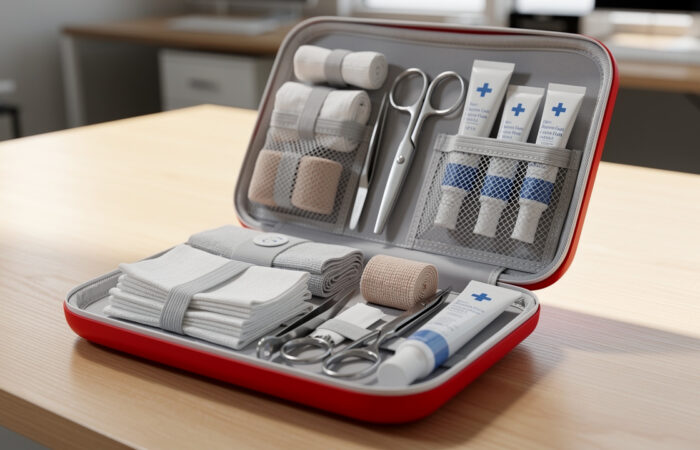
An OSHA first aid kit service handles four jobs at once: the initial kit build, the scheduled restocking, the inspections, and the compliance paperwork that proves all three actually happened. It starts by assembling or supplying a kit that matches your workforce size and hazard level, then keeps that kit stocked through a replenishment schedule rather than leaving you to notice gaps on your own. OSHA doesn’t certify or approve any specific kit, which trips up a lot of buyers who assume a product label settles the question. What actually matters is whether the kit meets 29 CFR 1910.151(b), the rule requiring adequate supplies be readily available, and whether its contents line up with ANSI Z308.1-2021, a standard outlined in detail within the official workplace first-aid program guide covering best practices for employers.
A service provider worth using will:
Track expiration dates on dressings and medications
Flag damaged packaging before it becomes a problem
Keep a record showing when each kit was checked and by whom
That documentation matters just as much as the supplies themselves, since an inspector asking for proof of maintenance won’t accept a verbal assurance that someone “probably checked it last month.”
Replenishment And Refill Programs Explained
Refill programs are built to mirror the kit class they’re replacing, so a 25-person ANSI A kit typically gets a refill pack sized around 78 pieces, while a 50-person ANSI B kit often needs roughly 208 pieces to bring it back to full strength. This matching matters because swapping in a mismatched refill can quietly drop a kit below the ANSI minimum without anyone noticing until an audit.
For organizations running multiple sites, First Aid Longs offers replenishment programs and component packs built specifically to keep hundreds of kits aligned across locations. Instead of each site manager guessing what to reorder, a planned refill schedule keeps consumables flowing on a fixed cycle, which cuts down on shortages and the scramble that follows an unexpected inspection.
Which OSHA First Aid Kit Class Does Your Business Need?

Choosing the right class comes down to matching ANSI A, B, or their enhanced A+ and B+ versions to your actual hazard level and headcount, and getting this wrong is one of the most common compliance gaps employers run into. ANSI A kits are built for lower-hazard environments like offices, retail stores, and corporate settings where injuries tend to be minor cuts, small burns, or splinters. ANSI B kits step up both quantity and variety of supplies for higher-hazard settings such as manufacturing plants, warehouses, and construction sites, where crush injuries, deeper lacerations, and chemical exposure are more realistic risks.
The A+ and B+ designations simply mean a kit exceeds the baseline requirements of its class, usually through added quantities or supplementary trauma items. Sizing then layers on top of class selection, with common configurations covering 10-person, 25-person, and 50-person crews, and the right choice depends on how many employees are on site at any given shift rather than your total payroll. A single large kit works fine for a compact office, but a sprawling warehouse or a construction site with crews spread across several zones often does better with multiple smaller kits placed close to where people actually work, since ANSI guidance assumes a kit should be reachable within a few minutes, not a long walk across a facility.
Specialized Kits For High-Risk Industries

General-purpose kits cover everyday cuts and scrapes, but construction crews, manufacturing plants, and similar environments often need supplemental trauma supplies on top of the basics. Hemostatic gauze, tourniquets, and Stop the Bleed style supplies address severe bleeding, which remains one of the few injury types where minutes genuinely decide outcomes, making these additions worth the extra cost for higher-risk sites.
Healthcare facilities, schools, and gyms face a different exposure risk, since contact with blood or bodily fluids calls for bloodborne pathogen cleanup kits and CPR barrier devices to protect the responder. The company produces commercial and business-grade kits for manufacturing plants, warehouses, and construction firms that include reliable tourniquets, quality bandages, and trauma supplies built for demanding conditions rather than light office use.
How Much Does A First Aid Kit Lease Or Service Cost?
Pricing for an OSHA first aid kit service ranges widely, running from around $20 to $60 for smaller plastic kits up to $200 or more for large ANSI A+ or B+ metal cabinets and shelved industrial stations. Several factors push that price up or down:
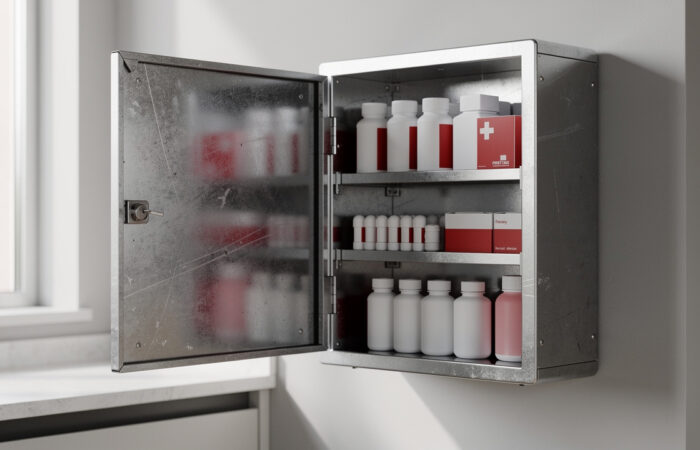
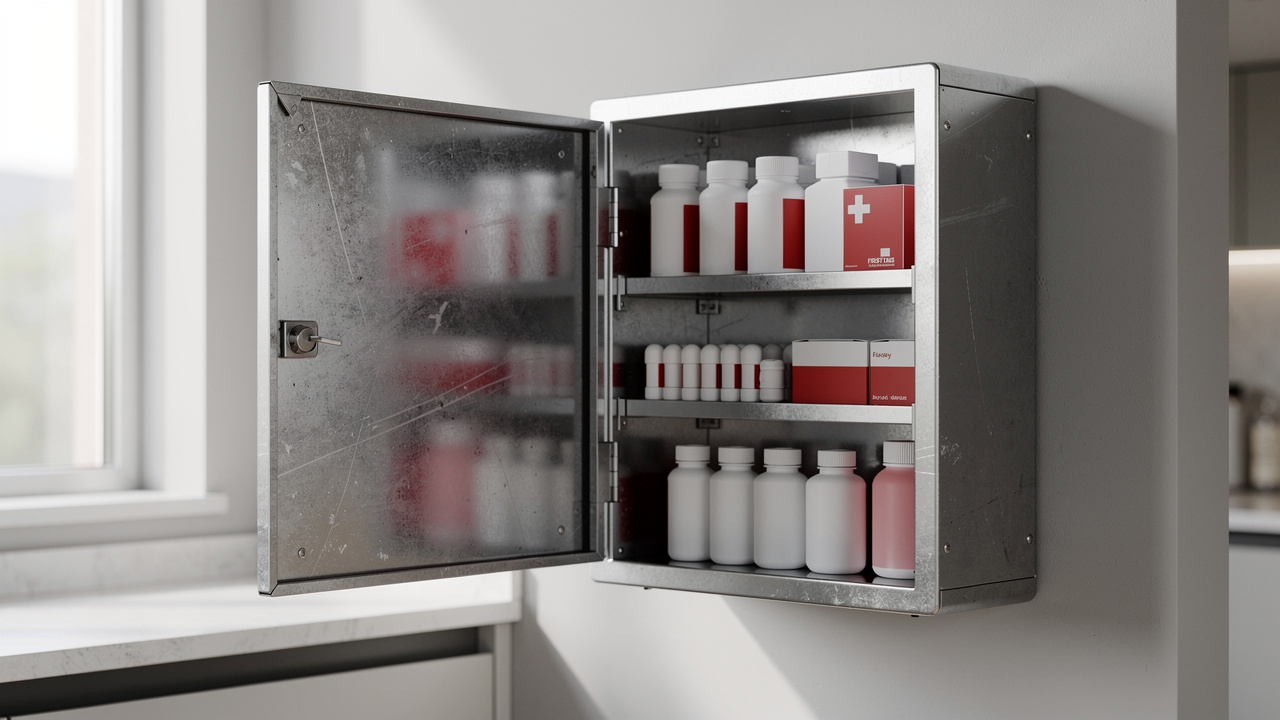
Case material: metal cabinets cost more than plastic cases but hold up better in fixed, wall-mounted installations
Gasketed closures: these add a bit to the price, but they’re worth it for construction sites, food production, and outdoor work where dust and moisture would otherwise ruin sterile supplies
Piece count: a 25-person ANSI A kit with around 79 pieces costs far less than a 50-person ANSI B kit carrying roughly 209 pieces
Specialized add-ons: bleeding control supplies or naloxone kits are often priced separately unless bundled into a managed plan
Whether refills and inspection visits are included in the quoted price makes the biggest long-term difference, since a cheap kit with no restocking plan ends up costing more once you factor in emergency reorders and compliance gaps.
| Kit Type | Typical Person Count | Approximate Piece Count | Rough Price Range |
|---|---|---|---|
| Plastic ANSI A Kit | 25 people | 79 pieces | $20 to $60 |
| Metal ANSI B Kit | 50 people | 209 pieces | $100 to $200+ |
| Multi-Shelf ANSI A+/B+ Station | 50+ people | Varies by shelf count | $200 and up |
Buying Wholesale Vs. Paying Retail Per Kit
Businesses buying one kit at a time through retail channels almost always pay more per unit than those ordering through wholesale or managed refill programs. That gap grows fast once you’re outfitting 10 or more employees, multiple departments, or several locations, since bulk pricing spreads fixed costs across a larger order and refill programs avoid the markup that comes with repeat one-off purchases.
First Aid Longs offers direct manufacturer pricing with volume discounts, and its kits are available without the very high minimum order quantities some suppliers require. That structure works for a large manufacturing client ordering hundreds of units just as well as it does for a smaller operator who only needs a handful of kits for one site.
Why Choose A Manufacturer-Backed Supplier Like First Aid Longs?
Working directly with a manufacturer rather than a reseller changes both the price and the reliability of what shows up at your door. The company runs in-house manufacturing through a 100K Class Cleanroom facility, which shortens lead times, trims out the markup layers a reseller adds, and keeps quality consistent batch after batch rather than depending on whichever supplier happened to be cheapest that month.
Beyond manufacturing, it offers customization across branding, labeling, color, and item selection, letting businesses swap specific components in or out to match their actual hazard profile, a principle echoed by emergency medication kit research showing that well-matched supply configurations improve real-world outcomes. That flexibility matters across construction, manufacturing, healthcare, and education, since a kit built for a hospital floor looks nothing like one built for a job site, and a manufacturer with cleanroom production can adjust configurations without the long reorder cycles a reseller would need.
How Do You Stay Compliant Between Service Visits?

Staying compliant between scheduled service visits means catching problems before they turn into a failed inspection, and that takes a routine, not a one-time effort. A quick monthly visual check, looking for missing items, expired products, or a damaged case, catches most issues early, while a full formal inspection should happen at least once a year for every kit on site. Higher-hazard areas, like a manufacturing floor or a busy construction zone, do better on a quarterly cycle given how often supplies get used up.
Assigning one responsible person to each kit removes the ambiguity that leads to neglected supplies, since nobody can assume someone else checked it. Keeping a written log of inspection dates, who performed the check, and what got fixed also gives you something concrete to show if OSHA or an insurer ever asks for proof that your program actually runs on schedule.
To Sum Up
Staying compliant really comes down to three things working together: matching your ANSI class to your actual workforce and hazard level, keeping supplies current through a regular service schedule, and writing down every inspection and restock so you can prove it later. Skip any one of those pieces and you’re exposed, even if the kit sitting on the wall looks fine from a distance.
The cost of getting this wrong, five-figure OSHA penalties, slower injury response, and the disruption that follows a serious incident, far outweighs what a proper managed program costs to run. Take a look at what’s currently hanging on your wall, compare it against your actual headcount and risk profile, and consider whether a wholesale or managed program through a supplier like First Aid Longs would close the gaps better than what you have now.