
OSHA burn treatment rules can feel confusing, and that confusion can slow care and raise compliance risk. When a burn happens on the job, seconds matter. OSHA burn treatment guidance focuses on two things: fast first aid and accurate recordkeeping. If your team does not know what counts as first aid, what must be logged, or which supplies to stock, even a small burn can turn into a recordable case and a costly claim.
This guide explains how OSHA handles first and second degree burns, what OSHA first degree burn treatment and second degree care look like inside the first aid rules, and how to choose the right supplies. You will see clear steps for minor burns, escalation points for more serious cases, and kit examples you can use across multiple sites.
Keep reading to match your burn plans to OSHA expectations and close the gaps in your current program.
How OSHA Defines Burn Treatment And First Aid Requirements
OSHA burn treatment requirements center on what must be available on site and when a burn becomes a recordable injury. OSHA separates simple first aid from medical treatment beyond first aid, and that line drives your treatment steps and your OSHA 300 Log.
Under 29 CFR 1910.151(b), employers must have adequate first aid supplies readily available for expected hazards, which includes basic care for minor burns. Under 29 CFR 1904, OSHA also explains which injuries are recordable, including non‑minor burns and any burn that receives care beyond the first aid list. According to OSHA, employers must keep these records so they can track patterns and reduce serious injuries over time.
In practice, first aid for burns covers:
Cooling the burn
Simple cleaning
Basic dressings
Over the counter pain medicine at normal strength
Medical treatment beyond first aid for burns includes prescription drugs, debridement that removes more than loose tissue, advanced wound closure, surgery, and most hospital care. Those steps usually move a case into recordable status when the burn is work related.
OSHA Rules That Shape Your Burn Treatment Program
OSHA’s recordkeeping rule at 1904.7(b)(5)(ii) lists every treatment that always counts as first aid. For burns, that list covers:
Flushing minor wounds
Cleaning the skin surface
Using non‑adherent dressings and gauze
Applying cold packs
Giving non‑prescription medicine at label doses
That list is closed, so anything not on it is treated as medical treatment.
For burns, medical treatment beyond first aid includes prescription ointments, stronger systemic pain medicine, debridement beyond loose tissue, and any procedure that requires a hospital or burn center. OSHA’s general recording criteria in 1904.7 make a case recordable when a burn leads to days away from work, restricted duty, job transfer, loss of consciousness, or any treatment beyond the first aid list. Guidance from OSHA also states that any work related second degree burn larger than a pinhead and any third degree burn are non‑minor and must be recorded.
According to the American Burn Association, about eight percent of burn injuries occur in the workplace, which means even moderate size employers can see burns several times during a year. For that reason, many safety teams build burn steps directly into their written first aid program and recordkeeping process. It is also smart to review internal policies against current OSHA language on the federal site and keep copies of key interpretation letters in your safety files.
Key OSHA pieces that should feed into every burn program include:
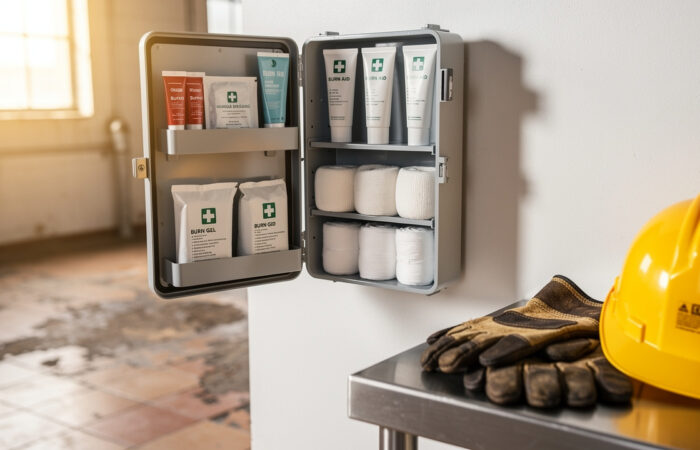
Adequate first aid supplies at each site
Match quantities to your thermal, chemical, and electrical burn risks
Provide enough dressings, cooling options, and access to flushing water where burns are likely
Document where those supplies sit and who inspects them
The closed list of first aid treatments
Supervisors and first aiders should know which steps keep a case at first aid level and which steps push it into medical treatment
Training should include simple examples on both sides of that line
Clear recordkeeping triggers for burns
Any second degree burn larger than a pinhead
All third degree burns
Any burn with days away or restricted work
Safety staff should know how to gather details, work with a clinic, and decide if a case belongs on the OSHA 300 Log
For broader injury and recordkeeping context, many safety managers also review CDC / NIOSH workplace safety resources and burn guidance from Mayo Clinic.
What Is The Proper OSHA Burn Treatment For First Degree Burns

Proper OSHA burn treatment for first degree burns means treating pain and protecting skin while staying inside OSHA’s first aid rules. OSHA treats first degree burns as minor injuries by nature, unless the case includes medical treatment beyond first aid, days away from work, or restricted duty.
Clinically, first degree burns affect only the top skin layer. They cause redness and mild swelling but no blisters. Resources from Mayo Clinic describe these burns as painful to touch, yet usually healing within a week without scarring. For OSHA first degree burn treatment, the focus stays on:
Safe cooling
Simple cleaning
Non‑stick dressings
Over the counter pain relief
OSHA does not print a medical recipe for what is the proper treatment for first degree burns across every workplace. Instead, it says which steps count as first aid and allows employers and clinicians to design detailed protocols. Your written plan should match those OSHA limits so a small superficial burn does not accidentally become a recordable case because of an overly aggressive treatment choice.
“The best way to control recordable cases is to control injuries at the first aid level.”
– Common guidance from occupational health consultants based on OSHA recordkeeping rules
Step-By-Step OSHA-Compliant First Degree Burn Response
A clear, simple checklist helps first aiders give the same care every time and keeps everything inside OSHA’s first aid list. These steps work for small, work related first degree burns on arms, legs, or similar areas.
Move The Worker To A Safe Place And Check The Burn
Remove the person from the heat source, steam, hot surface, or hot liquid as soon as it is safe
Take off jewelry and tight clothing near the burn before swelling grows
Confirm the skin is red, not blistered or charred, which fits a first degree pattern described by Mayo Clinic
If there is any doubt about deeper damage, treat it as more serious and escalate
Cool The Burned Area With Approved Methods
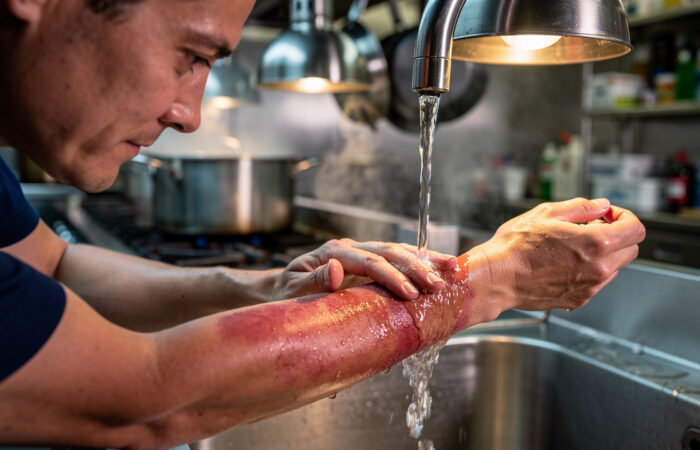
Place the burned skin under cool running water for several minutes, avoiding ice or very cold water that can damage tissue
In areas without sinks, use cool sterile saline or clean water from a wash bottle and let it flow gently over the burn
Start cooling as early as possible to reduce pain and limit tissue damage; guidance from the American Burn Association supports cool running water as a preferred first step for minor burns
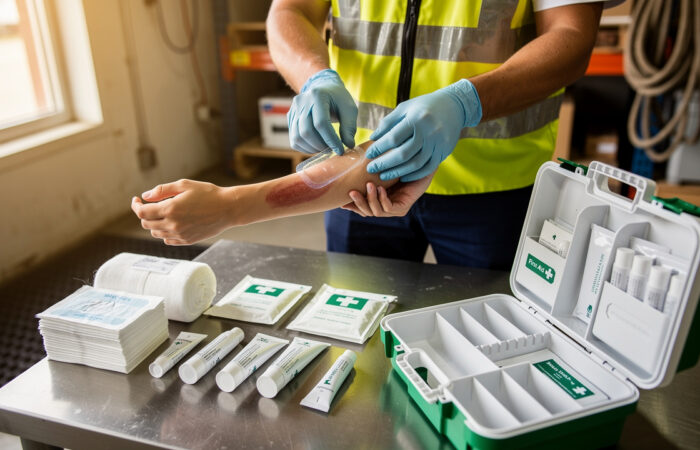
Clean And Cover Within OSHA First Aid Rules
After cooling, gently clean or flush the skin surface if there is dirt, grease, or other light contamination
Cover the burn with a non‑adherent sterile pad or light sterile gauze and hold it in place with simple tape or wrap; emerging wound care research, such as a study on an injectable thermosensitive chitosan hydrogel, illustrates how advanced dressing science continues to inform optimal burn coverage principles.
Use dressings that protect the area from friction and dirt while allowing some air flow, which fits OSHA’s definition of first aid
Manage Pain, Work Status, And Documentation
Per company medical policy, the worker may receive over the counter oral pain medicine at non‑prescription strength
Some programs also approve non‑prescription burn gel for extra cooling and comfort for minor burns
The supervisor documents the date, time, location, symptoms, and treatments in case the burn worsens
Because these cases stay at first aid level and rarely limit job duties, they usually do not appear on the OSHA 300 Log, as described by OSHA
What Is The Proper OSHA Burn Treatment For Second Degree Burns
Proper OSHA burn treatment for second degree burns starts with recognizing that they are more serious than superficial burns and that size and location matter for recordkeeping. OSHA guidance explains that any work related second degree burn larger than a pinhead is non‑minor and recordable, while very small second degree burns are minor only if they stay within first aid care and do not cause lost time or restrictions.
Second degree, or partial thickness, burns show redness along with blisters, swelling, and damage to deeper tissue layers. Clinical sources such as the American Burn Association describe these burns as moist and very painful. OSHA records also note that blistering can appear hours or even days later, which means an injury may first look like a first degree burn, then later meet second degree criteria. For OSHA second degree burn treatment, your team needs a path that separates tiny partial thickness burns from larger wounds that must go to higher care.
Because OSHA focuses on severity and recordability, it does not publish a detailed step chart for what is the proper treatment for second degree burns across all workplaces; employers can instead reference best practice recommendations for burn prevention and management to inform their internal protocols. Instead, the agency explains how to classify burns, what counts as first aid, and when a case is recordable. Employers then set escalation rules that work with their clinics and local emergency providers, while still matching OSHA’s first aid list and recordkeeping triggers.
Tip: During training, give staff simple photo examples of first, second, and third degree burns from reliable sources like Mayo Clinic so they can recognize when a case needs rapid escalation.
OSHA First Aid Versus Recordable Treatment For Second Degree Burns
Recognizing a second degree burn is the starting point. These burns show:
Blisters
Wet or shiny skin
Obvious swelling and strong pain
OSHA interpretation letters state that the timing of blister appearance does not change the degree, so if a blister forms later and the area is larger than a pinhead, the burn is still classified as a non‑minor second degree injury.
For tiny, pinhead‑sized burns that meet second degree criteria, first aid steps still look similar to those for first degree burns:
Cool the area with clean, cool running water or a saline flush
Gently clean the surface
Apply a non‑adherent sterile dressing with light gauze
Use over the counter oral pain medicine if allowed by policy
OSHA also lists simple blister draining as a first aid option when it is done one time to relieve pressure. According to OSHA, these steps all sit inside the first aid definition when used for small, minor injuries.
As size or location change, second degree burns quickly move beyond first aid. You should send the worker to a clinic or emergency department right away if you see:
Any second degree burn larger than a pinhead
Any partial thickness burn on the face, hands, feet, major joints, or genitals
Any burn caused by chemicals or electricity
These cases usually involve prescription medicine, possible debridement, or hospital care, which are all medical treatments beyond first aid. Research from NIOSH highlights that thermal and chemical burns often lead to days away from work, especially when they affect the hands or arms.
Employers must also think about delayed blistering and OSHA’s six working day rule for recording cases. If a burn first looks like a first degree injury but later shows second degree blisters larger than a pinhead, the safety team may need to update the injury record and add it to the OSHA 300 Log. That is why follow up checks and good documentation are important parts of any OSHA burn treatment pathway.
How To Build OSHA-Compliant Burn Treatment Kits And Protocols

Building OSHA compliant burn treatment kits and protocols means matching supplies and steps to your real hazards while staying inside OSHA’s rules. Standard kits from a catalog seldom cover everything for hot work, food service, laboratories, and offices all at once.
29 CFR 1910.151(b) uses a performance style standard that says adequate first aid supplies must be readily available, without naming exact products. That language means a welding shop needs different burn coverage than a small office, even if both fall under the same regulation. Guidance from OSHA and NIOSH recommends using your injury history and hazard analysis to size kits for each location.
Your internal burn protocol should then connect real products to clear steps. For example, when a worker in a kitchen touches a hot pan, the protocol might say to:
Cool the area under a specific sink
Use a labelled saline spray if needed
Apply a named non‑adherent pad from the nearest cabinet
That level of detail makes training easier and reduces mistakes under stress.
Practical Checklist For Burn Kits, Training, And Escalation

A short checklist helps you review your current burn program against OSHA expectations. It also gives you a template you can use across factories, clinics, schools, and field crews.
A simple way to start is to map kit contents to their role in first aid care.
| Kit Component | Role In OSHA First Aid For Burns |
|---|---|
| Cool water access or saline bottles | Allows fast cooling and flushing for minor thermal or chemical burns, which OSHA lists as first aid. |
| Non‑adherent burn dressings and gauze | Protects sensitive skin without sticking, while staying within OSHA’s basic dressing category. |
| Over the counter oral pain medicine | Helps control pain at non‑prescription strength when allowed by your medical policy. |
| Eye wash station and eye patches | Supports first aid for minor eye burns and particle exposures, as recognized by OSHA. |
Beyond products, written protocols should walk responders through simple steps; a chapter on best practice recommendations for burn management offers a structured framework that safety teams can adapt when designing site-specific escalation procedures. They should cover:
Stopping the burning process
Cooling
Cleaning and covering
Deciding if the burn is minor or non‑minor
Contacting a clinic or emergency services when burns exceed first aid limits
Training should review how to tell first, second, and third degree burns apart, using trusted diagrams from groups such as Mayo Clinic. Regular drills and refreshers help those skills stick.
Training and inspections keep those plans real. Many organizations hold annual or semiannual burn response drills for supervisors and designated first aiders, using common scenarios from their plants, kitchens, or labs. Regular kit checks confirm that dressings, burn gels, and eye wash bottles are up to date, sealed, and sized appropriately for each team. These steps support better outcomes and cleaner OSHA records whenever a real burn occurs.
Why Choose Us For OSHA-Focused Burn Treatment Supplies

Having the right burn care supplier makes OSHA compliance and day to day injury response much smoother. You want products that line up with OSHA’s first aid list, are easy for staff to use, and can be standardized across locations.
First Aid Longs focuses on workplace first aid and burn care that fits OSHA 1910.151(b) and related expectations. The company produces hydrogel burn dressings, tube based burn relief gels, single use packets, and complete first aid kits in a 100K Class Cleanroom, which supports consistent product quality. Because production stays in house, buyers also gain:
Competitive wholesale pricing
Shorter lead times
Reliable supply for multi‑site programs
Their hydrogel dressings combine cooling, moisture retention, and non‑stick coverage, which helps extend the effect of cool water and shields delicate skin from friction. Tube based burn relief gels with lidocaine and aloe fit well in:
Office kitchens
Security desks
Vehicles and mobile kits
Maintenance carts
Single use packets help limit cross contamination in cafeterias, gyms, buses, and classrooms where many workers or guests use the same stations.
Service also matters. Safety and procurement teams often need help matching products to hazard maps and OSHA goals. First Aid Longs works with you to:
Build custom stocking lists matched to weld bays, boiler rooms, laboratories, and guest areas
Support OEM and private label projects
Run refill programs that keep kits inspection ready without last minute rush orders
When you are ready to strengthen OSHA first degree burn treatment and second degree coverage across locations, it makes sense to buy from a supplier that builds products around regulatory needs. First Aid Longs offers OSHA friendly kits, empty cases for your own refills, and a wide range of burn care formats so you can match each hazard with the right product mix.
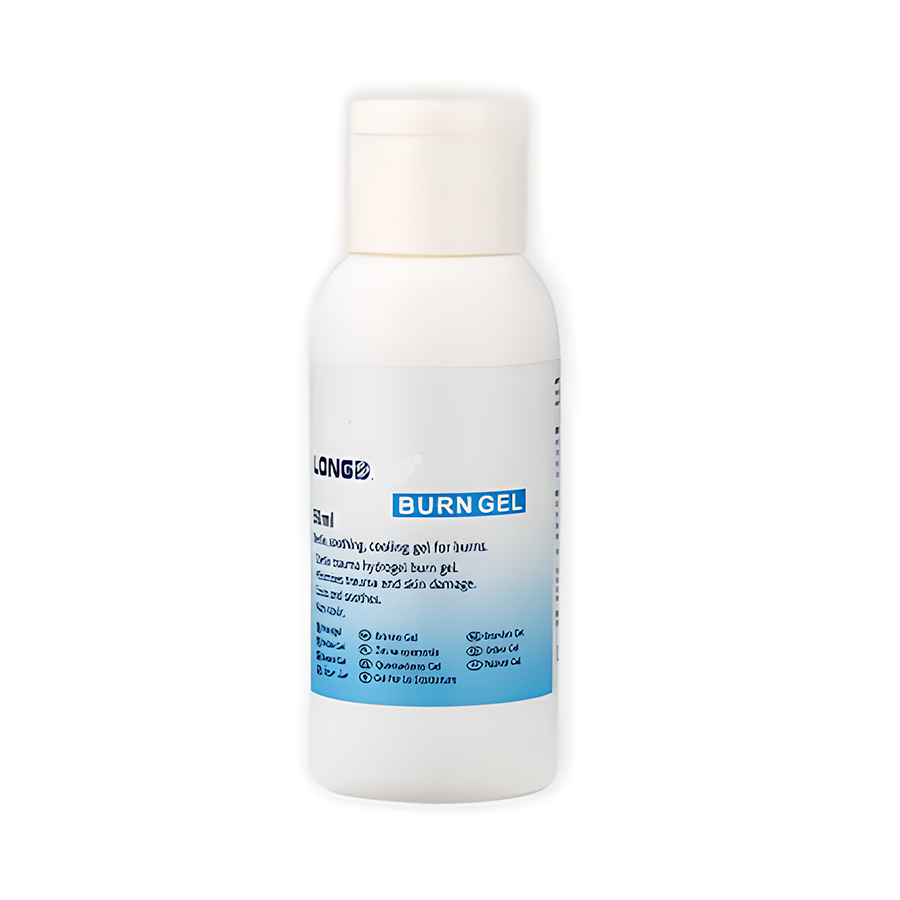
Secure Reliable Burn Gel Supplies Today!
Order our high-quality wholesale burn gels made with safety standards to stabilize your healthcare operations.
In Summary
Understanding how OSHA splits first aid from medical treatment beyond first aid is the foundation for handling workplace burns the right way. First degree burns usually stay in the minor category, managed with cooling, simple cleaning, non‑stick dressings, and over the counter pain relief.
Second degree burns, especially those larger than a pinhead or located on high risk areas, quickly become non‑minor and usually move into recordable territory. Clear protocols, hazard based kits, regular training, and reliable documentation protect workers while supporting OSHA compliance. Guidance from OSHA and clinical groups such as Mayo Clinic can help you refine those plans.
As you review your current burn treatment setup, consider matching your written procedures and risk profile with burn dressings, gels, and kits from First Aid Longs. Pairing sound protocol with purpose built products gives your teams confidence and keeps more cases at the first aid level when that is medically appropriate.