Saline wipes wholesale gives you a simple way to standardize gentle wound and skin care across every site you manage. Yet choosing and configuring OEM products can feel confusing when you first start.
You may juggle sterility rules, staff preferences, budget pressure, and storage limits all at once. That mix often delays decisions or locks you into expensive retail packs that do not quite fit your needs.
This guide explains what medical saline wipes are, how saline wipes wholesale programs work, and how OEM manufacturing lets you offer your own brand without building a factory. You will see which specifications matter, how the OEM process runs, and how First Aid Longs supports private label wipes plus complete first aid kits.
Key Takeaways
- You will understand the main advantages of OEM wholesale saline wipes, including brand control, better cost per wipe, and stable supply across hospitals, clinics, and industrial sites. You will also see how private label wipes support your wider first aid goals, so you can explain these gains clearly to finance and clinical teams.
- You will learn which product specifications you must lock in before you send any RFQ. That includes saline profile, wipe size, substrate, sterility level, packaging style, and required documentation. Clear specs mean faster quotes, easier comparison between suppliers, and fewer surprises during trials.
- You will get a simple picture of the OEM process from the first brief to palletized shipment. You will see where you can customize branding, format, and order size. You will also understand how First Aid Longs fits as a long term partner with saline wipes, first aid kits, eyewash, and burn care in one place.
What Are Saline Wipes Wholesale And Why Do OEM Options Matter?

Saline wipes wholesale refers to bulk, medical grade wipes pre moistened with saline and supplied by a manufacturer for institutional use. OEM options matter because they let you put these wipes under your own brand while keeping medical standards and lowering long term costs.
Saline wipes are usually saturated with 0.9 percent sodium chloride in purified water, which matches the body’s salt level. That isotonic profile helps reduce stinging on fragile skin, around eyes, or near devices, a benefit supported by research on Buffered solutions versus 0.9% saline in clinical care settings.
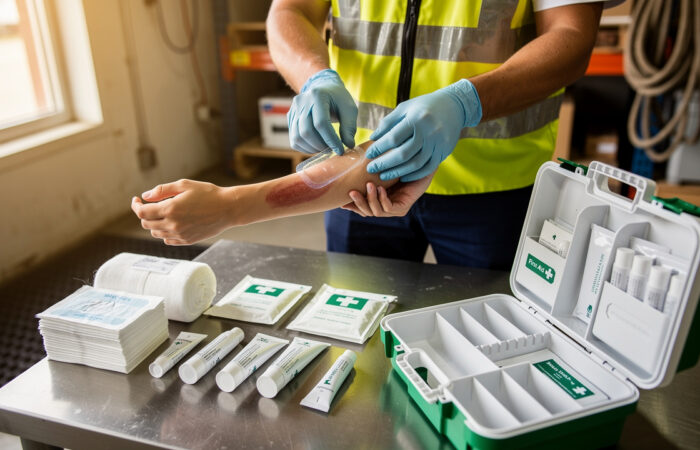
In real use, you see these wipes in wound cleansing, peri-ocular care, nasal cleaning for children, and sensitive area hygiene in long term care. They also sit in first aid kits for factories, construction sites, schools, and government offices. Because each wipe is single use, you cut cross contamination risk compared with shared bottles and gauze.
Saline Wipes Wholesale Basics For Healthcare And Safety Programs
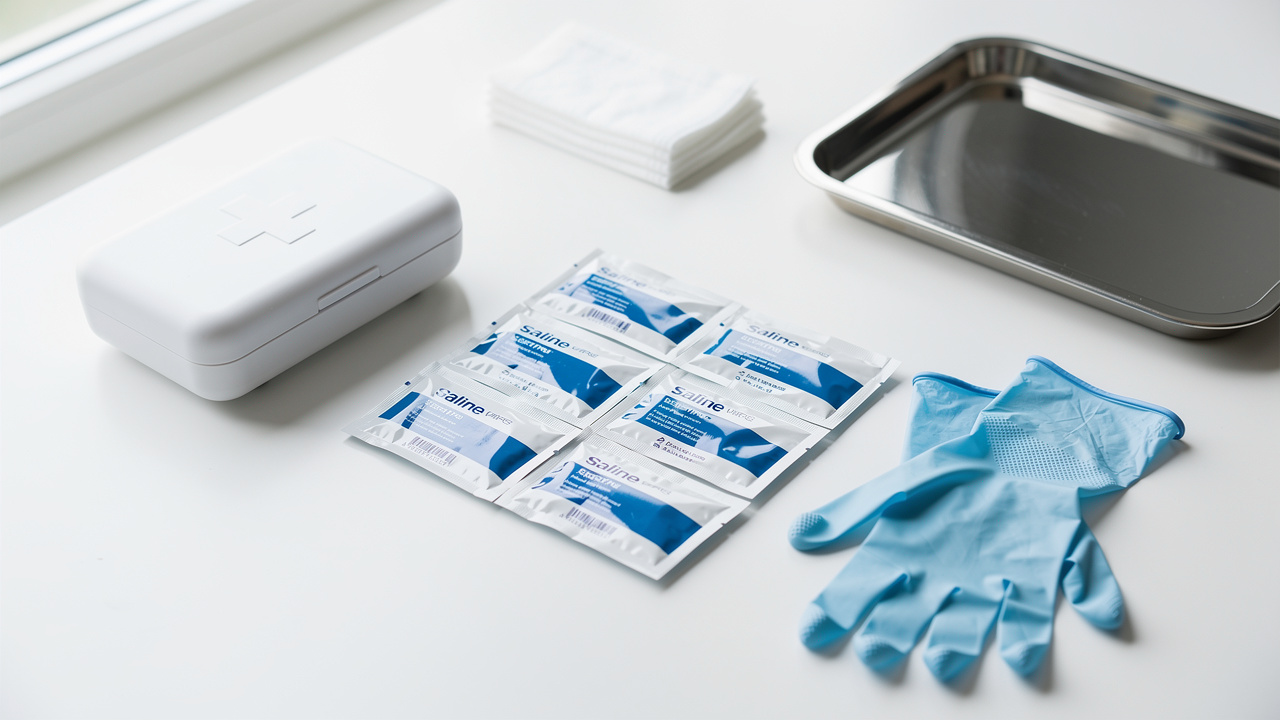
Saline wipes are disposable cloths soaked in saline solution, usually sterile and sealed in individual sachets. Healthcare buyers look for alcohol free, fragrance free formulas that stay gentle on infant skin, older adults, and anyone with allergies.
These wipes support many tasks, such as:
- Cleaning minor cuts before bandaging
- Wiping dried secretions near the eyes
- Removing mucus around the nose without causing redness
In factories and construction, they allow workers to clean small abrasions or facial areas after dust exposure when alcohol would sting, and the shift toward ready to use wipe formats is reflected in studies on Streamlining Endoscopy Cleaning: The impact of modern wipe solutions on time and resource use.
Compared with bottled saline plus gauze, pre packed wipes give you single use sterility, quicker care, and less product waste.
- Single sachets mean every patient or worker gets a fresh, sterile wipe with no chance of bottle tip contamination. Staff open, use, and discard, which keeps workflows simple and easy to train.
- You reduce unused saline and gauze, because each pack holds exactly one treatment. That helps finance teams and sustainability groups, who both watch waste levels closely. Ordering and stock counting also become more straightforward.
- Because the saline is isotonic and free from harsh additives, feedback from pediatric and eye care settings is usually positive. Fewer complaints about stinging or rash make nursing teams more willing to standardize on one wipe type.
How To Define Your Saline Wipes Wholesale Specifications Before Contacting An OEM

Defining your wholesale saline wipes specifications first helps you get accurate quotes and products that pass internal review the first time. When you do this homework, OEM partners can respond faster and recommend realistic options.
Most organizations need to balance clinical needs with storage space, infection control rules, and budget targets. That balance will influence every choice you make, from wipe size to carton count. It also affects which SKUs you finally standardize across hospitals, clinics, factories, and schools. You also need to agree on documentation requirements before you speak with vendors. That includes medical device status where relevant, lot traceability, shelf life, and any facility rules tied to sustainable materials or non flushable labels.
Key Saline Wipes Wholesale Technical And Packaging Parameters You Must Decide
Several core parameters shape how your saline wipes, wholesale line will look, feel, and perform. You do not need to be a clinician to decide, but you should consult your care teams.
- Formulation and safety sit at the top of the list. For wound cleansing, eye area care, and device sites, a simple isotonic saline profile without alcohol or fragrance works best. First Aid Longs also offers CW-01 cleansing wipes with distilled water, sodium chloride 0.02 percent, and cetrimide BP 1 percent for gentle skin cleaning where mild antiseptic action is helpful.
- Substrate choice affects absorbency and skin feel. Many hospitals prefer 100 percent cotton or spunlace nonwoven that feels soft and sheds very little lint. Industrial buyers might accept blended fibers if they want extra strength. If your organization tracks sustainability scores, cotton and recycled packaging can support ESG goals, as demonstrated by research into Bicomponent Split Microfiber Reusable textile products that achieve hygienically clean healthcare settings with a reduced environmental footprint.
- Format and count then decide how easy the wipes are to store and distribute. Common sizes are 4 by 6 inches for small wounds or facial care and 6 by 8 inches for larger areas. Individually wrapped wipes fit first aid kits, procedure packs, and mobile carts. Resealable bulk bags can serve non sterile comfort care, such as pediatric nose wipes, in waiting rooms.
- Regulatory and compliance needs also shape your spec. Hospital use often calls for sterile labeling, medical device registration, and access to SDS and IFU documents, which the U.S. Food and Drug Administration explains for device makers. Schools and government agencies may add Buy American preferences or recycled content rules.
Here is a simple decision table you can adapt.
| Configuration | Best Use Setting | Main Advantage | Watch Point |
|---|---|---|---|
| Small 4×6 sterile sachet | Eye and nasal care, pediatrics | Precise, gentle cleaning | May feel small for large wounds |
| Large 6×8 sterile sachet | Wound care, industrial first aid | Full coverage with one wipe | Slightly higher cost per piece |
| Non-sterile resealable soft pack | Waiting rooms, home programs | Lower packaging cost per wipe | Not fit for open wounds or devices |
How The OEM Saline Wipes Wholesale Manufacturing Process Works (And Where You Can Customize)

The OEM process for saline wipes wholesale follows a clear path from your brief to finished cartons on pallets. Understanding each step helps you ask better questions and plan realistic launch dates. In simple terms, you provide the requirements, the manufacturer designs and tests samples, quality teams lock in the process, and then full runs ship on agreed schedules. For a producer such as First Aid Longs, in house control and a 100K Class Cleanroom keep these steps tightly linked.
It starts with requirements gathering. You share settings, target patients or workers, desired wipe size, formulation type, and packaging preferences. At this point, you also describe regulatory expectations and any internal standards, such as barcoding rules or sustainability notes.
Process engineers then choose substrates, saline profile, and packaging film that match those needs, with substrate selection playing a key role. They prepare small pilot batches, so your teams can feel the wipe, test the moisture level, and see if the sachets open easily with gloves. Feedback from nurses and safety officers is important here.
Once the sample passes, quality and regulatory teams validate the process. They check microbiological safety, packaging integrity, and labeling. Finally, production teams schedule full runs, and logistics teams plan case packing, pallet patterns, and export or domestic freight.
From Brief To Bulk Shipment Saline Wipes Wholesale OEM Steps And Timelines
The OEM journey for saline wipes wholesale follows a repeatable series of stages. Knowing them helps you align internal sign offs and training.
- During the initial consultation, you walk through use cases, required certifications, storage limits, and target price bands. This is also when you share artwork or brand rules, even if they are not final. A clear brief keeps later changes small and avoids rework.
- In the R&D and sampling phase, engineers turn your brief into physical wipes and sachets. Your staff tests them for skin feel, ease of opening, and fit with existing kits. You may run short trials in one ward or site, then approve or tweak.
- When you approve the design, quality teams lock in manufacturing instructions, batch tests, and documentation such as COAs, SDS, and IFU. Production then books line time in the 100K Class Cleanroom, fills and seals wipes, and packs cases. Shipping follows agreed lead times, while your OEM partner helps set up steady refill schedules so you avoid gaps.
Why Choose First Aid Longs As Your OEM Partner For Saline Wipes Wholesale?

Choosing the right partner for wholesale saline wipes makes the difference between constant backorders and a quiet, reliable supply line. First Aid Longs focuses on in house manufacturing and medical approval, which reduces risk for you.
Because the company runs its own 100K Class Cleanroom and filling lines, it can keep quality consistent while still offering flexible OEM options. That mix fits hospitals, urgent care chains, industrial safety programs, and distributors that need private label products under one roof.
First Aid Longs has produced medical and first aid items since 1996, so it understands how different sectors work. The saline wipe range includes individually wrapped medical grade wipes and CW-01 cleansing wipes with distilled water, sodium chloride 0.02 percent, and cetrimide BP 1 percent for gentle yet effective skin cleaning. Clients often pair these wipes with eyewash, burn gel, and dressings in bundled kits.
First Aid Longs Saline Wipes Wholesale Capabilities, Customization, And Long Term Value
First Aid Longs positions its saline wipes wholesale offering to solve common procurement headaches. The company’s in house model lets you customize, test, and scale without long waits.
You can choose between sterile saline wipes and CW-01 cleansing wipes, depending on your protocols. Packaging options range from single use sachets to resealable bulk bags for non sterile comfort use. Branding covers full color print, varied layouts, and label content aligned with your local rules.
Quality control runs through every stage. Products are medically approved, produced in a 100K Class Cleanroom, and tested batch by batch. That supports audits in hospitals, government agencies, and large industrial groups. For organizations that also need eyewash or burn care, First Aid Longs offers OEM eyewash and burn care options so you can build coherent treatment kits.
How To Launch And Scale Your Private Label Saline Wipes Wholesale Program

Launching a private label saline wipes wholesale program looks complex at first, but a simple roadmap makes it manageable. The key is to start with demand mapping, then move through specs, partner selection, pilots, and full rollout.
When you follow clear steps, you protect your clinical standards and avoid stock gaps, while still reaching savings compared with retail packs, as evidenced by A cost comparison analysis of environmentally sustainable interventions in surgical settings. An experienced partner such as First Aid Longs can support you at each step, from initial brief to long term business reviews.
Start by mapping where saline wipes can replace current items. That might mean swapping bottle plus gauze sets in wound care, adding gentle nose wipes in pediatric clinics, or placing sterile wipes in ANSI style first aid kits at plants and warehouses. Next, confirm which specs are non negotiable, such as sterility for device site care or cotton substrates for eye area use.
From there, you can compare OEM offers, request samples, and run short pilots in a few locations. Once you see stable performance and positive feedback, you lock in contract terms, design artwork, and plan phased rollout across your network. Over time, joint reviews with your OEM partner help refine SKUs, adjust volumes, and combine saline wipes with wholesale medical kit manufacturing for bundled orders.
Practical Saline Wipes Wholesale Roadmap For Procurement And Safety Teams
You can use this simple roadmap to guide your private label saline wipes wholesale project. Assign clear owners and timelines for each stage so nothing slips.
| Implementation Step | Owner | Typical Timeline | Notes |
|---|---|---|---|
| Map demand and use cases | Procurement with nursing | 2 to 4 weeks | Review hospitals, clinics, plants, schools |
| Finalize specs and targets | Procurement and clinical | 2 to 3 weeks | Set must have and nice-to have traits |
| Shortlist and sample OEMs | Procurement | 3 to 6 weeks | Include First Aid Longs on the list |
| Run pilot and gather feedback | Site managers and safety | 4 to 8 weeks | Test skin feel, sachet handling, storage |
| Sign contract and roll out | Leadership and procurement | 6 to 12 weeks | Phase rollout to reduce disruption |
Ready to Restock Essential Saline Wipes?
Maintain hygiene compliance with dependable saline wipes suited for high demand workplace environments.

Conclusion
A clear OEM plan for saline wipes wholesale turns a simple consumable into a stable, high value part of your care and safety program. When you define specifications up front, understand the manufacturing steps, and choose a proven in house producer, you cut risk while protecting patients and workers. First Aid Longs offers medically approved saline wipes, flexible OEM and white label options, and nearly thirty years of manufacturing experience, all supported by a 100K Class Cleanroom. Now is a good time for you to request samples, share your requirements, and shape a private label line that fits your volume, budget, and compliance needs across every site you manage.